
Why You Still Cannot Book a Ride on the New York City Air Taxi
It’s one thing to fly in the open sky, but the FAA is forcing these companies to prove their airworthiness in "GPS-denied" city centers, which is a massive technical hurdle that current commercial benchmarks simply weren't designed to handle.
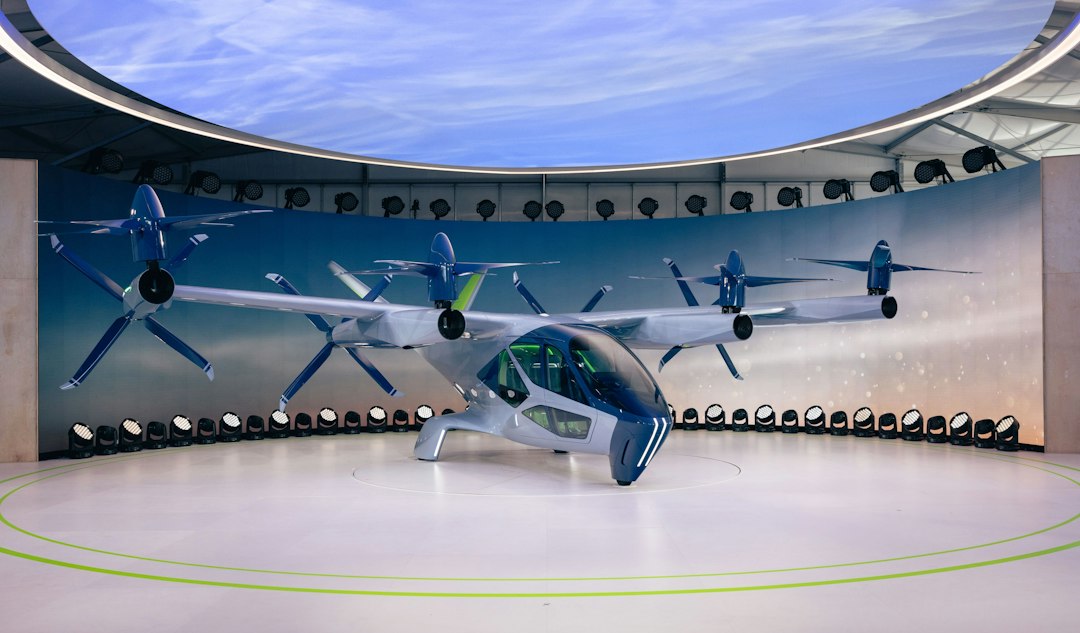
The Regulatory Hurdle: Why FAA Certification Remains the Biggest Barrier
Let's be honest, everyone talks about the "future of flight" as if it’s just a matter of building a cool drone and waiting for the batteries to get better. But the reality is that the FAA is effectively acting as the world’s strictest gatekeeper, and for good reason—they aren’t just rubber-stamping these things. Think about it: they’re demanding a safety profile equivalent to a massive commercial airliner, aiming for a catastrophic failure rate of less than one per billion flight hours. That’s a staggeringly high bar for startups that are essentially reinventing flight with distributed electric propulsion, where a single motor glitch could potentially drop the whole craft. When you look at the sheer physics of it, verifying that software is deterministic—meaning it can't just "learn" its way through a problem like a robot vacuum—adds a layer of complexity that keeps engineers up at night.
Then there’s the hardware headache. We don’t even have a set industry standard for solid-state batteries yet, so every single manufacturer is stuck in this loop of exhaustive, individual testing just to prove their packs won’t go into thermal runaway. It gets even hairier when you look at how these things are wired; you’ve got high-voltage lines running right next to sensitive navigation sensors, which makes electromagnetic interference testing an absolute nightmare compared to a standard Cessna. And let’s not forget the urban environment factor. It’s one thing to fly in the open sky, but the FAA is forcing these companies to prove their airworthiness in "GPS-denied" city centers, which is a massive technical hurdle that current commercial benchmarks simply weren't designed to handle.
Ultimately, these companies are trying to fit a square peg into a round hole because the current "Special Class" certification pathway is basically a moving target. You have to prove that a novel, never-before-seen configuration is just as safe as a Boeing 737, but you’re doing it while trying to keep the airframe light enough to actually get off the ground. Even if you nail the flight controls, you’re still on the hook for verifying your entire ground-based charging infrastructure and integrating with our existing National Airspace System. It’s not just about the plane; it’s about proving the entire ecosystem—from the grid to the detect-and-avoid software—won't blink under pressure. It’s a brutal, multi-year marathon, and frankly, I think a lot of people underestimate just how much regulatory friction is standing between us and an actual ride to the airport.
Beyond the Demo: Distinguishing Between Public Showcases and Commercial Operations
I think it is time we pull back the curtain on why those sleek demo videos you see online look nothing like the reality of booking a real flight. When you see a prototype zip across the skyline in a marketing reel, you are watching a tightly controlled performance that relies on experimental flight permits. These permits strictly forbid the transport of paying passengers, so don't be fooled by the glossy production quality. These showcases often operate under a compensated flight test exemption, meaning the company can brand the flight however they want, but they cannot legally take a dime from you. It is essentially a high-stakes rehearsal, not a service.
The gap between these PR stunts and actual operations is massive when you look at the certification requirements. A demo only needs a Special Airworthiness Certificate in the experimental category, but to become a real air carrier, a company must secure a full Part 135 certificate and prove their aircraft model meets rigorous Type Certification standards. Think about the pilots, too; those demo flights are handled by experts who have practiced that exact path hundreds of times. In a commercial world, you’ll have standard line pilots flying routes that need to be safe in all kinds of weather, not just on a clear, sunny afternoon.
And then there is the technical reality of the hardware itself. Those demo batteries might give you 15 minutes of flight time, but federal rules for commercial transport mandate a 20 to 30-minute power reserve, which these prototypes simply cannot hit yet. You also have to consider that demo vehicles are often handmade prototypes that lack the certified parts traceability required by law. Before a single passenger steps on board, every wire and bolt must be re-sourced and validated for a production line. It’s one thing to fly a one-off machine for a camera crew, but it’s a totally different game to build a fleet that meets Stage 5 noise compliance and keeps a transparent, FAA-accessible database of every single maintenance event.
Safety First: The Stringent Testing Requirements for eVTOL Aircraft
When we talk about the safety of these air taxis, it is easy to get lost in the marketing, but the actual testing requirements are intense. I think it is important to realize that manufacturers are now running complex heterogeneous formation flights, where different aircraft types must prove they can move in perfect sync to show that their systems actually play nice with each other. It is not just about staying in the air anymore; it is about proving interoperability in a crowded, high-stakes environment. To manage this, companies are integrating powerful, AI-driven onboard computing platforms, essentially putting the same high-performance hardware we see in autonomous cars into these vehicles to handle the immense sensor data required for flight safety.
You might wonder why this takes so long, but the industry is currently navigating a real transatlantic tug-of-war where regulators in the UK and the US are debating the best path forward for these novel electric designs. This uncertainty makes life difficult for engineers, who are constantly pushing toward sixth-generation iterations to refine structural integrity and power management based on every previous test flight. Before a company can even think about a commercial prototype, they need to secure Design Organisation Approval, which forces them to overhaul their internal processes until every single engineering step is standardized. It is a massive, behind-the-scenes administrative lift that is just as vital as the flight testing itself.
Beyond the regulatory paperwork, the technical stress testing is honestly mind-bending. Manufacturers are now designing components to withstand fatigue levels that far exceed standard aviation requirements, specifically to handle the unique, repetitive strain of vertical takeoff and landing. We are even seeing companies worry about chip-level reliability, certifying hardware to be resilient against cosmic radiation that could cause a bit flip in mission-critical flight logic. Plus, they have to prove that their ground control systems can track entire fleets in real-time, creating a digital record for every wire and bolt. It is a level of transparency that aims to ensure that when you finally step into one of these, every piece of the puzzle has been verified, re-verified, and then checked again.
Infrastructure Challenges: Developing Vertiports in a Dense Urban Environment
We’ve spent so much time obsessing over the aircraft themselves that we’ve almost entirely ignored the ground-level reality of where these machines are actually supposed to land. Developing vertiports in a dense urban environment isn't just a matter of clearing off a rooftop; it’s an engineering headache of the highest order. Think about it: our city buildings weren't designed to handle the unique, localized vibrational frequencies generated by high-frequency rotors during a vertical hover. If you don't integrate complex vibration-damping structural polymers into the decking, the entire building essentially acts like a massive tuning fork, amplifying noise and potentially compromising structural integrity.
And that’s just the start of the physical limitations we're up against. These craft deal with a nasty aerodynamic phenomenon called ground effect, where high-pressure air gets trapped beneath the vehicle, creating unstable turbulence that can make a precision landing feel more like a rodeo if the surface isn't specifically engineered to dissipate that airflow. Developers are looking at modular solutions like sloped Aeroberms to mitigate these issues and dampen the noise for folks on the street, but fitting these into the existing skyline is a nightmare. Plus, we’re running into a massive real estate bottleneck because FAA-mandated safety buffer zones often clash with local zoning laws, suddenly rendering perfectly good high-rise developments non-compliant simply because a flight path passes nearby.
Then there is the electrical and security side of things, which frankly scares me more than the flight physics. You can't just plug these things into a standard wall outlet; simultaneous fast-charging for a fleet of eVTOLs requires massive, dedicated substations that could trigger voltage dips across the municipal grid if they aren't managed with extreme care. We also have to contend with fire suppression, where traditional water-based sprinklers are useless against the intense chemical fires of modern high-density batteries, forcing us to move toward specialized chemical inerting systems. And don't get me started on the need for localized, high-precision beacon networks to guide aircraft in urban canyons where GPS signals are constantly bouncing off glass and steel. It’s a massive, multi-layered puzzle where every single piece has to be custom-built just to get a single passenger from the sky to the sidewalk.
The Path to Air Traffic Integration: Navigating NYC’s Complex Airspace
When you look at the map of New York City’s airspace, you aren’t just looking at sky; you’re looking at arguably the most congested and complex traffic bottleneck on the planet. I’ve spent time digging into the mechanics of our current system, and it’s clear that we’re trying to force a brand-new, autonomous, electric future into a rigid, decades-old framework designed for traditional airliners. Right now, our Class B airspace is so packed that controllers have to treat commercial jetliners at JFK and Newark as the absolute priority, which leaves virtually no room for the kind of consistent, high-frequency flight paths that air taxis would actually need to survive. It’s not just a matter of finding an open slot; it’s about navigating a environment where even a minor deviation could ripple into a massive safety risk for commercial traffic.
The real headache here is how these machines have to talk to the ground. We’re still largely relying on legacy voice-based radio, but the reality is that the volume of activity needed for air taxis is pushing the industry toward a fully digitized, data-linked messaging system that handles flight corrections in milliseconds. On top of that, you have the urban canyon problem: glass and steel skyscrapers bounce GPS signals around like a pinball machine, meaning these aircraft can’t just rely on standard satellite navigation. They need a terrestrial-based augmentation system just to maintain the sub-meter accuracy required for a safe touchdown. If that signal drops even for a second, the current FAA protocols demand an immediate, emergency landing—which is exactly the kind of friction that makes a scheduled "ride" feel more like a theoretical experiment than a reliable commute.
And then there's the physical act of flying through Manhattan itself. You’ve got to account for brutal wind shear and unpredictable updrafts that bounce off buildings, forcing engineers to write software that adjusts blade pitch in milliseconds just to keep the craft level. When you overlay that with the FAA’s strict "noise-sensitive" flight paths, you end up with these awkward, zig-zagging routes that eat up battery life and kill your effective range. It’s a massive, multi-layered puzzle where every single variable—from the structural integrity of a rooftop pad to the 5G telemetry needed to stay connected—has to be perfectly aligned before you can even think about carrying a passenger. It’s honestly impressive anyone is trying to solve it, but looking at the regulatory and physical realities, I think we have a long way to go before this becomes a standard part of our daily lives.
Looking Toward the Horizon: When Will Passengers Actually Take Flight?

So, when can we actually expect to stop checking our watches in gridlock and start booking a ride through the sky? If you look at the technical progress, we’re seeing some smart pivots, like the hybrid-electric design of the Cavorite X7, which effectively sidesteps current battery limitations to hit the range needed for real regional hops. It isn't just about raw power anymore; engineers are now using phase-change materials in the airframe skin to act as heat sinks, which is a clever way to manage the intense thermal loads we see during vertical takeoffs. I’m also encouraged by the shift toward visual odometry to solve the GPS-denied navigation problem in cities, as mapping building facades in real-time is a far more reliable way to maintain sub-centimeter accuracy than relying on bouncing satellite signals.
But we have to be realistic about the gap between these engineering breakthroughs and a public service. While companies are refining flight controls with gust-load alleviation algorithms that react in under 20 milliseconds, integrating those systems into a bustling city’s traffic flow is a massive logistical hurdle that hasn’t been fully stress-tested yet. We’re also seeing a shift in how vertiports are being built, with new designs incorporating hydrogen fuel cell backups to prevent charging spikes from crashing local power grids. It’s a lot of moving parts—from the psychoacoustic research aiming to make rotors sound less annoying to the way we’re using piezoelectric sensors to monitor airframe fatigue—and every single one has to function perfectly before regulators will give us the green light.
Honestly, I think we’re still looking at a fairly long runway before this becomes a standard part of your commute. It’s easy to get caught up in the promise of a seamless ride, but the reality is that we’re currently in the middle of a massive validation phase where even the smallest component, like a bird-strike-resistant window, needs to meet some of the toughest safety standards in aviation history. We’re essentially watching the birth of a new transportation category, and it’s being built on a foundation of blockchain-verified safety logs and hyper-precise landing polymers rather than just raw speed. It might feel like we’re waiting forever, but I’d rather they get the safety architecture right today than have to re-engineer the entire system after a failure tomorrow.
Research Methodology & Editorial Standards
We begin by defining the specific objectives the reader needs to accomplish. Primary product documentation and authoritative secondary sources inform every guide before drafting begins.
Figures and rules are checked against the sources available at the time of publication. Travel pricing changes constantly — always confirm current fares, rates, and terms with the provider before booking.