
Understanding the Root Causes Behind History's Deadliest Aviation Disasters
When we look back at the most tragic aviation disasters, it’s rarely a single catastrophic event that brings a plane down; it’s usually a quiet, compounding series of mechanical oversights that snowball into something unmanageable.
Mechanical Failures and Structural Integrity: Lessons from Design Flaws
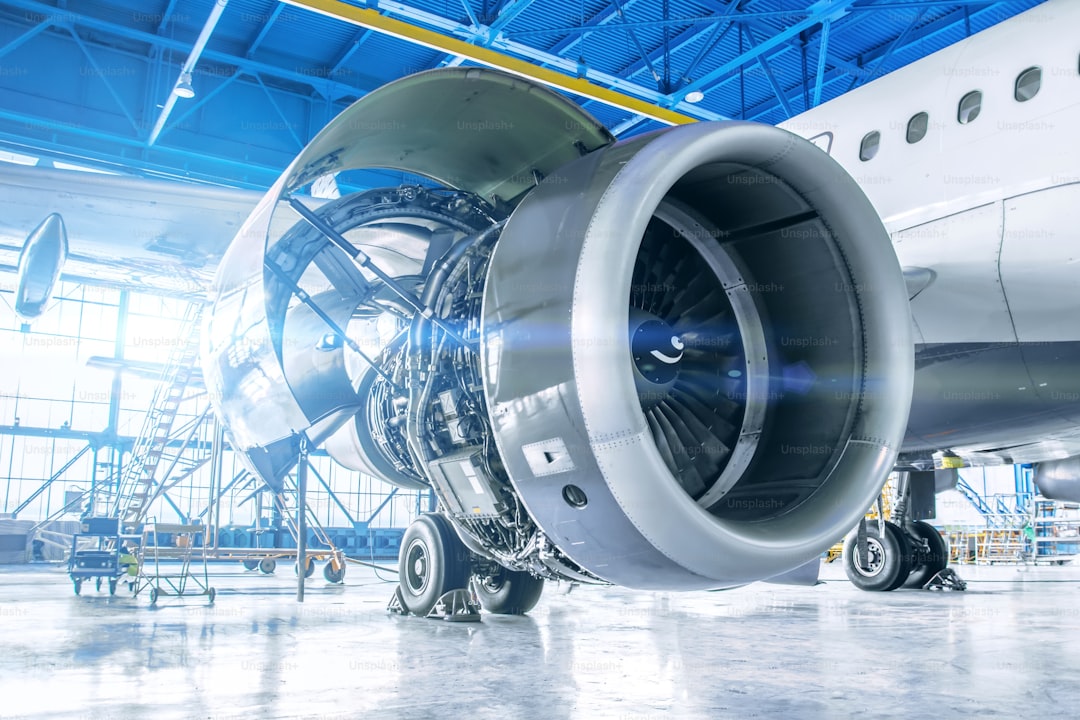
When we look back at the most tragic aviation disasters, it’s rarely a single catastrophic event that brings a plane down; it’s usually a quiet, compounding series of mechanical oversights that snowball into something unmanageable. I’ve spent enough time digging through engineering reports to know that what looks like a solid design on a blueprint can hide microscopic weaknesses that eventually turn into lethal failures. Think about those fatigue cracks that start deep within the grain of a metal component—traditional safety margins just don't catch them because they’re too small for the human eye or standard inspection tools to notice. It’s wild to realize that even a tiny, sub-millimeter shift in material alignment during manufacturing can slash tensile strength by thirty percent, leaving the structure vulnerable long before anyone on the ground realizes there’s an issue.
The real shift happening right now is moving away from those old-school, manual check-lists and toward AI-driven monitoring that can actually catch these hidden flaws in real time. We’re seeing finite element analysis paired with machine learning models that can predict stress points in ways that were practically impossible just a decade ago, essentially simulating years of flight cycles in a matter of hours. But here’s the catch—and this is where I think we need to be really critical—if these models are only trained on successful, "perfect" flight data, they’re going to miss the very failure patterns they're supposed to prevent. We have to feed these systems the ugly, messy data from actual past failures to build a design culture that doesn't just prioritize efficiency, but actually respects the physics of how things break.
It’s also fascinating to see how we’re starting to borrow ideas from fields like origami to rethink how we distribute stress in deployable structures, moving away from rigid joints that are prone to vibration-induced loosening. I often think about the galvanic corrosion that hides at the interface of different alloys; it’s a silent, invisible decay that’s been overlooked for years because it doesn't show up until it’s far too late. By using digital twins to test these geometries against extreme harmonic vibrations, we’re finally getting a clearer picture of how thermal expansion and non-linear loading conditions during those brutal takeoff and landing cycles actually chew through a frame. It’s not just about building stronger parts anymore; it’s about acknowledging that our current understanding of structural integrity is only as good as our willingness to stare down the reality of how these machines deteriorate under pressure.
The Critical Role of Maintenance Protocols in Preventing Catastrophic Failure
When I look at the history of aviation disasters, it is easy to fixate on the dramatic mid-air failures, but the reality is that the real battle is won or lost in the hangar long before the plane ever leaves the tarmac. It really comes down to whether we are just going through the motions of a checklist or actually understanding the health of the machine. I have seen firsthand how reliance on arbitrary hourly intervals often leaves us blind to the actual, cumulative damage occurring during those brutal takeoff and landing cycles. We are finally moving toward a digital-first approach where every flight cycle is logged against a digital twin, allowing us to calculate real-time stress rather than just guessing based on a calendar. It is a massive shift, but if we don't change the underlying culture, even the best data won't save us.
You see, the biggest enemy isn't just wear and tear; it is the confirmation bias that creeps into even the most professional inspection teams. I have read plenty of reports where inspectors subconsciously gloss over minor decay because they assume the system is functioning within normal parameters, effectively ignoring the early warning signs of a coming disaster. We are also seeing that maintenance protocols often fail to account for the hidden, silent killers like galvanic corrosion at the interface of dissimilar materials. These spots are frequently overlooked during routine checks because they remain invisible until the structural integrity is already compromised. And don't even get me started on fasteners; using advanced threadlocker technology is a simple but vital line of defense against the intense, prolonged harmonic vibrations that act like a slow-motion wrecking ball on an airframe.
The future of avoiding these catastrophes lies in how we interpret the noise generated by our own sensors. Right now, there is a huge debate about how we train our predictive maintenance models; if we only feed these algorithms successful mission data, they become effectively useless at identifying the unique pre-failure signatures that signal a break is imminent. We need to be feeding them the ugly, messy data from actual failures to truly catch problems like seal degradation in biomanufacturing or internal delamination in aging airframes. Whether it is using acoustic emission monitoring to hear the high-frequency waves of a microscopic fracture or just ensuring serialized tracking for every valve and gasket, we have to stop treating maintenance as a chore. It is the only thing standing between a routine flight and a headline we never want to read.
Human Factors and Pilot Error: Navigating Complexity in the Cockpit
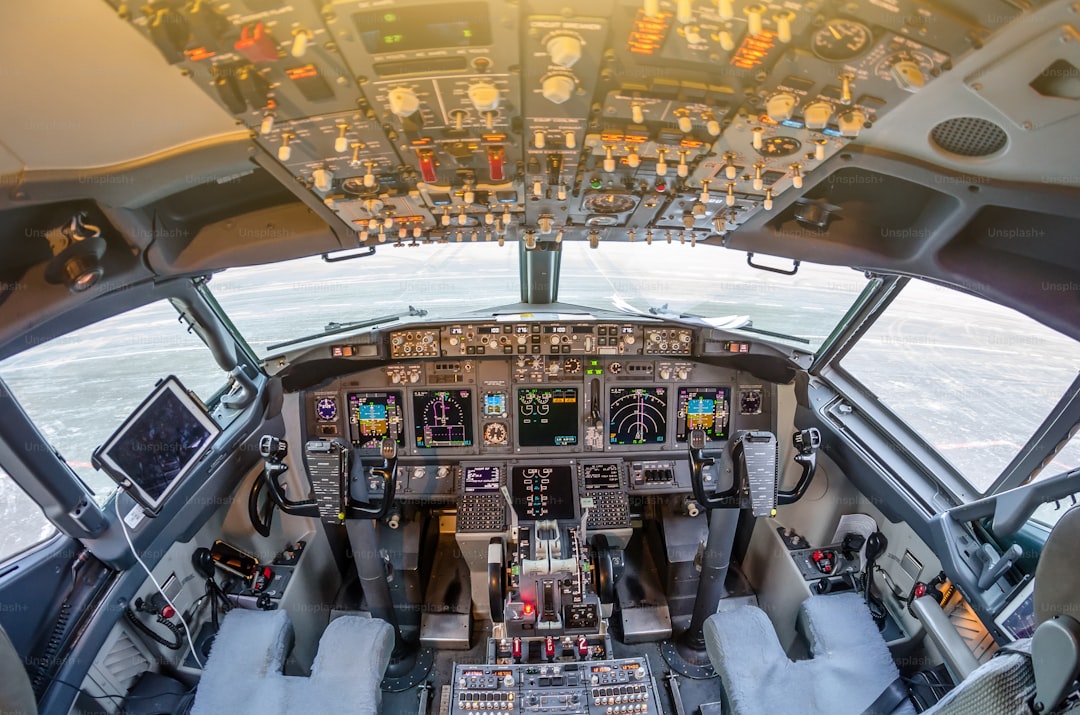
We’ve spent a lot of time looking at the nuts and bolts of aircraft structures, but even the most perfect machine is only as good as the person sitting in the left seat. When you’re staring at a modern flight deck, it’s easy to assume that automation has solved the problem of human fallibility, but I think we’re actually just trading old risks for new, more subtle ones. It’s wild to consider that during high-stress moments, a pilot’s working memory capacity can plummet by nearly fifty percent, effectively leaving them unable to process the very warnings meant to keep them safe. This isn't just a lack of training; it’s a biological bottleneck where the human brain simply hits a wall while trying to juggle multiple non-normal checklists.
If you’ve ever wondered why even experienced crews sometimes miss clear environmental cues, look no further than cognitive tunneling, where the brain locks onto a single stimulus and effectively shuts out everything else. This is compounded by automation bias, where we’ve become so accustomed to the flight management system doing the heavy lifting that we stop verifying if the machine’s reality actually matches the sky outside. It’s a dangerous shift, especially since studies show that when a pilot has to jump from high-level automation back to manual control in an emergency, that transition delay can easily exceed ten seconds. In a crisis, ten seconds is an eternity, and yet we’re still designing systems that assume humans can snap into manual precision instantaneously.
And then there’s the issue of the cockpit interface itself, which has turned into a digital minefield of mode confusion and alarm fatigue. When you have too many auditory alerts screaming at once, the human response isn’t to sharpen focus, but to start ignoring the noise—it’s a classic case of the Yerkes-Dodson law where extreme stress eventually breaks our ability to make sound decisions. I’ve seen data on eye-tracking that shows how scan patterns completely fall apart during an emergency, leading pilots to fixate on one display while missing critical secondary information staring them in the face. Honestly, we have to stop treating these events as simple pilot error and start acknowledging that our current cockpit designs are often asking the human brain to function in ways it simply wasn't evolved to handle.
Environmental Challenges and Geographic Hazards in Global Aviation
When we talk about aviation safety, we usually focus on what happens inside the machine, but I think it is time we look at the environment that is constantly pushing back against our designs. Volcanic ash remains one of the most stubborn threats because those silica-rich glass particles literally melt inside an engine before turning into a solid, glass-like coating on turbine blades, which kills thrust almost instantly. It is honestly unnerving how climate-driven shifts in the jet stream have made clear-air turbulence way more unpredictable, bumping up the frequency of those bone-jarring high-altitude disturbances by over fifteen percent in just the last ten years. Then you have the heatwaves we are seeing more often; when the air gets hot, it gets thin, and that forces pilots to slash their takeoff weights just to ensure they have enough lift to actually clear the departure path.
It is also worth noting how the physical ground we land on is changing, with extreme temperature swings causing runway surfaces to expand and contract in ways that mess with friction coefficients, making it a lot harder to bring a heavy long-haul jet to a stop. We are also dealing with more moisture in the upper atmosphere, which sounds harmless, but it actually speeds up the formation of ice crystals that love to clog pitot tubes and feed the flight computer total nonsense about the plane's airspeed. If you fly near the poles, you are now contending with shifting wind patterns that push you into zones where satellite navigation gets jittery thanks to ionospheric interference, forcing a reliance on older systems that just weren't meant for these new, longer corridors.
Even the air itself is becoming more abrasive, with desertification kicking up massive dust storms that ingest fine particulates into engines and tear through internal components at a rate that makes a mockery of their expected service life. Coastal routes aren't much better, as salt-heavy aerosols are constantly eating away at airframe surfaces, forcing maintenance teams to pull planes out of rotation way earlier than they used to for structural check-ups. Even the sun is playing a role, with increased radiation on polar routes occasionally triggering weird, intermittent resets in flight management computers by flipping bits in their memory. It is a reminder that we are operating in a world that is becoming less hospitable, and our safety protocols have to evolve faster than the weather patterns that are currently outpacing our engineering assumptions.
How Regulatory Oversight and Safety Investigations Shape Modern Flight
When we talk about the massive, invisible web of oversight that keeps our planes in the air, it’s easy to think of it as just a bunch of bureaucrats shuffling paperwork, but the reality is much more intense. Lately, there’s been a major, necessary push to move accident investigation bureaus away from government ministries and directly under the wing of presidential offices. Think about it: when an investigation board answers to the same people who manage a state-run airline, the potential for conflict is huge. By cutting those ties, these agencies can finally prioritize cold, hard data over political optics, which is honestly the only way we’re ever going to get a straight answer when things go wrong.
It’s also wild to see how even the smallest, most boring-looking components—like a single fuel control switch—can end up triggering a global headache for an entire fleet. We used to assume that if a switch wasn't critical, it couldn't take down a jet, but forensic data recovery has gotten so sharp that investigators can now pinpoint exactly how a tiny electrical glitch at the microsecond level cascades into a total loss of thrust. This is why we’re seeing a shift toward mandatory, real-time monitoring of even the most minor cockpit hardware. It’s not just about fixing what’s broken anymore; it’s about using these massive datasets to catch those weird, intermittent faults that a human inspector would never spot during a routine walkaround.
But here’s where things get tricky, and it’s a point I think we really need to watch: the rise of legal roadblocks in the wake of crash investigations. When litigation starts flying, it often freezes the flow of safety-critical information, keeping vital engineering data locked away in courtrooms while the rest of the world keeps flying on the same potentially flawed gear. It’s a frustrating reality that creates a massive gap between identifying a safety threat and actually rolling out the fix. As we move forward, the real test for global aviation won’t just be our ability to build better sensors, but our willingness to force transparency into a system that’s still way too good at hiding behind lawyers and red tape.
From Tragedy to Transformation: How Past Disasters Revolutionized Aviation Safety
It’s tough to grapple with the fact that many of the safety features we take for granted today were only born out of unimaginable loss. When you look at the history of flight, you quickly realize that the industry doesn’t usually innovate until it’s forced to by a tragedy that simply cannot be ignored. For example, the 1982 Air Florida Flight 90 crash in the Potomac River was a horrific wake-up call that pushed the industry to finally implement automated ice detection systems, shifting us away from reliance on visual judgment to real-time, sensor-based alerts. We’ve seen this pattern repeat across every major system, from the introduction of black boxes to the development of collision avoidance tech, essentially turning the lessons of past cockpit failures into the bedrock of modern flying.
And it’s not just about the heavy machinery or the complex engineering; it’s about how we’ve fundamentally redesigned the way humans interact with that technology. After realizing that hierarchy often kept junior officers from speaking up, we saw a massive, overdue shift toward crew resource management, which essentially broke down the old-school silence in the cockpit to ensure everyone has a voice during an emergency. We’ve also moved toward predictive systems, like Enhanced Ground Proximity Warning, which use global terrain databases to stop accidents before they even start, rather than just reacting to them after they’ve occurred. It’s wild to think that we once flew with such limited tools, but these changes prove that we’re getting better at learning from the "unthinkable" to keep the sky a bit safer for everyone.
But if you really dig into the data, you’ll see that the most significant transformations often come from rethinking the small, overlooked details—like how cabin materials burn or how we handle lithium-ion batteries in cargo holds. When investigators found that smoke inhalation was a bigger killer than the impact itself, it led to a total rewrite of fire safety standards, forcing everything from floor-level lighting to stricter heat release testing on interiors. It’s an ongoing, sometimes messy process of constant refinement where every incident serves as a diagnostic tool for the next generation of aircraft. I think it’s important to remember that every time we board a flight, we’re essentially standing on the shoulders of those hard-learned, often painful lessons that were paid for in the past.
Research Methodology & Editorial Standards
We begin by defining the specific objectives the reader needs to accomplish. Primary product documentation and authoritative secondary sources inform every guide before drafting begins.
Figures and rules are checked against the sources available at the time of publication. Travel pricing changes constantly — always confirm current fares, rates, and terms with the provider before booking.