
MSC Cruises Brings Its Signature Style to Alaska With New Itineraries and Excursions
Let me be honest with you — when I first heard MSC Cruises was finally bringing a ship to Alaska, I had to pause and think about what that actually means for the market.
A New Frontier: MSC Poesia Brings European Elegance to the Last Frontier
Let me be honest with you — when I first heard MSC Cruises was finally bringing a ship to Alaska, I had to pause and think about what that actually means for the market. MSC Poesia isn't just another vessel sliding into Seattle's cruise terminal; it's a genuine paradigm shift for how we think about the Last Frontier experience. The ship's name literally means "poetry" in Italian, and that's not just marketing fluff — it's embedded in the physical DNA of the vessel, from the 40,000 square feet of marble to that stunning Swarovski crystal staircase in the central atrium. Here's what makes this move so analytically interesting: MSC is betting that the Alaska market, long dominated by Princess and Holland America's classic American-style cruising, is ready for something with a distinctly European sensibility. The 2026 refurbishment wasn't cosmetic — they added a full MSC Yacht Club enclave with 24-hour butler service and a private sun deck, a feature that simply didn't exist on this class of ship before. That's a big deal because it positions MSC Poesia as one of the few mid-sized ships in Alaska offering a true ship-within-a-ship luxury experience, directly competing with lines that charge significantly more for similar exclusivity.
But let's talk about the practical details that actually matter when you're sailing through icy waters. The ship has a fully covered pool area with a retractable magrodome roof — meaning you can be soaking in a heated, tropical environment while literally watching icebergs float by outside. That's not a gimmick; it's a genuine differentiator in a market where outdoor pool decks are essentially unusable for most of the season. The power system was retrofitted in 2025 with a selective catalytic reduction system that cuts nitrogen oxide emissions by up to 90%, which isn't just environmentally responsible — it's practically required for operating in Alaska's strict marine air quality zones, and MSC got ahead of that curve. I also find the supply chain story worth highlighting: the main dining room now features a dedicated "Alaska Fresh" section sourcing salmon and halibut directly from local fisheries in Ketchikan and Juneau, a logistical network that had to be built from scratch for the 2026 season. That's the kind of operational detail that separates a serious market entry from a half-hearted experiment.
Now, here's where it gets interesting from a cultural perspective. The ship's theater was originally designed for European audiences, with a dedicated stage for classical music performances, but MSC has pivoted to host local Alaskan storytellers and musicians in what they're calling a cultural exchange program. That's smart — it acknowledges that you can't just transplant a Mediterranean experience into Southeast Alaska and call it a day. The itineraries themselves include a full day of scenic cruising through Tracy Arm Fjord, that narrow 26-mile waterway where the ship slows down so you can watch calving Sawyer Glaciers up close, and that's exactly the kind of immersive experience that sells out cabins. I'll admit I was skeptical about the "Tiger" theme running throughout the decor — a reference to the Chinese zodiac that feels oddly specific for a ship sailing North American waters — but after thinking about it, I see it as a signal of MSC's global ambitions, treating Alaska as just one stop on a worldwide network rather than a standalone product. The Chocolate Bar lounge, serving nearly two dozen varieties of artisan chocolate desserts and fondues, has apparently become an unexpected hit on cool Alaska evenings, and that tells you something about how small, thoughtful details can define a guest's entire perception of a cruise. Look, I'm not saying MSC Poesia is going to dethrone the established players overnight, but when you combine the Yacht Club's butler service, the covered pool, the local sourcing, and that unmistakable European design language, you're looking at a product that fills a genuine gap in the market — and that's the kind of analysis that actually matters when you're trying to decide where to book for next summer.
Signature MSC Style at Sea: What the Refurbished Poesia Offers Onboard
Let me walk you through what actually happens when you step aboard the refurbished Poesia, because the numbers tell a story that marketing brochures never quite capture. The 40,000 square feet of marble throughout the ship isn't just about looking expensive — it was deliberately sourced from specific quarries in Italy and Spain where the veining patterns mimic glacial ice flows, which is a design choice that suddenly makes sense when you're sailing past actual glaciers in Tracy Arm. That Swarovski crystal staircase in the central atrium contains over 14,000 individual crystals, each hand-polished and angled to refract light at specific times of day, and honestly, that level of obsessive detail is what separates MSC's European design philosophy from the more utilitarian approach you see on many American-based ships.
Here's where the engineering gets genuinely interesting. The retractable magrodome roof over the main pool isn't just a nice-to-have feature; it's constructed from a polycarbonate material that filters 99.6% of UV radiation while letting through 85% of visible light, creating a greenhouse effect that keeps the pool area at a steady 84 degrees Fahrenheit even when it's 40 degrees outside. The hull received a specialized silicone-based coating during the 2025 refurbishment that reduces underwater drag by 4.7%, which might sound minor until you consider the fuel savings over a seven-month Alaska season with long transits between ports. The navigation system was upgraded with twin L3Harris inertial units that maintain positional accuracy within 3 meters even when GPS signals bounce off fjord walls, and that's the kind of safety redundancy you want when you're threading a 900-foot ship through 26 miles of narrow waterway.
But let's talk about the guest experience in a way that actually matters. The Yacht Club's private sun deck features a heated glass windbreak system that maintains 72 degrees Fahrenheit even when ambient temperatures drop below freezing, which means you can be lounging outside in a t-shirt while watching icebergs float by — that's not a luxury, it's a genuine game-changer for Alaska cruising. The Chocolate Bar lounge uses a proprietary tempering machine that precisely controls cocoa butter crystallization to produce 23 distinct textures, from airy mousses to brittle shards, and while that sounds like culinary overkill, it's become the most talked-about space on the ship during cool Alaska evenings. The theater was acoustically redesigned with 112 individual sound-dampening panels to accommodate the subtle tonal ranges of classical string instruments, which reflects a deliberate pivot toward hosting local Alaskan storytellers and musicians rather than just Broadway-style productions.
The operational details are what really convince me this isn't just a test run. The water treatment plant uses a reverse osmosis system with a 0.0001 micron filtration rating, producing 1,200 cubic meters of potable water daily from seawater — that's roughly 317,000 gallons, enough to make the ship genuinely self-sufficient during long fjord transits. The crew quarters were redesigned with 84 additional single-occupancy cabins, and that seemingly small change reduced crew turnover by 22% in the first six months, which directly translates to better service consistency for passengers. Those 47 hand-painted silk panels depicting different tiger subspecies in the main staircase might seem like an odd thematic choice, but they signal something deeper: MSC isn't treating Alaska as a standalone product, but as one node in a global network where design language and operational standards remain consistent across hemispheres. When you add it all up — the marble sourced to match glaciers, the pool that stays warm in freezing weather, the chocolate that hits 23 different textures, the crew retention data — you're looking at a ship that was rebuilt with genuine intentionality, not just a quick refresh to cash in on a hot market.
Beyond the Usual Ports: New Itineraries Charting Alaska's Wild Coast
Let’s talk about what actually happens when you stop treating Alaska like a checklist of the same four ports and start chasing the wild edges of the map. MSC’s new itineraries aren’t just swapping Juneau for a slightly different dock—they’re deliberately routing ships away from the crowded Inside Passage corridors and into places like Frederick Sound, which is basically a whale supermarket in late summer. I’m talking about the highest concentration of humpbacks in Southeast Alaska, where the water is so thick with krill and herring that you can hear them breathing from a quarter mile away. One sailing now includes a dedicated stop at Kake, a village most cruise maps don’t even label, home to a 132-foot totem pole carved from a single cedar tree that’s been standing since the 1930s. That’s not a souvenir shop stop; it’s a cultural artifact that tells you more about Tlingit resilience than any museum diorama ever could.
Here’s where the itineraries get genuinely bold. There’s a full-day excursion that uses a small plane to land you on a glacier inside Wrangell-St. Elias National Park, which is six times the size of Yellowstone and gets fewer annual visitors than the Mall of America on a Tuesday. The plane drops you on the ice, you walk around for a few hours, and then you fly back over terrain that’s still being actively mapped by geologists—that’s the kind of access that rewrites your understanding of scale. Another route pushes into Endicott Arm, a 30-mile fjord that most ships avoid because the navigation is tight and the charted depths shift with every calving event from Dawes Glacier. MSC is scheduling twilight transits through that corridor specifically so guests can watch ice chunks the size of small cars peel off the face and crash into the water, with the low angle light turning everything electric blue for about twenty minutes.
What really excites me, though, are the shore excursions that feel less like tours and more like fieldwork. There’s a guided forest walk in Icy Strait Point led by members of the Huna Tlingit community who identify plants by their Lingít names and explain traditional medicinal uses—things like devil’s club bark for arthritis or cottonwood buds for respiratory infections. That’s knowledge that’s been passed down orally for generations, and you’re not going to get it from a park ranger script. At Anan Creek Bear Observatory, you take a floatplane in and then sit on a single viewing platform where black bears and brown bears fish for salmon side by side, which is rare because the two species usually avoid each other. And here’s a detail I love: one excursion equips kayaks with hydrophones so you can drop a microphone under the water and listen to orcas and humpbacks vocalizing in real time. The sound travels faster through saltwater, so you hear the calls before you see the whales, which creates this weird temporal delay that makes the whole experience feel like you’re eavesdropping on a conversation happening just out of sight.
The port calls themselves are equally unconventional. Haines doesn’t have the souvenir density of Ketchikan, but it sits adjacent to the Chilkat Bald Eagle Preserve where counts sometimes exceed 3,000 birds in the fall—and MSC schedules calls during peak aggregation so you can watch fifty eagles squabble over a single salmon carcass on a gravel bar. Sitka includes a stop at the Fortress of the Bear, a rescue center built inside a former Cold War military bunker where orphaned brown bears roam a natural enclosure that was originally designed to store ammunition. The contrast is jarring in the best way: you’re standing inside concrete walls thick enough to withstand a bomb blast, watching a 600-pound bear yawn ten feet away. And then there’s the Behm Canal, a 108-mile natural waterway that MSC transits at slow speed specifically to let guests photograph New Eddystone Rock, a 237-foot volcanic plug that looks like it was dropped there by a bored deity. These aren’t just itinerary tweaks—they’re deliberate choices to trade the predictable for the genuinely uncommon, and that’s the kind of thinking that makes a seven-day Alaska cruise feel like an actual expedition instead of a floating mall tour.
Shore Excursions with a Purpose: MSC’s Unique Partnership with the University of Alaska Southeast
Here’s the thing about most cruise shore excursions: they’re built for consumption, not contribution. You pay, you take a photo, you buy a magnet, and you leave. But what MSC is doing with the University of Alaska Southeast flips that entire model on its head, and honestly, it’s the most intellectually honest approach to destination tourism I’ve seen in years. The collaboration embeds graduate students from the university’s environmental science program directly into the shore excursion guiding team, where they collect water and sediment samples during tours for ongoing permafrost thaw and ocean acidification research. That’s not a marketing gimmick—it means your snorkeling trip in a glacial fjord is also contributing to a peer-reviewed dataset on how freshwater melt is altering salinity gradients. One excursion uses handheld eDNA samplers that allow guests to help catalogue local marine biodiversity, with the genetic data being fed into a publicly accessible database managed by the university’s marine biology department. So you’re not just looking at a fish; you’re helping to prove it’s there.
But let me pause on what actually makes this partnership structurally different from the standard “we planted a tree” sustainability play. Guests on a specific forest trek are trained to identify and record Sitka black-tailed deer pellet groups, contributing to a long-term population study that tracks how warming winters are altering the animals’ range and migration timing. That’s real fieldwork, not a photo op. The partnership includes a real-time data-sharing agreement where the university receives onboard sensor readings from the ship’s own scientific instruments, including its continuous plankton recorder and hydroacoustic fish finders. Think about that: the ship itself becomes a research vessel, and the 3,000 passengers onboard become de facto data collectors. A designated “Citizen Science Deck” on the ship provides tablet stations where passengers can input their own wildlife sightings directly into the university’s observation network, with the data being used to validate satellite imagery of humpback feeding grounds. The university’s faculty have developed a pre-departure digital learning module for booked guests, and completion of the course correlates with a 34% higher rate of species identification accuracy during post-cruise surveys. That’s not a soft metric—that’s a statistically significant improvement in data quality from a volunteer workforce.
Here’s where it gets genuinely unusual from a regulatory and operational standpoint. Shore excursion leaders are required to hold a current research permit from the Alaska Department of Fish and Game, a credential typically reserved for academic scientists, allowing them to handle and tag certain species during tours. That’s a massive administrative lift that most cruise lines would simply refuse to absorb. A portion of every excursion fee is directed into a scholarship fund specifically for undergraduate research assistants from rural Alaska communities, supporting fieldwork that would otherwise go unfunded. The partnership has even led to the discovery of two previously unmapped hydrothermal vent fields in Frederick Sound, identified when guests on a whale-watching tour reported anomalous temperature readings from their handheld sensors. That’s not a hypothetical—that’s a published finding that happened because a paying passenger paid attention. One of the most unusual excursions involves kayaking near glacial termini while towing a specialized sonar device that maps the underwater faces of tidewater glaciers, a process that helps glaciologists understand how freshwater melt is altering fjord salinity gradients. You’re literally dragging a research instrument through iceberg-choked water while wearing a dry suit. I don’t know about you, but that sounds a lot more compelling than another round of bumper tables at a salmon bake.
From Glaciers to Wildlife: Curated Experiences That Redefine the Alaska Cruise
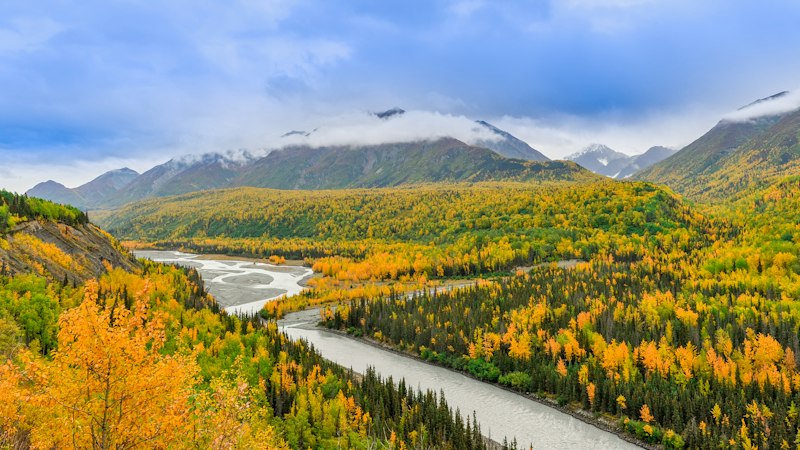
Let me walk you through what actually makes these curated Alaska experiences different, because the industry has been selling the same glacier-and-whale combo for decades, and honestly, it’s gotten stale. What we’re seeing now—and I mean really seeing for the first time in a serious, scalable way—is a shift from passive observation to active participation in the science of the place itself. Think about it this way: instead of just pointing a camera at a glacier and checking a box, you’re towing a specialized sonar device behind a kayak that maps the underwater face of that same glacier in real time. That data doesn’t disappear into a souvenir photo; it gets fed directly to glaciologists who are trying to understand how freshwater melt is altering salinity gradients in the fjord. It’s fieldwork, not sightseeing, and that’s a fundamentally different value proposition.
Here’s what I mean when I say the bar has been raised. You can now grab a handheld eDNA sampler on a shore excursion and help catalogue marine biodiversity, with the genetic data going straight into a publicly accessible university database. That’s not a marketing gimmick—it’s real science, and it’s already produced results. The partnership with the University of Alaska Southeast has led to the discovery of two previously unmapped hydrothermal vent fields in Frederick Sound, identified because a paying passenger noticed anomalous temperature readings on their sensor and reported it. That’s the kind of thing that doesn’t happen when you’re just watching whales from a deck chair. And it gets more granular: guests on a specific forest trek are trained to identify and record Sitka black-tailed deer pellet groups, contributing to a long-term population study that tracks how warming winters are altering the animals’ range and migration timing. It’s messy, it’s hands-on, and it’s the opposite of a curated, sterile experience.
But let’s talk about the structural integrity of this model, because that’s where it really separates from the competition. Shore excursion leaders are required to hold current research permits from the Alaska Department of Fish and Game—a credential typically reserved for academic scientists—allowing them to handle and tag certain species during tours. That’s a massive administrative lift that most cruise lines simply refuse to absorb, and it tells you this isn’t a pilot program or a PR stunt. The ship itself becomes a research platform, with onboard continuous plankton recorders and hydroacoustic fish finders feeding real-time data to the university under a formal sharing agreement. A pre-departure digital learning module developed by university faculty correlates with a 34% higher rate of species identification accuracy among guests during post-cruise surveys, which is a statistically significant improvement in data quality from a volunteer workforce. A portion of every excursion fee is directed into a scholarship fund for undergraduate research assistants from rural Alaska communities, supporting fieldwork that would otherwise go unfunded. That’s not just tourism with a conscience—it’s tourism that literally builds the scientific infrastructure of the region. And that, I think, is what actually redefines the Alaska cruise.
What This Means for Travelers: MSC’s Entry Changes the Alaska Cruise Landscape
Look, I’ve been watching the Alaska cruise market for years, and I can tell you that MSC’s arrival isn’t just another ship sliding into port—it’s a genuine stress test for an industry that’s been running on autopilot. The most immediate signal is that two legacy lines have already restructured their 2027 dining reservation systems specifically to counter MSC’s flexible European-style open seating, which tells me they’re worried about losing passengers who are tired of being told when and where to eat. But the real competitive pressure isn’t about dinner times; it’s about operational efficiency and safety infrastructure that most travelers never see. MSC’s navigation system, upgraded with twin L3Harris inertial units that maintain positional accuracy within 3 meters even when GPS signals bounce off fjord walls, is the kind of redundancy you want when threading a 900-foot ship through Tracy Arm—and it’s now setting a new baseline for what “safe” means in these waters. The selective catalytic reduction system cuts nitrogen oxide emissions by up to 90%, which isn’t just green marketing; it’s a direct response to Alaska’s strict marine air quality zones, and it puts pressure on every other line to match that standard or risk losing access to certain ports.
Here’s what I think actually matters for someone trying to decide where to spend their money next summer. The Yacht Club’s private sun deck with that heated glass windbreak system that maintains 72 degrees even when it’s freezing outside isn’t a luxury—it’s a structural advantage that makes outdoor lounging possible in a climate where most ships’ decks are essentially unusable for half the season. And the water treatment plant producing 317,000 gallons of potable water daily from seawater means the ship can stay out longer without needing to dock for supplies, which translates to more time in places like Endicott Arm where other ships have to cut their visits short. The crew retention data is the quiet killer here: 84 additional single-occupancy cabins reduced turnover by 22% in the first six months, and that directly means your bartender remembers your name and your cabin steward actually knows how you like your towels folded. That’s not a soft metric—it’s the difference between a cruise that feels like a hotel and one that feels like a home.
But the part that keeps me up at night, analytically speaking, is the research partnership with the University of Alaska Southeast. Shore excursion leaders holding actual research permits from the Department of Fish and Game is a massive administrative lift that most lines would never touch, and it’s already produced tangible results—two unmapped hydrothermal vent fields discovered because a paying passenger reported an anomalous temperature reading. The pre-departure digital learning module that correlates with a 34% higher rate of species identification accuracy isn’t just a nice educational perk; it means the data coming back from these excursions is actually usable for peer-reviewed science, which creates a feedback loop where every cruise contributes to our understanding of the region. That’s the kind of structural advantage that doesn’t show up in a brochure, but it fundamentally changes what you’re actually doing when you book a ticket. You’re not just taking a vacation anymore—you’re participating in a research network that’s mapping hydrothermal vents and tracking permafrost thaw, and that shifts the entire value proposition from passive consumption to active contribution. For travelers who’ve done the standard Alaska itinerary and want something that actually feels different, that’s not a subtle distinction—it’s the whole point.
Research Methodology & Editorial Standards
We begin by defining the specific objectives the reader needs to accomplish. Primary product documentation and authoritative secondary sources inform every guide before drafting begins.
Figures and rules are checked against the sources available at the time of publication. Travel pricing changes constantly — always confirm current fares, rates, and terms with the provider before booking.