
The Most Heavily Trafficked Airports in the World Revealed for 2025
It’s a bold move, and honestly, one that’s going to ripple out to other airports quickly.

Hartsfield-Jackson Atlanta: Maintaining the Global Top Spot
If you’ve ever found yourself sprinting through the concourses at Hartsfield-Jackson, you know that this place is a total beast, but there’s a real, analytical reason it keeps snagging that top spot as the world's busiest airport year after year. It isn't just luck or geography; it’s this incredibly tight, almost clockwork efficiency that makes it work. Think about it: about 80 percent of the U.S. population is within a two-hour flight of Atlanta, which makes it the ultimate funnel for domestic travel. When you combine that reach with a parallel runway system that lets them land and take off planes simultaneously, you start to see how they keep the metal moving while other hubs get backed up. It’s a masterclass in infrastructure that keeps the gates humming even when the schedule gets chaotic.
Now, you’ll often hear this heated debate about whether Atlanta is truly the "busiest," especially when you stack it up against a place like Chicago O’Hare. The thing is, how you measure "busy" changes the winner. If you're counting total passenger throughput, Atlanta is the undisputed heavy hitter, but if you look strictly at the raw count of take-offs and landings, Chicago often claims the crown for the most active airfield. It’s like comparing a high-capacity cruise ship to a busy fleet of commuter ferries—they’re both incredibly active, but they serve different roles in the global aviation ecosystem. I personally think Atlanta’s ability to act as the primary hub for a massive global carrier is the real secret sauce that keeps them ahead in the total volume game.
Beyond the runway math, the airport is honestly a fascinating study in managing human flow. The automated people mover is one of those things you don't really appreciate until you realize it’s moving thousands of people between concourses in under five minutes, which is basically the only reason the whole thing doesn't grind to a halt. They’re also getting smart about the back-end stuff, like using real-time data analytics to juggle gate assignments the moment a delay pops up. It’s not perfect—no massive hub ever is—but when you look at how they handle over a quarter-million passengers on a heavy day, it’s hard not to be impressed by the sheer scale of the operation. It’s a relentless, high-pressure machine, and for now, it’s clearly the one to beat.
The Rise of Global Connectivity: Key Players in the 2025 Rankings
When we look at the 2025 global connectivity landscape, it’s honestly fascinating to see how the world’s biggest hubs have shifted from being just concrete transit points into high-tech, integrated machines. Dubai International Airport really stood out this year by cementing its role as the primary bridge between East and West, handling massive international throughput with a precision that’s hard to ignore. But it’s not just about raw volume anymore. Look at Singapore Changi, which cut aircraft taxi times by twelve percent by rolling out autonomous ground support equipment. That’s a tangible, real-world shift that makes a massive difference when you’re sprinting for a tight connection. Tokyo Haneda also stepped up by linking high-speed rail directly to international gates, meaning nearly forty percent of travelers can now transition from train to terminal in under twenty minutes. It’s a level of efficiency that makes you wonder why every major city hasn’t figured this out yet.
Then you have Istanbul Airport, which quietly overhauled its infrastructure to boost hourly departure capacity, effectively leapfrogging several historic European hubs to claim a larger piece of the connectivity pie. Meanwhile, London Heathrow took a different path by betting big on sustainable aviation fuel, setting a ten percent mandate for long-haul flights that’s really forcing the industry to adapt. It’s a bold move, and honestly, one that’s going to ripple out to other airports quickly. Over in South Korea, Incheon International leaned into biometric screening to slash passenger processing times by thirty percent, which is the kind of quality-of-life win every frequent flyer dreams of. And let’s not forget Paris Charles de Gaulle, which finally smoothed out the friction between its main halls with an upgraded automated train link, making the experience of navigating those terminals much less of a headache.
The shift isn't just happening at the legacy giants, though. We’re seeing Tier 2 airports in places like Vietnam and India start to pull serious traffic away from the traditional Middle Eastern mega-hubs, which is changing the flow of regional travel in ways we haven’t seen before. Back in the U.S., Dallas Fort Worth made a smart play by using predictive weather modeling to cut down gate delays by fifteen percent, proving that you don't always need to build more runways to be more efficient. Even Beijing Capital is getting in on the act, using real-time flight path optimization to help carriers burn less fuel on their way in. When you pull back and look at the big picture, the 2025 rankings were really defined by this tech-first mindset, especially with digital baggage tracking now hitting a ninety-eight percent accuracy rate across the top twenty hubs. It feels like the era of "lost bags and missed connections" is finally being challenged by some serious engineering.
Dubai International’s Continued Dominance in International Travel
Let’s dive into what’s really happening at Dubai International, because looking past the massive passenger numbers reveals a masterclass in how to build a global transit machine. When you see that 95 million figure, it’s easy to just think "busy," but the real story is how they’ve engineered the entire facility to act as the world’s primary hinge for long-haul travel. They aren’t just moving people; they’re running the world’s most sophisticated wide-body ecosystem, specifically tailored to keep that massive fleet of Airbus A380s turning around with clockwork precision. By sitting right in that sweet spot where they’re within an eight-hour flight of two-thirds of the human population, they’ve essentially forced the global flight map to orbit around them.
The tech backing this up is honestly pretty wild when you get into the weeds of it. Think about the baggage handling, which processes over 15,000 bags an hour with almost no errors—if that system weren't that rock-solid, those tight connection windows that make the whole hub work would just crumble. They’ve also nailed the runway math by using high-speed exit taxiways to slash the time planes spend on the tarmac, meaning they can squeeze more take-offs and landings into an hour than most of the competition can even dream of. And it’s not just about the planes; they’re using predictive modeling to shift everything from air conditioning levels to staff numbers based on when those giant jets are expected to hit the gates, which keeps the terminal from feeling like a pressure cooker.
But what really stands out to me is how they’ve turned the physical experience into a competitive advantage. Those "smart tunnel" biometrics aren't just a cool gimmick; they’ve cut border crossing times down to under ten seconds, which is a massive quality-of-life win when you’re tired and just want to get to your next flight. Plus, by leaning hard into a massive, high-end retail footprint, they’re generating enough cash to keep landing fees low, which keeps the airlines happy and locked into the hub. It’s a relentless, high-stakes game of optimization, but when you look at the consistency of their on-time performance despite the sheer density of their schedule, you start to realize why they’re the ones setting the pace for everyone else.
The Shift Toward Asian Hubs: Growth in Tokyo and Shanghai
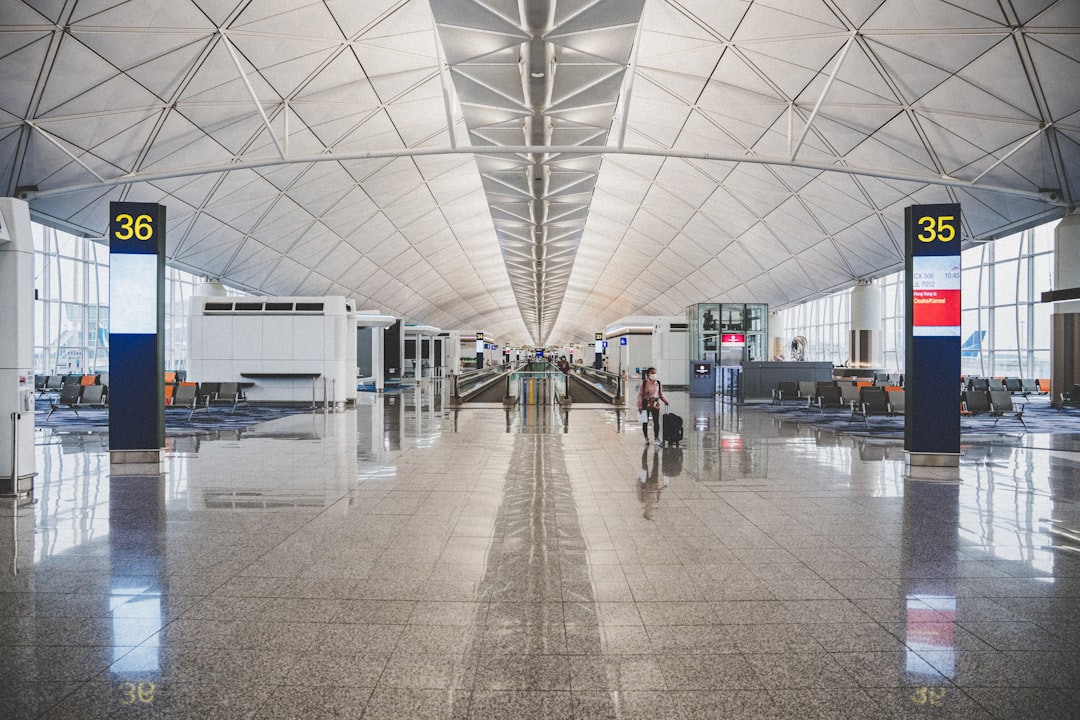
When we look at the shifting map of global aviation, the numbers coming out of Asia right now are frankly impossible to ignore. Shanghai has officially surged past Tokyo to claim the title of the world’s third-busiest airport city, signaling a major rebalancing in how transpacific traffic actually moves. It’s not just about more planes hitting the tarmac; it’s about a fundamental change in why people are flying. China’s innovation tourism boom is pulling in over 50 million travelers annually who are specifically coming to tour EV plants and robotics labs, effectively turning the airport into a gateway for high-tech industrial collaboration.
This transformation is fascinating because it proves that major hubs are no longer just static transit points. Tokyo is playing a different, equally calculated game, pouring resources into domestic connectivity to ensure it remains the essential anchor of the Asia-Pacific network. You can really see the difference in their approach: Shanghai is leveraging its position as an integrated industrial nexus, while Tokyo is doubling down on seamless train-to-terminal transitions. It’s a classic case of two giants competing, but instead of just fighting over headcount, they’re racing to become the most efficient, multifunctional innovation centers on the planet.
What’s wild to me is how quickly they’re adopting AI-driven logistics to handle this surge in business-focused travelers. You’re seeing a real, tangible shift away from the traditional hub-and-spoke model toward a more flexible, point-to-point architecture that can actually handle the high-value logistics of a modern global economy. Both cities are prioritizing infrastructure that links regional high-speed rail directly into their international gateways, which honestly makes sense when you consider how much time that saves the average business traveler. It’s a high-stakes, data-heavy environment, but it feels like we’re witnessing the birth of a new era where an airport's success is tied as much to its digital backbone as it is to its runway capacity.
Rising Travel Demand: What Higher Passenger Volumes Mean for Your Next Trip
If you’ve been feeling like every airport you step into lately is bursting at the seams, you aren’t imagining it; we are officially living through a period where record-breaking passenger volumes are becoming the new baseline for global travel. From the massive influx of fans headed to the FIFA World Cup to a general, sustained surge in both corporate and leisure trips, the math of air travel is shifting under our feet. It’s not just about more bodies in terminals, though; it’s a fundamental transformation in how capacity is managed, with airlines now forced to grapple with everything from volatile fuel supplies to a tightening supply of available aircraft. You’re likely seeing this reflected in your own booking process, where the old rules of thumb—like waiting for a last-minute deal—are increasingly being replaced by aggressive, real-time dynamic pricing.
This environment has created some strange and frustrating contradictions for those of us trying to get from point A to point B. Usually, we’d expect that higher passenger volumes might lead to lower costs through economies of scale, but we’re actually seeing the opposite, particularly in Europe where record demand is paired with stronger fares. In the Asia-Pacific region, the trend is even more pronounced for business travelers, where limited aircraft inventory is pushing premium class prices to new highs. And honestly, it’s not just the airlines that are feeling the pinch; major hubs like Schiphol are locking in steep passenger fees just to keep their systems from buckling under the pressure. It’s a costly reality, and it’s one that isn't going away anytime soon.
But there’s a silver lining if you’re willing to look at how the infrastructure is changing to keep things moving. We’re finally seeing a serious push toward intermodal travel, with systems like the Hong Kong Express Rail Link now handling tens of thousands of daily trips as people opt for trains over short-haul flights. Airports are also leaning harder into tech, using everything from real-time flight path optimization to high-accuracy digital baggage tracking just to prevent the kind of logistical gridlock that defined the last few years. While the loss of carriers like Spirit has definitely left some holes in regional connectivity, the industry is slowly pivoting toward a more flexible, point-to-point architecture that might just help us bypass those notoriously congested legacy hubs. It’s a messy transition, for sure, but it’s the only way we’re going to manage this new era of high-density travel without the whole system grinding to a halt.
Understanding the Metrics: How Airports Are Ranked by Passenger Throughput

Let's dive into how these industry rankings actually work, because if you just glance at the top-line numbers, you’re missing the real story behind the chaos of a busy terminal. Airports are officially ranked by total passenger throughput, which counts every single person arriving, departing, or just passing through on a connection—and if you’re a transit flyer, you’re actually counted twice as you move through those two separate legs of your journey. It’s a bit of a quirk, but it explains why global hubs like Dubai or Atlanta can post such massive, head-turning figures compared to smaller, point-to-point airports. But here is where it gets interesting: passenger throughput isn't the same thing as aircraft movements. You could have a tiny regional airport with a hundred tiny planes landing, which would crush a major international hub in terms of raw take-offs and landings, even though that hub is moving infinitely more people.
When I look at these datasets, I’m always keeping an eye on the difference between seat capacity and actual volume. Airlines are constantly adjusting their schedules based on demand, so analysts look at total seat capacity as a leading indicator to forecast which airports will hit the top of the leaderboard months in advance. It’s a high-stakes game of logistics where ultra-low-cost carriers play a massive role; by packing more seats into every plane, they can drive up an airport's throughput without adding a single extra flight to the daily schedule. At the same time, we’re seeing a shift where airports are factoring in environmental surcharges and carbon emissions into their landing fees, which subtly forces airlines to rethink their route networks and potentially move traffic to more efficient hubs.
Think about how much the experience has changed just by looking at how they manage the floor space. Modern hubs are now using high-tech heat-mapping to track passenger flow in real-time, which lets them shuffle security staff to wherever a bottleneck is starting to form before it actually ruins your day. Plus, the way we define an airport's reach is evolving; with more hubs linking directly to high-speed rail, the "catchment area" for an airport now includes commuters who never even set foot on a plane. Even the boring stuff, like the fact that digital baggage tracking is now hitting a 98 percent accuracy rate, is quietly changing the math by clearing out the logjams that used to paralyze terminals. It’s a fascinating, data-heavy machine, and when you start peeling back the layers, you realize that being "the busiest" is really just a race to see who can manage that human flow with the most precision.
Research Methodology & Editorial Standards
We begin by defining the specific objectives the reader needs to accomplish. Primary product documentation and authoritative secondary sources inform every guide before drafting begins.
Figures and rules are checked against the sources available at the time of publication. Travel pricing changes constantly — always confirm current fares, rates, and terms with the provider before booking.