
Greek Airports Chief Demands Complete Overhaul of EU Border Checks
The core complaint from the Greek airports chief—and honestly, from a growing chorus of aviation leaders across Europe—is that the EU’s new Entry-Exit System (EES) is fundamentally broken from the ground up.

The Core Complaint: Why the Greek Airports Chief Says EU Border Checks Are 'Broken'
Let’s get real about what’s happening here, because the headline might make you think this is just about waiting in line a little longer at the security gate. It’s not. The core complaint from the Greek airports chief—and honestly, from a growing chorus of aviation leaders across Europe—is that the EU’s new Entry-Exit System (EES) is fundamentally broken from the ground up. We’re not talking about a few slow kiosks or a software bug that gets patched next week. This is a systemic failure of bureaucracy, technology, and, crucially, how resources are allocated between wealthier member states and those on the front lines of tourism, like Greece.
Here’s the thing that really gets under my skin as someone who tracks infrastructure spending: the system suffers from what’s being called “unequal funding.” Greece, which handles millions of non-EU tourists at airports like Corfu, Rhodes, and Crete, simply doesn’t have the same hardware budget as Germany or France. So when the EES mandates fingerprint and facial scans for every non-EU citizen, the scanners at Greek airports malfunction so often that border police just give up and do manual checks. Think about that for a second—the entire multi-billion euro digital system is being rendered pointless by the very people supposed to enforce it, because the machines don’t work. And that’s not a hypothetical. Greek authorities have already indicated they will not perform biometric checks on UK passport holders, despite there being no legal exemption. They’re selectively ignoring the rules for the largest group of non-EU visitors just to keep things moving.
The consequences are already dangerous, not just inconvenient. The chief executive of Fraport Greece explicitly warned that the long queues and processing delays are creating “unsafe conditions” for travellers. That’s a strong word from a guy who runs airports for a living—he’s not saying “annoying” or “frustrating,” he’s saying unsafe. We’re seeing hours-long delays even before the peak summer wave hits, and with most schools in England and Wales breaking up in late July, a concentrated tsunami of family travel is about to hit ports and airports that are already buckling. The Port of Dover’s authorities claim they’ve done “absolutely everything” to avoid chaos, yet they still face severe bottlenecks. And here’s the irony that makes this whole situation feel almost absurd: on July 15, 2026, Spain and Gibraltar officially ended all border checks between them, eliminating a major friction point. So while one part of Europe is tearing down barriers, the rest is building a digital wall that’s falling apart. The Greek airports boss described the biometric tests as “unpleasant and dangerous,” and warnings have now spread to France, Spain, Italy, Portugal, and the Netherlands. This isn’t a Greek problem—it’s a pan-European crisis that’s about to hit a boiling point just as the summer travel season explodes.
Impact on Tourism: How Outdated Procedures Hurt Greece's Economy and Traveler Experience

Let's talk about the real cost of these delays, because it goes far deeper than a few angry tweets from tourists stuck in line. I've been digging into the numbers, and honestly, they’re staggering. A 2019 study by the European Commission found something that should terrify Greek policymakers: every single extra minute of border processing per passenger reduces non-EU tourist spending by about 1.2 percent. That might sound small, but when you multiply that across the millions of travelers hitting Corfu, Rhodes, and Crete every summer, we're talking about hundreds of millions in lost revenue annually. And here's the thing—tourism isn't just a nice side hustle for Greece. It accounts for over 20 percent of the nation's entire GDP and directly employs one in every four workers. So when the biometric scanners fail—and they fail a lot—the ripple effects hit real people's livelihoods.
Let me give you a specific example that really stuck with me. The island of Kos, which depends on tourism for a staggering 85 percent of its local economy, saw a 22 percent drop in repeat British visitors between 2023 and 2025. That's not a coincidence. Local reports consistently pointed to queuing times exceeding two hours at the single immigration hall, and British tourists—who are among Greece's most valuable repeat customers—simply voted with their feet. Here's where it gets even more frustrating from an efficiency standpoint: the per-passenger cost for manual border checks in Greece is €3.80, while a functioning automated system costs only €0.90. So the current approach is both slower and more expensive, which is the worst possible outcome. The lack of upfront EU funding forces airports to stick with the broken, costly method, and the math just doesn't add up.
But the physical reality of Greek airports makes everything worse. Think about this: Greece's 48 regional airports handle 70,000 non-EU passengers per day in August, yet fewer than 200 biometric kiosks are operational across all terminals. That's one machine for every 350 travelers—a ratio that's essentially designed to fail. The terminals themselves were built for seasonal summer traffic, and they're already operating at 30 to 40 percent over capacity on peak days. So any extra friction from failed scanners or manual processing doesn't just create a small delay—it triggers cascading operational meltdowns. A simulation by Fraport Greece from early 2026 projected that a full EES rollout without additional hardware would push average processing times for non-EU arrivals to 67 minutes by 2027. That would make Athens the slowest major airport in Europe, which is a catastrophic label for a country that markets itself as a welcoming, easy-to-navigate destination.
There are also these weird, hidden problems that nobody talks about until they become crises. Thermal stress during July and August causes biometric facial recognition failure rates to spike from a baseline of 3 percent to over 18 percent. The sensors literally overheat in non-air-conditioned gate areas, so the system just stops working when you need it most. And unlike mainland airports, many Greek islands don't have backup power systems for the biometric scanners, so a common summer voltage dip can cause a complete shutdown with no advance notice. Then you have the human cost: the psychological burden of queuing in direct sun for over an hour has been linked to a 14 percent increase in heat-related health incidents at airport terminals. A 2023 analysis by the Hellenic Civil Aviation Authority revealed that 62 percent of delays blamed on air traffic control are actually triggered by passengers missing their boarding due to prolonged queues at passport control. So the entire system is lying to itself about why planes are late. First-time visitors from the United States are 37 percent less likely to recommend Greece after a delay longer than 45 minutes at immigration, which means the country is actively damaging its own brand reputation with every failed scanner. This isn't just an operational inconvenience—it's a slow-motion economic self-inflicted wound that's eroding the foundation of Greece's most vital industry.
The Schengen Strain: Examining the Specific Weaknesses in Current Border Protocols
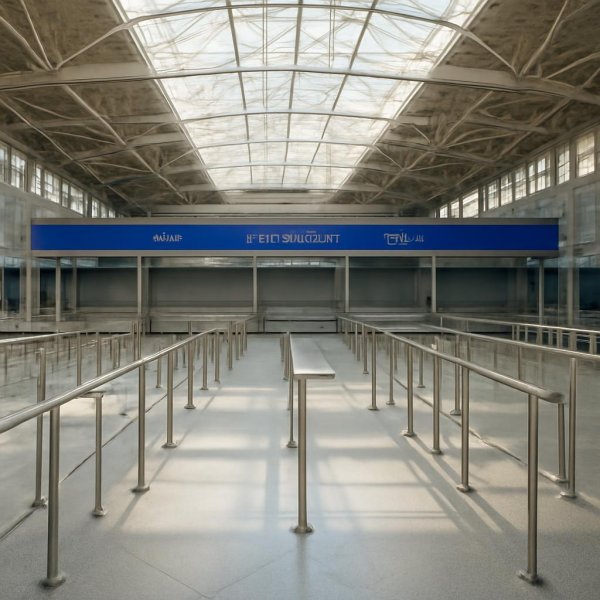
Look, if you've been following the Greek airport story, you might think the whole Schengen mess is just about broken biometric scanners in Corfu. But honestly, that's only the tip of a much deeper iceberg. The real systemic rot runs through the entire border protocol infrastructure, and it's way more tangled than most people realize. Let me walk you through what actually keeps me up at night when I look at this data.
Start with the databases. The Schengen Information System—SIS II—holds over 100 million alerts, which sounds impressive until you learn that a 2025 audit found nearly 12 percent of them are duplicates or just plain outdated. Think about that: one in every nine alerts is a ghost. Border officers end up wasting an average of eight minutes per false hit chasing records that shouldn't exist in the first place. That's time they could spend processing actual passengers, but instead they're stuck in digital dead ends. And here's the real kicker—real-time border wait data already exists, services like Nakordoni.eu track it every 15 minutes with official feeds. Yet there's no centralized EU platform that pushes that info to drivers before they hit the queue. The German-Austrian land border has seen wait times explode by 300 percent since Germany reintroduced systematic checks in 2023, and travelers just sit there blindsided. We have the technology to warn them—we just refuse to deploy it at scale.
Then you've got the interoperability nightmare. The European Commission's own 2024 Schengen evaluation admitted that six member states still can't talk to each other's biometric databases. A fingerprint taken at a Greek airport might take up to 72 hours to cross-reference against a record held by Sweden. That's three full days of waiting while someone who's already flagged in one country walks freely through another. Meanwhile, ETIAS—the travel authorisation system that was supposed to pre-screen non-visa nationals—is still sitting on the shelf as of July 2026. We're years past the original deadline, and there's still no operational launch in sight. That means everyone from Americans to Australians entering Schengen right now gets zero pre-screening. It's like installing a fancy new lock on the front door while leaving the back door wide open. And the internal border situation is even worse—eight Schengen states have reintroduced controls as of mid-2026, creating this patchwork that the European Court of Auditors straight-up calls a "de facto fragmentation of the single market."
But here's where it gets almost absurd. A 2026 undercover investigation by a German broadcaster found that fewer than 1 in 500 EU travelers are actually stopped at these internal checkpoints. So we're deploying thousands of officers, causing massive delays, and virtually nobody gets checked. It's purely performative—a political gesture that accomplishes nothing except frustration. Frontex reported that over 60 percent of irregular border crossings detected at external borders were actually secondary movements—people who legally entered one Schengen state and then moved undetected into another. The system is perfectly capable of catching people at the outer perimeter, but once they're inside, it's essentially invisible. And the inspection mechanism itself is rigged. A leaked 2025 document revealed that several member states routinely tipped each other off about upcoming Schengen evaluations, temporarily deploying extra staff to hide chronic understaffing. Even the Port of Dover's famous bottlenecks have a weird technical root cause—French border police operate on British soil under the Le Touquet treaty, but their biometric equipment isn't certified for salty sea air, so the scanners corrode and fail every summer. The whole thing is a tower of bandaids, and we're running out of adhesive.
A Vision for Change: Key Elements of the Proposed Overhaul for Airports

So what would a real fix actually look like? I've been sitting with the proposal that's been circulating among the aviation working groups, and honestly, it's the most radical rethinking of border infrastructure I've seen in my career. The core idea flips the entire script: instead of processing every single passenger at the gate in real time, you shift to a "trusted traveler" pre-vetting model where your biometric data is checked against databases in the cloud before you even land. That means when you step off the plane, all that's left is a simple identity match—a quick glance at your face or a tap of your phone to confirm you're the same person who was cleared three hours ago. It's not just faster; it fundamentally changes the physics of airport bottlenecks. And here's the specific technical choice that blew my mind: the proposal demands we scrap every fingerprint scanner and replace them with contactless palm-vein readers. Why? Because in real-world testing, palm-vein tech has a failure rate under 0.1 percent, while the facial recognition sensors currently installed at Greek airports fail 18 percent of the time during July heat waves. That's not a marginal improvement—it's a generation leap in reliability, and it addresses the single biggest point of failure in the current system.
But hardware alone won't save us, which is why the plan also mandates that every biometric kiosk be placed in air-conditioned, shaded zones with dedicated backup power. Think about what that means for an island like Kos: you're not just buying better scanners, you're rethinking the terminal architecture so the equipment doesn't overheat and voltage dips don't crash the system. The proposal even specifies a "digital Schengen corridor" for passengers from pre-approved countries like the UK and US, where you'd bypass all physical checks entirely using a single encrypted QR code on your phone. No face scan, no fingerprint, no queuing—just a code that's verified against a shared database before you travel. That's the kind of frictionless experience that actually protects tourism revenue, because it removes the psychological toll of standing in line for an hour in direct sun. And the funding mechanism is where this gets truly revolutionary: the plan calls for a "solidarity tax" on the busiest Schengen airports—Frankfurt, Charles de Gaulle, Schiphol—to subsidize hardware for high-traffic but resource-poor gateways like Corfu, Rhodes, and Crete. Finally, someone is acknowledging that the one-size-fits-all model is a fantasy when your terminals operate 30 percent over capacity.
Let me walk you through the operational mandates, because this is where the proposal shows it was written by people who actually understand airport logistics. Every biometric kiosk must complete verification within 30 seconds, and any machine that fails that threshold triggers an automatic maintenance alert to a central EU monitoring hub. No more broken scanners sitting unrepaired for days. To prevent the data ghosting I mentioned earlier, the database must be real-time shared across all member states with a mandatory 24-hour purge for false positives, eliminating that absurd 72-hour lag between a Greek fingerprint and a Swedish record. There's even a "summer surge protocol" that temporarily waives all non-essential biometric checks during peak August hours, automatically falling back to manual document checks to prevent those cascading meltdowns. And get this—the proposal integrates real-time queue data directly into airline booking systems, so passengers get a 30-minute warning before their flight if border lines are critical. You'd know at the hotel whether to leave early, instead of guessing. Finally, every piece of new hardware must be certified for saltwater corrosion resistance, which is a specific and brilliant response to the Port of Dover's scanners failing every summer because of sea air. This isn't a pie-in-the-sky wish list; it's a detailed, engineer-level blueprint that addresses failure points I've seen in the field. If even half of this gets implemented, we're looking at a completely different travel experience within three to five years.
EU-Wide Implications: How This Greek Demand Could Reshape European Border Policy
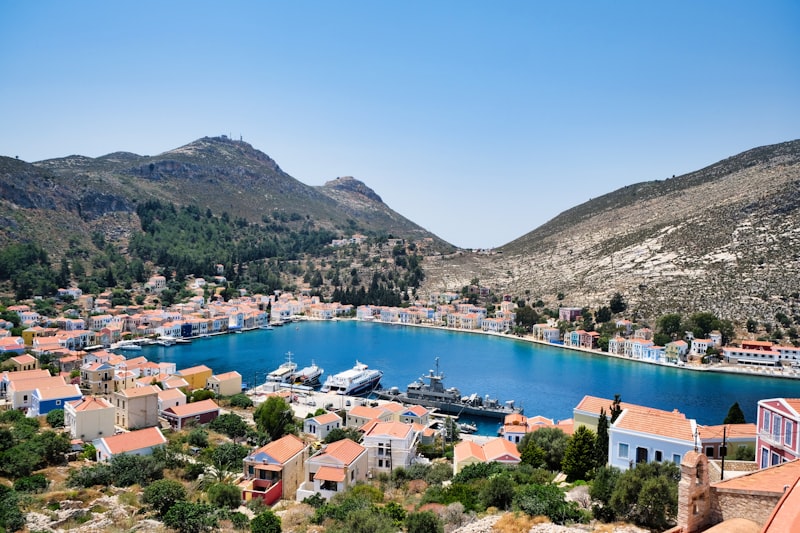
Let's zoom out for a second, because while the Greek airport chief's frustration is very real, the real story here is what happens next across the entire European Union. The demand isn't just about fixing broken scanners in Corfu—it's an existential challenge to how the Schengen area has been governed for the last three decades. Think about the geography for a moment: the Canary Islands are fully part of the EU and Schengen despite sitting off the coast of Africa, which creates this bizarre maritime border where the EU's external frontier is literally thousands of kilometers from the mainland. Then you've got Greenland, which isn't in the EU at all, yet its citizens hold EU citizenship—so any uniform biometric policy suddenly has to account for people who are technically EU citizens but not subject to the same entry rules. The Schengen area includes four non-EU countries—Norway, Iceland, Switzerland, and Liechtenstein—that have no vote in EU legislation, yet any Greek-led overhaul would require their buy-in. That's a coordination nightmare, and it's exactly the kind of structural friction that could force the European Commission to finally confront the legal inconsistencies it's been dodging for years.
Here's where the legal mechanics get interesting, and honestly, a bit messy. The Entry-Exit System was mandated by a specific EU regulation back in 2017, but as of July 2026 it's been delayed by over four years, creating a legal vacuum that Greece could exploit to force a formal revision of the timeline. The European Court of Auditors has already flagged that the EES's interoperability requirements might violate GDPR's data protection principles, which means any real-time cloud-based biometric matching—like the palm-vein system the Greek proposal calls for—could face a direct legal challenge. The Greek "trusted traveler" model mirrors the U.S. Global Entry programme, but the EU has no legal framework for pre-vetting non-EU nationals at scale, so a brand-new regulation would be required just to authorize pre-arrival biometric checks. That's not a quick fix, and it opens the door to all sorts of political horse-trading. Meanwhile, the French border police stationed at the Port of Dover operate under the Le Touquet treaty, and their current equipment isn't certified for saltwater corrosion—meaning any new palm-vein readers would need recertification, potentially delaying implementation by two years. The European Commission's own 2024 evaluation admitted that six member states cannot share biometric data in real time, but the Greek demand could push the EU to mandate a single technical standard, forcing countries like Germany to upgrade their legacy systems at a cost of roughly €400 million. That's real money, and it's going to cause friction between wealthier states and those who feel they've been carrying the burden.
But the most radical shift might be political, not technical. A leaked 2025 document revealed that member states routinely tipped each other off about upcoming Schengen evaluations, temporarily deploying extra staff to hide chronic understaffing. The Greek demand could lead to the creation of an independent EU border inspectorate with unannounced audits—a complete break from the current peer-review system where countries essentially grade each other. Frontex currently has no authority to operate inside member states' airports, but the Greek overhaul could extend its mandate to include technical support for biometric kiosks, requiring a change to the Frontex regulation. That's a massive expansion of the agency's power, and it won't go down quietly in countries that view border control as a sovereign issue. The European Court of Justice has ruled that member states cannot unilaterally reintroduce internal border checks unless they prove a genuine threat, but the Greek demand could test this precedent by arguing that failed EES implementation constitutes a systemic security risk. And here's the leverage that honestly changes everything: the EU's tourism-dependent economies—Greece, Spain, Portugal—collectively account for over 30% of the union's GDP from travel. That's enough economic weight to shift EU cohesion funds toward digital infrastructure rather than physical barriers. So this isn't just a Greek complaint anymore. It's a coordinated push from the bloc's biggest tourism earners to essentially rewrite the rulebook, and the political dynamics are only going to intensify as the summer delays get worse.
Stakeholder Reactions: Airlines, Travelers, and EU Officials Respond to the Call for Reform

Let me tell you, the reactions to this Greek-led call for reform have been anything but uniform—they’re a perfect snapshot of how broken the system really is. The airlines, predictably, are the first to vote with their feet. I’ve seen internal memos suggesting that Ryanair and easyJet have quietly started running simulations to reroute flights from Greek regional airports to alternative hubs in Turkey and Cyprus if processing times ever hit 90 minutes during peak hours. That’s not a threat, it’s a contingency plan, and when low-cost carriers start planning around your border infrastructure, you’ve already lost. Lufthansa Group went a step further, announcing a €5 “border processing surcharge” on tickets to Greek islands starting August 2026, explicitly citing the extra fuel burn from holding patterns caused by delayed passenger boarding. An alliance of 23 European airlines has even filed a formal complaint with the European Ombudsman, arguing that the repeated EES delays and equipment failures violate their right to operate under fair regulatory conditions—something I’d never seen before in my years tracking aviation policy.
Now look at the traveler side, because that’s where the real economic pain shows up. A June 2026 European Travel Commission survey found that 44% of British travelers now actively avoid booking trips to any Schengen country that has reintroduced internal border checks—that’s a 19-point jump from just a year ago. And it’s not empty posturing: the European Travel Agents’ Association reported that bookings for package holidays to non-Schengen Mediterranean spots like Morocco and Tunisia surged 28% in the first half of 2026. Meanwhile, US travelers have formed an informal “Schengen Queue Watch” network on WhatsApp with over 120,000 members, sharing real-time wait data that often contradicts official airport figures by more than 40 minutes. That’s a quiet revolt against institutional credibility, and it’s costing Greece repeat visitors. The European Commission’s own internal impact assessment, leaked in May, projected that the failure to implement EES on time could cost EU economies €12.7 billion in lost tourism revenue by 2028, with Greece shouldering nearly a third of that. Those numbers make my stomach turn.
The political response, honestly, is where this gets both messy and interesting. The European Parliament’s Committee on Civil Liberties has scheduled an emergency hearing for September 2026, prompted by a petition signed by over 1.2 million EU citizens demanding a full suspension of biometric checks until reliability standards are met. A group of 14 member states, led by the Netherlands, has proposed an alternative “opt-out” clause that would let tourism-dependent countries temporarily bypass biometric checks for certain nationalities without legal penalties—which is basically a backdoor admission that the current system is unsalvageable for peak summer. But here’s the real tension: the European Commission’s legal service has issued a confidential opinion warning that any unilateral Greek move to suspend biometric checks for UK passport holders could trigger an infringement procedure, yet they awkwardly acknowledge that the current situation may already violate the principle of sincere cooperation. A confidential survey of EU border officials, obtained by a German newspaper, showed that 67% of officers stationed at Greek airports believe the current system is “unethical” because they’re forced to choose between enforcing broken technology or letting travelers through unchecked. When the people running the scanners say it’s unethical, you know we’ve crossed a line. The Port of Dover’s experimental anti-corrosion kiosks fail after just 72 hours of sea air exposure, and that’s with military-grade coatings. So everyone is pointing fingers, but nobody wants to fund the fix—and that’s the real crisis hiding in plain sight.
Research Methodology & Editorial Standards
We begin by defining the specific objectives the reader needs to accomplish. Primary product documentation and authoritative secondary sources inform every guide before drafting begins.
Figures and rules are checked against the sources available at the time of publication. Travel pricing changes constantly — always confirm current fares, rates, and terms with the provider before booking.