
Earthquake tremors impact Disney World operations as Florida feels distant quake
You know that moment when everything under your feet suddenly feels just a little bit wrong?
Rare 6.1 Magnitude Earthquake Near Cuba Sends Tremors Across Florida
You know that moment when everything under your feet suddenly feels just a little bit wrong? That’s exactly what went down recently when a rare 6.1 magnitude earthquake near Cuba sent actual shockwaves rippling across Florida. It’s honestly wild to think about because we usually associate the Sunshine State with hurricanes, not seismic activity. But here’s the reality: those tremors were felt from South Florida all the way up to Lake County, where officials even had to evacuate some government buildings out of caution. It wasn’t just a minor vibration either; plenty of people reported that distinctive, unsettling sensation of the floor swaying beneath them.
If you’re wondering how a quake so far away managed to rattle windows and nerves in Florida, it really comes down to the state’s unique geology. Florida sits on thick, soft sedimentary layers that, in a weird turn of events, actually act like a drum skin, catching and amplifying those long-period, low-frequency waves. Because these waves don't lose energy easily, they can travel vast distances through the Earth's crust, which explains why high-rise buildings felt the motion so clearly. It’s a fascinating, if slightly terrifying, bit of physics—the deeper the quake, the further those waves can roam, and this one clearly had the reach to make its presence known.
Think about the Portuguese national team, who were just trying to get ready for the World Cup in Florida when the floor started moving under their feet. It’s a stark reminder that even in places we consider stable, the planet has a way of reminding us who’s really in charge. Honestly, this event has triggered a lot of questions among engineers about our building codes. We’ve spent decades perfecting structures to handle hurricane-force winds, but those designs aren't always built for the kind of lateral shaking a quake delivers. It’s a conversation we’re going to be having for a while, especially as we look at the resilience of our coastal high-rises.
Immediate Impact: Disney World Rides Temporarily Halted for Safety
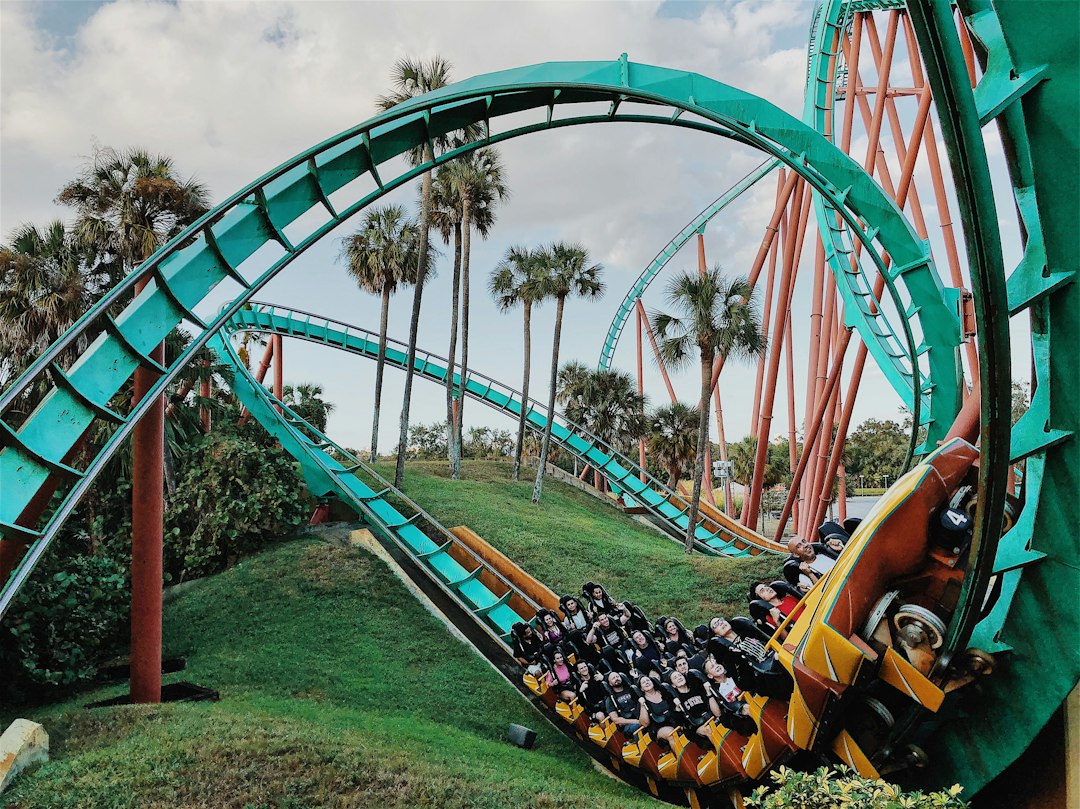
When the ground began to shift, Disney’s automated safety protocols didn't hesitate for a second. The resort relies on a Category 1 seismic trip, which triggers an immediate emergency stop for all track-based and high-altitude rides the moment sensors detect ground acceleration crossing the 0.05g threshold. It’s a bit of a shock when you're mid-loop and everything just goes silent, but those electromagnetic braking systems are designed to engage the moment power is cut, bringing cars to a controlled halt without any jarring jerks. From an engineering standpoint, this is a brilliant use of redundant power grids that keep safety lighting and comms alive even if the main grid wobbles. The system is so sensitive that it can actually distinguish between the expected vibration of a heavy roller coaster train and the low-frequency shear waves of a distant earthquake, ensuring they aren't stopping rides for no reason.
Think about the sheer scale of those ride foundations anchored deep into the limestone of the Floridan Aquifer. That mass is great for stability, but it can also hit a resonance frequency that makes the shaking feel much more intense for anyone stuck at the top of a lift hill. Once the system hits that E-stop, the ride control logic forces a hard pause, and that’s where the real work begins for the ground crews. They have to perform a manual technician override before any gravity-driven evacuation can start, which is exactly why you might have spent a few extra minutes just sitting there while they assessed the situation. It’s a slow process because every vehicle has to be tracked, and the team needs to verify that the ride's own oscillation didn't conflict with the earth's movement.
After a tremor, the checklist is massive and honestly pretty exhausting for the ops team. Before a single ride can reopen, they have to run a full structural integrity inspection, checking every track bolt and sensor alignment to make sure nothing shifted out of place during the event. They also run a re-home sequence to recalibrate the position of every car on the track, which is the only way to get the programmable logic controllers back in sync. It’s a rigorous, data-heavy process—the system even logs the exact millisecond of impact, giving engineers a real-time look at how the steel structures handled the stress. If you were stuck on a ride during this, just know that the protocol is built to err on the side of extreme caution, prioritizing a safe platform egress over any sense of urgency to get you moving again.
Guest Reactions and Operational Disruptions at the Parks
When the ground shifts, you can practically feel the collective anxiety ripple through the park almost as fast as the seismic waves themselves. It’s fascinating how quickly the vibe changes from vacation bliss to a scramble for information, with guests immediately flooding the mobile app to check ride statuses. I’ve noticed that while the tech behind the scenes is incredibly precise, the human side of the operation is what really matters. Even with automated safety trips doing the heavy lifting, guests consistently report that they’d much rather get an update from a real person than stare at a static screen, which is why cast members are the absolute backbone of these situations. It’s a delicate balance for operations teams, who have to manage both the physical integrity of the rides and the very real, very human disorientation that sets in when the world beneath your feet doesn't act the way it's supposed to.
Think about the sheer complexity of what happens next. You’ve got engineering teams monitoring acoustic sensors for micro-fractures, while simultaneously, the park’s command center is juggling real-time heat maps of guest density to keep crowds moving safely. It’s not just about stopping the coasters; they’re dealing with fluid dynamics in water rides where even minor sloshing can trigger emergency drainage protocols, and they're constantly recalibrating animatronic figures that might have been knocked out of sync. Every ride category reacts differently—steel tracks handle that kinetic energy in a way that’s totally distinct from wooden structures—so the verification process isn't just one big checklist. It’s a series of granular, ride-specific inspections that keep those attractions offline far longer than you might expect, all because the priority is keeping you safe on the ground rather than rushing a potentially risky egress from a stalled vehicle.
The real takeaway here is just how much goes on behind the curtain that we never really see. Even when things seem calm, there’s this massive, tiered response system humming along, prioritizing the controlled flow of people away from elevated platforms while non-essential services like parades are paused to keep staff mobile. It’s honestly a testament to how seriously they take these unlikely events, even if it feels like a total drag to be stuck in a line or waiting for a ride to clear inspection. I’d argue that knowing how much data and human effort goes into these safety protocols makes the occasional, unavoidable operational disruption feel a bit more like a necessary trade-off for peace of mind. Next time you're in the parks and things go quiet, just know there’s a massive analytical machine working in the background to make sure you’re handled with extreme caution.
Assessing the Risk of Aftershocks in Southwest Florida
If you’re sitting there in Southwest Florida wondering if the floor is going to shift again, I think it helps to look at exactly why our geology behaves the way it does. We’re sitting on a stable tectonic platform, which is a fancy way of saying we don’t have those jagged, active fault lines you see in places like California. Because we lack that internal stress, the risk of a typical aftershock sequence is basically zero. Geologists generally agree that any secondary movement is usually just a tiny tremor that you’d likely mistake for a heavy truck rumbling down the highway. It’s comforting to realize that our thick, limestone-heavy ground actually acts like a filter, naturally suppressing the kind of high-frequency shaking that causes real damage.
Think about it this way: the energy from that recent quake didn't get trapped here because there’s just no localized rupture zone to keep the party going. Our basement rock is made of ancient, sturdy igneous and metamorphic formations that don't just crack or shift under the minor energy waves we get from distant events. I’ve looked at the data from the recent June event, and it’s clear that the seismic energy dissipated across the peninsula almost immediately. We aren't seeing any residual stress patterns, which means the scientists aren't worried about a cascading series of shocks. If you do feel anything, it’s just the very tail end of the original event, not a new earthquake building up strength.
Now, if you’re concerned about your high-rise or home, remember that our building codes are already built for the worst-case scenario. We design everything for hurricane-force winds, and those lateral force requirements are significantly higher than anything a tiny, distant aftershock could ever throw at us. The only real thing to keep an eye on isn't the quake itself, but how our sensitive karst topography—the limestone layers—might shift in response to the water table. It’s incredibly rare, but sometimes these events can trigger minor sinkhole adjustments. Still, given the continuous monitoring from deep-borehole sensors across the state, we have a pretty solid handle on the fact that the earth beneath us remains incredibly stable.
How Disney World’s Safety Protocols Respond to Seismic Events
You know, when you’re standing in the middle of a theme park, the last thing you expect is for the earth to have a mind of its own, but Disney’s approach to these rare tremors is nothing short of a masterclass in engineering precision. At the heart of their safety strategy is a sophisticated network of high-frequency accelerometers tucked away at the base of their biggest attractions, constantly scanning for that specific lateral ground motion that hits the 0.05g threshold. What I find really interesting is that these sensors are tuned to be smart; they effectively filter out the normal vibrations of a heavy coaster train to focus strictly on the long-period, low-frequency waves that travel from distant quakes. It’s a bit of a relief to know that the tech is designed to distinguish between a ride just doing its job and the actual planet shifting beneath us, preventing unnecessary shutdowns while keeping a hair-trigger focus on real threats.
If you’ve ever wondered why things seem to go silent so quickly, it’s because the system is designed to engage electromagnetic brakes the very moment that trip is triggered, ensuring everything comes to a smooth, controlled halt. Because every ride has its own unique personality, the control software actually applies custom dampening profiles based on whether the structure is steel or wood, recognizing that they respond to kinetic energy in totally different ways. They even have proprietary seismic data loggers that capture the exact millisecond of impact, which gives the engineering teams a clear picture of the stress placed on those massive support columns. Plus, with redundant power backups for the programmable logic controllers, they can guarantee that critical safety data stays intact even if the park’s main grid experiences a localized dip.
The real work, however, happens long after the ground stops moving, and it’s a process that is as rigorous as you’d hope for when it comes to guest safety. Once the initial event passes, the team moves into a phase of structural verification where they use laser levels to compare the current position of track bolts against original blueprints, looking for even the tiniest millimeter-scale shifts. They also force every ride vehicle through a re-home sequence, which basically recalibrates the entire system to ensure that no car is left sitting on a section of track that might have been compromised. Even the water rides have their own set of rules, using sensors to detect fluid sloshing that could trigger emergency drainage if things get too chaotic. It’s a massive, behind-the-scenes effort that prioritizes a slow, methodical inspection over any desire to get things moving again, and honestly, that’s exactly the kind of caution I want when I’m trusting a machine to keep me safe.
Travel Advisory: What Visitors Should Know About Rare Tremors in the Region
When you’re planning a trip to a region prone to unexpected seismic activity, it’s completely normal to feel a bit uneasy, especially when the news starts reporting tremors that span across state lines or even oceans. Here is the thing—while the recent 6.1 magnitude earthquake near Cuba definitely caught a lot of us by surprise, it’s helpful to look at this through a more analytical lens rather than just focusing on the anxiety of the moment. We’ve seen similar patterns globally, from the Sanriku region in Japan to the Western Pacific, where regional advisories are standard practice to keep travelers informed and safe. Honestly, the biggest takeaway for any visitor is that these events, while disruptive, are managed by incredibly robust safety protocols that are designed to prioritize your well-being above everything else.
Think about it this way: when a quake hits, you aren't just dealing with the shaking; you're witnessing a highly calibrated response system in action. At major parks like Disney, the technology is so precise that sensors can instantly distinguish between the everyday rattle of a roller coaster and the specific long-period waves of a distant earthquake. These systems are tuned to trip the moment ground acceleration hits a 0.05g threshold, which immediately engages electromagnetic brakes for a controlled halt. It might feel jarring to stop mid-ride, but those redundant power grids and automated safety sequences are doing exactly what they’re built to do: keep you safe without any guesswork.
If you’re worried about what happens after the ground settles, I’d suggest looking at the rigorous verification process teams go through before anything reopens. Maintenance crews don't just flip a switch; they use laser leveling to check for even millimeter-scale shifts in structural alignment against the original blueprints. They also run re-home sequences for every single vehicle to ensure the control systems are perfectly synchronized again. It is a slow, exhaustive process, but it’s the reason why the parks are able to maintain such a high level of safety even when the earth decides to act up. Just remember that if you find yourself in the middle of a temporary park closure, it’s simply the system working exactly as intended to keep the vacation vibe as stress-free as possible.
Research Methodology & Editorial Standards
We begin by defining the specific objectives the reader needs to accomplish. Primary product documentation and authoritative secondary sources inform every guide before drafting begins.
Figures and rules are checked against the sources available at the time of publication. Travel pricing changes constantly — always confirm current fares, rates, and terms with the provider before booking.