
Divers Uncover Rare Silver Bar from Legendary 1622 Shipwreck Off Florida Keys
You know that moment when you hear about a shipwreck and it’s just... The Nuestra Señora de Atocha isn’t that.
The Legend of the Nuestra Señora de Atocha: A 400-Year-Old Shipwreck Story
You know that moment when you hear about a shipwreck and it’s just... a story? The Nuestra Señora de Atocha isn’t that. It’s the real deal — a 400-year-old Spanish galleon that sank in 1622 off the Florida Keys, and it’s still giving up its secrets today. Here’s what I find fascinating: this wasn’t some random merchant vessel. It was the rear guard of Spain’s Tierra Firme Fleet, a heavily armed warship tasked with protecting 27 other ships from pirates and Dutch raiders. But it never fired a shot in anger. A hurricane took it down, killing 260 to 265 people in the process. And then, just to make sure nobody would ever find it, a second hurricane hit the wreck site on October 5th of the same year, scattering the debris across the seafloor and erasing any trace the Spanish salvagers could follow for the next six decades.
Let’s pause for a moment and think about what was actually on board. The Atocha was carrying a massive haul of gold, silver, and emeralds from the Americas to Spain — but that’s only part of the picture. The manifest also included a significant amount of contraband. Merchants and passengers routinely smuggled uncounted riches to avoid paying the Spanish crown’s royal tax of 20 percent. So the true value of the cargo is probably much higher than the official records suggest. And here’s where it gets really technical: the silver bars — like the 22.5-pound ingot divers just pulled up — were standardized by Spanish mints into specific weights and purity marks. Each bar is essentially a historical record of colonial mining. Scientists have used the composition of Atocha’s silver to trace the exact origin of the ore to the mines in Potosí, Bolivia. That’s not just treasure; that’s a chemical fingerprint of the Spanish Empire’s wealth engine.
But the story behind the search is just as wild. Mel Fisher spent 17 years hunting this wreck, and it cost him everything — his son, his daughter-in-law, and a crew member died in a 1975 boat accident during the search. When he finally found the main wreck site in 1985, it wasn’t a clean discovery. The Atocha had broken apart on a coral reef, mixing its debris field with the remains of other wrecks in that treacherous area. And Fisher’s company, Salvors Inc., had to fight a legal battle all the way to the U.S. Supreme Court in 1982 just to establish that finders of abandoned shipwrecks actually have rights to the treasure. That ruling is still the precedent for all maritime salvage law today. Because the wreck sits in shallow water — only about 55 feet deep — the cargo has been exceptionally well-preserved. Divers have recovered organic materials like wooden chests and leather goods that would have rotted in deeper, colder water. And the best part? You don’t have to be a treasure hunter to see it. The recovered artifacts are on display at a dedicated museum in Key West, Florida, where you can walk past the same emeralds and silver coins that were brought up from the ocean floor. That’s the kind of story that makes you want to book a trip and see it for yourself.
First Discovery in Decades: The Significance of the 22.5-Pound Silver Bar
Let’s be honest: when you hear about another silver bar from the Atocha being pulled up, it’s easy to roll your eyes and think “okay, more treasure.” But this 22.5-pound ingot is different, and I’ll tell you why. It’s the first major bar recovered from the main wreck site since 2015 — that’s over a decade without a find of this size and significance. And here’s the kicker: it was sitting in a section of the debris field that had already been searched, but was buried under sand and seagrass that only shifted after a recent storm. That alone tells us something important: the site isn’t done giving up its secrets. We’re not just picking up scraps. The bar weighs 22.5 pounds, which is about 10.2 kilograms, and it matches the exact Spanish colonial ingot standards — typically cast in multiples of the marco (230 grams) or the libra (around 460 grams). So it’s not just a lump of metal; it’s a standardized piece of imperial accounting.
Now, think about what that actually means for researchers. The bar carries assay marks and tax stamps that, once the encrustation is cleaned off, will let historians pinpoint the exact Potosí mint year and the specific assayer who certified its purity. The quinto royal tax stamp is unusually well preserved — we’re talking about a die impression that can be cross-referenced with surviving Spanish colonial records. That’s the kind of detail that makes a historian’s month. And the value? It’s estimated between $50,000 and $100,000, which is way above the roughly $10,000 melt value at current silver prices. That premium isn’t hype; it’s the documented provenance from the 1622 fleet. The team used a new-generation metal detector that can discriminate between ferrous and non-ferrous metals — crucial in that coral-rich environment where you’d otherwise waste hours digging up cannonballs. They even ran X-ray imaging on the bar through the thick calcium carbonate crust, revealing the underlying markings without removing the protective patina. That’s a conservation win before the conservation even starts.
Here’s where it gets really interesting from a methodological standpoint. The bar was found in a cluster with other metal fragments, suggesting it was part of a wooden chest that broke apart centuries ago. That means the main wreck site still contains large, intact cargo items — even after decades of salvage. That contradicts the assumption that everything worth finding has already been recovered. The recovery team logged the precise GPS coordinates of the discovery, which is critical because the depth is only 55 feet, but the seafloor there can shift by several feet overnight. One storm, and that spot could be buried again. So this find isn’t just a trophy; it’s a data point that expands the expected total recoverable treasure from the Atocha. The bar will now undergo conservation — a slow freshwater bath to leach out salts, followed by neutron radiography to non-destructively map its internal structure and reveal any hidden markings or inclusions. I’m not saying it’s a game-changer, but it’s the kind of find that makes you rethink how much is still out there, just waiting for the right combination of technology and luck.
Meet the Modern Treasure Hunters: Mel Fisher’s Expeditions and the Crew of the DARE
Let me tell you about the crew working the Atocha today, because it’s nothing like the romanticized image you probably have. The salvage vessel DARE — and yes, the name comes from the famous clipper ship that raced tea from China, not from some swashbuckling motto — is a floating operations center crewed by a deliberate mix of grizzled veterans and wide-eyed rookies. The newcomers get the worst job: they’re the ones lowered into freshly excavated holes in the seabed where visibility is literally zero. I’m talking about working entirely by touch, relying on the hum of a metal detector and muscle memory to distinguish a silver bar from a chunk of coral. Captain Vince Trotta has led hundreds of these expeditions, and he’ll tell you the hardest part isn’t finding treasure — it’s keeping people calm when they’re blind in a hole fifty-five feet down.
Here’s how the actual process works, and it’s more brute force than you’d expect. The DARE uses a technique called “blowing holes” — basically, they position the vessel over a target grid and use the propellers to blast away layers of sand and sediment. Then divers descend into those man-made craters with an airlift, which is just a fancy underwater vacuum cleaner, to gently suck away the remaining debris. But there’s a strict protocol: the moment the airlift hits a non-ferrous metal signal, everything stops. You don’t risk damaging a 400-year-old artifact with suction. Josh Fisher-Abt, Mel’s grandson, is on the deck regularly, stepping off the DARE to dive those same holes. And the team has a lead archaeologist present during every critical recovery — this isn’t a free-for-all, even if it looks like one from the surface.
What really caught my attention is how the technology has evolved since Mel’s early days. The DARE is equipped with a dynamic positioning system that holds the vessel steady over a search grid even when the Gulf Stream is ripping through at three knots — something Fisher could only dream of in the 1970s. Every find gets logged with precise GPS coordinates because the seafloor there can shift by several feet overnight after a storm. That’s exactly what happened with the recent silver bar: Captain Drake Nicholas and lead diver Blake were working a section that had already been searched, but a storm had freshly exposed it. The crew still finds intact chests down there, which tells you the site isn’t anywhere close to being picked clean. It’s a reminder that this isn’t a closed chapter — it’s an ongoing, methodical, and surprisingly scientific operation that just happens to involve pulling up treasure worth six figures.
From Seabed to Spotlight: How the Rare Silver Bar Was Located and Recovered
Here’s the thing that surprised even the salvage veterans: this silver bar was sitting in a section of the Atocha debris field that had been swept clean years ago. A recent storm shifted the seafloor by several feet, exposing what had been buried under sand and seagrass — proving that this site still had secrets it wasn’t ready to give up. When the divers went down, they weren’t working with visibility. I mean zero — entirely by touch, relying on a new-generation metal detector that can discriminate between ferrous cannonballs and non-ferrous silver in that coral-choked environment. The bar was clustered with other metal fragments, which told the team it had originally been part of a wooden chest that disintegrated centuries ago. They logged the precise GPS coordinates immediately, because at just 55 feet deep, the seabed can rearrange itself overnight after a storm — one big swell and that spot disappears again.
The actual extraction is more surgical than you’d think. The salvage vessel DARE holds steady against a three-knot Gulf Stream current using a dynamic positioning system that Mel Fisher could only dream of in the 1970s. Once the target is identified, divers descend into a man-made crater with an airlift — basically an underwater vacuum — but here’s the critical part: the airlift automatically shuts off the moment it hits a non-ferrous metal signal, preventing any damage to the artifact. They brought the bar up with its thick calcium carbonate crust still intact, then ran X-ray imaging through that crust to reveal the assay marks and tax stamps without removing the protective patina. The quinto royal tax stamp is unusually well preserved, clear enough that researchers can cross-reference the die impression with surviving Spanish colonial records from Potosí.
Now comes the part that really excites the historians. The bar will undergo a slow freshwater bath to leach out salts, followed by neutron radiography — a non-destructive technique that maps the internal structure and can reveal hidden markings or inclusions the X-rays missed. The composition will be chemically traced to the mines of Potosí, Bolivia, adding another data point to what’s essentially a chemical fingerprint of the Spanish Empire’s silver production. And look, this find contradicts the long-held assumption that the main wreck site has been fully depleted after decades of salvage. It suggests there are still intact cargo items down there, waiting for the right combination of storm exposure and technology. That’s not just a lucky recovery — it’s a methodological reminder that we’re still learning how to read the seafloor.
A $100,000 Find: The Historical and Monetary Value of the Artifact
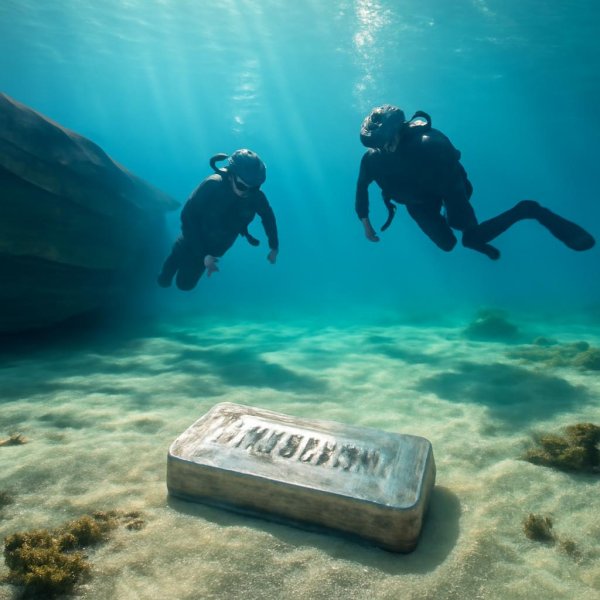
Look, let’s be honest about what a $100,000 price tag on a 22.5-pound silver bar actually means, because it’s not the silver itself that’s driving the number. At current spot prices, that ingot would melt down to maybe $10,000 — so you’re paying a tenfold premium, and every penny of that comes from one thing: provenance. This isn’t just a hunk of metal; it’s a verifiable page from the Spanish colonial tax ledger. The assay marks and that quinto royal tax stamp — the king’s 20% cut — are so well preserved that researchers can match the die impression to surviving mint records from Potosí. That’s the kind of detail that turns a treasure into a historical document. And we’re not even done with the analysis yet. The bar will go through neutron radiography, which maps the internal structure non-destructively, potentially revealing hidden markings or inclusions that standard X-rays miss. The trace element composition will confirm what we already suspect: the ore came from Cerro Rico in Bolivia, the mine that supplied roughly 60% of the world’s silver in the late 1500s. So you’re not just buying silver; you’re buying a chemical fingerprint of the empire’s wealth engine.
Now, here’s what I find really interesting from a methodological standpoint. The bar was sitting in a section of the debris field that had already been searched — but a recent storm shifted the seafloor by several feet, exposing what had been buried under sand and seagrass. That 400-year-old calcium carbonate crust acted as a natural time capsule, protecting the metal from corrosion and the stamps from abrasion. The team used a new-generation metal detector that can discriminate between ferrous cannonballs and non-ferrous silver in that coral-rich environment, which saved them from wasting hours on false targets. And when they lowered the airlift, it automatically shuts off the moment it hits a non-ferrous signal — no suction damage to the artifact. The salvage vessel DARE held steady against a three-knot Gulf Stream current using a dynamic positioning system that Mel Fisher could only dream of in the 1970s. That’s the technological leap that made this precise recovery possible where earlier efforts failed.
But the real value here isn’t the dollar figure — it’s what this find tells us about the site itself. The bar was part of a wooden chest that disintegrated centuries ago, and the fact that it was found in a cluster with other metal fragments means the main wreck site still contains intact cargo items, even after decades of salvage. That contradicts the long-held assumption that everything worth finding has already been recovered. The seafloor at 55 feet deep can rearrange itself overnight after a storm, hiding artifacts for years and then exposing them again. So this isn’t just a lucky recovery — it’s a data point that expands the expected total recoverable treasure from the Atocha. And for collectors, that $100,000 estimate isn’t hype; it’s the documented lineage from the 1622 fleet, cross-referenced with Spanish bureaucracy, chemically traced to a specific mine, and preserved by a natural crust that’s older than most countries. That’s the kind of artifact that makes you rethink what “depleted” really means.
What’s Next? The Ongoing Search for the Atocha’s Lost Treasure
So what’s actually next for the Atocha? I think the most overlooked part of this story is that the main wreck sits nearly 100 miles from where everyone — including Spanish salvagers in the 1620s and Mel Fisher in the 1960s — originally thought it sank. That correction came from historian Eugene Lyon, who pored over colonial archives and realized the fleet had been pushed much farther west by the hurricane. That single archival insight changed the entire search radius, and it’s a reminder that the next big discovery might not come from a new metal detector but from a dusty document nobody’s read yet. The legal framework is equally fascinating: Fisher’s battle against the State of Florida went all the way to the U.S. Supreme Court, which essentially ruled that finders of abandoned shipwrecks have ownership rights as long as they can prove abandonment. That 1982 precedent still governs every salvage operation in American waters, so the Atocha isn’t just a treasure — it’s the legal test case that defined the entire industry.
But here’s where it gets personal for me. You can actually book a spot on the Fisher family’s salvage dives yourself — I’m talking about paying a fee to descend on the DARE and keep up to $3,000 in authenticated shipwreck treasure you recover during the trip. That’s not a tourist gimmick; it’s a legitimate way the operation funds itself while letting everyday people touch history. The Fisher family also runs a dedicated museum in Key West where you can see the recovered emeralds and silver coins, but a lot of the artifacts don’t stay there — they regularly hit public auctions, circulating through private collections and keeping the market active. And because the debris field is enormous and mixed with other wrecks that sank in the same treacherous stretch, the salvage team has to map the site after every major storm using that dynamic positioning system. The seafloor at 55 feet is alive — it shifts by several feet overnight, burying chests for years and then exposing them again when a winter storm rearranges the sand.
What really keeps the search alive, though, is the sheer volume of what’s still down there. For every headline-grabbing silver bar, the team recovers dozens of smaller artifacts — coins, jewelry, buttons, even organic materials like leather and wood that are preserved at a level you almost never see in deeper wrecks. Each one carries traceable mint marks or assay stamps that can be cross-referenced with Spanish colonial records, turning every button into a data point. The same shallow water that made the wreck vulnerable to hurricanes also created a weird preservation sweet spot: not so deep that oxygen-starved water rots everything, but shallow enough that the calcium carbonate crust forms quickly and seals artifacts from corrosion. So the search for the Atocha’s lost treasure was never a single event — it’s a process that resets every time a storm sweeps through, every time a new technology comes online, every time a historian finds a forgotten ledger in Seville. That’s what makes this different from a closed archaeological site. The Atocha is still writing its own story, and we’re just lucky enough to be reading along as the chapters unfold.
Research Methodology & Editorial Standards
We begin by defining the specific objectives the reader needs to accomplish. Primary product documentation and authoritative secondary sources inform every guide before drafting begins.
Figures and rules are checked against the sources available at the time of publication. Travel pricing changes constantly — always confirm current fares, rates, and terms with the provider before booking.