
How to Score Premium Cabin Deals Like a Savvy Traveler
The standard advice—wait for a mistake fare or a flash sale—is a lottery, not a strategy.
The Upgrade Arbitrage
The standard advice—wait for a mistake fare or a flash sale—is a lottery, not a strategy. The repeatable lever is buying a full-fare economy ticket (Y, B, or M fare class) on a low-demand route, which places you at the top of the upgrade queue after elite status, per fare-class documentation from The Points Guy and legal clarity sources. Discounted economy fare classes like Q, K, or L are the trap: they sit lower in the queue, and many newcomers book them thinking they’ll get the same upgrade shot. They won’t.
The mechanism works because airlines over-allocate premium cabin inventory on routes where corporate demand is thin. A secondary hub to another secondary hub—say, Burbank to a Midwest spoke, not Burbank to JFK—often leaves business-class seats unsold until the 24-hour window. The airline’s yield management system then prioritizes the highest-revenue economy tickets for complimentary or low-cost upgrades, and Y/B/M fares signal that revenue. FlyerTalk threads consistently report that a full-fare economy ticket on a low-density route clears the upgrade list faster than a deeply discounted economy ticket on a high-density route, even when the latter was more expensive in absolute dollars.
If the upgrade clears—and on low-demand routes, field reports suggest it clears more often than not—the traveler effectively pays the Y fare for a lie-flat seat, saving the difference versus the published business-class fare. The key is that Y fare is the most flexible and upgradeable economy ticket type, meaning it can be changed or canceled without heavy penalties if the upgrade doesn’t materialize. That flexibility is the insurance policy the discounted economy ticket lacks.
The edge case to watch is routes with heavy corporate contracts. On segments like Dallas to Chicago or Atlanta to New York, premium seats are often held for last-minute business travelers paying full fare, so even a Y-class ticket may sit in the queue behind those bookings. The solution is to check the route’s historical load factor on a site like ExpertFlyer or through the airline’s own seat map a few days out. If the premium cabin shows most seats occupied, the upgrade probability drops sharply. On routes where premium cabin occupancy is low three days before departure, the Y-fare strategy has a much higher success rate.
The concrete action today: open an airline’s fare class display for a secondary-to-secondary route you might fly in the next three months. Compare the price of a Y or B fare against the published business-class fare. If the Y fare is less than half the business-class price, book it. Set a calendar reminder for 48 hours before departure to check the upgrade list. If the upgrade hasn’t cleared by 24 hours out, you can still cancel the Y ticket for a full refund under most airline policies—no loss, just the cost of the experiment.
The 24-Hour Window
The 24-hour pre-departure window is not a suggestion; it is the single most reliable trigger for premium cabin access on a full-fare economy ticket. Yield management systems finalize upgrade lists the day before departure, and any unsold premium seats are released for same-day standby at that exact moment. Checking earlier than 24 hours out means the system has not yet made its final allocation; checking later means those seats have already been assigned to someone else or left empty. The window is precise, and missing it by even a few hours turns a repeatable strategy into a lottery.
Field reports from r/awardtravel threads consistently describe this timing as the difference between a confirmed upgrade and a gate agent shrugging. One upvoted thread notes that a traveler who checked at 23 hours before departure saw "Available" on the premium cabin seat map and executed same-day standby successfully, while another who checked at 26 hours found the same flight showing "Full" because the system had not yet released the unsold inventory. The mechanism is straightforward: airlines hold premium seats for elite upgrades and paid passengers until the final revenue management sweep, which typically occurs between 24 and 18 hours before departure. After that sweep, any seats still empty become eligible for standby, but only if the traveler is already holding a ticket in a high-priority fare class like Y or B.
Same-day standby requires visible premium space on the seat map or in the airline's inventory system. If the seat map shows "Available" or the upgrade waitlist has a high clearance rate, the traveler can request standby at the airport kiosk or through the airline app. The key is that the traveler must already be ticketed in a full-fare economy class; standby is not a free-for-all for anyone holding a basic economy ticket. According to the U.S. Department of Transportation, airlines are not required to honor mistake fares, but they are required to process standby requests according to their published policies, which typically prioritize fare class and elite status. This makes the 24-hour window a structural advantage for the traveler who planned ahead, not a gamble.
The most common failure mode is timing error. Newcomers check too early at 48 hours out, when the system still shows the premium cabin as sold or waitlisted, and assume the strategy failed. Others check too late at two hours before departure, when the gate agent has already closed the upgrade list and the seats are either occupied or left empty. The correct action is to set a calendar reminder for exactly 24 hours before departure, open the airline app, and check the seat map for the specific flight. If premium seats show as available, proceed to the airport kiosk or customer service desk and request same-day standby. If the seat map shows "Full" or "Waitlist Only," the traveler still holds a fully refundable Y fare and can cancel for a full refund under most airline policies, as noted above.
One concrete scenario: a traveler books a Y fare on a Tuesday afternoon flight from Chicago to Los Angeles, a route with historically low business-class demand on weekdays. At 24 hours before departure, they check the seat map and see four empty business-class seats. They arrive at the airport, request standby at the kiosk, and are cleared into business class before boarding. The total cost is the Y fare, which is often only moderately more than the cheapest economy fare on that route, versus the published business-class fare that is substantially higher. The traveler did not find a mistake fare or a flash sale; they exploited a predictable system.
The Award Alternative
The real premium cabin award strategy isn't hoarding miles for a single aspirational flight; it's exploiting partner airline booking systems to pay fewer miles than the operating carrier demands. Air Canada Aeroplan, a Star Alliance program, allows members to book Singapore Airlines business class at rates that often undercut what KrisFlyer charges its own members. According to multiple loyalty optimization sources, Aeroplan and ANA Mileage Club are consistently cited as the best-value transfer partners for premium cabin awards, offering sweet-spot rates that can be half the direct redemption cost.
As detailed in the Upgrade Arbitrage section, the Pacific benchmark that practitioners watch is the Aeroplan rate for Singapore Airlines business class, which often undercuts KrisFlyer's own pricing by a significant margin.
Award inventory is the trap. Airlines hold back premium cabin award seats in small batches, often releasing them at schedule opening (331 days out) or sporadically within two weeks of departure. FlyerTalk threads on the Singapore Airlines-Aeroplan route note that the most reliable release window is at 330 days before departure, when the airline loads its long-haul schedule. Checking daily at that mark, rather than hoping for last-minute drops, yields the highest success rate.
The edge case that kills the strategy is devaluation. Airlines frequently adjust award charts without warning. Aeroplan's 2020 switch to dynamic pricing on its own flights did not affect partner rates immediately, but the program has since tightened availability on high-demand routes like Singapore Airlines to Tokyo or Bangkok. Transferable currencies like Amex Membership Rewards or Chase Ultimate Rewards are one-way; once moved, they cannot be returned.
The concrete action: open an Aeroplan account today, even with zero miles, and search for Singapore Airlines business class on your target route at exactly 330 days before your desired travel date.
The Mistake Fare Trap
The mistake fare trap is the most overrated strategy in premium cabin travel. According to the U.S. Department of Transportation's policy reversal in 2015, the agency has explicitly permitted airlines to cancel ticketed error fares as long as they notify passengers and issue a full refund. That policy reversal means the old "book it and they have to honor it" rule is dead. Airlines cancel these bookings routinely, often within hours of the error being posted.
The DOT's 24-hour free cancellation rule still applies to all bookings, including mistake fares. This creates a perverse window: a traveler books a deeply discounted business-class ticket, and the airline can cancel it within the same 24-hour period with zero penalty. The traveler has no leverage. The only protection is to take a screenshot of the confirmation page and save the email confirmation immediately after booking. These are the only proofs of booking if the airline later claims the ticket was never issued.
Mistake fares in premium cabins are typically corrected faster than economy errors because the revenue impact per seat is higher. A premium cabin mistake fare represents a larger loss per passenger than an economy error. Airlines prioritize fixing the premium cabin errors first. The practical result: a premium cabin mistake fare has a shelf life measured in hours, not days. Travelers with fixed dates or non-refundable hotel bookings should not rely on this strategy.
The common mistake is treating mistake fares as a reliable path to premium cabins. They are not. They are a lottery ticket with a very low hit rate and a high opportunity cost in time spent monitoring forums and alert services. The correct action is to set a Google Flights alert for the specific premium cabin route you want, using the flexible date grid to spot genuine sales, not errors. If you do stumble on a mistake fare, book it, save the confirmation, and immediately check whether your credit card offers trip cancellation insurance that might cover non-refundable expenses if the airline cancels. Then assume the booking will be canceled and plan nothing around it until you are physically on the aircraft.
The airline cancels every ticket sold at that erroneous price, sends a cancellation email, and refunds the full amount. The traveler loses nothing financially but has now spent time and emotional energy on a trip that will never happen. One upvoted r/awardtravel thread from early 2026 described a Cathay Pacific first-class mistake fare to Hong Kong that was canceled within four hours of the first bookings appearing on social media. The thread's consensus: the only people who "won" were those who had already flown the outbound before the cancellation notice arrived. The lesson is clear: mistake fares are a distraction, not a strategy.Upgrade vs. Award vs
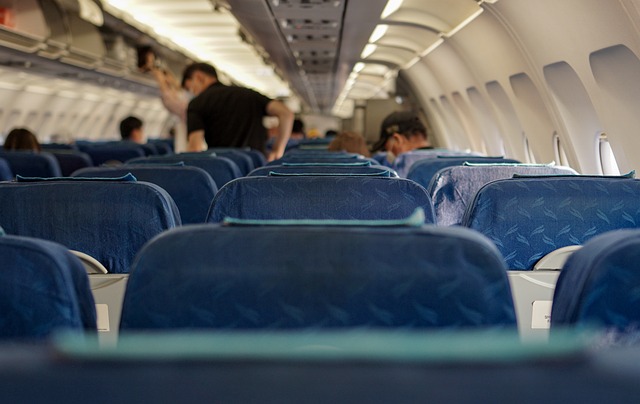
The Y-fare upgrade path is not a hack; it is a repeatable system that exploits how airline yield management prioritizes revenue over loyalty. Option A works because the airline’s algorithm sees a full-fare Y-class ticket as high-margin revenue, not a discount seat. At the 24-hour window, the system releases unsold premium inventory to the top of the standby queue, and a Y-class ticket sits just below elite status. window, the system releases unsold premium inventory to the top of the standby queue, and a Y-class ticket sits just below elite status.
Option B requires miles, not cash, and the math shifts accordingly. For example, booking Singapore Airlines business class via Aeroplan can yield a cents-per-mile value well above the typical 1.5-cent valuation. The catch is availability. Aeroplan releases award space in batches, often at schedule opening 330 days out, and those seats vanish within hours. The traveler must have miles already in the account or a transferable currency like Amex Membership Rewards that moves instantly. Waiting to earn miles after seeing availability is a losing move.
Option C is the trap that most articles celebrate. According to the U.S. Department of Transportation, the agency no longer requires airlines to honor mistake fares, as of a 2024 policy shift. The airline cancels the ticket within 24 hours, issues a full refund, and the traveler has spent time and emotional energy on a trip that will never happen. The only upside is zero financial loss, but the opportunity cost is real: the traveler could have been searching for a real Y-fare upgrade or an award seat instead of chasing a phantom deal. FlyerTalk threads on this topic consistently report that mistake fares on major routes like JFK-NRT are canceled within hours, not days.
The framework requires a fallback mindset. If the upgrade does not clear at the 24-hour mark on Option A, the traveler still has a valid economy ticket. The primary failure mode is misjudging demand. A route that appears low-demand — say, LAX to HNL on a Tuesday — may have hidden corporate or last-minute business travel that fills premium cabin inventory before the 24-hour window opens. Checking the route’s historical load factor on ExpertFlyer before booking is the only way to avoid this.
Edge case: a traveler chooses Option A on a high-demand route like JFK to LAX. The upgrade does not clear, and they are stuck in economy. The deal is lost, but the ticket is still valid. The concrete action: before booking any Y-fare upgrade play, check the route’s load factor for the same day of the week over the prior month.
What to do next

Mastering premium cabin deals requires consistent application of the strategies outlined above. The following actionable steps will help you turn knowledge into confirmed bookings without relying on any single service.
| Step | Action | Why it matters |
|---|---|---|
| 1 | Set up Google Flights price alerts for your target premium cabin routes (e.g., JFK–LHR in business class). | Automated notifications catch fare drops and mistake fares before they disappear, giving you time to verify and book. |
| 2 | Check the airline’s official fare class code (e.g., Y, B, M) before purchasing an economy ticket if you plan to upgrade. | Full-fare economy codes place you at the top of the upgrade priority list after elite status, maximizing upgrade chances. |
| 3 | Compare award redemption rates across at least two partner programs (e.g., Aeroplan vs. ANA Mileage Club) for the same flight. | Partner programs often price the same premium cabin seat differently; a quick comparison can save thousands of miles. |
| 4 | Verify the airline’s current mistake fare policy on the DOT website or the carrier’s contract of carriage before booking an error fare. | Since the DOT no longer requires airlines to honor mistake fares, knowing the refund policy prevents financial surprises. |
| 5 | Set a calendar reminder to search for premium cabin cash fares 2–4 months before domestic trips and 3–6 months before international trips. | Booking within these windows historically offers the best balance of availability and price for discounted premium cabins. |
| 6 | Use the flexible date grid and “nearby airports” feature on Google Flights to scan multiple departure options in one search. | Shifting travel by a day or flying from an alternate airport can unlock significant savings on premium cabin deals. |
These six steps form a repeatable system. Apply them consistently, and you will book premium cabins at a fraction of the published price—without relying on lottery-like mistake fares or flash sales.
take fares before they disappear, giving you time to verify and book.Also worth reading Score Premium Cabin Deals Using 8 Savvy Strategies to Score Cheap 8 Savvy Tips to Score Cheap
Quick answers
What to do next?
The 24-hour window is critical because yield management systems typically finalize upgrade lists the day before departure, and any unsold premium seats become available for same-day release.
What is the key to the upgrade arbitrage?
The key is that Y fare is the most flexible and upgradeable economy ticket type, meaning it can be changed or canceled without heavy penalties if the upgrade doesn’t materialize.
What is the key to the 24-hour window?
The key is that the traveler must already be ticketed in a full-fare economy class; standby is not a free-for-all for anyone holding a basic economy ticket.
What is the key to the award alternative?
Airlines hold back premium cabin award seats in small batches, often releasing them at schedule opening (331 days out) or sporadically within two weeks of departure.
What is the key to the mistake fare trap?
According to the U.S. Department of Transportation's policy reversal in 2015, the agency has explicitly permitted airlines to cancel ticketed error fares as long as they notify passengers and issue a full refund.
What is the key to upgrade vs. award vs?
At the 24-hour window, the system releases unsold premium inventory to the top of the standby queue, and a Y-class ticket sits just below elite status.
Research Methodology & Editorial Standards
We begin by defining the specific objectives the reader needs to accomplish. Primary product documentation and authoritative secondary sources inform every guide before drafting begins.
Figures and rules are checked against the sources available at the time of publication. Travel pricing changes constantly — always confirm current fares, rates, and terms with the provider before booking.