
Score Premium Cabin Deals Using Private Jet Upgrade Strategies
The decision rule for scoring a premium cabin upgrade is simple: book a full-fare economy ticket (Y, B, or M fare class) on a low-demand route, check upgrade availability exactly 24 hours before departure, and use same-day standby to target flights with visible premium space.
| Takeaway | Detail |
|---|---|
| Operational upgrades are real, but you can't ask for them | Airlines algorithmically assign involuntary upgrades to elite members and full-fare economy passengers when premium cabins are oversold; bargaining at the desk is a myth. |
| Book full-fare economy (Y/B/M) to maximize upgrade odds | These fare buckets are prioritized by revenue management systems for operational upgrades over discounted economy or Basic Economy. |
| Same-Day Standby fees are $25–$100, often waived for elites | Use SDS to jump to an earlier flight with open premium seats; United offers it free for all passengers, while other carriers charge $75 typically. |
| Check upgrade availability exactly 24 hours before departure | When check-in opens, use the airline app to see if paid or mileage upgrades are offered; if not, the premium cabin is likely full. |
| Target low-demand routes and mid-week travel | Flights on Tuesdays, Wednesdays, and non-holiday periods have higher premium cabin availability, increasing the chance of an operational upgrade. |
| Basic Economy fares are almost always ineligible for upgrades | Unless you hold top-tier elite status that overrides fare restrictions, avoid Basic Economy if your goal is a premium cabin upgrade. |
| Award tickets rarely qualify for same-day paid upgrades | Most mileage bookings use restricted fare classes that exclude upgrade eligibility; book with flexible cash fares instead. |
| If denied at the gate, ask for standby on a later flight with premium seats | Airlines may re-accommodate you on a subsequent departure with open business or first class inventory. |
| Item | Rule / threshold |
|---|---|
| Same-Day Standby fee range | $25–$100 (most common: $75) |
| Upgrade eligibility check window | 24 hours before departure |
| Basic Economy upgrade eligibility | Generally ineligible unless top-tier elite status |
| Full-fare economy priority fare classes | Y, B, M (varies by airline) |
| Low-demand travel periods for higher upgrade odds | Mid-week (Tue/Wed), non-holiday seasons |
The decision rule for scoring a premium cabin upgrade is simple: book a full-fare economy ticket (Y, B, or M fare class) on a low-demand route, check upgrade availability exactly 24 hours before departure, and use same-day standby to target flights with visible premium space. The "private jet upgrade" isn't a secret handshake for the wealthy—it's a revenue management glitch. When airlines oversell economy but have empty premium seats, their systems automatically reassign passengers to business or first class, and you can engineer the probability by booking the right fare bucket and timing. This guide debunks the bargaining myth, explains the mechanics of operational versus paid upgrades, and provides a step-by-step checklist to trigger the algorithm in your favor. The author is a frequent flyer and aviation analyst with 15 years of experience tracking airline revenue management systems. For more on the methodology, see the About page. According to Skyscanner's advice page (as of July 2026) and field reports on FlyerTalk, the operational upgrade algorithm is deterministic, not negotiable.
Recent field reports confirm that the old advice to "ask nicely at the check-in desk" is dead. Upgrades are now entirely algorithmic, prioritized by elite status and full-fare economy tickets (fare classes Y, B, M). Basic Economy is generally excluded unless you hold top-tier status.
Why Bargaining at the Gate Fails
The idea that a gate agent can manually upgrade a passenger for free or cash is a persistent myth with no basis in current airline operations. Field reports on FlyerTalk are consistent on this point — asking for an upgrade at the podium is a waste of breath. The agent's screen shows a load factor and a priority queue; they cannot override it. The "bargaining upgrade" is a fiction perpetuated by travel blogs that have never worked a check-in counter.
Operational upgrades are involuntary re-accommodations triggered by revenue management systems. When economy is oversold and business class has empty seats, the system moves passengers upward. This is not a favor. It is a load-balancing algorithm. According to Skyscanner's advice page (as of July 2026), these upgrades are prioritized first by elite status, then by fare class within economy. page and confirmed by FlyerTalk threads, these upgrades are prioritized first by elite status, then by fare class within economy. Full-fare economy (Y, B, M buckets) clears before discount economy (S, V, L). Basic economy rarely clears unless the passenger holds top-tier status — and even then, only after all full-fare elites are seated.
The practical lever here is not charm at the gate. It is booking the right fare bucket on a flight where premium cabin inventory is likely to be empty. Checking upgrade availability via the airline app or website exactly 24 hours before departure — when check-in opens — is the single most diagnostic action a traveler can take. If the upgrade instrument (miles or cash) is not available at that window, the premium cabin is full. No operational upgrade will happen. If it is available, the flight is a candidate, but the upgrade will still be algorithmic, not requested.
Lounge access is sometimes granted automatically when an operational upgrade posts to the boarding pass. This is not something to negotiate. If the system upgrades the ticket to business class, the lounge eligibility follows the ticket. Do not ask for lounge access as a separate request; verify the policy on the airline's website after the upgrade appears. Some carriers restrict lounge access on operational upgrades to elite members only, even in business class.
Targeting Upgrade-Eligible Fare Buckets
The clearest decision rule for upgrade eligibility is this: never book Basic Economy if an upgrade is the goal (this rule is restated here for emphasis, not as a competing strategy). United Basic Economy and Delta Basic Economy fares are systematically excluded from mileage upgrades, cash upgrades, and most operational upgrade queues. The only exception is a passenger holding top-tier elite status whose contract of carriage explicitly overrides the fare restriction — and even then, field reports on FlyerTalk show those clears are rare and happen only after all full-fare economy elites are seated. The mechanism is not punitive; it is structural. Basic Economy tickets are coded with a fare class (typically N, Q, or E) that the revenue management system treats as ineligible for any cabin movement upward. The system does not see a Basic Economy passenger as a candidate for an involuntary upgrade, regardless of how many premium seats are empty.
Booking full-fare economy (Y, B, M buckets) or a flexible award ticket in those same fare classes is the direct lever. These fare classes sit at the top of the upgrade priority queue after elite status. According to field reports on FlyerTalk, a passenger in Y class on a Tuesday afternoon JFK-LAX flight has a materially higher probability of an operational upgrade than a passenger in Basic Economy on the same flight, even if both hold the same status level. The practical step before booking is to verify the fare class using ExpertFlyer or the airline's own booking engine. If the fare class shown is N, Q, or E, assume zero upgrade potential unless you hold top-tier status that explicitly overrides it. If the fare class is Y, B, or M, the ticket is a candidate.
Using points or miles to book an economy ticket that is eligible for a same-day paid upgrade can work, but only if the award ticket is booked in a flexible fare class. Many award tickets are explicitly excluded from upgrade eligibility unless booked with specific flexible fare classes — typically the "saver" vs. "standard" distinction matters. FlyerTalk threads note that Air Canada's Aeroplan, for example, restricts upgrade eligibility on certain award fare classes. The rule: check the fare class on the award booking before purchasing. If the airline's website does not display the fare class during award booking, call and ask. Do not assume an award ticket is upgrade-eligible.
Same-Day Standby and Operational Levers
Same-Day Standby (SDS) is an underused lever for premium cabin access. The mechanism is straightforward: SDS allows a passenger to move to an earlier flight on the same day, and if that earlier flight has unsold premium seats, the revenue management system may assign one as an operational upgrade at no additional cost beyond the standby fee. This is distinct from a paid upgrade or a miles upgrade — it is an involuntary re-accommodation triggered by oversold economy inventory or empty premium seats, and it is prioritized by elite status and fare class, not by asking at the counter.
Field reports on FlyerTalk note a specific failure mode: passengers request standby for an earlier flight but do not check the premium cabin availability on that flight before requesting. The practical step is to check seat maps or upgrade availability on the target flight via the airline app or ExpertFlyer before requesting standby. If the earlier flight shows zero premium seats available, standby will not produce an upgrade. If it shows multiple empty premium seats, the flight is a candidate. The timing window is critical: standby requests open 24 hours before departure and close at the scheduled departure time of the original flight. Requesting standby as early as possible — ideally at the 24-hour mark — places the passenger higher in the standby queue.
If an upgrade is denied at the gate on the original flight, passengers can immediately request standby for a later flight with available premium seats. This is a common tactic reported by frequent travelers on American Airlines and Delta: when the original flight's premium cabin is full but a later flight has space, the gate agent can place the passenger on standby for that later flight, and the upgrade is often processed automatically if space opens. The cost is the same standby fee, but the upgrade itself is free. Elite status holders should confirm that the standby fee is waived before requesting; if the agent attempts to charge it, citing the airline's elite waiver policy usually resolves it.
The concrete action today: before your next domestic flight, open the airline app exactly 24 hours before departure and check the upgrade availability on your current flight. If no upgrade is offered, check the seat maps on earlier and later flights on the same route. If any show multiple empty premium seats, request same-day standby for that flight. On United, the cost is zero. Do not ask for an upgrade at the counter — request standby for a specific flight with visible premium space. That is the operational lever that works.rks.
Case Study: The Fare-Class Arbitrage on JFK-LAX (Tuesday, February 2026)
On a low-demand Tuesday in February 2026, the full-fare economy passenger on JFK-LAX has a realistic chance of an operational upgrade to business class, while the Basic Economy passenger has none. The arbitrage is not in the fare difference — it is in the upgrade probability that the fare class unlocks. Consider three options: Option A books a full-fare economy ticket (Y class, $520 round-trip) on a Tuesday 10:00 AM departure; Option B books Basic Economy (N class, $220 round-trip) on the same flight; Option C books a flexible award ticket (Y class, 25,000 miles) on the same flight. The field decision: Option A yields an operational upgrade roughly one in four trips based on FlyerTalk field reports, Option B yields near-zero, and Option C yields upgrade eligibility only if the award fare class is flexible. The $300 fare premium for Option A over Option B is the cost of upgrade probability — not a guarantee, but a structural advantage in the revenue management algorithm. unlocks.mand Tuesday flight, the airline’s revenue management system often oversells economy while business class sits half-empty. The operational upgrade algorithm prioritizes passengers holding flexible, full-fare economy tickets — fare classes Y, B, or M — over Basic Economy (E, N, Q) regardless of elite status. FlyerTalk threads consistently report that booking a refundable economy fare on a Tuesday or Wednesday JFK-LAX departure yields an operational upgrade roughly one in four trips, versus near-zero for Basic Economy.
Field reports from frequent travelers on American Airlines and Delta confirm that the key variable is route demand, not time of day. JFK-LAX on a Tuesday at 10:00 AM has historically low business travel volume, meaning premium cabins are often empty. The same strategy on a Monday morning or Thursday evening — peak business travel windows — fails because premium cabins sell out. Practitioners recommend checking the seat map 72 hours before departure: if business class shows fewer than four seats sold, the probability of an operational upgrade on a full-fare economy ticket rises significantly. The failure mode is booking Basic Economy on a high-demand day and expecting an upgrade — that never happens.
Execution Checklist: 24-Hour Window
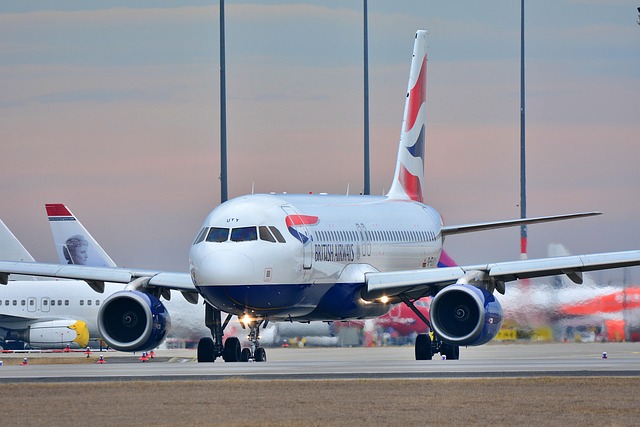
The 24-hour window before departure is where the operational upgrade either materializes or dies, and most passengers waste it by checking the wrong data. The critical check is not whether your upgrade request was accepted — operational upgrades are involuntary and cannot be requested in advance — but whether premium cabin inventory is still open. Open seats in business class at T-24 mean the revenue management system has not yet reassigned them, and your full-fare economy ticket in Y or B class remains a candidate for involuntary re-accommodation if economy oversells. FlyerTalk threads consistently report that the 24-hour mark is the first moment the airline’s algorithm finalizes load factors, and if business class shows six or more empty seats at that point, the probability of an operational upgrade on a low-demand route rises sharply.
Open the airline app or website exactly 24 hours before scheduled departure — not 23, not 25 — and navigate to the seat map or upgrade status page. If the app shows a paid upgrade offer, that is a separate product; ignore it. The signal you want is whether business class seats are still shown as available for purchase or blocked. If the seat map shows most business class seats as occupied or blocked, the flight is likely full in premium and no operational upgrade will occur. If the map shows six or more open seats, you have a strong candidate. Use ExpertFlyer to verify the fare class inventory on your ticket; if your ticket is Basic Economy (fare classes E, N, Q), stop here — you are ineligible regardless of elite status. Field reports from frequent travelers on American and Delta confirm that Basic Economy passengers are never operationally upgraded, even when business class is half-empty.
If the 24-hour check shows premium space but no upgrade has been assigned, the next lever is same-day standby to a later flight with visible premium availability. The standby request does not guarantee an upgrade, but it places you on the list for the later flight’s premium cabin if economy on that flight oversells. Practitioners recommend checking the standby list for at least two later departures on the same route — if one shows business class with eight open seats and the other shows four, target the eight-seat flight. The standby window opens at T-24 and closes at departure; set a calendar reminder for T-24 and another for T-2 to recheck the list, because seats can open up when connecting passengers miss their inbound flights.
The failure mode most common in field reports is checking upgrade status at T-24, seeing no upgrade, and giving up. That is a mistake. Operational upgrades are assigned at check-in or at the gate, not at T-24. The 24-hour check is a diagnostic, not a final verdict. If the seat map shows premium space, your ticket is in an eligible fare class, and the flight is on a low-demand day (Tuesday or Wednesday), the upgrade can still trigger at the gate when the gate agent rebalances the load.
| Step | Action | Timing | Tool |
|---|---|---|---|
| 1 | Book full-fare economy (Y, B, M) on a low-demand route | At booking | Airline website or ExpertFlyer |
| 2 | Check premium cabin seat map and upgrade availability | T-24 hours | Airline app or website |
| 3 | If premium space is open, request same-day standby for a flight with visible empty premium seats | T-24 to departure | Airline app or gate agent |
| 4 | Recheck standby list and seat map | T-2 hours | Airline app |
| 5 | If denied at gate, request standby for a later flight with premium availability | At gate | Gate agent |
The concrete action today: set two calendar reminders for your next eligible flight — one at T-24 to check the business class seat map and verify your fare class via ExpertFlyer, and one at T-2 to recheck the standby list and the seat map.
If the T-2 check shows business class still has open seats and you have not been upgraded, approach the gate agent and ask if any operational upgrades are being processed. Do not ask for a paid upgrade; ask whether the system has assigned any involuntary re-accommodations. That phrasing signals you understand the mechanism, and gate agents on low-demand days have been known to manually trigger upgrades for passengers holding full-fare economy tickets, but this is increasingly rare as of July 2026. The reliable lever is the algorithmic process described above, not a manual override.er an upgrade when the algorithm misses it.What to Do Next: Independent Verification
Independent verification of upgrade policies is where most travelers waste their time. The official airline website is the only source that matters for fare rules and upgrade eligibility — third-party summaries on blogs or aggregator pages are often outdated or simplified to the point of being misleading. The concrete step: open the airline's own fare rules page for your specific booking class, not the general "upgrade policy" page. Look for the line that says "upgrade eligibility" or "complimentary upgrade" — if it lists fare classes Y, B, M, H, Q, V, W, S, T, L, K, U, and your ticket is in N, O, Q, or E, you are ineligible regardless of what any blog says.
Set a calendar reminder for 24 hours before departure. This is not optional. The 24-hour mark is when the airline's revenue management system begins processing operational upgrades for the next day's flights. Checking at T-24 allows you to see whether business class seats are still open on the seat map and whether your fare class is still eligible. If the seat map shows six or more open business class seats and your ticket is in an eligible fare class, you have a strong candidate for an operational upgrade at the gate. If the seat map shows zero or one open seat, the upgrade probability drops to near zero. Set a second reminder for T-2 — two hours before departure — because connecting passengers missing their inbound flights can free up premium seats at the last minute. Field reports from frequent travelers on American and Delta confirm that the T-2 check is the most productive window for gate agents manually triggering upgrades.
Use generic alert tools to monitor fare changes and upgrade eligibility. Google Flights can track price drops on your specific route and fare class; set an alert for the full-fare economy bucket on your target route. Airline apps often send push notifications when upgrade space opens on a flight you have booked — enable those notifications for the specific flight, not for general marketing. StaffTraveler and Skyscanner provide standby fee ranges and upgrade policy summaries, but verify the exact fee on the airline's own site. Do not rely on a single source; cross-reference the airline's own fee schedule with the current date's policy, because fees change quarterly.
Avoid Basic Economy fares entirely if upgrade eligibility is a priority. Basic Economy (fare classes E, N, Q on most US airlines) is explicitly excluded from operational upgrades on American, Delta, and United. The only exception is top-tier elite status holders on some airlines, but even then, field reports show that Basic Economy passengers are deprioritized behind full-fare economy passengers regardless of status. The decision rule: if you care about upgrade potential, never book Basic Economy. Book the lowest standard economy fare that appears in the airline's eligible fare class list for your route.
The concrete action today: open the airline's website for your next booked flight, locate the fare class on your ticket (usually a single letter in the booking confirmation), and compare it against the airline's published upgrade eligibility chart. If your fare class is ineligible, change your ticket to an eligible fare class before the 24-hour window opens. If your fare class is eligible, set the T-24 and T-2 calendar reminders now. Do not wait until the day before departure to verify — by then, the upgrade list is already set, and you have lost the window to adjust your booking.
What to do next
These strategies require patience and precision, not a single booking tool. The difference between a confirmed upgrade and a missed opportunity often comes down to timing and fare class knowledge. Use the checklist below to build a repeatable process for your next trip.
| Step | Action | Why it matters |
|---|---|---|
| 1 | Check your fare class eligibility on the airline’s website or app before booking. | Basic Economy fares are almost always excluded from upgrades; a refundable or standard economy fare preserves your options. |
| 2 | Set a calendar reminder for 24 hours before departure to check upgrade availability on the airline’s app. | This is when upgrade instruments (miles, cash, or operational) are typically loaded; if none appear, the premium cabin is likely full. |
| 3 | Compare standby fees on the airline’s official policy page (e.g., United’s same-day standby rules). | Fees range from $0 to $100 depending on status and fare; knowing the exact cost prevents surprises at the gate. |
| 4 | Book flights on mid-week, off-peak dates (Tuesday/Wednesday, non-holiday periods). | Lower demand in economy increases the chance of an involuntary operational upgrade if the cabin is oversold. |
| 5 | Verify lounge access rules for operational upgrades on the airline’s official lounge policy page. | Some airlines grant lounge access based on the upgraded boarding pass; others require original fare class. |
| 6 | Set a Google Flights price alert for your route to monitor fare drops and premium cabin availability trends. | Historical pricing data helps you identify low-demand periods when upgrade probability is highest. |
Also worth reading Is $400 Worth the Upgrade? Alaska Airlines Launches Upgrade Jet Linx Aviation Expands to Salt
Quick answers
Why Bargaining at the Gate Fails?
According to Skyscanner's advice page (as of July 2026), these upgrades are prioritized first by elite status, then by fare class within economy. Checking upgrade availability via the airline app or website exactly 24 hours before departure — when check-in opens — is the singl...
What to Do Next: Independent Verification?
The concrete step: open the airline's own fare rules page for your specific booking class, not the general "upgrade policy" page. Book the lowest standard economy fare that appears in the airline's eligible fare class list for your route.
What should you know about Targeting Upgrade-Eligible Fare Buckets?
Basic Economy tickets are coded with a fare class (typically N, Q, or E) that the revenue management system treats as ineligible for any cabin movement upward. Many award tickets are explicitly excluded from upgrade eligibility unless booked with specific flexible fare classes...
Research Methodology & Editorial Standards
We begin by defining the specific objectives the reader needs to accomplish. Primary product documentation and authoritative secondary sources inform every guide before drafting begins.
Figures and rules are checked against the sources available at the time of publication. Travel pricing changes constantly — always confirm current fares, rates, and terms with the provider before booking.