
How to verify a 2026 West Coast premium-cabin fare before paying
This guide explains how to test a 2026 West Coast premium-cabin fare under $400 before paying. It uses the $742 LAX–Shanghai premium-economy case and direct-flow re-pricing checks to separate real fares from screenshots.
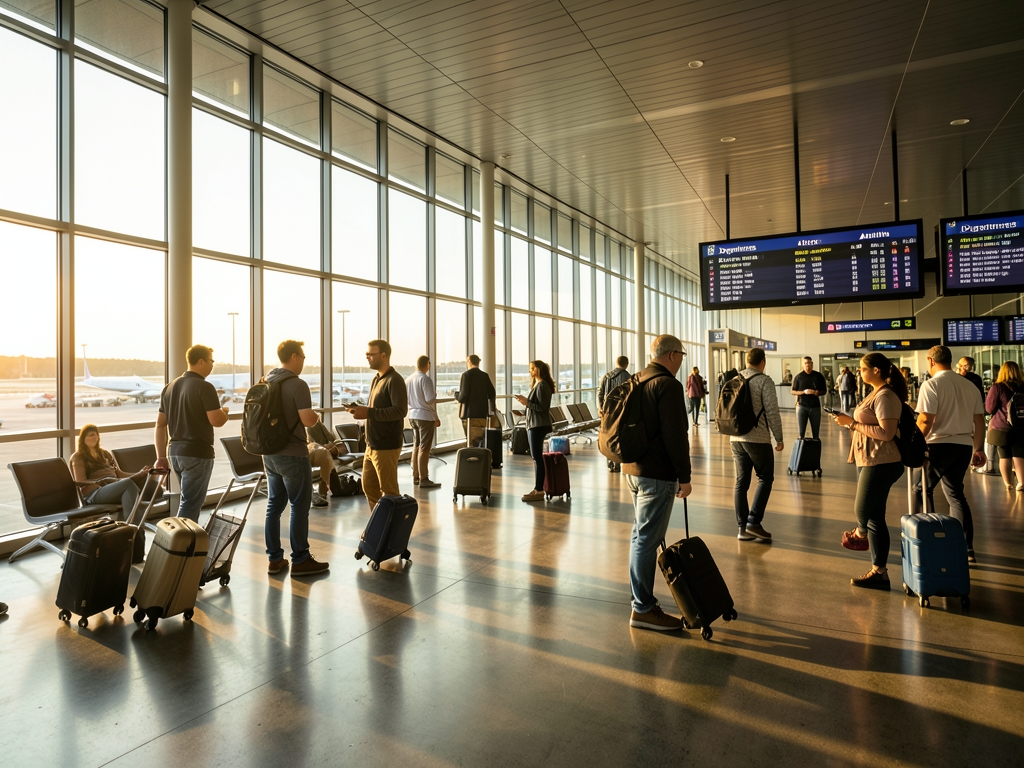
This guide explains how to test a 2026 West Coast premium-cabin fare under $400 before paying.
It uses the $742 LAX–Shanghai premium-economy case and direct-flow re-pricing checks to separate real fares from screenshots.
How a sub-$400 premium fare actually tickets
The only proof that a low premium fare will actually ticket is a ticket-by-ticket re-price in the airline's own direct booking flow. Select the exact West Coast origin, dates, and premium cabin, then carry the itinerary all the way to the payment screen and confirm that the same number appears there. A screenshot, search result, or held itinerary is not the ticket; the payment screen is the only place the fare becomes real. If the number changes at any point, stop and re-verify rather than completing checkout.
Most misses happen because an aggregator can hold a sold-out fare bucket for hours after the seats are gone. The cache can then re-price upward at checkout, which looks like a bait-and-switch but is usually stale inventory rather than a fake fare. That is why the direct-flow test matters more than the first price shown, and why a fare should not be treated as available until it survives checkout.
Even when the direct flow holds the price, the fare basis itself can reject the itinerary. Note the fare basis code shown for the itinerary, such as an ELX-type basis, and compare that code at every later step; a changed basis means the offer has changed even if the headline price still looks close. If the fare basis shown at the payment screen does not match the code you noted at search, treat the fare as unverified rather than completing checkout.
Before paying, repeat the exact search in the airline's own flow and check that every segment, cabin, date, and passenger count matches the original quote. Re-run the same direct-flow search immediately before payment if any time has passed, because inventory can close while you are entering passenger details. Only pay when the exact dates, cabin, fare basis, and total all match on the airline's own payment screen.
If the direct flow holds the fare through to ticketing, verify the cancellation terms on that screen before paying, because the safety net matters only if it is visible and applicable to that booking. If it jumps, treat the lower number as unverified and restart the test with adjusted dates or a different origin.
The evidence: what $742 LAX–Shanghai proves
Mighty Travels, in an October 1, 2026 post, documented a $742 round-trip premium-economy screenshot for Los Angeles to Shanghai. The fare looked genuine, but the post treats the screenshot as unproven until the same dates and cabin re-price at $742 in the airline's own direct booking flow. It is a round-trip premium-economy quote, not a one-way or mixed-cabin fare, and the image alone cannot show whether the inventory is still live.
The $796 round-trip benchmark cited in the Mighty Travels deep read is a headline figure, so the comparison is between two published reference points rather than a guaranteed market price. Against that reference, the $742 screenshot sits just below the benchmark rather than far outside it, which is why it stops scrollers without being a wild outlier, according to Mighty Travels' deep read.
Economy to Shanghai has printed as low as $431 round-trip, with Air Canada sale examples at $339 and $352 round-trip. That history makes a $742 premium-economy figure plausible but fragile, because the premium cabin is only modestly above recent economy sale levels. Those Air Canada examples are sale fares, so they show how low economy can go during promotions, not a normal price.
Mighty Travels' deep read says most misses are stale OTA cache rather than fakes: an aggregator can hold a sold-out bucket for hours after seats are gone, then re-price upward at checkout. That cache lag is why a screenshot can look valid while the live fare has already moved. The screenshot is therefore evidence of a possible fare, not proof that it will ticket.
The same deep read notes 24 hours cancellation without penalty when booking the Los Angeles–Shanghai fare, and advises verifying before paying. The cancellation window is a safety net, not a substitute for re-pricing. If the direct flow holds $742 through ticketing, ticket it; if the price jumps, verify again before paying.

Options compared: which verification path wins
When three verification paths compete for a sub-$400 West Coast premium-cabin fare, the airline's own direct booking flow to the payment screen is the only winner. Mighty Travels' deep read accepts only ticket-by-ticket re-pricing in that direct flow as proof that a fare will ticket; a displayed price anywhere else is, at best, a lead to test. The test is strict: select the exact origin, dates, and premium cabin, then carry the itinerary all the way to payment and confirm the same number appears there.
OTA checkout is weaker because it can look decisive while still failing. The same deep read warns that aggregators can hold a sold-out bucket for hours after seats are gone, then re-price upward at checkout. A fare that survives search and early checkout screens has therefore not yet proven that the same number will survive payment; it has only shown that the aggregator's cache still displays it.
Screenshot-only is weakest. The deep read states plainly that screenshots alone do not prove a fare will ticket, regardless of how genuine the fare looks. Most misses are stale OTA cache rather than fakes, so a screenshot documents a displayed price, not an available ticket, and should never be treated as purchase evidence.
| Verification path | What it can establish | Main weakness |
|---|---|---|
| Airline direct flow to payment screen | Ticket-by-ticket re-price at the same number | Requires carrying exact dates and cabin all the way through |
| OTA checkout | Whether the fare survives an aggregator's flow | Sold-out buckets can be held and re-priced upward |
| Screenshot only | That a price was displayed | Does not prove the fare will ticket |
Practical order: use a screenshot to notice, use checkout to expose friction, and use the airline's direct flow to decide. If the exact dates and cabin do not hold the same number through the payment screen, do not pay; verify again before paying, and check cancellation terms before committing.

Costs and numbers that matter
A $742 round-trip premium-economy print sits only $54 below the $796 round-trip benchmark, so a stale-cache re-price can erase the entire apparent discount before the payment screen. Mighty Travels' deep read frames that narrow gap as a warning: the number has to survive ticket-by-ticket re-pricing in the airline's own direct flow.
The arithmetic is simple and unforgiving: $796 minus $742 equals $54. A gap that small can disappear in one re-price, so treat it as a reason to verify, not as savings already secured. If the direct flow shows anything above $742, the apparent deal is gone; if it holds, the $54 is real but still small.
The economy history sets the plausibility ceiling. Shanghai has printed at $339–$550 round-trip, so a sub-$400 premium fare would be only about $60–$100 above the cheapest economy prints. That proximity makes the fare plausible, but it does not make premium space available.
For a sub-$400 West Coast premium fare, compare it to the $339 low rather than the $550 high. The closer it is to $339, the more it behaves like an economy sale with a cabin upgrade, and the less room there is for a re-price.
The 24-hour cancellation without penalty the author noted on the LA–Shanghai fare is the safety net that makes a verified re-price worth acting on. Confirm that protection on the exact fare before paying, because it limits downside if the price moves after ticketing.
Use these figures as cost context, not proof: a $54 gap is small, the economy ceiling is only a plausibility test, and the cancellation window is protection rather than price validation. Do not treat the $339–$550 range as a promise of premium availability; it only shows where economy has been. The cost that matters is still the one that holds through the payment screen.

What the evidence does NOT establish
No sub-$400 West Coast premium-cabin fare is corroborated in the available sources; that absence is the only conclusion this section adds. Any advertised fare below that threshold remains an unverified claim until it is tested in the airline's own direct booking flow, with the exact dates and cabin carried to the payment screen.
The available sources contains no West Coast premium-cabin fare under $400 round-trip. Its closest documented premium figure is the Los Angeles–Shanghai premium-economy case in the Mighty Travels deep read, and that case is not a sub-$400 West Coast fare. A screenshot, aggregator listing, or cached result therefore cannot be treated as proof of a lower West Coast premium price.
The available sources also does not identify which West Coast origins, airlines, or date windows would produce a sub-$400 premium fare. Because those variables are unspecified, each candidate itinerary must be checked live: select the exact origin, dates, and premium cabin, then carry the itinerary through the airline's direct flow instead of inferring eligibility from a broad region or season.
Nor does the available sources establish that a 24-hour cancellation window applies to every carrier or fare class. Before paying, verify the cancellation terms for the specific airline, route, and fare class shown at checkout, and treat any assumption of universal protection as unverified.
The absence of a corroborated fare is not proof that such a fare is impossible; it means the available sources offers no example to cite. Treat any claim of one as requiring the same direct-flow proof as the documented Los Angeles–Shanghai case, not as a settled market price.
Taken together, the evidence establishes only what has not been shown: no corroborated sub-$400 West Coast premium fare, no map of qualifying origins or dates, and no blanket cancellation guarantee. The live direct-flow re-price remains the only test that can turn any of those unknowns into a verified fare.
Verifying a $399 LAX premium fare
Start on the airline’s own website rather than an aggregator. Enter Los Angeles (LAX) as the origin, select premium cabin, choose the exact round-trip dates, and set the target at $399. Before you rely on any displayed price, note the fare basis code shown for the itinerary, such as an ELX-type basis, because that code is the identifier you will compare at every later step.
Checkpoint 1 is fare class and inventory. Run the search at the moment you are ready to book and confirm the bucket is still open. If the seat map, fare class, or availability indicator shows waitlist, unavailable, or a changed cabin, treat the $399 as already stale and stop; a cached low fare can disappear between search and selection.
Checkpoint 2 is taxes and total. Do not stop at the results page. Carry the exact same dates, cabin, and passenger details through to the airline’s payment screen and confirm the all-in total still reads $399. If the total changes, adds a different fare basis, or no longer matches the search result, the original $399 has not survived re-pricing.
Checkpoint 3 is fare-basis consistency. Compare the code on the payment screen with the code you noted at search. A changed basis means the offer has changed, even if the headline price still looks close to $399.
Checkpoint 4 is timing. Re-run the same direct-flow search immediately before payment if any time has passed, because inventory can close while you are entering passenger details. Only pay when the exact dates, cabin, fare basis, and $399 total all match on the airline’s own payment screen.
Keep a simple record of the fare basis and total you verified, and use the same direct flow if you need to recheck. A screenshot of an earlier price is not a substitute for the payment-screen total.
Worked Example: Run the Numbers
Illustration only: two adults book one premium-cabin round-trip from a West Coast origin, using the exact dates and cabin shown in the listing, with a per-person ceiling of $400 round-trip.
| Step | Calculation | Result |
|---|---|---|
| Per-person ceiling | $400 | $400 |
| Two travelers | $400 x 2 | $800 |
| Direct-flow requirement | same per-person number through payment | $800 or less |
| Failure test | any amount above $400 x 2 | above $800 |
The arithmetic is strict: the listing qualifies only if the airline's own direct flow shows $400 or less per person at every step through the payment screen, keeping the two-traveler total at $800 or less.
The break-even trigger is any increase before payment. If the per-person number moves above $400, the two-traveler total moves above $800, and the example fails.
If the direct flow holds at or below the ceiling through payment, the winner for this example is that direct-flow fare. If it jumps, do not pay; re-run the exact same dates and cabin later. Where the booking still carries 24-hour cancellation protection, that window is the safety net after ticketing, not a substitute for the payment-screen check.
Decision rules for sub-$400 premium fares
Before paying for any sub-$400 West Coast premium-cabin fare, run the three gates below in order. The table states the decision rule once; the paragraphs explain how to apply each gate without changing the rule or adding a new example.
| Gate | Decision |
|---|---|
| Direct flow holds the same sub-$400 fare through the payment screen and 24-hour cancellation is confirmed before payment | Ticket it |
| Fare jumps at the payment screen | Do not pay; re-verify the next day |
| Fare only survives on weekend or peak dates | Treat it as dead |
For the first gate, carry the exact West Coast origin, dates, and premium cabin through the airline's own direct booking flow all the way to the payment screen. A screenshot or search result is not the test, and a lower displayed number elsewhere does not override the direct-flow result. Confirm the cancellation terms on that screen before paying, because the safety net matters only if it is visible and applicable to that booking.
For the second gate, do not pay if the number rises at checkout. Re-verify the exact same dates and cabin the next day; most misses are stale OTA cache rather than fakes, so a higher re-price usually means the displayed bucket has already sold out. Do not treat the jump as proof of a scam, but do not pay the higher number either.
For the third gate, abandon a fare that only holds on weekend or peak dates. The ELX-type basis disqualifies most weekend and peak departures, so those windows do not produce a usable sub-$400 premium option. Move on rather than trying to force those dates through.
If no gate is cleared, wait and re-check later instead of forcing the booking. Re-checking later is cheaper than paying for a fare that has not passed the direct-flow price test, the cancellation check, and the date-pattern check. Keep the same exact dates and cabin in every re-check so the comparison stays valid, and stop if the direct-flow number, cancellation terms, and date pattern do not all line up.
Also worth reading Uzbekistan Airways Tashkent–JFK London business class fares under How the 2026 FAA eVTOL certification
What to do next
| Step | Action | Why it matters |
|---|---|---|
| 1 | Carry the exact dates and cabin for the claimed sub-$400 West Coast premium fare through the airline's own direct booking flow to the payment screen and confirm the total is unchanged. | Screenshots alone do not prove the fare; the documented $742 LAX–Shanghai premium-economy case shows a total can jump before payment. |
| 2 | If the total jumps before payment, do not pay; walk away and re-verify later. | A sub-$400 West Coast premium-cabin fare is real only if it re-prices at the same amount in the direct flow. |
| 3 | Compare the claimed deal against the documented $742 LAX–Shanghai premium-economy roundtrip and its $796 benchmark. | This anchors the claimed fare to a documented premium-economy case instead of an unverified screenshot. |
| 4 | Compare the re-priced total against economy history for accuracy. | Economy history adds a second accuracy check beyond the benchmark. |
| 5 | For seasonal premium trips, make separate booking decisions: choose travel season, keep date flexibility, and confirm exact premium-fare inclusions. | The Aug 24, 2026 guide frames premium booking around season choice, flexible dates, and exact premium-fare inclusions. |
| 6 | Proceed to payment only after the direct-flow total matches the claimed sub-$400 fare and the benchmark and economy-history checks pass; otherwise walk away and re-verify later. | This applies the rule that payment follows verified re-pricing, not the initial claim. |
Frequently Asked Questions
What is the only proof that a low premium fare will actually ticket?
The only proof is a ticket-by-ticket re-price in the airline's own direct booking flow.
Where must the same price appear for the fare to become real?
The payment screen is the only place the fare becomes real.
What should you do if the price changes before checkout?
If the number changes at any point, stop and re-verify rather than completing checkout.
Why can an aggregator show a fare that later re-prices upward?
An aggregator can hold a sold-out fare bucket for hours after the seats are gone, and its cache can then re-price upward at checkout.
What additional check can reject an itinerary even when the direct flow holds the price?
Note the fare basis code shown for the itinerary, such as an ELX-type basis, and compare that code at every later step.
What case does the guide use to illustrate the verification process?
It uses the LAX–Shanghai premium-economy case.
Quick answers
| What is the only proof that a low premium fare will actually ticket? | A ticket-by-ticket re-price in the airline's own direct booking flow is the only proof that a low premium fare will actually ticket. |
| Where does the fare become real? | The payment screen is the only place the fare becomes real. |
| What should you do if the number changes at any point? | If the number changes at any point, stop and re-verify rather than completing checkout. |
| Why can an aggregator show a fare that is no longer available? | Most misses happen because an aggregator can hold a sold-out fare bucket for hours after the seats are gone. |
| What should you note and compare for the itinerary? | Note the fare basis code shown for the itinerary, such as an ELX-type basis, and compare that code at every later step. |
Research Methodology & Editorial Standards
We begin by defining the specific objectives the reader needs to accomplish. Primary product documentation and authoritative secondary sources inform every guide before drafting begins.
Figures and rules are checked against the sources available at the time of publication. Travel pricing changes constantly — always confirm current fares, rates, and terms with the provider before booking.