
How U.S. Border Preclearance Works at International Airports
The strategic value of U.S. Border Preclearance is often miscalculated as a simple time-saver, when it is actually a trade-off between departure-side friction and arrival-side agility.
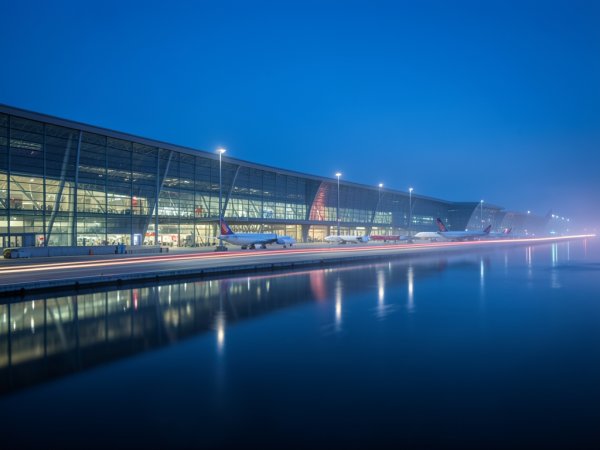
Evaluating The Preclearance Strategic Tradeoff
The strategic value of U.S. Border Preclearance is often miscalculated as a simple time-saver, when it is actually a trade-off between departure-side friction and arrival-side agility. By shifting the customs bottleneck to your point of origin, you gain the ability to walk off your aircraft at a U.S. hub as a domestic passenger, effectively bypassing the often-congested international arrival halls. This transition to domestic status is the primary utility gain, as it eliminates the need to re-clear immigration or navigate secondary customs queues after a long-haul flight.
Practitioners on FlyerTalk frequently highlight that this is a binary risk assessment. If your itinerary involves a tight connection to a domestic U.S. flight, the Preclearance model is almost always superior because it removes the requirement to re-check baggage or transit between international and domestic terminals. However, if you are carrying complex agricultural goods or anticipate visa-related inquiries, the domestic-arrival benefit may be offset by the risk of being denied boarding at your departure airport. Dealing with these issues at your final U.S. destination provides significantly more legal recourse and flexibility than being stranded at a foreign airport.
You should weigh your specific U.S. arrival airport against the departure-side requirements. Arriving at a massive hub like JFK or LAX as a domestic passenger can save you over an hour of transit time, which often justifies the additional hours spent in the departure terminal. Conversely, if your final destination is a smaller regional airport with minimal customs traffic, the benefit of Preclearance diminishes, and the mandatory early arrival at your international departure point may result in a net loss of total trip time.
| Scenario | Preclearance Benefit | Primary Risk |
| Connecting to U.S. Domestic | High: Bypasses terminal transfer | Missed flight if secondary screening occurs |
| Final U.S. Destination (Large Hub) | High: Skips massive arrival queues | Longer pre-departure wait |
| Final U.S. Destination (Small Airport) | Low: Minimal arrival friction | Excessive terminal dwell time |
| Complex Visa/Agricultural Goods | Negative: Limited recourse abroad | Denied boarding at origin |
Not all flights from a Preclearance-equipped airport are processed through the facility, so verify your specific airline and terminal operations before finalizing your transit plans. While Mobile Passport Control may be available at certain locations to expedite the process, it does not mitigate the risk of a secondary inspection. To make an informed decision, compare your total travel time by mapping your arrival terminal at the U.S. destination; if you are landing at a terminal that requires a shuttle or a long walk to the main customs hall, the value of having already cleared the border is significantly higher.
As a next step, check the official CBP website to confirm if your specific flight number is serviced by a Preclearance facility. If you are connecting through a hub like Dublin or Abu Dhabi, consult your airline’s departure terminal map to identify the exact location of the CBP facility relative to your arrival gate, ensuring you have accounted for the necessary transit time within the airport itself.
Navigating The Mandatory Timing Buffers

The most common tactical error at preclearance hubs is treating the facility as a standard security checkpoint rather than a secondary, high-stakes border crossing. While a typical airport security scan might take twenty minutes, the preclearance process requires two distinct queues: one for the facility itself and a secondary, often more rigorous, screening for the gate area. If you arrive at the airport expecting to breeze through in under an hour, you are setting yourself up for a missed connection, as the facility effectively acts as a domestic border control point that operates on a strict, non-negotiable schedule.
The operational reality for travelers is defined by the hard cutoff times enforced by carriers. Most airlines operating from preclearance facilities, such as those at Dublin Airport, mandate that passengers clear the facility at least 60 minutes before the scheduled departure time. This is not a suggestion; it is a hard gate closure. If you are still in the customs queue when the clock hits that 60-minute mark, the airline will typically deny boarding, regardless of whether the aircraft is still at the gate. Field reports from FlyerTalk users frequently highlight this as the primary cause of involuntary denied boarding, noting that even a minor delay in the initial document check can cascade into a missed flight.
Peak hour congestion adds another layer of complexity that standard airport arrival advice often ignores. At major hubs, the window between 05:00 and 12:00 local time sees a massive concentration of U.S.-bound departures, which can lead to unpredictable surges in wait times. Airport flight information data often shows that while the facility might be quiet at 14:00, the morning rush can push wait times well beyond the standard three-hour recommendation. If your itinerary involves a morning departure, treat the three-hour arrival window as a baseline, not a maximum, especially if you are traveling with checked baggage that requires additional processing time before you enter the preclearance zone.
Terminal geography is another frequently overlooked variable. Not every terminal at a major international airport is equipped for U.S. processing, and navigating between terminals can add significant time to your transit. Travelers often assume that a single airport code implies a single, unified process, but you must verify your specific terminal's capabilities before arriving. If you are connecting from a non-preclearance flight into a preclearance-equipped terminal, you must account for the time required to clear local security, transit to the U.S. zone, and then undergo the full preclearance procedure.
To mitigate these risks, check your airline’s specific guidance for your flight number on the day of travel, as some carriers adjust their internal cutoff times based on seasonal volume. Before your next trip, use the official CBP portal to verify the exact location of the facility within your departure terminal. If you are traveling during a peak holiday period, set a calendar reminder for 3.5 hours before departure to ensure you have a buffer for the dual-queue requirement.
| Operational Factor | Standard Requirement | Field Risk |
| Facility Arrival | 3 Hours Pre-Departure | Peak hour surges exceed standard estimates |
| Gate Cutoff | 60 Minutes Pre-Departure | Automatic denial of boarding if in queue |
| Queue Structure | Dual-Stage Processing | Security + Customs bottlenecking |
| Terminal Access | Specific Terminal Only | Inter-terminal transit delays |
If you are planning a trip from Dublin (DUB) to New York (JFK) this coming October, choosing a flight that utilizes U.S. Preclearance can significantly streamline your arrival. By clearing U.S. Customs and Immigration in Dublin, you arrive at JFK as a domestic passenger, which often saves 45 to 90 minutes of waiting in international arrival queues during peak afternoon hours. To ensure a smooth experience, arrive at Dublin Airport at least three hours before your flight to account for the dedicated Preclearance facility, especially if you are traveling during the busy morning bank of departures. As a concrete action step, check your specific flight details on the Dublin Airport website to confirm it is routed through the Preclearance terminal, and ensure your Global Entry or Mobile Passport Control (MPC) profile is updated before you head to the gate.
The Inadmissibility Trap And Secondary Screening

The most significant risk of U.S. Border Preclearance is that you are subject to the full legal authority of U.S. Customs and Border Protection (CBP) while still on foreign soil, as outlined in GAO-17-216. Unlike a standard arrival where a secondary inspection might simply delay your exit from the terminal, a secondary review at a preclearance facility effectively traps you in the departure zone. If the duration of this inspection exceeds your remaining time before the aircraft doors close, you will be denied boarding, and your checked luggage may be offloaded, creating a complex logistical recovery process that does not exist for standard international arrivals.
Practitioners on FlyerTalk often highlight that this operational bottleneck makes preclearance a high-stakes environment for anyone with complex visa status, dual citizenship, or ambiguous customs declarations. If you have any reason to believe your entry might be questioned—such as a recent change in work authorization or a history of extended stays—it is often safer to choose a route that arrives at a standard U.S. port of entry. In a standard arrival, a secondary screening is an inconvenience that happens after you have already reached your destination; in a preclearance facility, it is a binary event that can terminate your travel plans before you even board the aircraft.
Checked luggage introduces a secondary layer of risk that is frequently overlooked by travelers. When you clear customs at your departure airport, your bags are screened alongside your person. If an officer flags your luggage for a physical inspection, the airline must locate and pull those specific bags from the cargo hold. This process can cause significant delays for the entire flight, and if the inspection is not resolved before the hard cutoff, the airline will typically proceed without your bags, leaving you to manage a lost-luggage claim at your final destination while having already technically cleared customs.
To mitigate these risks, evaluate your documentation and declaration status before arriving at the airport. If you have any doubt about your admissibility, look for alternative flight paths that do not utilize preclearance facilities, even if those routes require a longer transit time or a different arrival terminal in the United States. If you must use a preclearance route, ensure all digital declarations are completed in advance to minimize the time spent at the kiosk, which reduces the window of opportunity for an officer to pull you for a secondary review.
| Risk Factor | Preclearance Facility Impact | Standard Arrival Impact |
| Secondary Screening | Potential for denied boarding | Delayed exit from terminal |
| Flagged Luggage | Offloaded from flight | Delayed baggage claim |
| Entry Denial | Remains in foreign country | Detained at U.S. port of entry |
| Operational Control | CBP holds full legal authority | CBP holds full legal authority |
Before your next departure, verify your specific flight's terminal layout on the official CBP website to identify the exact location of the preclearance area. If you are traveling with sensitive documents or uncertain visa status, set a calendar reminder to review your entry requirements at least 48 hours in advance, allowing sufficient time to pivot to a non-preclearance routing if necessary.
Case Study: The Dublin To JFK Connection
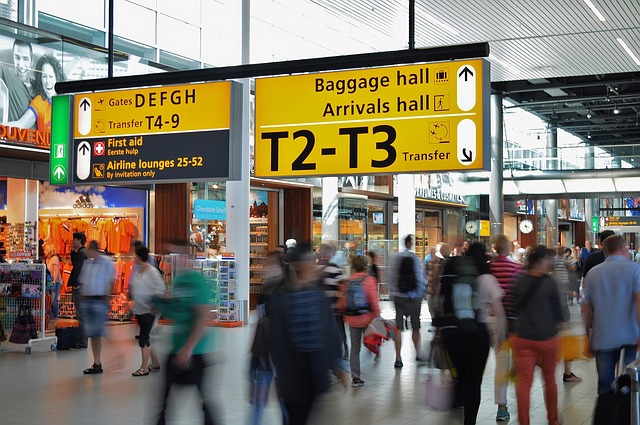
The Dublin to JFK route serves as the definitive stress test for the preclearance model because it highlights the divergence between theoretical time savings and operational reality. While the primary benefit is arriving as a domestic passenger, the facility at Dublin Airport (DUB) creates a unique bottleneck during the morning bank of transatlantic departures. Practitioners on FlyerTalk frequently note that the facility's physical layout forces a rigid sequence: you must clear security, navigate the terminal, and then undergo a secondary, dedicated customs inspection that is entirely distinct from standard airport security protocols.
When comparing the preclearance route against a standard international arrival, the math often hinges on the specific time of day rather than the total distance traveled. If you depart DUB at 10:00 AM, you are competing with the peak volume of U.S.-bound traffic that typically surges between 05:00 and 12:00 local time. During these hours, the time spent in the preclearance queue can easily balloon, effectively front-loading the stress of your journey. Conversely, arriving at JFK as a domestic passenger allows you to bypass the often-congested international arrivals hall, which can save you upwards of 90 minutes if your flight lands during a peak period of international arrivals at the New York hub.
| Route Strategy | Preclearance (DUB to JFK) | Standard International (EU to JFK) |
| Arrival Status | Domestic | International |
| Customs Location | Departure Airport | JFK Arrival Hall |
| Typical Queue Risk | High (Morning Peak) | High (Arrival Bank) |
| Post-Landing Exit | 5 Minutes | 60–90 Minutes |
| Connection Buffer | 2 Hours (Recommended) | 3.5 Hours (Recommended) |
The decision rule for this specific connection is binary: if your onward flight at JFK departs less than two hours after your scheduled arrival, the preclearance route is the only viable option to mitigate the risk of a missed connection. While a non-preclearance itinerary might appear cheaper on a fare search, the hidden cost is the high probability of being stuck in the JFK customs hall while your domestic flight boards at a different terminal.
One common mistake is assuming that the preclearance facility operates with the same throughput as a standard security lane. Because officers are performing full immigration and agriculture inspections, a single complex case can stall an entire line for several minutes. If you are traveling with checked luggage, remember that your bags are screened alongside your person in Dublin; if an officer flags your bag for a physical inspection, the airline must locate and pull that specific item from the aircraft hold. This mechanism is why airlines are so strict about the 60-minute pre-departure closure rule, as any delay in the customs hall directly impacts the aircraft's departure weight and balance manifest.
To optimize your next trip, verify the specific terminal layout for your flight on the Dublin Airport website before you leave for the airport. If you are connecting from a non-preclearance flight into DUB, ensure your inbound flight arrives at least 90 minutes before your U.S.-bound departure to account for the transit between terminals.
Digital Expedited Entry Requirements
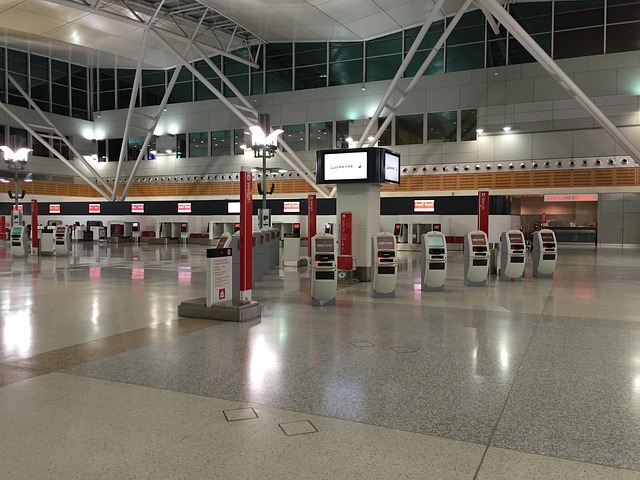
Digital expedited entry programs are not a bypass for the operational constraints of preclearance, but rather a secondary layer of efficiency that functions only when the underlying facility infrastructure is fully operational. While Global Entry kiosks are standard at most preclearance sites, their utility is strictly limited by the physical availability of the hardware and the presence of staff to manage the transition from kiosk to exit. Practitioners on r/awardtravel frequently report that when these digital systems experience downtime, the resulting bottleneck forces all passengers into a single manual processing queue, effectively nullifying the time-saving benefits of your membership.
Mobile Passport Control (MPC) has expanded to select preclearance locations, offering a potential alternative to physical kiosks. However, the reliability of this digital pathway depends heavily on your ability to maintain a stable data connection within the terminal to finalize your submission before reaching the officer. If you intend to use MPC, ensure your passport and visa details are pre-loaded and verified within the application before you leave your hotel. Attempting to troubleshoot app connectivity while standing in a moving line often leads to frustration and can force you to abandon the digital lane in favor of the standard queue.
Holding trusted traveler status does not override the strict boarding cutoffs enforced by airlines at these facilities. Even with Global Entry or MPC, you remain subject to the same mandatory departure-side timing requirements as every other passenger. If you are still in the customs hall when the airline’s boarding cutoff is reached, your status will not prevent the airline from denying you boarding. The digital tools are designed to accelerate your interaction with the officer, not to extend your window of operation within the terminal.
When planning your transit, treat digital entry tools as a contingency rather than a guarantee. If you encounter a situation where kiosks are offline, the manual lane typically adds 20 to 30 minutes to your processing time. Always verify the specific terminal layout and the availability of digital lanes on the official CBP portal for your departure airport before you arrive. If you find that a facility is known for frequent kiosk outages, adjust your arrival buffer accordingly to account for a worst-case manual processing scenario.
| Digital Tool | Primary Function | Failure Mode | Mitigation Strategy |
| Global Entry | Automated Kiosk Processing | Hardware/System Outage | Prepare for manual lane |
| Mobile Passport | App-based Submission | Connectivity/App Glitch | Pre-load data offline |
To finalize your preparation, confirm that your passport information is current within your trusted traveler profile. If you have recently renewed your document, ensure the new details are updated in the CBP system, as a mismatch will trigger an automatic rejection at the kiosk, forcing you into the manual line regardless of your status. Check your status on the official CBP website today to confirm your membership is active and your travel documents are correctly linked.
Duty Free And Restricted Item Logistics
Duty-free shopping at a preclearance facility operates under a distinct regulatory logic that effectively treats your departure terminal as a domestic U.S. zone. Because you complete all customs and agriculture inspections before boarding, liquids purchased in the airside retail area are generally permitted on the aircraft without the standard 3.4-ounce restriction. This provides a significant operational advantage over standard international departures, where items bought in the city or at non-preclearance duty-free shops are routinely confiscated at the gate-side security checkpoint.
The primary failure mode for travelers involves the transition from a preclearance flight to a subsequent international connection within the United States. While your items are cleared for entry, they remain subject to standard Transportation Security Administration (TSA) regulations if you exit the secure area at your U.S. If your itinerary includes a domestic-to-international transfer where you must re-clear security, any liquid duty-free items exceeding standard carry-on limits will be subject to disposal unless they are checked into your hold luggage.
To ensure your purchases are accepted as cleared items, you must maintain the integrity of the Security Tamper-Evident Bag (STEB). Field reports from frequent travelers on FlyerTalk consistently emphasize that the receipt must remain visible inside the sealed bag to verify the purchase was made at an authorized airside location. If the seal is broken or the receipt is missing, security officers at your U.S. destination may treat the items as non-compliant liquids, regardless of their origin.
A critical, often overlooked risk occurs if you are denied boarding at the preclearance facility after completing your purchases. Because you have already cleared U.S. customs, you are technically in a legal limbo when attempting to exit the terminal back into the foreign country. Local customs authorities may view your duty-free goods as imports if you attempt to re-enter the country with them, potentially leading to unexpected taxes or confiscation. Always clarify the return-to-landside procedure with airport staff before finalizing high-value duty-free transactions if your boarding status is in any way uncertain.
| Scenario | Handling Requirement | Risk Level |
| Direct flight to U.S. | Keep in sealed STEB with receipt | Low |
| Domestic U.S. connection | Carry-on permitted | Low |
| International U.S. connection | Must be checked if re-clearing security | High |
| Denied boarding at gate | Potential local customs import tax | Moderate |
Before your next departure, verify the specific duty-free liquid policy for your airline, as some carriers impose stricter internal cabin-baggage rules that supersede general airport allowances. If you plan to purchase alcohol or perfumes, check the official airport website for the specific terminal's list of approved duty-free vendors to ensure your receipt will be recognized by U.S. authorities.
What to do next
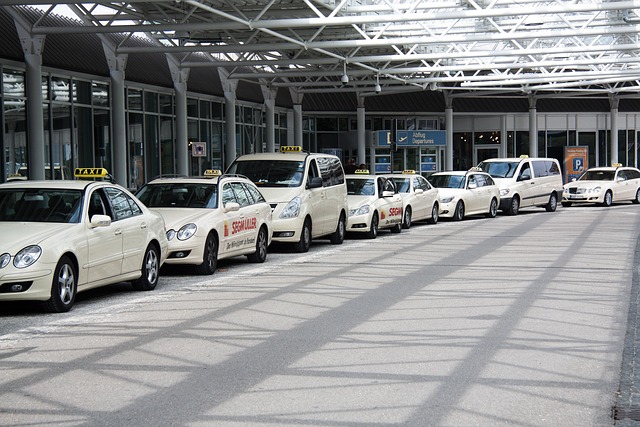
Navigating U.S. Preclearance requires careful planning to ensure you arrive at your departure gate with sufficient time to complete all necessary inspections. Use the following steps to prepare for your journey and streamline your experience at the airport.
| Step | Action | Why it matters |
|---|---|---|
| Verify Airport Status | Check the official U.S. Customs and Border Protection website for a current list of Preclearance locations. | Confirms if your departure airport offers this service for your specific flight. |
| Check Airline Guidance | Review your airline’s specific check-in and arrival time recommendations for U.S.-bound flights. | Ensures you meet carrier-specific requirements for clearing customs before boarding. |
| Review Programs | Confirm your Global Entry or Mobile Passport Control status and check if it is supported at your departure point. | Helps expedite the immigration process during peak travel hours. |
| Plan Arrival Time | Set a calendar reminder to arrive at the airport earlier than standard international guidelines. | Provides a buffer for potential queues at the Preclearance facility. |
| Review Duty-Free Rules | Consult airport signage regarding liquid restrictions for items purchased before or after Preclearance. | Prevents issues with security compliance for items bought in the terminal. |
Also worth reading New Serbia-Hungary Border Insider Look How Customs TSA Touchless ID How It Works ArriveCAN Express Lanes Cut Border
Quick answers
What to do next?
The primary operational threshold is the "One-Hour Rule": facilities typically cease operations 60 minutes before the flight's departure time (Etihad Airways).
What is the key to evaluating the preclearance strategic tradeoff?
destination; if you are landing at a terminal that requires a shuttle or a long walk to the main customs hall, the value of having already cleared the border is significantly higher.
What is the key to navigating the mandatory timing buffers?
If you are still in the customs queue when the clock hits that 60-minute mark, the airline will typically deny boarding, regardless of whether the aircraft is still at the gate.
What is the key to the inadmissibility trap and secondary screening?
The most significant risk of U.S. Border Preclearance is that you are subject to the full legal authority of U.S. Customs and Border Protection (CBP) while still on foreign soil, as outlined in GAO-17-216.
What is the key to case study: the dublin to jfk connection?
If you depart DUB at 10:00 AM, you are competing with the peak volume of U.
What is the key to digital expedited entry requirements?
If you intend to use MPC, ensure your passport and visa details are pre-loaded and verified within the application before you leave your hotel.
Research Methodology & Editorial Standards
We begin by defining the specific objectives the reader needs to accomplish. Primary product documentation and authoritative secondary sources inform every guide before drafting begins.
Figures and rules are checked against the sources available at the time of publication. Travel pricing changes constantly — always confirm current fares, rates, and terms with the provider before booking.