
Why You Need Cash When Traveling to These Popular Destinations
You’ll notice that these merchants often prefer physical cash over digital alternatives, and that’s not just a matter of convenience.

Navigating Local Markets and Small-Scale Vendors
When you’re navigating bustling local markets, it’s easy to focus solely on the vibrant atmosphere, but there’s a complex economic engine humming beneath the surface that you really need to understand. In many informal markets, vendors operate on a high-velocity, low-margin model where daily inventory turnover is the only way to avoid the crushing costs of cold storage or secure warehousing. You’ll notice that these merchants often prefer physical cash over digital alternatives, and that’s not just a matter of convenience. It’s actually a strategic response to the reality that small-value digital transaction fees can quietly erode their already thin profit margins by as much as three percent per sale.
Data suggests that street-level merchants lose up to 25 percent of potential revenue when they can’t access efficient payment infrastructure, which explains why they rely so heavily on immediate physical liquidity. Think about it this way: their cash box isn’t just a register; it’s their primary source of working capital and a vital safety net against supply chain disruptions. Because many of these vendors lack formal banking relationships due to regulatory hurdles, they simply don't have the luxury of waiting for digital clearing times. This is why you’ll often find that even in regions where mobile money is common, the ratio of cash-to-digital transactions in local wet markets remains stubbornly above 90 percent.
You might also catch onto their pricing games, like when they offer lower-quality goods at fixed prices while saving premium items for a good old-fashioned negotiation. This is a classic psychological tactic designed to anchor your expectations before the real deal-making begins. It’s worth remembering that these merchants are often prioritizing long-term customer loyalty over a quick, one-off profit. By using small cash discounts as a tool for retention or acting as informal currency exchange hubs during times of high inflation, they’re effectively managing their own risk in real-time. Next time you're bartering for a local souvenir or a fresh snack, keep in mind that your cash isn't just payment—it’s the lifeblood of an ecosystem that’s built to survive without the safety net of the formal banking world.
Overcoming Digital Infrastructure Gaps and Connectivity Dead Zones
When you’re staring at a dead zone on your map, it’s easy to feel like you’ve been cut off from the modern world, but the reality is that the gap between being connected and being isolated is closing faster than you’d think. I’ve spent a lot of time looking at how remote areas are leapfrogging traditional cable-heavy infrastructure, and it’s honestly fascinating. In places like the Kalahari, low-earth orbit satellite constellations are now bypassing the need for physical fiber-optic cables entirely, which were honestly never going to reach those rugged terrains anyway. It’s not just about satellites, though; we’re seeing mesh networking protocols that let mobile devices talk to each other without needing a centralized provider. Think of it like a digital relay race where your phone acts as a node, keeping the network alive even when the main signal is nowhere to be found.
It’s also worth pointing out that the way we handle data is changing at the source, especially in logistics and banking. Smart ports are increasingly relying on private 5G networks to keep things moving in dead zones, while some innovative financial apps are shifting to SMS-based encryption that needs zero data to verify a transaction. This is a game changer for inclusion because it means you don't need a high-speed fiber connection just to manage your money. I’ve seen data suggesting that hybrid models—like pairing satellite backhaul with community-run Wi-Fi hotspots—can slash access costs by up to 60 percent. It’s a much smarter, leaner way to bridge the digital divide than waiting for decades for legacy infrastructure to catch up.
But here is the part that really hits home for me: the shift toward edge computing and localized servers. By moving data processing right to the site, we’re cutting out the reliance on long-distance connections that are almost guaranteed to drop out at the worst possible moment. Even schools in connectivity-starved regions are using offline servers that sync up via low-frequency bursts whenever a satellite connection pings them. And when you factor in solar-powered switching nodes that prevent total system collapse during power surges, it’s clear that we’re moving toward a more resilient, decentralized reality. It’s not about waiting for a perfect global grid anymore; it’s about stitching together these smarter, local solutions to ensure you can stay connected, no matter how far off the beaten path you actually are.
Essential Cash Requirements for Tourist Taxes and Local Fees
You know that moment when you’re checking into a hotel, exhausted from a long flight, only to realize the front desk won’t accept your card for the local tourist tax? It’s a classic travel headache that catches even seasoned globetrotters off guard. I’ve found that in many regions, especially across North Africa, these levies aren't just suggested—they’re legally mandated to be paid in local currency at the point of check-in. Front desks often keep very little petty cash on hand, so if you don't have exact change, you're looking at a real problem. Worse yet, failing to secure a physical receipt for that payment can actually lead to fines or complications at border control when you’re trying to head home.
Think about it this way: for these local authorities, cash isn't just about tradition; it’s about survival and immediate liquidity. In remote ecological zones or at gated natural reserves, you'll often find that digital terminals are intentionally excluded because the local humidity or dust wreaks havoc on the hardware. Plus, there’s the issue of the bottom line. Small boutique spots or rural transit authorities often insist on cash to dodge the hefty merchant gateway fees and currency conversion losses that hit them when they process international credit cards. It’s a way to ensure the money goes directly to site restoration or fuel for rangers rather than getting tied up in the slow, costly churn of international banking clearinghouses.
Honestly, it’s a smart, if frustrating, way to manage regional infrastructure. In some places, these taxes are even adjusted weekly based on hyper-fluctuating exchange rates, meaning your pre-trip budget might be slightly off by the time you arrive. I always suggest keeping a dedicated "tax stash" of local notes separate from your main spending money. It saves you from the stress of hunting for an ATM when you’re already standing at the trailhead or the reservation gate. If you’re heading anywhere off the beaten path this year, don't assume the digital world has fully arrived—carrying enough physical currency for these specific fees is just part of being a prepared traveler.
Why Tipping Culture Still Relies on Physical Currency
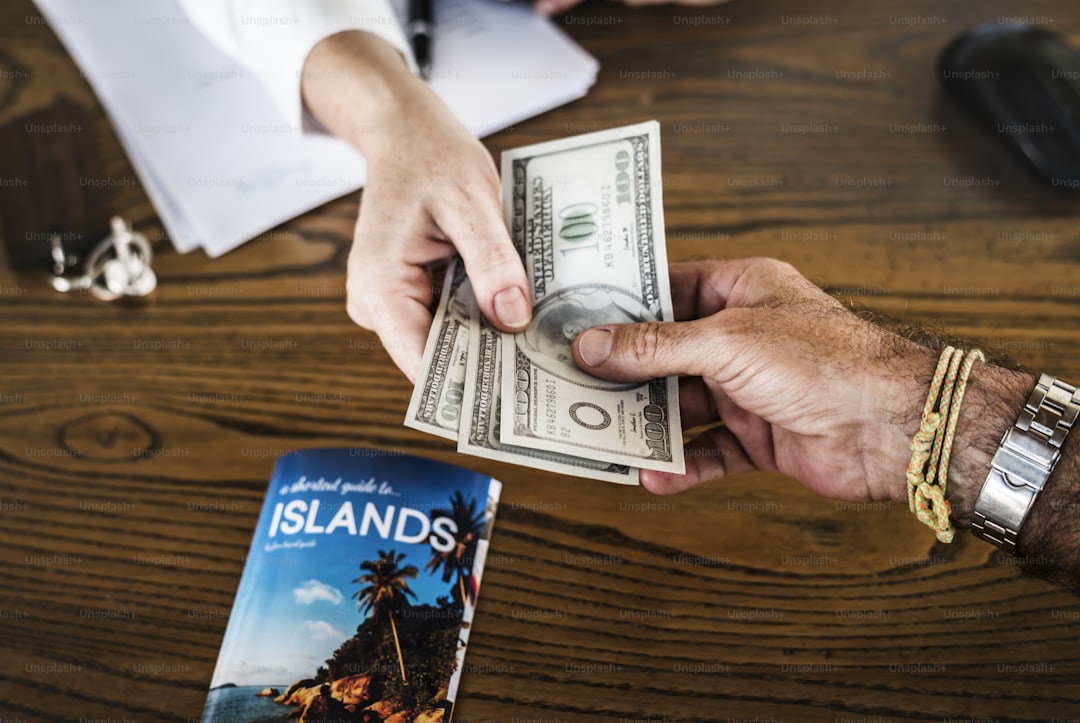
When we talk about why physical cash remains the king of tipping, we have to look past the convenience of a smartphone tap and really examine the friction in the service worker’s pocket. The most immediate issue is that digital gratuities are frequently subject to automatic payroll tax withholding and administrative delays, which can slash a worker's actual take-home pay by as much as 20 percent. For folks living paycheck to paycheck, cash isn't just about tradition; it’s essential daily working capital used for immediate needs like transit fare or a hot meal. Many service staff also prefer physical currency because it provides a vital buffer against banking instability, such as sudden liquidity freezes or restrictive daily withdrawal limits that would otherwise lock them out of their own hard-earned income.
Beyond the financial mechanics, there’s a genuine psychological component that shifts how we interact during that final moment of a meal or service. Behavioral economists have noted that the tactile act of handing over cash creates a stronger reward response, which consistently correlates with higher tip percentages compared to sterile digital interfaces. And let’s be honest, those pre-set digital tipping prompts on tablets often induce choice fatigue and even resentment, whereas cash allows you to tip based on your own personal perception of the interaction. This fosters a sense of autonomy and connection that a screen simply can't replicate. It’s a human signal of appreciation that feels more authentic to both the giver and the recipient.
Finally, we have to address the behind-the-scenes realities of how these businesses actually function. Many legacy point-of-sale systems simply lack the infrastructure to distribute gratuities fairly, often leading to opaque pooling or even employer-led skimming that cash bypasses entirely. Data suggests that physical tips are 30 percent more likely to be shared immediately among the back-of-house staff, ensuring the money actually reaches the people who earned it without getting caught in complex accounting software. For independent providers who lack the resources to reconcile intricate digital tax liabilities, cash is the only way to manage their daily intake without incurring massive professional accounting costs. When the power grid flickers and digital terminals go offline, cash remains the only reliable way to reward service, proving that in a world of complex tech, the simplest solution is often the most resilient.
Mitigating the Risks of Card Fraud in High-Traffic Tourist Hubs
When you’re navigating a bustling tourist hub, it’s easy to get distracted by the sights, but you really need to keep your guard up because card fraud has become terrifyingly sophisticated lately. I’ve been looking into the latest security reports, and it’s clear that skimming isn't just about bulky hardware anymore; these days, criminals are using low-energy Bluetooth tech to harvest your data wirelessly without even touching your wallet. It honestly feels like a cat-and-mouse game where the thieves are constantly upgrading their toolkits to bypass our usual defenses. Think about those public Wi-Fi hotspots you might use to check your maps—they’re often mirrored by bad actors who can intercept your financial data the second you connect. Even your phone’s NFC chip is a target, as illicit scanners can now pull card info through your bag if they get close enough in a crowded market.
And it’s not just about the cards in your pocket; we’re seeing a rise in deepfake audio scams where someone calls your hotel room pretending to be the bank, hoping you’ll hand over your credentials while you’re tired and stressed from travel. I’m also seeing more "card-on-file" vulnerabilities where simple, under-secured travel apps keep your data exposed long after your trip ends. Then there’s the issue of fake QR codes stuck on café menus that look totally legit but actually drop malware on your phone to steal your banking logins. It’s a lot to keep track of, and frankly, relying on standard card protections just doesn’t cut it when syndicates are deploying mobile cell towers to intercept your two-factor authentication codes in real-time.
Honestly, the best way to handle this is to stop trusting the infrastructure altogether and start building your own, more resilient layers of defense. I’ve started using virtual, merchant-locked credit cards that physically won't process a transaction if it hits from a location outside my travel itinerary, which is a massive safety net. If you’re really worried, sticking to physical, non-contact methods or even cash for smaller vendors can be the difference between a smooth vacation and a total financial nightmare. It’s not about being paranoid, but it is about being smart enough to know that the digital world has gaps that opportunistic criminals are more than happy to exploit. My advice? Keep your digital footprint as light as possible while you’re moving through these high-traffic areas and always check for physical tampering on terminals before you tap.
Essential Strategies for Managing Physical Currency While Abroad
Let’s be real for a second: planning for international travel usually means obsessing over flight deals and hotel points, but we often overlook the most basic piece of the puzzle—how we actually move money once we’re on the ground. I’ve found that relying entirely on plastic is a gamble, especially when you’re dealing with dynamic currency conversion, where those ATM prompts can sting you with rates 5 to 7 percent worse than the mid-market reality. Carrying local cash is your best insurance policy against that hidden 3 percent foreign transaction fee that sneaks onto your statement. Plus, there's the peace of mind that comes with having a backup; if an automated fraud algorithm decides your morning coffee in a new city looks suspicious and freezes your card, that physical stack in your pocket is the only thing keeping you from being stranded.
Beyond the math, there’s the logistical reality of how money actually flows in different parts of the world. In many places, digital terminals are more of a suggestion than a guarantee, often failing to sync with global banking networks for days at a time. If you’re traveling through regions where inflation is high, cash gives you a massive advantage because you’re trading in the current, real-time value of the currency, rather than waiting for a digital system to catch up to the latest local pricing. I’ve also noticed that relying on cards for every small purchase creates a silent "micro-transaction drain," where flat-fee charges add up until you’ve accidentally burned through 10 percent of your budget just in processing fees. It’s an avoidable loss that adds up fast over a two-week trip.
We also have to consider that, in some ways, physical cash has actually become more secure than our digital tools. Many central banks are now using advanced optical-variable ink and micro-textiles that are genuinely harder to replicate than a standard magnetic-stripe card, which is still prone to modern skimming tech. And don't forget the resilience factor; whether it's a remote mountain village or a simple power grid failure, cash is the only payment method immune to electromagnetic interference or system outages that can take down entire digital gateways. My advice is to keep a diverse mix of hard currencies, like the dollar or euro, for those moments when local digital platforms are either restricted or completely offline. Carrying exact change is another secret weapon, as it saves you from the "rounding up" tax that happens when a vendor doesn't have change and forces you into an involuntary, higher price point.
Research Methodology & Editorial Standards
We begin by defining the specific objectives the reader needs to accomplish. Primary product documentation and authoritative secondary sources inform every guide before drafting begins.
Figures and rules are checked against the sources available at the time of publication. Travel pricing changes constantly — always confirm current fares, rates, and terms with the provider before booking.