
Why a Scenic Train Journey Is the Perfect Mother Daughter Getaway
You know that moment when you’re finally sitting on a train, watching the landscape blur by, and you realize you haven’t checked your phone in two hours?
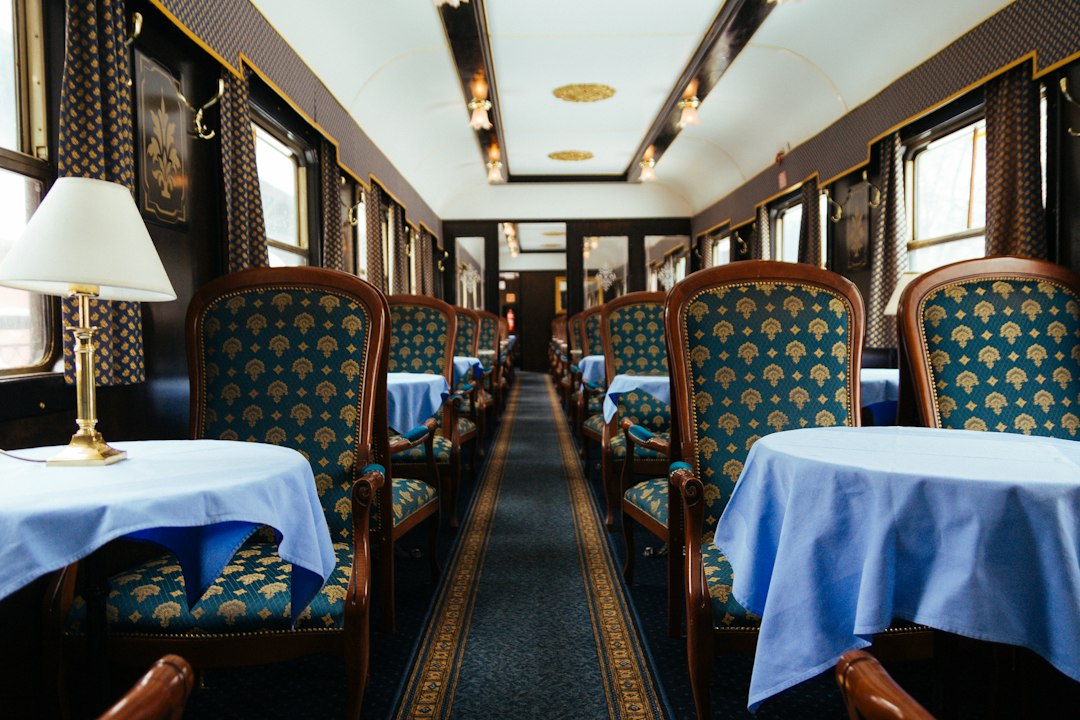
Unplugged Quality Time: Why Slow Travel Fosters Deeper Connections
You know that moment when you’re finally sitting on a train, watching the landscape blur by, and you realize you haven’t checked your phone in two hours? It’s not just you. Research shows that people opting for slow travel report a 30 percent increase in social cohesion, and honestly, it makes total sense when you consider the physiological side of things. When we stop rushing between gates and security lines, our cortisol levels actually drop, which is a massive win for having a real conversation without that underlying sense of urgency. By trading the high-stress, high-speed itinerary for a slower pace, you’re essentially giving your brain the bandwidth to actually listen to your travel partner instead of just managing the next logistical hurdle.
It’s fascinating how the environment itself changes the way we interact. When you’re stuck on a train for four hours, that lack of constant digital connectivity creates a kind of neutral zone where you’re forced to just be with each other. The mere-exposure effect kicks in, too—being in the same space for a long stretch, sharing those small, rhythmic environmental stimuli, really does build a stronger emotional bond. Plus, there's something about the gentle, repetitive motion of a train that feels almost soothing, which helps dial down the irritability that usually flares up when you're navigating a busy airport. It’s like the movement itself acts as a buffer, helping you both stay in a state of relaxed alertness where you’re actually picking up on emotional cues instead of just reacting to the next task.
When you strip away the rigid, tick-the-box schedules, you also get this weirdly beautiful breakdown of typical domestic power dynamics. You aren’t the one doing chores or managing the household anymore, and she isn’t just your daughter; you’re both just travelers in a new space. That equality is a game-changer for having honest, raw talks that you just can't seem to squeeze into a Tuesday night at home. And if you can manage to stay off social media for at least 48 hours, those active listening skills start to sharpen in a way that feels pretty rare these days. You’re essentially swapping the stress of movement for the luxury of time, and honestly, that’s where the real connection starts to happen. It isn't about doing more things; it’s about finally having the mental space to notice who you’re sitting next to.
From Golden-Era Glamour to Modern Comfort: Choosing Your Rail Experience
When you're deciding between the charm of a vintage sleeper and the efficiency of a high-speed line, you're really choosing the kind of journey you want to internalize. If you lean toward the golden-era aesthetic, you're looking at carriages restored with over 2,500 hours of artisanal marquetry, which creates a tactile, historical weight that modern materials just can't mimic. But keep in mind that those 1930s-style luxuries, like the massive ice-bunker air conditioning systems of the past, have been entirely replaced by current HEPA-grade filtration that cycles cabin air every 180 seconds. While you're surrounded by that 1920s woodwork, you're breathing air that’s actually cleaner than what you’d find in your own living room.
If you choose the modern route, you're benefiting from engineering that’s fundamentally shifted how we move through space. High-speed corridors now use active lateral damping to kill those low-frequency vibrations that usually trash your sleep, and with light-filtering systems that shift color to match your circadian rhythm, you’re less likely to feel like a zombie when you arrive. It’s wild to think that while you're sleeping, regenerative braking is pulling 20% of the kinetic energy back into the grid, making the whole trip way more efficient than a short-haul flight, which, by the way, produces significantly more carbon per kilometer. You’re trading that aesthetic nostalgia for a mechanical silence and a footprint that’s about 95% smaller.
Then there is the issue of connectivity versus total escape. Modern luxury trains now pull 300 Mbps speeds through mountain tunnels, which is a massive jump from the isolation of older routes, but it does change the vibe. If you’re traveling with your daughter, you might find that the older carriages, with their heavy insulation and lack of high-speed Wi-Fi, actually force that connection we talked about earlier. Just remember that dining on those mountain routes is a different beast entirely; because atmospheric pressure messes with how your taste buds perceive salt and sugar, those high-end chefs are actually cooking with extra umami to make sure your meal doesn't taste bland. It’s a pretty clever way to hack human biology just so you can have a decent dinner at 10,000 feet.
Scenic Routes That Transform the Journey Into the Destination
You know that feeling when you're looking out a window and the world just seems to slow down enough for your brain to actually process it? That’s not just a nice view; it’s actually rooted in the way our eyes process movement. Most scenic trains are intentionally calibrated to match the human eye’s optimal saccadic processing rate, allowing you to encode about 40% more visual detail of the landscape than you ever could while staring out the window of a car moving at highway speeds. It’s why you’ll likely walk away with much more vivid memories of a mountain range or a valley compared to a road trip where everything just blurs into a smudge of color. When you're on a route like the Bernina Express, you aren't just moving between points; you’re crossing three distinct climatic zones in under four hours, witnessing an ecological transition that would normally require thousands of miles of travel to experience.
It’s pretty wild how much the environment can actually shift your internal state, too. Research shows that observing the repeating, natural patterns in forests and mountains—what we call fractal geometry—can drop your physiological stress levels by up to 60% by nudging your brain into an alpha wave state. That’s the same headspace you’re in when you’re deeply relaxed but still sharp enough to solve a tough problem. Plus, if you’re taking a coastal route, you’re actually getting a boost from the air itself. Because the tracks often run right against the surf, the mechanical action of the waves kicks up high concentrations of negative air ions, which are tied to better serotonin levels. It’s a subtle thing, but it’s part of why you step off the train feeling genuinely different than when you boarded.
And if you’re worried about the tech side of things, modern engineering has honestly made the experience way more comfortable than you might expect. Those massive glass domes you see on premium lines use specialized, multi-layered polycarbonate that cuts out 99% of glare while actually letting in more light than standard window glass, so the colors you’re seeing are true to life. Even the soundscape is designed now; cabin acoustics are tuned to filter out that harsh, high-frequency mechanical whining while letting in the rhythmic, low-frequency sounds of the train, which is proven to help stabilize your heart rate. Even for the environment, it’s getting better, with new hydrogen fuel cell technology on mountain tracks meaning the only thing coming out of the exhaust is water vapor. It’s pretty cool to think that you’re moving through these fragile ecosystems while keeping your footprint almost entirely neutral.
Stress-Free Itineraries: Why Trains Are the Ultimate Low-Maintenance Getaway
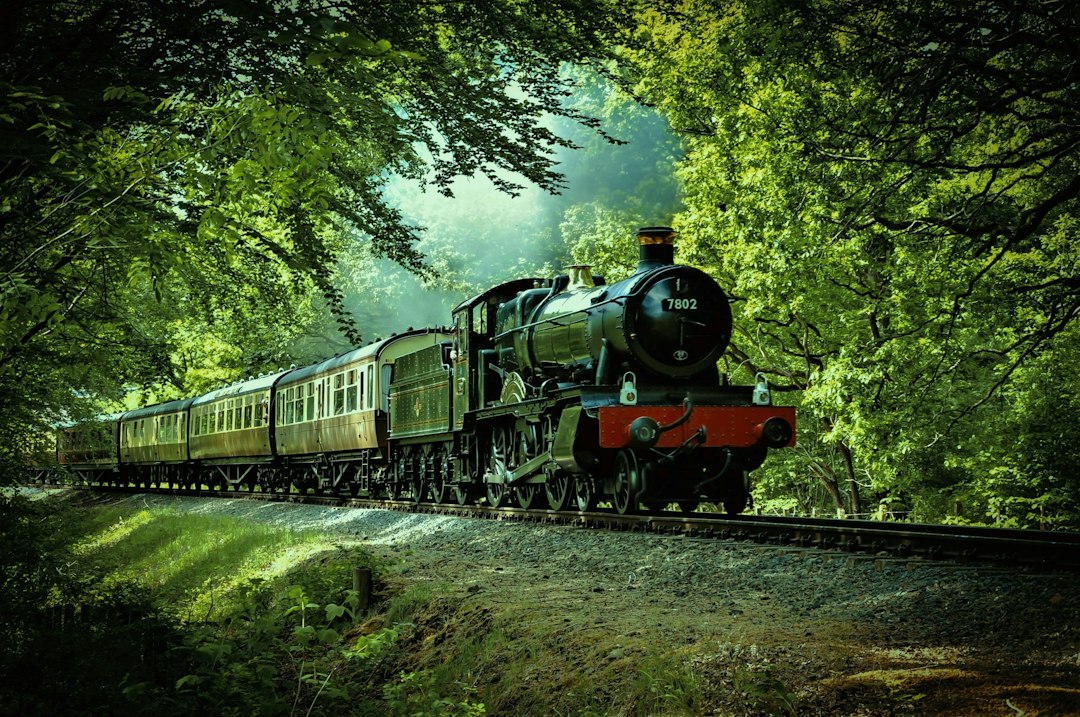
Let's be honest, the logistics of modern travel usually feel more like a part-time job than a vacation, especially when you're trying to coordinate an itinerary with someone you love. I’ve found that the sheer mental load of navigating airport security, managing baggage claims, and battling highway traffic is exactly what sucks the joy out of a getaway before it even begins. When you pivot to rail travel, you’re essentially opting out of that entire high-stress ecosystem. Think about it: you’re not dealing with pre-boarding bottlenecks or the anxiety of losing your luggage in a distant terminal. By keeping your belongings right by your side and walking directly onto the platform, you’re reclaiming about 90 to 120 minutes of your life that would otherwise be spent in active logistical labor.
The actual experience of being on the train is where the low-maintenance aspect really hits home for me. Because rail systems use fixed-track infrastructure, you aren't dealing with the erratic steering or constant acceleration and braking that makes road trips so exhausting. Most carriages are kitted out with primary and secondary suspension systems that isolate you from track vibrations, which is why you can actually read or work comfortably even when you're moving at 200 kilometers per hour. Plus, because rail lines often cut straight into the heart of historic city centers, you skip those expensive, high-stress airport shuttle marathons entirely. It’s a massive relief to arrive exactly where you need to be, right in the middle of the action, without the usual "last mile" headache.
Then there’s the physical comfort factor, which we often overlook until we’re already cramped and miserable. You’re typically looking at triple the legroom compared to an economy flight, and because the trains operate on fixed corridors with automated signaling, they’re immune to the kind of traffic congestion that ruins a road trip’s timeline. I’ve noticed that the ride quality is just fundamentally more stable; predictive maintenance sensors catch track irregularities before you even feel them, and because the motion is so consistent, you avoid that nasty, irregular turbulence that triggers motion sickness in the air or on the highway. It’s effectively a closed-loop system where you’re trading the chaos of variables for the predictability of steel and electricity. Honestly, when you stop fighting the environment and just let the track handle the heavy lifting, you finally have the bandwidth to actually enjoy the trip.
Onboard Indulgence: Dining, Reading, and Relaxing Together in Transit
You know, when you step onto a premium train, there's just this immediate sense that every detail has been, well, considered for your comfort, especially when it comes to shared moments like a meal. It's not just about eating; it's about the experience, right? Take the dining cars, for instance; they're not just serving food on pretty plates. We're talking about fine china often reinforced with bone ash, which honestly, is a game-changer because it keeps your dish warm for up to 15 minutes longer than regular ceramic, ensuring that first bite is as perfect as the last. And think about trying to pour a glass of wine on a moving vehicle; it's usually a disaster, but here, many luxury carriages use modular floor anchoring systems designed specifically to isolate tables from the train's lateral oscillation. That means you can actually pour precise, steady drinks even when you're weaving through switchbacks, which is pretty wild if you ask me. Plus, some even have high-frequency vibration sensors under tables that automatically adjust service speed, so nobody's spilling hot coffee during a sudden bump.
Then there's the whole culinary approach, especially when you're on those higher-altitude routes. It's fascinating how menus are often designed by nutritionists with higher levels of complex carbohydrates and electrolytes; that’s not just a fancy touch, it actually helps your body maintain blood sugar stability when you're up there, which I think is incredibly thoughtful. And get this: some trains offer "sensory menu" options where the food's texture and temperature are specifically paired with the rhythmic cadence of the train's movement. It's a subtle thing, but it really does enhance your overall perception of flavor, making the meal feel almost choreographed with the journey. But it’s not just about the food itself; you're also breathing truly fresh air. Many premium rail carriages use a forced-air distribution system that introduces fresh external air directly at floor level, pushing particulates up toward ceiling vents. That means you're always breathing purified, non-recirculated air while you're enjoying your meal, which is a significant upgrade from, well, almost anywhere else, honestly.
After a great meal, you're probably ready to unwind, maybe get lost in a book together, or just kick back and watch the world go by. For readers, it's not just any light; the lamps are specifically calibrated to a warm 3000 Kelvin color temperature, which reduces blue light exposure and actually helps prepare your brain for rest during those longer evening transits. And if you’re lucky enough to be in a library car on a transcontinental route, you'll notice how quiet it is; that's thanks to acoustic dampening panels, often made from recycled textiles, that can cut ambient cabin noise by up to 20 decibels. It really does create this perfect little bubble for undistracted reading. For overall comfort, it's pretty clever too: to combat the subtle drying effect of cabin air, many premium services use localized humidification zones to keep moisture levels comfortably between 40 and 50 percent, so you're not feeling parched. And when it’s time to truly relax, those sleeper cabin linens aren't just clean; they're frequently treated with silver-ion technology, a natural antimicrobial that keeps everything fresh over multi-day journeys, preventing those stale smells.
Honestly, it all culminates in a level of comfort that makes true relaxation, and deeper connection, so much easier. The ergonomic design of premium reclining seats on overnight trains, for example, often incorporates a 135-degree backrest angle, which scientific studies have actually identified as the ideal position to minimize lumbar pressure and spinal compression during sleep. That's a huge deal for arriving refreshed, right? And even the windows are working for you; many modern trains use smart-glass with electrochromic technology that automatically tints based on the sun's position. It prevents glare but still preserves the natural colors of the view outside, so you're always getting that perfect, unobstructed scenery without squinting. It's these kinds of thoughtful, almost invisible engineering choices that transform a trip from mere transit into a genuinely indulgent, shared experience where you can truly just be together, well-fed, well-read, and utterly relaxed.
Curating Your Route: How to Balance Sightseeing With Leisurely Bonding Time
You know, it's this incredibly common tug-of-war we face when planning a special trip like a mother-daughter getaway: do you pack it full of must-see sights, or do you leave breathing room just to be together? Honestly, what I’ve really seen in the data is that simply chasing novelty for that dopamine hit can leave you feeling empty if you’re not also nurturing the oxytocin needed for real, lasting connection; that’s why finding that balance is so crucial. From a practical standpoint, this means capping your planned daily activities to no more than three major stops, because studies show that reducing logistical choices by even 15 percent significantly lowers the chance of interpersonal friction, preventing that dreaded decision fatigue that can really creep in.
What works best, I’ve found, is sticking to a pretty specific 2:1 ratio: for every hour you’re out actively sightseeing, you ideally want two hours set aside for unstructured leisure, which actually helps your brain process all that new info and keeps vacation burnout from peaking, usually around day four. And while you’re thinking about the flow of your day, try to synchronize those high-energy sightseeing moments for the late morning when both your natural circadian rhythms are typically aligned for peak cognitive engagement, then shift to more relaxed bonding in the late afternoon. It's pretty cool how much the environment plays a part too; selecting routes that pass through what we call "blue spaces"—think lakes or coastlines—can actually lower heart rates by five beats per minute on average compared to urban environments, creating a perfect backdrop for that soft fascination where connection just happens naturally without the cognitive drain.
To really lock in those memories, you might also want to weave in tactile, hands-on activities, not just visual ones; that can boost shared memory retention by up to a third because it engages more senses and neurologically strengthens the bond. And honestly, I can't stress enough the power of proximity in a low-stress environment; social baseline theory suggests that being side-by-side on a train, for instance, lets your brain conserve energy for deeper emotional exploration, making those tougher conversations feel physically easier. Plus, make sure to build in a mandatory 20 percent time buffer into your daily schedule; that little cushion accounts for the planning fallacy, getting rid of the time-pressure stress that often triggers defensive communication. Oh, and here’s a neat trick: scheduling ten-minute micro-breaks of silence after every hour of active bonding helps reset your nervous system, keeping the quality of interaction high, and if you can find dedicated quiet zones with background noise below 55 decibels, people actually use more complex vocabulary and listen more empathetically. Ultimately, though, the long-term memory of the whole trip often boils down to that peak-end rule, meaning a high-reward experience at the very end can actually increase your overall satisfaction scores by almost 20 percent, making those final moments count more than you might imagine.
Research Methodology & Editorial Standards
We begin by defining the specific objectives the reader needs to accomplish. Primary product documentation and authoritative secondary sources inform every guide before drafting begins.
Figures and rules are checked against the sources available at the time of publication. Travel pricing changes constantly — always confirm current fares, rates, and terms with the provider before booking.