
Where to find the best pizza in New York City according to locals
When we talk about the New York slice, it’s easy to get lost in the romance of it all, but there’s a surprising amount of hard science beneath that grease-stained paper plate.

The Iconic Classics: Defining the New York Slice
When we talk about the New York slice, it’s easy to get lost in the romance of it all, but there’s a surprising amount of hard science beneath that grease-stained paper plate. Let’s look at the chemistry: the specific mineral concentrations of calcium and magnesium in city tap water actually react with the gluten in the dough to create that signature chew you just don't find anywhere else. Most iconic spots use high-gluten flour, typically sitting at 13 to 14 percent protein, which gives the crust the structural integrity it needs to hold up under the weight of the toppings. You’re looking at a 150 to 200-gram slice, and that thin, foldable base is only possible because of the rapid Maillard reaction triggered by gas ovens pushing past 500 degrees Fahrenheit. It’s a precise, high-heat dance that crisps the bottom while keeping the sauce bright and acidic.
And here is where it gets really interesting for the gear-heads: the equipment itself is often just as legendary as the pizza. Many of those legacy spots are still running on deck ovens that have been seasoned by five decades of flour and cornmeal, which, honestly, you just can't replicate in a modern kitchen. The dough is usually cold-proofed for 24 to 48 hours to manage fermentation, with a salinity level locked right at 2 percent of the flour weight. That low-moisture, part-skim mozzarella is another deliberate choice, selected specifically because its fat-to-moisture ratio keeps the cheese from turning into a greasy mess during that intense, fast-bake process. It’s an incredibly efficient system designed to handle high-volume demand without sacrificing that classic, reliable profile.
Think about the folding, too, which isn't just a local affectation—it’s an engineering necessity. By creating that structural arch, you’re increasing the moment of inertia, which keeps the tip of the slice from drooping under gravity before it hits your mouth. Even the paper plate plays a role; that specific bleached paperboard is thick enough to wick away excess oil without falling apart in your hands. Most of these pies measure exactly 18 inches, a dimension dictated entirely by the physical constraints of those vintage floor-standing deck ovens. Whether they’re adding sugar or malt to speed up browning or keeping the sauce raw to preserve that tomato brightness, every single move in these kitchens is calculated to maintain a standard that’s been refined over generations. It’s not just food; it’s a localized, industrial craft that’s as much about physics as it is about taste.
Beyond Manhattan: Borough Gems You Need to Visit
If you’ve spent any time navigating the city, you know that Manhattan often feels like the default setting for every visitor, but honestly, that’s where you start missing the real story. When we talk about the outer boroughs, we aren’t just looking at more land; we’re looking at over 80 percent of the city’s geographic footprint where the pizza culture actually gets a chance to breathe and evolve. Think about it this way: while Manhattan is locked into high-volume, standardized footprints, Brooklyn, Queens, and the Bronx are operating on a completely different set of industrial and cultural variables. It’s a bit like comparing a polished flagship store to a local workshop where the tools have been calibrated by hand for decades. Let's look at why these neighborhoods are arguably doing the heavy lifting when it comes to truly interesting pies.
The infrastructure in these areas is fundamentally different, and that’s not just a minor detail—it’s the secret sauce. For instance, those legendary Brooklyn coal-fired spots are tied to 19th-century industrial zoning that allowed for the massive, heavy-duty thermal infrastructure you just can't squeeze into a cramped Manhattan basement. Then you have the water supply; because the outer boroughs draw from specific points along the Catskill and Delaware aqueducts, the mineral and micro-sediment profiles in the dough are subtly distinct from what you’d find downtown. It’s these tiny, overlooked factors that dictate how the gluten develops during that crucial 72-hour cold fermentation process, which, by the way, produces an acetic tang you won't get from the fast-turnover spots.
When you get into Queens or the Bronx, the culinary influences shift even further, moving away from the "standard" slice toward something way more personal. You’ll see places swapping out mass-market mozzarella for hand-stretched buffalo milk versions, a move that’s only really sustainable because the rent structure doesn't force them to cut corners to stay afloat. And keep an eye out for those 14-inch personal pies—they aren't just a size preference, they're a deliberate engineering choice that allows for a faster, more uniform heat transfer across the entire crust. It’s easy to get distracted by the bright lights of midtown, but if you really want to understand the craft, you’ve got to start venturing out to where the ovens have been running on the same steady, antique rhythm for generations.
The Art of the Thin Crust: What Makes a True NYC Pie
When we talk about the architecture of a true New York pie, we have to look past the grease and the hype to see the engineering happening in the dough. Honestly, it all starts with a specific hydration level of 60 to 65 percent, which is the sweet spot for creating enough steam for internal aeration while keeping the dough elastic enough to stretch thin without tearing. You’ll find that many of the best shops incorporate high-diastatic malt powder to accelerate enzymatic activity, which gives you that deep, complex browning you only see in a sub-six-minute bake. And if you’ve ever wondered why the bottom crust has that distinctive, grit-free crunch, it’s usually because of a microscopic dusting of semolina flour acting as a thermal buffer against the stone hearth.
It’s also about controlling the environment, down to the pH of the sauce. Seasoned makers keep their tomato acidity between 4.2 and 4.6, which is crucial because it stops the moisture from migrating into the crumb and turning your base into a soggy mess. Think about the thermal mass of those old-school stone deck ovens, too; they’re designed to recover heat in seconds, which is the only way to get that consistent, rapid rise that creates the classic, airy rim. I’ve noticed that to get that perfect leopard-spotting on the undercarriage, the best spots are using wheat cultivars with higher natural ash content, which browns way faster under that intense radiant heat.
But there’s a real, living science to it that changes day-to-day. You’d be surprised how many high-volume kitchens are actually adjusting their salt content based on daily humidity readings to keep yeast metabolism in check. It’s a precise, three-millimeter rollout that’s engineered so heat can hit the center of the pie before the sugars on the surface turn to charcoal. They’re even using low-moisture, whole-milk mozzarella to keep the fat content right at 20 percent so the cheese doesn't just break into an oily slick. It’s not just about throwing ingredients together; it’s a constant, calculated effort to balance fermentation and physics, and that’s exactly what sets a legendary slice apart from the rest.
Hidden Neighborhood Favorites Loved by Locals

If you're anything like me, you’ve probably realized that the best slice in New York isn't usually found under a neon sign or on a listicle of tourist hot spots. I’ve spent years tracking down these neighborhood joints, and honestly, the difference often comes down to the kind of hyper-specific, obsessive technical work you’d never notice unless you were looking for it. These local favorites are essentially running private labs where the dough is treated with more care than a science experiment. They’re constantly adjusting flour blends based on the daily humidity of their specific block, and many are using aged sourdough starters that have been kept alive for over a decade. It’s this commitment to wild bacteria and precise fermentation that gives their crusts that distinct, complex tang you just can’t replicate with commercial yeast.
Let’s look at the actual mechanics here, because it’s fascinating how they manage to stay so consistent. Many of these spots are keeping their walk-in coolers locked between 38 and 42 degrees Fahrenheit to perfectly regulate yeast metabolism, while others are even reintroducing trace minerals like magnesium into their water to reinforce the gluten structure. You’ll also notice they’re often using unlined wooden peels instead of metal ones, which is a deliberate choice to wick away moisture during the launch so the bottom crust doesn't steam. And when it comes to the sauce, they’re sourcing tomatoes grown in volcanic soil, where the higher potassium levels naturally shift the pH, giving the sauce a brightness that doesn't need to be forced with additives.
But here is the real kicker that separates the legends from the rest: the thermal management. I’ve seen masters carefully position their pies based on invisible heat gradients on the oven floor, aiming for that narrow 650 to 700-degree window to get that perfect leopard-spotting. Some are even using heirloom rye flour to boost pentosan levels, which helps the crust hold onto gas bubbles during that initial explosive rise in the oven. It’s not just cooking; it’s a form of high-stakes engineering. When you see them par-baking for exactly ninety seconds or resting dough at exactly 65 degrees to avoid snap-back, you realize you're witnessing a craft that’s been refined to an almost absurd level of detail. It’s these tiny, unseen variables that make the neighborhood favorite feel so much more alive than the standardized competition.
From Coal-Fired Ovens to Modern Artisanal Spots
When we look at the evolution of New York pizza, the shift from those original coal-fired behemoths to today’s artisanal workshops is really a story of managing extreme thermal energy. Those legendary coal ovens hit a steady 1,800 to 2,000 degrees Fahrenheit, creating a dry, punishing heat that gives the crust a rigid, blistered structure you just can’t replicate easily. Modern spots are now chasing that same dragon by using hybrid wood-and-gas setups that hit 900 degrees, often relying on volcanic stone hearths from Vesuvius to mimic that old-school thermal mass. It’s a fascinating technological bridge, trying to marry century-old intensity with the control modern chefs demand to get that perfect, crisp finish.
You’ll notice that modern artisanal bakers are obsessing over the chemistry of the dough in ways the old guard never had to worry about. They’re leaning heavily into autolyse—mixing flour and water first—to really open up the gluten structure, which lets them bump hydration levels up to 75 percent. That’s a huge jump from the standard 60 percent we see in traditional shops, and it leads to a significantly airier, more open crumb. Plus, by using stone-milled heirloom grains, these shops are adding more bran and germ into the mix, which honestly creates a much more complex, earthy flavor profile than the standard high-gluten commercial flour.
And here is where the precision really kicks in: it’s not just about the recipe, it’s about the environmental variables. Many of these newer spots are running 96-hour cold-fermentation cycles to break down those complex carbs, which helps the crust caramelize almost instantly when it hits that high-heat deck. They’re even measuring the Brix levels in their tomatoes to ensure the sauce sweetness is spot-on without needing a pinch of sugar. It’s pretty wild to watch a chef use infrared thermometers to map out the exact heat zones on their oven deck, moving pies around to ensure the Maillard reaction hits the crust right at the same moment the center finishes baking.
If you’ve ever wondered why some of these newer pies taste so much cleaner, it’s often because they’ve switched to buffalo milk mozzarella, which has a higher protein-to-fat ratio that melts more elegantly than the typical low-moisture stuff. They’re also using smart-venting systems to pull excess moisture out of the air, which stops the crust from getting soggy before it even reaches your table. It’s a move toward engineering the environment as much as the food itself. Honestly, while the old coal-fired spots have that historic charm, these modern labs are proving that if you control the humidity and the thermal conductivity of the floor, you can produce a slice that’s just as consistent as anything from the golden age.
Navigating the NYC Pizza Scene: How to Spot an Authentic Shop
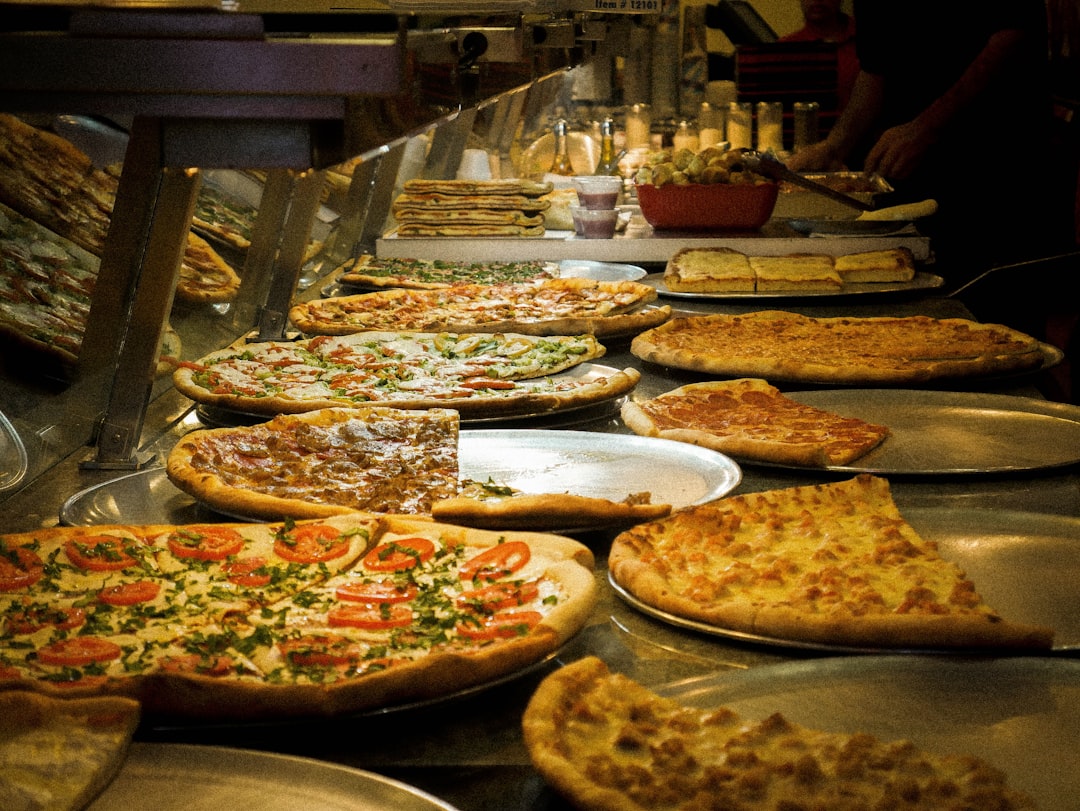
When you’re standing on a busy corner in the city, surrounded by a dozen places claiming to serve the best slice, it’s easy to feel overwhelmed by the sheer noise of the competition. But look past the bright neon and the aggressive marketing, and you’ll find that spotting an authentic shop is really about noticing the technical details that most people completely overlook. Here’s what I look for: I check if the kitchen is relying on natural, passive radiant heat from stone decks rather than modern convection fans, which is the only way to get that classic, uneven rise in the crust. If you see the staff using an infrared thermometer to map out heat gradients on the oven floor, you’ve found a place that treats baking like an engineering challenge rather than just a lunch rush.
It’s also in the dough, which is a living, breathing component that demands precise handling. A shop that cares will proof its dough for at least 24 hours at exactly 40 degrees Fahrenheit to unlock those complex, acetic acid profiles you can actually taste. You might notice the dough resting on unlined, untreated wooden boards; this isn't just tradition, it’s a functional choice that allows for moisture migration through the wood grain, keeping the dough from getting gummy. And watch how they launch the pie. A real pro uses a flour-dusted wooden peel, which acts as a desiccant to prevent sticking and ensures the crust doesn't suffer from any premature dampness before it even hits the hearth.
Finally, you can often tell how serious a shop is just by looking at the sauce and the cheese sitting under the heat lamps. Authentic spots avoid thickening agents entirely, trusting the natural pectin in high-quality, vine-ripened tomatoes to create a viscosity that won't soak through the base of your slice. They’re also typically using a low-moisture mozzarella calibrated to exactly 20 percent milk fat, which is the sweet spot for a melt that stays creamy without turning into a greasy pool. When the crust displays that natural, non-forced browning—the result of a perfect enzymatic breakdown of starches during fermentation—you know you’re in a place that has mastered the physics of the bake. It’s not just about getting fed; it’s about finding that rare spot where the science is as solid as the flavor.
Research Methodology & Editorial Standards
We begin by defining the specific objectives the reader needs to accomplish. Primary product documentation and authoritative secondary sources inform every guide before drafting begins.
Figures and rules are checked against the sources available at the time of publication. Travel pricing changes constantly — always confirm current fares, rates, and terms with the provider before booking.