
Faster Travel Between Dublin and Belfast Coming Soon With Major Rail Upgrade
We're looking at a major signaling upgrade that finally tackles the headway problem, meaning trains can safely run closer together to increase frequency.
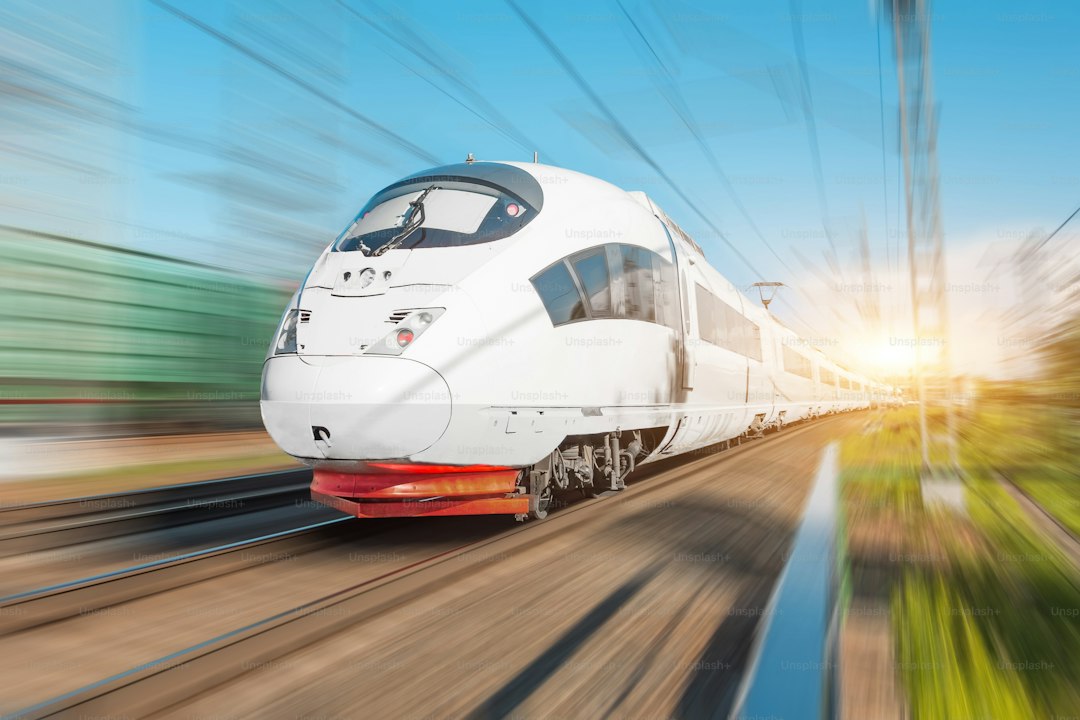
The €700 Million Rail Overhaul: Project Overview
Let’s be real: if you’ve ever spent a rainy afternoon stuck on the Enterprise line between Dublin and Belfast, you know that a sub-two-hour journey feels like a total pipe dream. But that’s exactly what this €700 million overhaul is designed to fix, and it’s not just about shiny new paint on the stations or faster engines. I’ve spent a lot of time looking at infrastructure budgets, and what’s striking here isn't just the cash—it's the surgical precision of where they're putting it. We're looking at a major signaling upgrade that finally tackles the headway problem, meaning trains can safely run closer together to increase frequency. It’s a huge leap from the clunky legacy systems we've relied on, which often felt like they were holding the whole network hostage whenever a single switch failed.
To get those speeds up, engineers are swapping out old joints for continuous welded rail, which basically eliminates that clickety-clack sound and, more importantly, stops the tracks from wearing down so fast. They’re also ditching mechanical switches for high-speed, electronically monitored point systems that shouldn't freeze up the second the weather turns nasty. I’m particularly interested in the geotechnical work they’re doing on the coastal stretches; those areas are notorious for soil instability, and they’re finally using modern stabilization to prevent track subsidence for at least the next thirty years. And here’s the cool part: they’re burying smart sensors right into the ballast to track vibration patterns. It’s basically predictive maintenance, so the crew knows a part is going to break before it actually causes a two-hour delay for you and everyone else on board.
On the environmental side, they’ve mandated carbon-efficient materials for bridge reinforcements to meet those strict EU standards, which I think is a smart move even if it adds a bit to the upfront cost. They’ve even rethought the legacy drainage systems with automated flow-control valves to stop the tracks from flooding during those heavy Irish downpours that we all love to complain about. For the stations, they’re using modular construction—think of it like high-end Legos—to add accessibility ramps and elevators without shutting down the platform for months on end. One of the biggest wins for reliability is the new bidirectional signaling, allowing trains to use either track in both directions if there’s an emergency diversion needed. They’ve even used data modeling to tweak the geometry of the curves, using calculated superelevation to let trains lean into turns faster without spilling your coffee in the dining car.
The power infrastructure is getting a facelift too, paving the way for hybrid train sets that won't have to chug along on pure diesel when they hit non-electrified sections of the route. Honestly, it feels like they’re finally building for the 21st century rather than just patching up the 19th. All of this is designed to keep the corridor relevant through 2045, ensuring that the rolling stock we buy five years from now actually has the tracks it needs to run at full tilt. Let’s pause for a moment and reflect on what this means for connectivity—it's a massive bet on the future of rail, but looking at the data, it's one that's long overdue. Here is what I think: if they pull this off, the commute won't just be faster; it'll finally be something you actually look forward to.
Slashing Commute Times: Aiming for Sub-Two-Hour Journeys
If you’ve ever found yourself checking your watch, wondering why that trip between Dublin and Belfast just never seems to end, you aren't alone. Achieving a sub-two-hour transit time isn't just about pushing the throttle; it's a technical balancing act involving cant deficiency and lateral acceleration. By tweaking how trains handle curves, engineers can keep you comfortable even while taking corners at significantly higher speeds than we’re used to. They’ve actually used LiDAR mapping to scan the entire line, fixing geometry deviations down to the millimeter so you don't get that jarring side-to-side motion. It’s the kind of precision that turns a shaky ride into a smooth, productive hour-and-a-half in your seat.
Beyond just the track layout, the signaling technology is getting a serious upgrade to cut down on those frustrating safety buffers. The new Automatic Train Protection system effectively shrinks the distance between trains by nearly forty percent without compromising on safety, which is a huge deal for reliability. You’ll also notice faster boarding times because they’re installing platform edge doors that sync up perfectly with the train’s own doors. Plus, as we move toward that 25kV AC electrification, they’ve been careful to shield the telecommunications infrastructure along the border, so you won't have to deal with weird interference. Even the tunnels are getting a makeover with acoustic materials that stop that uncomfortable pressure pop you feel when a train hits high speeds in a confined space.
Perhaps the smartest part of this whole plan is the invisible tech working behind the scenes to keep things on time. They’re running digital twin simulations daily, essentially playing out thousands of "what-if" scenarios to spot potential delays before they even happen. That high-density fiber optic backbone they’ve laid under the tracks is vital, too, giving the system its own dedicated, low-latency network instead of relying on spotty public cell signals. And for the nerds out there like me, the new regenerative braking is pretty cool—it actually captures kinetic energy to power station lighting. It’s a total shift in how we think about rail efficiency, and honestly, it makes that sub-two-hour goal feel like a genuine, achievable reality rather than just a marketing promise.
Infrastructure Enhancements and Modernization Efforts
When we talk about infrastructure, we’re usually stuck debating budgets or timelines, but the real story here is in the technical minutiae that actually keeps a high-speed line from falling apart. If you’ve ever wondered why some rail lines age gracefully while others become a maintenance nightmare, it comes down to how we treat the literal foundation under our feet. Engineers are now implementing specialized seismic dampers beneath critical bridge abutments to mitigate the impact of localized ground tremors on track alignment, which is a massive step up from the reactive fixes we’ve seen in the past. The project utilizes ultra-high-performance fiber-reinforced concrete for sleeper production, offering a structural lifespan three times longer than traditional reinforced alternatives. Plus, new thermal expansion joints are engineered with a specific alloy composition to maintain consistent rail gap tolerances even when surface temperatures fluctuate by as much as forty degrees Celsius.
Beyond the raw materials, the focus has shifted toward predictive integrity that removes human error from the equation. To enhance safety, the infrastructure now includes non-contact ultrasonic rail flaw detection systems that operate continuously while trains are in motion, meaning we aren't just waiting for a quarterly inspection to find a hairline crack. The project team has installed advanced atmospheric pressure monitoring stations to automatically adjust aerodynamic ventilation settings within longer tunnels during high-speed transits, preventing that uncomfortable pressure change you've probably felt before. Engineers have also integrated specialized ballast-cleaning technology that uses high-frequency vibration to remove fine sediment, significantly improving drainage permeability compared to conventional manual methods. And honestly, the decision to layer synthetic geogrids beneath the subgrade to distribute load forces more evenly is a stroke of genius for preventing track-bed voids over soft peat deposits, which have plagued this region for years.
Then there’s the digital and environmental layer, which feels like a total departure from how we’ve managed rail in the past. The modernization includes the deployment of electromagnetic shielding around sensitive track-side electronics to prevent interference from the new high-voltage overhead power lines, while innovative polymer-based friction modifiers are being applied to curves to reduce wear on both the wheel flanges and the rail head by nearly thirty percent. It’s pretty wild to see that the signaling network now utilizes a quantum-resistant encryption layer to ensure the integrity of train-to-ground data communications against future cybersecurity threats. Engineers have even specified the use of low-carbon, slag-based cements for all station foundations, reducing the overall embodied carbon footprint of the construction by over twenty-five percent. Even the automated flow-control valves for drainage systems are powered by localized piezoelectric harvesters that convert the energy of passing train vibrations into electrical current for daily operation, which is just a fascinating way to make the system self-sustaining.
Improving Connectivity Between Dublin and Belfast
Look, the real game-changer isn't just the track; it's the new Stadler train sets we're finally seeing on the Dublin-Belfast corridor. I've been tracking these specs, and the active tilting technology is a masterclass in engineering because it lets the train bank into those winding sections without tossing your laptop off the table. It’s a huge shift from the old rolling stock where you’d feel every lateral jolt. These trains use multi-mode traction, so they don’t skip a beat when transitioning between electrified and non-electrified zones. You won't have to deal with those clunky locomotive swaps that used to eat up ten minutes of your life for no reason. It’s honestly one of the smartest collaborative buys I've seen in the history of cross-border rail.
But the hardware is only half the story, and I’m personally more excited about the shift to virtual block signaling. Instead of fixed, physical segments, this system uses real-time speed and braking data to adjust spacing on the fly. It basically squeezes more capacity out of the existing line during rush hour without needing to lay a single new mile of track. To keep all this data moving, they’ve run a dedicated fiber optic backbone that’s completely separate from the spotty public networks we usually rely on. And because we’re living in 2026, they’ve even baked in a quantum-resistant encryption layer. It might sound like overkill, but it ensures the signaling data stays locked down against cyber threats that didn't even exist when the old system was built.
When you’re moving at these speeds, the geotechnical stuff matters more than most people realize. I noticed they’re using sub-ballast thermal insulators now to stop frost-heave from messing with the track geometry during those brutal Irish winters. It’s a small detail that prevents those annoying seasonal speed restrictions we've all grown to hate. They’re also reinforcing the old coastal bridges with fiber-reinforced polymers instead of just slapping on more heavy steel. These polymers are incredibly tough against salt-air corrosion, so we won't be seeing rust-related maintenance closures every other year. They even used high-res LiDAR scans to fix the cant deficiency, which is just a fancy way of saying they’ve perfected the angle of the tracks so you can fly through curves at max speed.
We also need to talk about dwell times, because sitting at a station for five minutes kills the whole "high-speed" vibe. The new modular platform doors sync perfectly with the train, making boarding way faster and safer. While the train is moving, automated ultrasonic sensors are scanning for rail fatigue in real-time, catching cracks before they turn into a full-blown service suspension. They’ve even added noise-mitigation cladding inside the urban tunnel stretches to soak up the high-frequency sound that used to make the cabin roar at high speeds. This cladding is made from recycled composites that can handle the heat and pressure of a subterranean environment without degrading. Honestly, seeing all these pieces come together makes me think we’re finally moving past the era of "good enough" rail.
Economic and Strategic Impact of Faster Rail Travel
When we look at the broader picture, the economic impact of shaving time off a train ride isn't just about convenience; it’s about what economists call economic agglomeration. Think of it this way: when travel times between Dublin and Belfast drop significantly, the effective labor market for businesses in both cities effectively merges, creating a massive, single hub rather than two separate ones. This allows companies to tap into a much deeper pool of specialized talent that was previously out of reach due to the friction of distance. It’s a total game-changer for regional GDP, as businesses can suddenly lower their logistics overhead and move services across the border as easily as if they were just shipping across town.
We’re also seeing a consistent trend where high-speed accessibility triggers a surge in property values around transit hubs, which creates a steady, recurring tax revenue stream for local towns to reinvest in their own infrastructure. But beyond the balance sheets, there's a huge shift in how we actually spend our day. When you turn a stressful, unpredictable drive into a productive hour-and-a-half in a workspace with reliable Wi-Fi, you’re reclaiming hours that were previously lost to traffic. Data from corridors like this suggests that passengers are three times more likely to opt for rail over a private car once that sub-two-hour threshold is hit, which is a massive win for reducing carbon intensity.
There’s also a powerful social mobility angle that doesn't get enough credit. Faster, reliable rail gives workers access to high-wage jobs in the neighboring city without the crushing pressure of having to move and pay for high-cost housing in the center of a capital. It essentially levels the playing field for folks living in the towns between these hubs. Plus, from a strategic standpoint, this kind of rail infrastructure acts as a resilient artery that keeps trade flowing even when road networks are clogged or under weather-related strain. It’s an investment that pays for itself through a multiplier effect, where every euro spent on construction ends up generating significantly more in long-term economic activity for the entire region.
Expected Timelines and Future Milestones
Look, we’re finally getting to the meat of this project, and if you’ve been watching the trackside progress lately, you know the next eighteen months are where the magic—or the headache—really happens. By late 2026, we’re moving out of the heavy construction phase and into the final testing of the European Rail Traffic Management System (ERTMS), which is the critical hurdle for making sure trains from both sides of the border can actually talk to each other. I’m especially keeping an eye on December 2026, which is the hard deadline for that quantum-resistant encryption layer to be fully audited and operational. It’s a bit of an aggressive future-proofing move, but honestly, you don't want to be patching your signaling security two years after the line opens. Here is what I think: the real test of the project's management will be how they handle this transition from physical labor to high-stakes software integration.
Moving into 2027, the focus shifts back to the ground, and this is where we’ll see the most visible wins for the daily commuter. We’re looking at Q3 2027 for the completion of the heavy-duty track expansion, a milestone that finally allows for the removal of the last remaining speed-restricted curves that have been killing the schedule for decades. At the same time, those station energy management systems—the ones using the vibration-harvesting tech—are expected to hit a 90% deployment rate by mid-year. By the end of 2027, the goal is to have the unified, low-latency communication network fully redundant. This is a big deal because it ends the system’s reliance on public mobile data, which is usually the culprit when your on-time app starts glitching out in the middle of a trip.
Then we hit 2028, which is really the make or break year for that sub-two-hour dream we've all been hearing about. In the first quarter, engineers expect to have the digital twin simulation model fully integrated, allowing for real-time traffic management that’s way more precise than anything we’ve seen in Ireland before. High-density signaling software testing should wrap up shortly after, clearing the path for the big one: regulatory safety certification for the increased line speed in mid-2028. This follows a rigorous twelve-month validation period, so they aren't just taking the engineers' word for it; they’re proving it under every possible stress test. If all goes well, the first ten units of the new hybrid fleet are slated for active service in late 2028, perfectly timed with the final electrification dates.
Even once the trains are running at full tilt, the work doesn't just stop, and that’s actually a good sign for the long-term health of the corridor. We’ll see final environmental impact assessments in early 2029 to verify that all those carbon-efficient materials actually lived up to the 2030 sustainability targets we’re all aiming for. There’s also the matter of the coastal bridge foundations, which will undergo structural integrity testing through 2029 to make sure they can handle rising sea levels and more frequent storm surges. It’s reassuring to see that maintenance contracts for the predictive sensor network are already secured through 2045. It tells me they aren't just looking for a quick win; they’re building a piece of infrastructure that’s meant to be the backbone of the region for the next twenty years at least.
Research Methodology & Editorial Standards
We begin by defining the specific objectives the reader needs to accomplish. Primary product documentation and authoritative secondary sources inform every guide before drafting begins.
Figures and rules are checked against the sources available at the time of publication. Travel pricing changes constantly — always confirm current fares, rates, and terms with the provider before booking.