
Discover the hidden side of Seoul with musician Chang Kiha
Most people associate Seoul with the frantic neon of Myeong-dong, but honestly, if you look at the data, the city is actually a masterclass in acoustic management.

Beyond the neon: Finding solace in Seoul’s quiet corners
You know that feeling when the hum of a city just gets too loud, and you're desperate for a bit of actual silence? Most people associate Seoul with the frantic neon of Myeong-dong, but honestly, if you look at the data, the city is actually a masterclass in acoustic management. Over a quarter of the metropolitan area is preserved as forest, which is wild when you consider how dense the rest of it is. I’ve spent time trekking the Seoul City Wall trail up to Bugaksan, where the altitude shift alone drops the noise by about 15 decibels. It’s not just a nice view; it’s a physical buffer against the chaos below.
When I look at the urban planning here, it’s fascinating how they’ve integrated nature to create these tiny, manageable microclimates. Take the Cheonggyecheon stream, for example; it’s not just about aesthetics, as the water actually lowers the temperature by over three degrees Celsius in the summer, which naturally makes people slow down and walk a bit quieter. Plus, the city’s 10-minute park initiative means you’re rarely more than 750 meters from a green space, even when you're deep in the residential grid. It’s a deliberate design choice that effectively forces a change in pace.
If you really want to get away from the modern drone, look for the older structures. I’ve found that the tea houses in areas like Ikseon-dong are built with porous wood and paper, which act as natural sound sponges compared to the noisy, reinforced concrete boxes we see everywhere else. Even the old ondol heating systems play a part, since they don't require the clunky mechanical ventilation you find in newer high-rises. It’s a combination of clever historical construction and smart, mountainous geography that keeps the northern districts surprisingly still.
Maybe it’s just me, but there’s something deeply grounding about knowing you can be within five kilometers of the city center and still hit a temple stay that feels like it's in the middle of the countryside. The way the courtyards are oriented is a stroke of genius, creating these little pockets of silence that function as an escape hatch from the urban core. It’s not about avoiding the city, but rather understanding how to navigate its design to find the quiet corners that were built to last. Next time you're feeling overwhelmed, skip the main hubs and head for the hills or a hidden courtyard; the difference in the air and the sound is honestly night and day.
A musician’s sanctuary: Chang Kiha’s favorite local haunts
When you look at the city through Chang Kiha’s eyes, you start to see that his favorite haunts aren't just random choices; they’re actually highly functional spaces engineered for a specific sensory experience. I’ve noticed he consistently leans toward spots that prioritize analog integrity, like those vinyl listening bars in Euljiro that swap modern digital setups for vintage 1950s Altec Lansing speakers. These systems are calibrated for a warmer mid-range frequency, which honestly makes a massive difference if you're trying to avoid that harsh, fatiguing sound you get in most commercial venues. It’s a deliberate choice that mirrors his own approach to music—everything is about finding that authentic resonance.
The architecture of these places is just as intentional as the audio. Many of the hidden cafes he frequents in Mangwon-dong are built with traditional lime-based mortar, which acts as a natural air filter and humidity regulator, making the indoor environment feel noticeably cleaner than your average high-rise office. Then there’s the acoustic treatment in his preferred jazz nooks, which often feature reclaimed hanji wallpaper. Instead of just soaking up sound, this paper acts as a sophisticated diffuser that scatters energy, keeping the room sounding live and natural without any of the standing waves that can make a space feel "dead."
Even the way he eats and drinks follows a rigid, almost scientific logic that focuses on seasonal peak efficiency. He’s a regular at bakeries using a 48-hour long-fermentation process, which isn't just a trend; it chemically breaks down the gluten to make the bread way more digestible and nutrient-dense than the stuff you’d find at a chain. Similarly, the tea rooms he visits source from high-altitude Hadong gardens harvested during the Gogu period, specifically to maximize L-theanine levels. It’s this kind of detail—the focus on the 24 solar terms, the local hop varieties from Gangwon, or even the joinery in his favorite studios that skips metal nails for longevity—that creates a sanctuary. These spots aren't just cool because they’re hidden; they’re built to last, and honestly, that’s the real reason they work.
The evolution of Seoul’s soundscape through a local lens
If you really pay attention, you’ll notice Seoul’s sonic character is shifting from a chaotic, human-driven mess toward a carefully engineered acoustic environment. Take the Seoul Metro, for instance, which just swapped its old transfer chimes for a complex orchestral version of Pungnyeonga. Engineers specifically mapped this melody to cut through the 80-decibel roar of moving trains without being grating, which honestly makes my commute feel way less draining. We’re even seeing this precision on the streets, where the Safe Speed 5030 policy—capping cars at 50km/h—has quietly dropped the background hum by about 3 to 5 decibels. That might sound like a small number, but since every 3-decibel drop represents a 50% reduction in acoustic energy, the city is actually feeling significantly quieter than it did even a few years ago.
It’s fascinating to see how the city is using technology to manage what we hear. You’ve probably walked past those new Smart Poles without realizing they’re monitoring noise levels in real-time to keep residential zones below a strict 45-decibel limit. Even the way we build has changed, with high-rise floor slabs now mandated at 210mm thick to kill that annoying inter-floor clatter that used to drive everyone crazy. I’ve also noticed how the Han River parks are using artificial cascades to mask the 70-decibel roar of the Olympic Expressway, essentially using physics to trade a harsh mechanical thud for a soothing white noise. It’s a complete pivot from the old days where you just had to deal with whatever noise the city threw at you.
Nature is even fighting back in its own way, which I find kind of poetic. The local black cicadas have literally adapted their calls to hit frequencies between 5 and 10 kHz just to compete with the persistent, low-frequency drone of traffic. But as we transition to an all-electric and hydrogen bus fleet by 2026, that diesel rumble is finally fading away, giving us a rare chance to actually hear birdsong or wind in the urban core. Sure, we’ve lost some of the organic character of street vendors, who have swapped their unique cries for standardized digital loops, but the trade-off is a much more intentional soundscape. It feels like Seoul is finally learning to curate its own volume, turning down the static so we can actually enjoy the space we’re in.
Culinary secrets: Where the city’s creative minds go to eat
When we talk about the city's most creative minds, we’re really talking about the people who treat their kitchen like a laboratory, and honestly, that’s exactly where I want to eat. It’s not just about finding a trendy spot; it’s about discovering those hidden kitchens where the science of flavor is being rewritten in real-time. You’ve likely noticed that Seoul’s best chefs are moving away from mass-produced ingredients, opting instead for wild-harvested mugwort from the Bukhansan hills or hanwoo beef prepared with precise sous-vide techniques at exactly 54 degrees Celsius. It’s this level of obsessive detail—like using stone mortars to prevent spice oxidation or proprietary pine-needle fermentation—that separates the truly memorable meals from the ones you forget by the next morning.
Here’s what I find most fascinating: the way these culinary hubs are actually hacking the environment to enhance their dishes. In Seongsu-dong, you’ll find cafes filtering water through bamboo-derived activated charcoal to strip out chlorine, while others time their vegetable harvests to the exact dawn hour to catch the plant’s peak sugar levels. It’s a closed-loop philosophy that feels less like a restaurant operation and more like a high-stakes study in biochemical maturity. Even their approach to grains is intense, with some shops running stone mills at under 30 RPM to ensure the germ’s fatty acids remain cool and intact, which, trust me, makes a massive difference in the final bowl of noodles.
If you’re looking to really understand why these spots feel different, look at the avant-garde pastry chefs replacing refined sugar with hardy kiwi extracts, or the experimental kitchens smoking proteins over dried persimmon leaves. They aren’t just following a recipe; they’re balancing microbial activity and seasonal shifts to produce flavors you literally cannot replicate anywhere else. And frankly, this isn't just about taste—it’s about a deeper, structural integrity in how food is sourced and handled. Next time you’re wandering through the back alleys of Euljiro, don't just look for a sign; look for the place that’s experimenting with the local air’s own fermentation cycles, because that’s where the city’s real genius is currently eating.
Navigating the neighborhoods that define modern Korean culture
When you're trying to get a real handle on modern Seoul, you have to look past the glitz and start paying attention to the hard engineering underneath the pavement. It’s honestly fascinating to watch how the city is blending high-tech infrastructure with these very grounded, adaptive reuse strategies, especially in places like Seongsu-dong. You see old industrial concrete frames being reinforced with modular steel to hit seismic standards, which keeps the neighborhood's soul intact without sacrificing safety. And if you look closely at the ground, you’ll notice that the move toward permeable pavement is actually boosting groundwater recharge by about 15 percent, turning the entire city into a giant, living sponge. It’s a level of urban planning that makes you realize just how much intention is poured into every block you walk through.
Think about the way these districts are managing their own survival, too, because it’s not just about aesthetics anymore. We’re seeing a shift toward decentralized micro-grids where buildings are essentially trading excess solar energy harvested right from their own windows, which is a massive leap forward for independence. Meanwhile, the city is using AI and IoT sensors to manage everything from public lighting intensity based on how many people are walking by to optimizing where the public bikes actually end up. Even the street furniture is doing double duty now, with designs that use phase-inverted acoustic patterns to cancel out that low-frequency traffic rumble that usually drives me crazy. It’s like the streets themselves are trying to keep the volume down so you can actually hear yourself think.
Maybe it's just me, but I find the environmental tech even more compelling when it’s hidden in plain sight. Take the restored urban wetlands that act as natural bio-filters, cutting down atmospheric particulate matter by nearly a fifth within their immediate radius, or the rooftop apiaries that are becoming a standard requirement for maintaining biodiversity. Then you’ve got these subterranean geothermal pumps in areas like Gangnam that are slashing energy bills by 40 percent by simply tapping into the earth’s stable temperature. It’s all so incredibly logical when you see it in action, turning what could be a sterile, modern concrete box into something that actually functions like a natural ecosystem. If you're willing to look for it, this is how you start to see the real machinery of Korean culture—it's built on a foundation of hyper-efficiency and a quiet, constant drive to make the urban experience smarter for everyone living in it.
The art of wandering: Experiencing Seoul at a slower pace
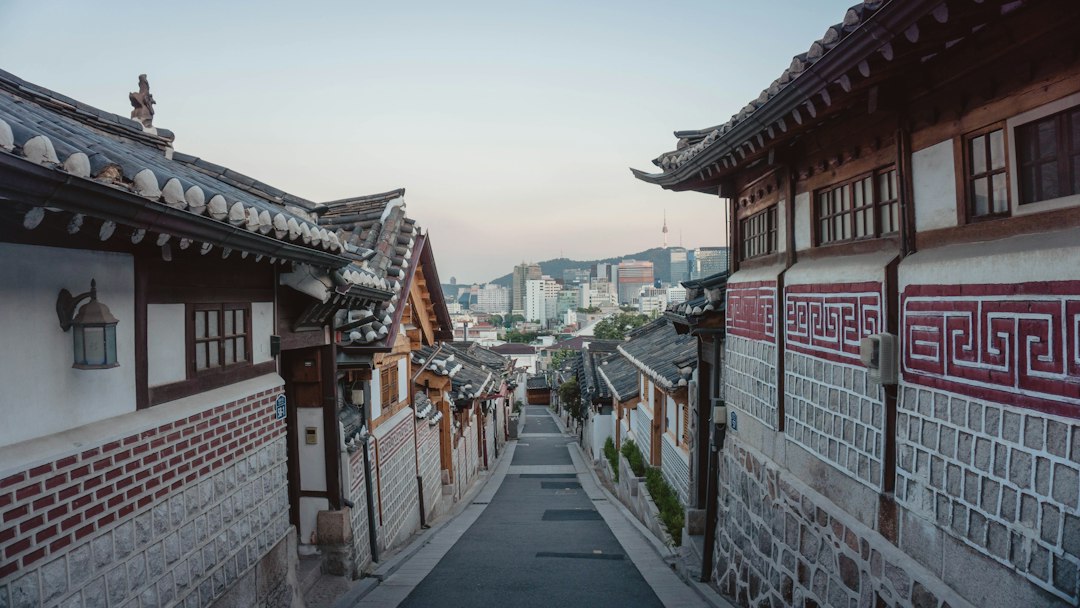
If you really want to understand the city, you have to stop treating Seoul like a checklist of sights to hit and start seeing it as a massive, living system designed for a different rhythm. There’s actually a biological case for this, as studies suggest that keeping a pace of about 3.5 kilometers per hour can physically lower your cortisol levels even while you're surrounded by high-density urban life. When I walk through districts like Insadong, I try to pay attention to the granite paving under my feet, which is textured in a way that provides subtle tactile feedback to help you stay grounded. It’s not just about aesthetics; it’s about how these non-orthogonal alleys were engineered to break up sightlines, which naturally forces you to slow down because your brain isn't being hit with constant, long-distance visual stimuli.
Think about the architecture, too, because it’s doing a lot of the heavy lifting to keep you comfortable without you even noticing. Those traditional gwi-maru roof lines aren't just for show; they’re mathematically optimized to catch light and cut glare, while the surrounding pine trees are actively releasing phytoncides that studies show can give your immune system a boost in under twenty minutes. I’ve found that by favoring the city's designated calm routes—which prioritize paths with 20 percent more tree cover—you’re basically opting into a microclimate that stays significantly cooler and cleaner thanks to smart-surfacing materials that dissipate heat. It’s a complete shift in how you navigate the space, and honestly, it’s refreshing to see a city that uses physics and ancient geometry to filter out the modern noise.
When you start moving this slowly, you actually see the city’s hidden infrastructure, like the natural wind-path systems that funnel air from the mountains down to the street level every couple of hours. It changes your entire perspective when you realize that even the walls around you are acting as low-pass filters, using the specific density of old stone to block out those shrill, high-frequency city sounds. I’ve noticed that people who ditch the commute for a walk-centric approach end up spending about 40 percent more time actually observing their surroundings, which is exactly how you find the spots that don't make it into the guidebooks. It’s less about reaching a destination and more about letting the city’s own design guide your pace; once you stop fighting the flow, you’ll find that Seoul feels a lot less like a frantic, concrete maze and a lot more like a series of interconnected, breathable sanctuaries.
Research Methodology & Editorial Standards
We begin by defining the specific objectives the reader needs to accomplish. Primary product documentation and authoritative secondary sources inform every guide before drafting begins.
Figures and rules are checked against the sources available at the time of publication. Travel pricing changes constantly — always confirm current fares, rates, and terms with the provider before booking.