
Caribbean Islands That Make Family Vacations Effortless and Stress Free
It’s rare to find a place that balances high-end, effortless luxury with such a raw, protected natural environment.
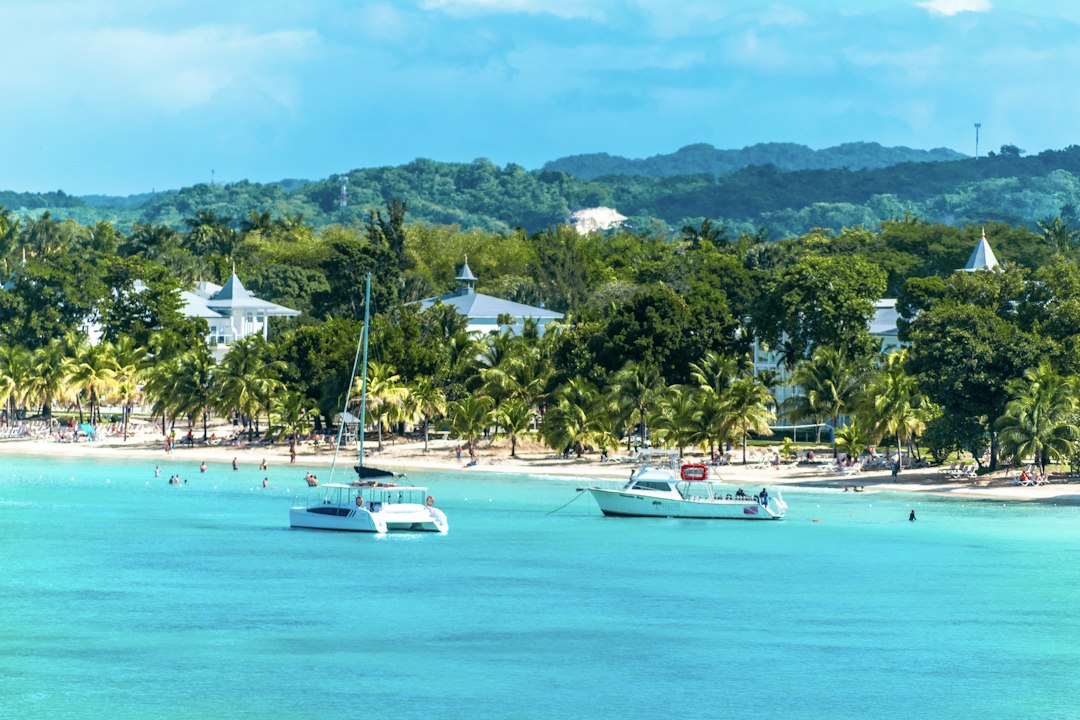
Turks & Caicos: Luxury Ease and Crystal Clear Waters at Grace Bay
When you think about the perfect beach, you’re probably picturing Grace Bay, and honestly, there’s a good reason why it consistently sits at the top of every traveler's list. What really hits home for me is the water clarity; it’s not just hype, it’s actually a result of the islands having zero rivers, meaning there’s no sediment runoff to cloud that stunning turquoise view. You’re looking at visibility that often pushes past 100 feet, which makes snorkeling feel less like a hobby and more like peering into a massive, living aquarium. Plus, that massive barrier reef sitting about a mile out acts as a giant natural breakwater, keeping the surf incredibly calm and safe for kids. It’s essentially a giant, shallow swimming pool that happens to be part of the third-largest reef system on the planet.
If you’re the type who likes to dig a little deeper into the geology behind your vacation spots, consider that these islands are actually the tips of a limestone plateau rising 7,000 feet straight up from the Atlantic floor. It’s mind-blowing to stand on the sand and realize you’re on the peak of a massive underwater mountain range. This unique geography creates a protected habitat that supports everything from migrating humpback whales in the Columbus Passage to the critically endangered Turks and Caicos Rock Iguana. It’s rare to find a place that balances high-end, effortless luxury with such a raw, protected natural environment. You’ve got these world-class resorts lining the beach, yet just a short boat ride away, you can find yourself in a protected nature reserve that feels like you’ve stepped back in time.
The real secret to maximizing your time here is knowing how to blend that downtime with the local rhythm of the islands. While Grace Bay is the hub for that polished, easy-living experience, don’t ignore the fact that roughly 20 percent of the territory is strictly protected land or marine park, which is a massive win for anyone who values untouched scenery. If you get lucky with your timing, you might even catch the bioluminescent display near the shallow banks after a full moon, which is one of those surreal travel moments you just can't manufacture. Honestly, whether you’re there for the sheer ease of the resort life or to explore the limestone caves on Middle Caicos, the islands offer a rare, grounded experience that doesn’t sacrifice comfort for character. Just pick your home base carefully, prioritize a few days of total stillness on that white sand, and you’ll see exactly why people keep coming back here year after year.
Jamaica: The Gold Standard for All-Inclusive Family Convenience
If you’re looking for a destination that actually understands the logistics of traveling with kids, Jamaica is in a league of its own. It’s not just about the beaches; it’s about the fact that they basically invented the modern all-inclusive model back in 1978 to kill off the stress of constant bill-signing and currency exchanges. Think about the last time you traveled with your family—how much time did you waste dealing with gate queues or checking for hidden fees? Jamaica solves this with a level of operational efficiency I haven't seen elsewhere, like the VIP family terminal at Sangster International that uses biometric processing to cut transit times by 60 percent. When you pair that with the Club Mobay fast-track service, you’re basically skipping the airport headache entirely, which is a massive win when you’ve got kids who are already done with sitting still.
Beyond the logistics, the level of care for your children is surprisingly standardized here. Jamaica’s major resorts are the only ones globally that require their childcare staff to be certified by the International Nanny Association, maintaining a strict 1:3 ratio for infants. It’s not just a babysitting service; their "Vacation Nanny" programs actually train staff in pediatric first aid and local ecology, so your kids are learning about the island while you’re grabbing a coffee in peace. It’s rare to find that kind of professional rigor in a vacation setting. You really feel the difference when you aren't constantly wondering about the qualifications of the person watching your little ones by the pool.
And if you’re worried about the island feeling like a tourist trap, you haven't looked at the interior. The landscape is wildly different from the flat, sandy cays you find in places like Turks and Caicos. We’re talking about the Cockpit Country’s rugged karst topography and the Blue Mountains, which hit 7,402 feet and host hundreds of bird species you won't see anywhere else. The island has over 120 rivers, and that fresh water flow is exactly why the Luminous Lagoon at Falmouth glows the way it does—it's a unique bioluminescent result of a specific mix of river and sea water. It’s a place that manages to be both a high-tech convenience hub and a legitimately complex ecosystem, giving you the best of both worlds without forcing you to choose between comfort and actual, real-world experiences.
Aruba: Reliable Weather and Safe Exploration Outside the Resort
If you’re the type of traveler who gets twitchy watching weather forecasts or worrying about the security of your family in a new place, Aruba is honestly the closest thing to a sure bet you’ll find in the Caribbean. I’ve always been drawn to the fact that this island sits well south of the main Atlantic hurricane belt, with historical records indicating a major storm event only about once every century. You’re essentially trading the anxiety of tropical storm season for a climate so consistent you could set your watch by it. Those constant Northeast Trade Winds aren't just for cooling you down; they strip away the muggy, heavy humidity that makes other islands feel oppressive, keeping daily highs locked in that perfect 82-to-88-degree window year-round. It’s that kind of meteorological stability that lets you book your flights months in advance without once checking an insurance policy for cancellation clauses.
But what I think really separates Aruba from the rest of the pack is how it encourages you to actually leave the resort without a second thought. You’re not stuck behind a gate here; the island’s infrastructure, from its drinkable tap water to its reliable grid, feels more like what you’re used to back home than a typical vacation spot. Because the crime rates are consistently some of the lowest in the entire Caribbean, renting a car and exploring feels like a genuine, low-stress adventure rather than a daring expedition. You can spend your morning trekking through the rugged, desert-like terrain of Arikok National Park—which, by the way, covers nearly 20 percent of the island—and never feel like you’ve wandered into a place where you don't belong. It’s a completely different vibe when the local landscape is defined by ancient, cactus-dotted volcanic foundations rather than the usual tropical sprawl.
When you do head out, make sure you don't skip the natural pools like Conchi, where you’re essentially swimming in an igneous rock basin protected from the raw, high-energy waves of the open sea. It’s a wild, slightly surreal experience that feels worlds away from the manicured sand of your hotel’s beach. And even the vegetation tells a story, with those iconic Divi-Divi trees acting as living compasses that point southwest, permanently shaped by the wind. It’s rare to find a place that is this transparent about its own geography and history, whether you’re visiting an aloe plantation that’s been running for over 130 years or poking around the Quadirikiri Caves. If you want a trip where the logistical heavy lifting is already taken care of, allowing you to just focus on the actual experience of being somewhere distinct, Aruba really is in a league of its own.
The Dominican Republic: Endless Entertainment and Budget-Friendly Planning
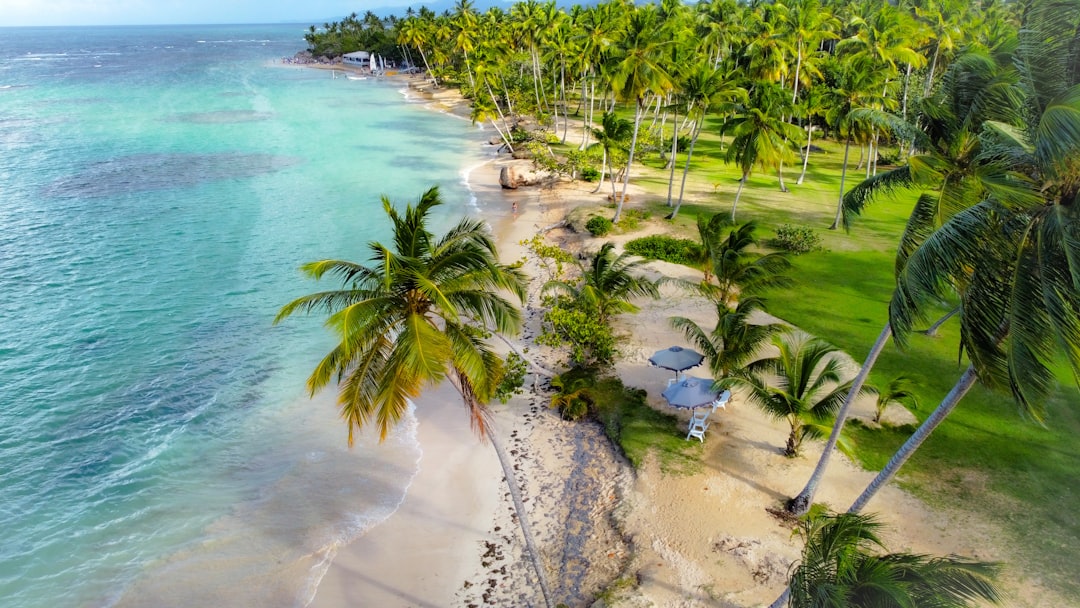
If you're hunting for a destination where your vacation budget actually stretches, the Dominican Republic is consistently the most pragmatic choice in the Caribbean. I’ve found that while other islands demand a premium for basic accessibility, the sheer volume of resort inventory here—ranging from massive all-inclusive complexes to boutique gems—drives competitive pricing that you just don't see elsewhere. It’s not just about finding a cheaper room, though; it’s about the fact that you can secure high-end amenities for a fraction of the cost you’d pay in a place like Turks or Aruba. You’re looking at a market that has mastered the art of volume, which ends up being a massive win for your bottom line.
But let’s be real, the true value here isn't just in the price tag—it’s the biodiversity and history you get for free. I love that you can pivot from a morning at a world-class golf course, of which there are more than 25, to exploring the Ciudad Colonial in Santo Domingo, the oldest continuous European settlement in the Americas. It’s a bit mind-bending to realize that you’re walking through the first cathedral and university in the New World while your kids are likely more interested in the fact that the island’s unique amber deposits actually inspired the science behind Jurassic Park. There’s a density of experiences here that makes every dollar spent feel like it’s pulling double duty.
And if you’re trying to keep the family entertained, the geography is basically a massive, natural playground that defies the typical tropical script. You can take the only cable car in the Caribbean up Mount Isabel de Torres, or if you’re feeling adventurous, venture near Lake Enriquillo to see American crocodiles in one of the world's few hypersaline lakes. I’ve always thought it’s a brilliant contrast to the standard beach day, especially since you can easily jump between eight distinct life zones—from arid deserts to alpine regions—without ever needing a complex itinerary. It’s honestly the most efficient way I know to get a deep, varied travel experience without the logistical exhaustion that usually comes with planning a multi-stop vacation.
The Bahamas: Thrilling Water Parks and Quick Connections for Younger Travelers
If you’re the type of parent who dreads the logistical grind of international travel, the Bahamas honestly feels like it was engineered to solve that exact problem. Its proximity to the U.S. is a total game-changer, especially with the westernmost islands like Bimini sitting just 50 miles off the Florida coast, making for flights under 45 minutes from Miami. When you’re traveling with younger kids, that short window of time in the air is the difference between a smooth start and a full-blown meltdown. Plus, Nassau’s U.S. Customs and Border Protection pre-clearance facility is a massive win, using biometric kiosks to slash your re-entry processing times by about 40 percent. It’s that kind of operational efficiency that lets you breathe a little easier the moment you step into the terminal.
And let’s talk about the water parks, because they aren't just your standard hotel pools. You’ve got setups like the 141-acre Aquaventure at Atlantis, which pumps 20 million gallons of water through a landscape that includes a high-speed slide shooting you 60 feet down through a transparent tunnel right inside a shark-filled lagoon. If you prefer something a bit more modern, Baha Bay at Baha Mar is doing some really cool things with sustainable tech, featuring the Caribbean’s first ProSlide Dueling RocketBLAST water coaster. It’s wild to think that you can have this level of high-octane entertainment while knowing the resort is actually managing its water footprint with serious precision.
The geography here is just as impressive as the tech, and it’s one of the reasons the environment stays so consistently inviting for families. Because the Great Bahama Bank is a massive carbonate platform with depths often under 30 feet for hundreds of miles, it acts like a giant thermal battery that keeps the coastal water significantly warmer than the deep Atlantic. It creates this huge, shallow, protected swimming environment that feels like a natural playground. Even the sand is a geological marvel, like the famous pink stretches on Harbour Island, which gets its color from tiny red-shelled Foraminifera mixing with white coral. Whether you’re leaning into the convenience of a high-speed transit hub or looking for that perfect, shallow water for the kids, the Bahamas really does manage to make the complex parts of family travel feel like a breeze.
Grand Cayman: Stress-Free Wildlife Encounters and High-End Infrastructure
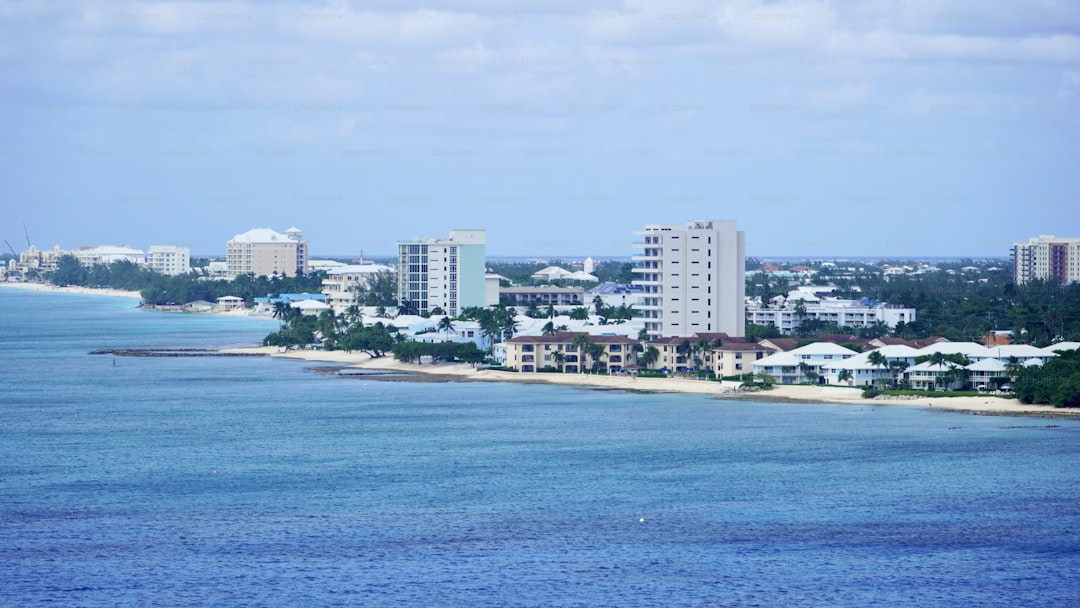
If you’re the type of traveler who values a seamless transition from the airport to the beach, Grand Cayman is honestly hard to beat. Because the island serves as a major global financial hub, the infrastructure here is leagues ahead of most Caribbean destinations, featuring incredibly reliable power, high-speed connectivity, and top-tier medical facilities that provide a real sense of security. You aren’t just getting a tropical getaway; you’re getting a destination that functions with the same logistical efficiency you’d expect at home. It’s that combination of high-end comfort and genuine ease that makes it a standout choice for families who want to avoid the typical stress of international navigation.
When it comes to wildlife, the experience here is surprisingly intimate and, frankly, much more controlled than what you find elsewhere. Take Stingray City, for example, where southern stingrays have been hanging out in shallow, waist-deep water for decades; they’re so accustomed to visitors that the interaction is entirely calm and manageable, even for younger kids. It’s a rare chance to get up close with marine life without needing to be an expert swimmer or dealing with the chaos of deeper waters. Plus, the island’s commitment to conservation is woven into the tourist experience, especially at the Cayman Turtle Centre, where you can see real-world efforts to protect green sea turtles in an environment that’s both educational and accessible.
Geologically, the island is fascinating because it lacks any natural rivers or streams, which is a massive win for water clarity. Without that sediment runoff, you’re looking at some of the most consistent snorkeling visibility in the region, and because the entire coastline is strictly managed through a comprehensive system of Marine Protected Areas, you can bet the reefs stay vibrant and healthy. If you’re looking to trade the beach for something different, the Mastic Trail or the ancient caverns at the Crystal Caves offer a cool, low-stress way to explore the island’s unique topography. It’s rare to find a place that manages its environment with this much foresight while keeping the visitor experience so remarkably stress-free.
Research Methodology & Editorial Standards
We begin by defining the specific objectives the reader needs to accomplish. Primary product documentation and authoritative secondary sources inform every guide before drafting begins.
Figures and rules are checked against the sources available at the time of publication. Travel pricing changes constantly — always confirm current fares, rates, and terms with the provider before booking.