
TSA PreCheck in 2026: Why $76.75 via IDEMIA Beats $85 — Buy or Skip?
TSA PreCheck is worth buying for travelers flying two or more round-trips per year on participating airlines, but only at the cheapest authorized provider.
| Takeaway | Detail |
|---|---|
| The same five-year credential is sold at three prices | $76.75 via IDEMIA, $84.95 via CLEAR, and $85.00 via Telos |
| Buy only if you fly 2+ round-trips per year | Skip if you fly once a year or less on a PreCheck-participating airline |
| PreCheck uses an expedited screening line | Travelers do not remove shoes, laptops, or liquids; members use a traditional metal detector |
| Membership lasts five years | Capital One states TSA PreCheck costs up to $85 for a five-year membership |
TSA PreCheck is worth buying for travelers flying two or more round-trips per year on participating airlines, but only at the cheapest authorized provider.
Skip it if you fly once a year or less, and enroll through IDEMIA at $76.75 instead of CLEAR at $84.95 or Telos at $85.00.
How PreCheck lanes actually work
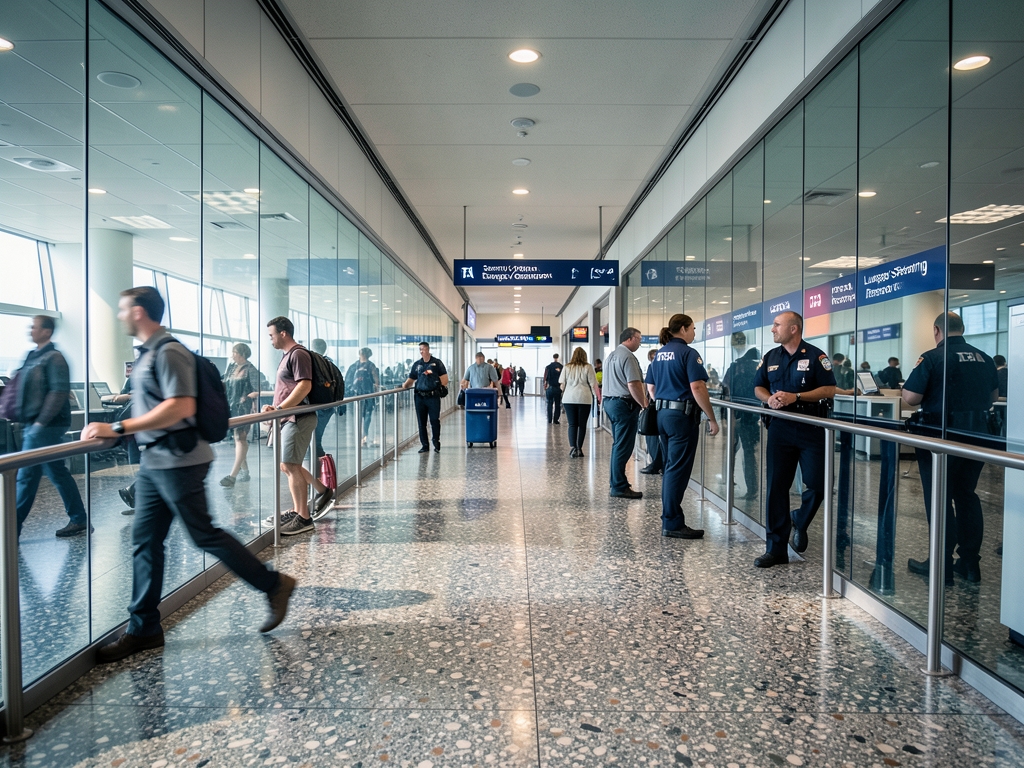
TSA PreCheck is not a separate line you can enter by showing a membership card; it is a different screening process tied to a specific flight. According to LOT Polish Airlines' passenger guide, you may use dedicated TSA PreCheck lanes only if your boarding pass displays the TSA PreCheck indicator. The practical check is simple: before joining a security queue, confirm the indicator appears on the mobile or paper boarding pass you plan to use, because that mark is what directs you into the dedicated lane.
The indicator matters because the screening steps change once you reach that lane. NerdWallet reports that TSA PreCheck members pass through a traditional metal detector rather than a full-body scanner. POPSUGAR Smart Living notes that travelers can keep shoes, laptops, and liquids in their bags during screening. That combination reduces the unpacking-and-repacking cycle at the bins, which is where standard security lines often slow down.
Getting that indicator starts before you arrive at the airport. Your Known Traveler Number must be added to the airline reservation before check-in, not merely saved in a frequent-flyer profile. A KTN stored in your account may not carry into every booking, so check the reservation details directly. If the number is missing, add it and refresh your boarding pass before you head to the airport so the PreCheck indicator has a chance to appear on that trip.
At the checkpoint, the routine is predictable. Enter the PreCheck lane shown for your boarding pass, place your carry-on on the belt, and follow the officer's instructions through the metal detector. Because your shoes, laptop, and liquids can stay packed, you spend less time handling items in public and more time moving through the queue. The benefit is not only speed; it is a simpler, more consistent screening experience from one trip to the next.
For travelers deciding whether the program fits their habits, the mechanism is the key test: will you repeatedly use a process that depends on the indicator, the dedicated lane, and lighter screening steps? When your trips regularly qualify for PreCheck screening, the convenience compounds over time. When they rarely do, the membership's on-paper benefit will not show up in your actual airport routine.
The evidence: three prices, one credential
AeroCorner's 2026 comparison says TSA PreCheck is sold through three TSA-authorized enrollment providers, and that the providers set different prices. For this section, the key check is the September 2026 price list for a new five-year enrollment. This is the only place these three figures appear together:
CLEAR's $84.95 enrollment buys the same credential IDEMIA sells, plus one thing worth naming: no-appointment, walk-in enrollment, which CLEAR advertises on its own PreCheck pages (clearme.com and tsaprecheckbyclear.tsa.dhs.gov). That convenience is real, and it is precisely what the extra $8.20 pays for. It does not buy a faster, broader, or longer-lasting credential. So the check is logistical, not financial: if you can reach an IDEMIA enrollment location and book a slot, there is no reason to hand CLEAR the premium. Use CLEAR only if the walk-in option is genuinely the difference between finishing enrollment this month and never getting around to it.
Telos, at $85.00, sits $8.25 above IDEMIA for the same five-year term, with no offsetting feature in the pricing. If your checkout screen reads $84.95 or $85.00, you are on CLEAR's or Telos's page — back out and finish on IDEMIA's instead. Any quote above the authorized provider's own listed figure is a markup layered on top, not a faster credential.
One thing the table cannot tell you: renewal pricing is set separately from new-enrollment pricing, and each provider sets its own. AeroCorner's figures cover new enrollments as of September 2026, so do not assume $76.75 is what your renewal invoice will say. Before paying a renewal, open that provider's current renewal page and compare it against the other two — the spread may have shifted, and the winner may change. Apply the same test regardless: the lowest authorized checkout for the same credential.
The practical sequence is short. Confirm you meet the enrollment requirements, complete the application through IDEMIA at $76.75, and keep the receipt with your five-year expiration date noted. When renewal comes due, re-run the three-provider comparison at that moment rather than defaulting to whoever holds your record. Providers count on renewal inertia; the price gap is small enough to ignore once and large enough to matter across cycles.

The $15.50/year math that decides it
At the IDEMIA price of $76.75 for a five-year membership, TSA PreCheck costs $15.35 per year—$76.75 divided by five. That is the whole decision: if saving 10 or more minutes at departure is worth more than $15.35 to you, the credential pays for itself; if not, it does not. AeroCorner's September 2026 comparison is the source for the $76.75 figure, and the arithmetic is simple enough to check on a phone before you enroll.
The "$85" that many articles still cite is not a universal price; it is the Telos price. Capital One's cost page says PreCheck costs up to $85 for five years, while AeroCorner's September 2026 provider comparison lists Telos at $85.00 and IDEMIA at $76.75. The gap is $8.25 per five-year cycle, so the myth that PreCheck "costs $85" is really a myth that every provider charges the same amount.
Being wrong has a small but real cost in both directions. Paying $85 when $76.75 was available wastes $8.25. Skipping PreCheck while flying four or more round-trips a year trades roughly 40+ minutes of checkpoint time for $15.35 a year, assuming each PreCheck departure saves at least 10 minutes. The first mistake is a one-time $8.25; the second is recurring time at every departure.
The break-even threshold is two paid airport visits per year: at $15.35 annually, two departures that each save 10+ minutes clear it. The practical rule used in this piece is stricter: enroll or renew through IDEMIA at $76.75 if you fly two or more round-trips per year on a PreCheck-participating airline, and skip it if you fly once a year or less. That keeps the $15.35/year math tied to actual travel rather than to an optimistic count of airport visits.

What the evidence does not establish
The 99% under-10-minutes figure is a TSA average cited by NerdWallet, not a guarantee for your airport, day, or holiday week; PreCheck lanes can back up during peak morning banks, so treat it as a planning benchmark rather than a promise.
PreCheck access is conditional on the boarding-pass indicator. LOT Polish Airlines' passenger guide says you may use dedicated TSA PreCheck lanes only if your boarding pass displays the TSA PreCheck indicator; if it is missing, or if the carrier does not participate, there may be no PreCheck lane for that flight.
The benefit is US-screening specific. LOT's guide covers US screening only, and Business Insider identifies 14 international airports where US-bound passengers go through customs before takeoff; those preclearance locations run their own process, so verify your departure airport's setup before assuming lane access.
The sources cited in this article do not list current renewal fees or any 2026 promotions. Before you enroll or renew, check IDEMIA's and CLEAR's official sites for the current renewal fee and any promotion, and compare the two before paying.
The table below lists common edge cases where PreCheck may underdeliver; it is a planning checklist, not a claim that the credential is worthless.
| Situation | What can happen | What to verify |
|---|---|---|
| Airline does not participate in PreCheck | There may be no dedicated PreCheck lane for that flight | Confirm participation before booking if PreCheck is the reason for choosing the fare |
| Boarding pass lacks the PreCheck indicator | LOT's guide ties lane access to the indicator, so standard screening may apply | Check the pass before leaving for the airport and contact the airline if it is missing |
| Departure outside the US or at a preclearance airport | LOT covers US screening only, and preclearance locations run their own process | Verify the departure airport's screening setup before assuming lane access |
| Peak morning bank or holiday week | PreCheck lanes can back up; the 99% figure is an average | Allow extra time and check airport-specific conditions before travel |
One traveler, one enrollment
For a traveler taking four U.S. round-trips each year, the cost of TSA PreCheck becomes easy to measure. Enrolling through IDEMIA costs $76.75 for a five-year membership, according to AeroCorner’s September 2026 pricing comparison. Dividing that fee across the expected travel volume — $76.75 ÷ (4 round-trips per year × 5 years) — works out to $3.8375, or about $3.84 per round-trip. That figure is the practical benchmark: if faster screening is worth roughly four dollars to you on each round-trip, the enrollment pays for itself on this schedule.
That per-trip figure turns a five-year fee into a simple value question: is faster screening worth about four dollars each time you fly? The same arithmetic applies to your own schedule; if you fly far less often than four round-trips per year, the per-trip cost rises quickly and the purchase is harder to justify.
The per-round-trip math only holds when your Known Traveler Number is correctly tied to every reservation. Before you rely on the benefit, run three checks for each trip. First, confirm that the airline operating your flight participates in TSA PreCheck and can print the indicator on boarding passes. Second, add your KTN to the reservation at booking, not just to your frequent-flyer profile, because the number needs to be attached to that specific trip. Third, verify the PreCheck indicator appears at online check-in; if it is missing, you should expect to be routed through standard screening. LOT Polish Airlines’ passenger guide notes that the TSA PreCheck indicator must appear on the boarding pass for access to TSA PreCheck lanes.
Use this checklist before every departure:
□ KTN added to airline profile AND this booking
□ Name on reservation matches government ID exactly
□ Boarding pass shows the TSA PreCheck indicator at online check-in
If the indicator does not appear, review the reservation for a missing KTN, a name mismatch, or a booking made before the number was saved to your profile. Correcting those details before you leave for the airport is far easier than trying to fix them at the counter. For the four-round-trip traveler in this example, catching those errors protects the $3.84-per-round-trip value you calculated when you enrolled.
Decision rules: buy, renew, or skip
If you fly at least two US round-trips per year on airlines that participate in TSA PreCheck, enroll through IDEMIA at $76.75 for a new five-year membership. AeroCorner's September 2026 comparison lists that as IDEMIA's new-enrollment price; use it as the benchmark when you are buying for the first time. Confirm the price on IDEMIA's enrollment page before you pay, because provider pricing can change.
If you already hold PreCheck, do not accept an automatic renewal without comparing quotes. Renewal prices are set per provider, and the available sources do not state them, so request your current provider's renewal price and IDEMIA's renewal price, then choose the lower one. A new-enrollment price is not a reliable proxy for a renewal price, and a provider that was cheapest for a new enrollment may not be cheapest at renewal.
If you fly once a year or less, skip: as the math above shows, that works out to $15.35 per use over five years, which is more than the time saved is worth to most travelers. If your actual use is lower than once a year, the per-use cost is even higher.
Apply the rule to your own itinerary count, not to a generic traveler: count only round-trips you actually expect to take on PreCheck-participating airlines, and exclude trips where you will not use a PreCheck lane. If your count is exactly two, compare the $15.35 per use with the time you expect to save on those two trips; do not assume the membership pays for itself automatically.
Before enrolling, confirm that the airports and airlines you use most often actually offer PreCheck lanes. If they do not, the $76.75 buys no benefit on those trips, and the skip rule becomes the better choice even for frequent flyers.
| If this is true | Then do this | Check before paying |
|---|---|---|
| You fly 2+ US round-trips per year on PreCheck-participating airlines | Enroll through IDEMIA at $76.75 | Confirm the current IDEMIA new-enrollment price |
| You already hold PreCheck | Compare renewal quotes before auto-renewing | Your current provider's renewal price and IDEMIA's renewal price |
| You fly once a year or less | Skip | Whether $15.35 per use is worth it to you |
Also worth reading Expert Strategies to Get Through TSA How to Use TSA PreCheck Touchless ID Global Entry or TSA PreCheck: One
What to do next
Frequently Asked Questions
How long does a TSA PreCheck membership last?
A TSA PreCheck membership lasts five years.
Do I need to remove my shoes, laptop, or liquids in the TSA PreCheck lane?
Travelers using TSA PreCheck do not remove shoes, laptops, or liquids and members use a traditional metal detector.
Can I get into the TSA PreCheck lane just by showing my membership card?
TSA PreCheck is not a separate line you can enter by showing a membership card; it is a different screening process tied to a specific flight.
What should I check on my boarding pass before entering a security queue?
Before joining a security queue, you should confirm the TSA PreCheck indicator appears on the mobile or paper boarding pass you plan to use, because that mark is what directs you into the dedicated lane.
How often do I need to fly for TSA PreCheck to be worth buying?
TSA PreCheck is worth buying for travelers flying two or more round-trips per year on participating airlines, but you should skip it if you fly once a year or less.
Which authorized provider offers the lowest price for the same TSA PreCheck membership?
The same five-year TSA PreCheck credential is sold at the lowest price through IDEMIA compared with CLEAR and Telos.
Quick answers
| At which three providers is the same five-year credential sold? | It is sold via IDEMIA, CLEAR, and Telos. |
| When is TSA PreCheck worth buying? | It is worth buying for travelers flying two or more round-trips per year on participating airlines, but only at the cheapest authorized provider. |
| When should a traveler skip TSA PreCheck? | Skip it if you fly once a year or less on a PreCheck-participating airline. |
| What must a boarding pass show to use dedicated TSA PreCheck lanes? | It must display the TSA PreCheck indicator. |
| What screening changes occur in a TSA PreCheck lane? | Travelers do not remove shoes, laptops, or liquids, and members use a traditional metal detector. |
Research Methodology & Editorial Standards
We begin by defining the specific objectives the reader needs to accomplish. Primary product documentation and authoritative secondary sources inform every guide before drafting begins.
Figures and rules are checked against the sources available at the time of publication. Travel pricing changes constantly — always confirm current fares, rates, and terms with the provider before booking.