
Tarmac Delay Rules: What to Document at the 2-Hour Mark
The DOT's 14 CFR Part 259 caps domestic tarmac delays at 3 hours and international at 4, with food and water owed at 2 hours and a $33,000-per-passenger fine ceiling from January 2026.
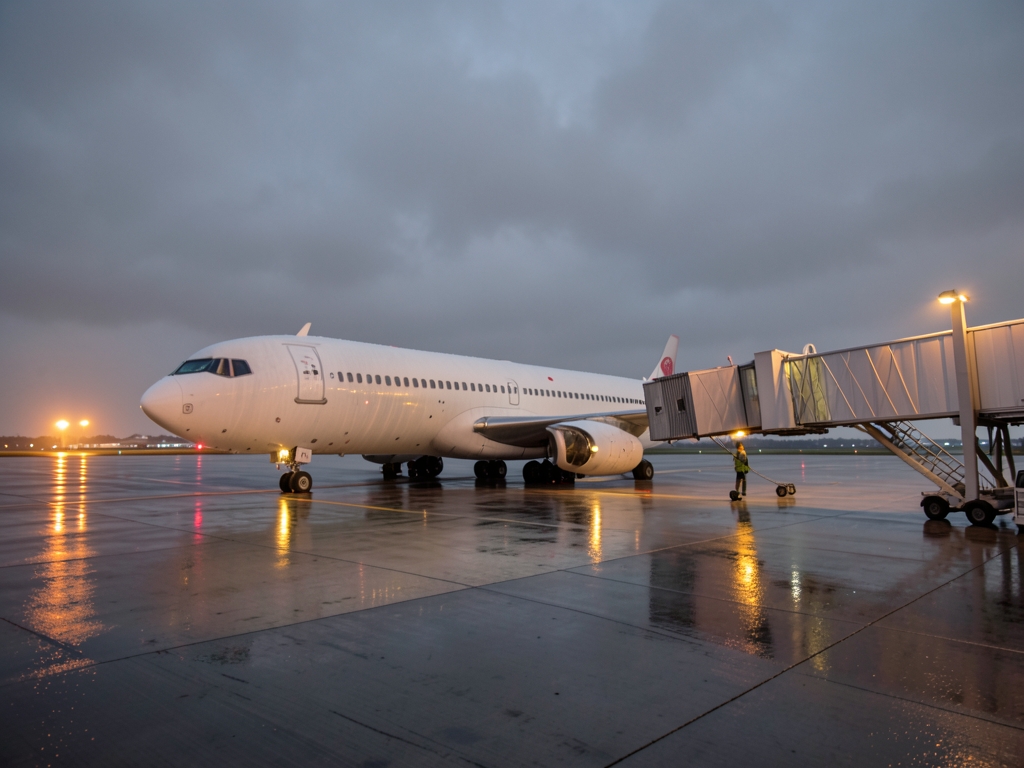
The DOT's 14 CFR Part 259 caps domestic tarmac delays at 3 hours and international at 4, with food and water owed at 2 hours and a $33,000-per-passenger fine ceiling from January 2026.
That protection only activates if you know when the clock starts, which exceptions apply, and how to document and escalate at the 2-hour mark.
What the 3-Hour Rule Actually Requires
The federal tarmac rule is not a single deadline — it is a checklist of obligations that kick in at different points on the clock. Under 14 CFR Part 259, as summarized on the DOT's tarmac delay page, a covered US airline must give passengers the chance to deplane after 3 hours on the ground for a domestic flight and after 4 hours for an international flight. Those are the outer limits, not the first duties. The earlier triggers are where most violations actually happen, and they are the ones you can document in real time.
The first hard trigger arrives at the 2-hour mark. Per TravelStacks' April 22, 2026 guide to the 2026 rules, food and water must be offered no later than 2 hours into the delay. Two obligations run the entire duration rather than starting at a threshold: working lavatories and medical attention if needed. If the cabin is hot, the toilets are out of service, or someone has asked for medical help and gotten none, that is a separate failure from the deplaning clock — note it with a timestamp, because it does not reset when the aircraft finally moves.
The announcement schedule is your evidence clock. Pilots must make PA announcements at least every 30 minutes covering the status of the delay and the options available, including the fact that deplaning is an option. That last element matters: an announcement that only says "we're waiting on a gate" is not the same as one that tells you you may get off. Write down the time of each announcement and what it actually said. A gap longer than 30 minutes, or a series of updates that never mention deplaning, is the kind of record a complaint can be built on.
| Clock point | What the airline owes you |
|---|---|
| Start of delay | Working lavatories; medical attention if needed |
| 2 hours | Food and water offered |
| Every 30 minutes | PA update on status and options, including deplaning |
| 3 hours (domestic) | Opportunity to deplane |
| 4 hours (international) | Opportunity to deplane |
At the 2-hour mark with no food, no water, and no mention of deplaning, start a paper trail: photograph the clock and any seatback display showing the time, screenshot your phone's timestamp, and ask the crew on the record — politely, by name if you have it — when the 3-hour domestic or 4-hour international deplaning point will be reached and whether you can get off now. Keep the question factual. You are not asking for a favor; you are asking them to state the plan against a rule with a fixed number.
One caution before you cite the rule to anyone: the deplaning obligation is not unconditional. The DOT's rule page and TravelStacks both note that safety, security, and air traffic control considerations can extend the clock, and the exceptions are where most disputes end up. Document the timeline anyway. The record is what lets you argue later that no exception applied.
The 2026 Numbers That Changed
The 2026 tarmac rule overhaul introduced a single figure that dominates every passenger’s risk calculation: the per-passenger fine ceiling now stands at $33,000, up from $27,500, effective January 2026, per TravelStacks’ April 22, 2026 guide. That fine number does not directly translate to a passenger payout; it is an enforcement ceiling. For any current enforcement trend or refund-processing claim, check the DOT’s flight-delay and tarmac-delay pages rather than assuming the figure changes your individual refund timing.
Under the same regulatory shift, the DOT’s 2024 automatic refund rule now mandates cash refunds—not travel vouchers—for any flight cancelled after a tarmac delay. If your plane sits on the tarmac past the 3-hour domestic mark (or 4-hour international mark) and the carrier cancels the flight, you are entitled to a refund in cash by default. This rule closes a longstanding loophole where airlines routinely offered vouchers instead of money, and it applies automatically; you do not need to request the refund for it to be processed.
For documentation, the article uses the door-close time as the practical marker, while the DOT’s tarmac-delay definition turns on being on the ground with no opportunity to get off the plane. At the two-hour mark, a separate requirement kicks in: the airline must provide food and water. This is not a suggestion—it is a regulatory trigger that applies regardless of whether the delay is domestic or international. Passengers should be aware that working lavatories and periodic crew announcements (at least every 30 minutes) are also mandated obligations; verify the exact start point against the current DOT tarmac-delay page.
For international travelers, the 4-hour limit remains the deplaning threshold, but a 2025 EU Commission interpretive guidance now treats a 4-hour ground wait as a mandatory “right to care” obligation, entitling passengers to meals, hydration, and deplaning where safe. Critically, tarmac time counts toward the EU arrival-delay threshold that triggers EUR 250/400/600 compensation; a 4-hour tarmac delay that results in a three-plus hour late arrival at the destination can simultaneously invoke both the U.S. fine ceiling and EU compensation rules, creating a layered rights scenario that savvy travelers can leverage.

Why Delays Are Spiking in 2026
The rule on paper has not changed much. The pressure on it has. A New York Times analysis of federal data reported that the rate of long tarmac delays had nearly doubled compared with 2024, with the climb accelerating during the second Trump administration. Check the current DOT data before drawing a route-specific conclusion; the practical point is to know your deplaning limit before boarding and to document from the 2-hour mark if the clock starts mattering.
The broader reliability picture points the same direction. New analyses of federal aviation data compiled by TheTraveler.org show US travelers enduring the worst mix of flight delays and extended tarmac waits in years, with 2025 reliability already sliding before 2026 began. Read that as a two-year deterioration rather than a single bad season — the kind of drift that shows up first in departure banks and gate holds, then in the tarmac numbers.
The timing is the part that catches people. As of June 9, 2026, TheTraveler.org reported that delays and tarmac waits had reached multi-year highs just as peak summer travel began. Summer is when aircraft are fullest and rebooking options are thinnest, so a ground hold in July costs you more than the same hold in February. If your trip falls in that window, build slack into connections and treat a tight same-day turnaround as a risk you are choosing to take.
What this means for the clock is practical. The delay rate is a base rate, not a prediction for your flight, so the useful move is to know which triggers apply before you need them. Check the DOT's tarmac delay page for the current rule text and confirm whether your flight is domestic or international, since the deplaning limit differs between the two. Then, at the two-hour mark with no deplaning offer, start documenting: photograph the clock, timestamp the crew's announcements, and ask on the record when the applicable limit falls. That record is what turns a bad afternoon into a claim the DOT can act on.
| Signal | What the data shows | What to do with it |
|---|---|---|
| Long tarmac delay rate, 2026 vs. 2024 | Nearly doubled (NYT analysis, Nov 2026) | Assume higher odds; know your limit before boarding |
| Overall reliability, 2025 | Worst mix of delays and tarmac waits in years (TheTraveler.org) | Pad connections; avoid tight same-day turns |
| Peak summer, as of June 9, 2026 | Multi-year highs (TheTraveler.org) | Document from the two-hour mark; ask the crew on record |
None of this changes what the airline owes you. It changes how likely you are to need it — and how much the documentation habit is worth when you do.
US vs EU Rules Compared
The most useful way to read the US and EU regimes side by side is to notice that they regulate different things. The US rule under 14 CFR Part 259 is a hard clock on the aircraft: a covered carrier must give you the chance to get off at the domestic three-hour mark and the international four-hour mark. EU261 contains no numeric tarmac limit at all. What it has instead is a compensation trigger tied to arrival delay, and that is where the two systems diverge in practice.
The EU piece moved in 2025. Per TravelStacks' 2026 tarmac guide, the European Commission's interpretive guidance now treats a four-hour ground wait as triggering mandatory "right to care" obligations — meals, hydration, and deplaning where it is safe to do so. Read that carefully: it is guidance on how to interpret the existing duty of care, not a statutory deplaning deadline with a fine attached the way the US rule works. If you are sitting on a European carrier at hour four, the operative question is whether the airline has met its care obligations, and your leverage is a complaint to the national enforcement body, not a DOT-style penalty.
The second EU mechanism is the one most passengers miss. Tarmac time counts toward the three-hour arrival-delay threshold that triggers EUR 250/400/600 compensation under EU261, according to TravelStacks. So a four-hour tarmac wait that pushes you into the destination more than three hours late will usually qualify — the delay is measured at arrival, not at departure, and the hours spent on the ground are not excluded from that calculation. That is the opposite of the US structure, where the tarmac clock and the compensation question are separate inquiries.
UK261 mirrors the EU approach under the UK CAA, per the same source, which means one documentation set travels. The practical consequence: keep a single log that works on both sides of the Channel. Record the time the aircraft door closed, the time it reopened, every PA announcement with a timestamp, and your actual arrival time at the gate. That log answers the US question (did the carrier breach the deplaning clock?) and the EU/UK question (how late did I arrive, and was care provided?) without you having to reconstruct anything later.
| Question | US (14 CFR Part 259) | EU261 / UK261 |
|---|---|---|
| Numeric tarmac limit? | Yes — 3h domestic, 4h international | No statutory limit; 4h ground wait treated as triggering care duties under 2025 Commission guidance |
| Does tarmac time count toward compensation? | Separate from the delay clock | Yes — counts toward the 3h arrival-delay threshold for EUR 250/400/600 |
| What you document | Door-close and deplaning-offer times | Arrival time at gate, care provided, receipts |
One caution before you file anything: the EU figures above are the statutory compensation bands, and eligibility depends on distance and the cause of the delay, so verify your specific flight against the airline's stated reason before asserting a number. The documentation habit is the same either way — start it at the two-hour mark and keep it running.
Where the Rule Breaks
The 3-hour domestic limit and 4-hour international cap are not absolute deadlines; they are conditional thresholds that the pilot in command can waive. Under 14 CFR Part 259, the rule is suspended when the captain determines that deplaning would compromise safety or security, or when air traffic control advises that returning to the gate would disrupt airport operations. If the crew cites either of these exceptions, the tarmac clock effectively pauses, and the airline is not subject to the per-passenger fine ceiling until the situation is resolved. Always ask the crew on the record which exception they are invoking before assuming your rights are triggered.
Foreign carriers operating into the United States are not automatically bound by the DOT’s tarmac provisions. Coverage applies only if the airline has voluntarily committed to comply with 14 CFR Part 259. Before booking or when a delay occurs, verify your carrier’s commitment on the DOT’s consumer protection pages. If an international flight is operated by a non-committing carrier, the 4-hour deplaning obligation and the $33,000 fine ceiling may not apply, leaving passengers reliant on the airline’s internal policies rather than federal enforcement.
When you hit the 2-hour mark on the tarmac with no deplaning offer, shift into documentation mode immediately. Photograph any visible clock displays or timestamped announcements, and press the crew for a definitive statement on when the 3-hour (domestic) or 4-hour (international) limit will be reached. If the airline fails to offer deplaning or adequate food and water by those thresholds, you have a concrete basis to request a full cash refund under the DOT’s 2026 automatic refund rule, rather than accepting a travel voucher.
3h40m at Newark
Under the DOT’s tarmac-delay framework, a delay becomes usable evidence only when it is logged minute by minute. At 0:00, when the doors close, start a note with the date, flight number if available, gate, and aircraft type if visible; then ask the crew on the record when deplaning will be offered. This is the first entry in the complaint file, not a later reconstruction.
At 2:00, if no snack service appears, photograph the seatback clock or cabin clock and timestamp the missed food/water duty. At 2:30, if there is no PA announcement, record the time of the silence and note the missed 30-minute update. At 3:00, the domestic limit is reached; if no deplaning offer is made, write down the exact time and the fact that no offer was made. Each entry should be factual: time, observation, and who made any statement.
At 3:40, when deplaning occurs and the flight cancels, the money issue becomes immediate. Ask for the unused ticket refund in cash, not a voucher, and decline any voucher in writing. Accepting a voucher can forfeit the cash refund, so the written refusal is the cost-control step. Keep the refusal, the refund request, and any agent response together.
The complaint filing sequence is then fixed: first, the written voucher refusal; second, the written demand for the unused-ticket cash refund; third, a DOT complaint through the aviation consumer protection complaint channel that attaches the minute-by-minute log, clock photos, announcement timestamps, and the crew’s on-record statements. The sequence matters because the DOT complaint is stronger when it shows the missed checkpoints and the passenger’s attempt to preserve the cash remedy, rather than a general complaint about the delay.
Worked Example: Run the Numbers
Consider a concrete numeric example: a domestic flight held on the tarmac for exactly 180 minutes. Under 14 CFR Part 259, the 3-hour domestic limit activates at the 180-minute mark, obligating the airline to allow deplaning. If the crew announces “we are at two hours” and then keeps the door closed for another 30 minutes, each minute past the 180-minute threshold is a potential violation. The $33,000 ceiling applies per passenger per violation; on a full 180-seat aircraft, the theoretical maximum exposure balloons to $5.94 million, though actual settlements typically resolve far below that ceiling.
Now run the numbers on the food-and-water trigger. The rule mandates that food and water be offered no later than the 2-hour mark. In the same 180-minute scenario, the 2-hour threshold arrives at minute 120. If the airline has not provided a snack or a bottle of water by that point, a second violation layer activates. Document the exact clock time of the announcement—photos of the aircraft’s onboard clock, timestamps of crew PA announcements—because the DOT treats the 2-hour and 3-hour marks as separate, enforceable obligations, not a single sliding scale.
For this example, the passenger who documents the 2-hour food-and-water mark and the 3-hour domestic deplaning mark has the strongest record. At that point, the airline faces two separate potential violation counts—one for failing food/water at the 2-hour mark and one for exceeding the 3-hour domestic limit. The $33,000-per-passenger fine ceiling is an enforcement upper bound, not a passenger payout; if the flight is cancelled after the delay, check the DOT’s automatic refund rule and request cash rather than a voucher.
Your Tarmac Action Checklist
At the 2-hour mark with no deplaning offer, your documentation protocol should activate immediately. Start by noting the exact doors-closed time, then photograph any posted delay notices for visual proof. Log every public address announcement timestamp; the rule requires updates at least every 30 minutes, and gaps in this record can strengthen a later complaint. At 2 hours and 45 minutes, ask the crew on the record when the 3-hour (domestic) or 4-hour (international) limit will be met. This on-the-record question creates a timestamped admission of the approaching limit, which is invaluable if the airline later contests your claim.
If the airline breaches the tarmac limit, the path to remedy is structured but time-sensitive. First, request deplaning once the 3-hour or 4-hour threshold is crossed. If the flight is cancelled after the delay, the 2026 automatic refund rule described in this guide says you are entitled to cash back, not travel vouchers, processed through the airline’s system; verify the current rule before relying on it. Following deplaning or cancellation, file a complaint with the DOT Aviation Consumer Protection at transportation.gov. Check the DOT complaint page for the current process and timing rather than assuming a fixed 24-hour window.
Should the delay extend past the limit and the airline refuse deplaning, your final recourse is to document the breach and submit the formal complaint immediately. The $33,000-per-passenger fine ceiling, effective January 2026, provides the regulatory teeth behind these protections, but the real leverage comes from the passenger who knows the clock, tracks the announcements, and acts within the 24-hour filing window. In 2026, the tarmac rule is only as powerful as the traveler who understands its triggers and executes the checklist without delay.
Also worth reading The Absolute Filthiest Places on US Airlines Challenge DOT's $775 Optimal Inflight Temperatures What
What to do next
Frequently Asked Questions
Does the rule force the airline to open the doors as soon as a tarmac delay begins?
No — the chance to deplane is an outer limit reached only after the domestic or international ground-delay ceiling, not a duty that starts when the delay begins.
What is the earliest thing an airline is actually required to provide during a tarmac delay?
The first hard trigger is the food-and-water mark, by which point food and water must be offered no later than that point into the delay, per TravelStacks' April 22 guide to the updated rules.
Do working lavatories and medical care only kick in once a delay reaches a certain length?
No, working lavatories and medical attention if needed are obligations that run the entire duration of the delay rather than starting at any threshold.
If the cabin is hot and the toilets are out of service, does that count against the deplaning deadline?
No, a hot cabin, out-of-service toilets, or a medical request that goes unanswered is a separate failure from the deplaning clock and should be noted with a timestamp.
Which regulation and which carriers do these tarmac obligations apply to?
They come from 14 CFR Part 259, as summarized on the DOT's tarmac delay page, and apply to covered US airlines.
When does the per-passenger fine ceiling for tarmac violations take effect?
The per-passenger fine ceiling applies from January of the year covered by the updated 2026 ruleset described in the DOT summary.
Quick answers
| What must be offered no later than 2 hours into a tarmac delay? | Food and water must be offered no later than 2 hours into the delay. |
| What are the two obligations that run the entire duration of a tarmac delay rather than starting at a threshold? | Working lavatories and medical attention if needed. |
| What must be documented with a timestamp if the cabin is hot, toilets are out of service, or medical help is requested but not provided? | If the cabin is hot, the toilets are out of service, or someone has asked for medical help and gotten none, that is a separate failure from the deplaning clock. |
| At what point does the $33,000-per-passenger fine ceiling from January 2026 apply? | The $33,000-per-passenger fine ceiling from January 2026 applies to tarmac delays. |
Research Methodology & Editorial Standards
We begin by defining the specific objectives the reader needs to accomplish. Primary product documentation and authoritative secondary sources inform every guide before drafting begins.
Figures and rules are checked against the sources available at the time of publication. Travel pricing changes constantly — always confirm current fares, rates, and terms with the provider before booking.