
Tarmac delay rules 2026: 3-hour domestic vs 4-hour international rebook or wait
For the traveler already on the aircraft, the useful check is simple: if the delay is projected past the threshold, start the rebook in the app.
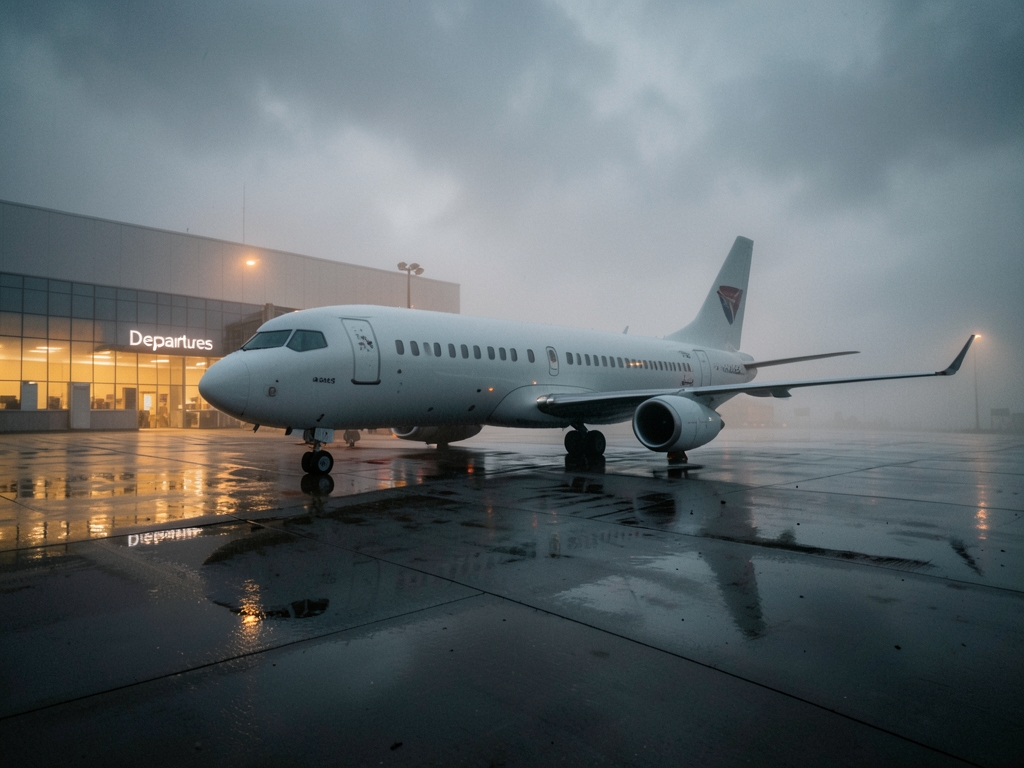
For the traveler already on the aircraft, the useful check is simple: if the delay is projected past the threshold, start the rebook in the app. If the app provides a change, take it. If not, call an agent. The goal is to reduce the time spent waiting, missed connections, and uncertainty.
The final comparison comes down to effort and speed. Rebooking in the app is the winner at the two-hour threshold because it is self-service and avoids the counter line, consistent with the expert rebooking guidance NPR's Nov. 18, 2026 piece collects. Rebooking via phone or agent is slower and the same in outcome. Staying and waiting is the weakest because it leaves the disruption unchecked. Demanding a gate return at the limit is a fallback, not a strategy. Start the app rebook as soon as the delay crosses the point where waiting becomes a real choice.
Costs and numbers that matter
Start with the cost split: an airline-initiated disruption and a voluntary change are not priced the same. Airfiesta’s October 4, 2026 guide says that when a U.S. carrier changes your flight, it rebooks or refunds without a change fee, but a fare difference can still apply. That means “no change fee” is not the same as “no out-of-pocket cost.” Before you accept any replacement itinerary in the app, compare the new flight’s fare class with the one you bought; the class is what tells you whether the swap is truly costless.
The significant-change benchmark is the cost check for which pricing lane you are in. Airfiesta identifies a 3-hour domestic shift or a 6-hour international shift in the U.S. as significant. Write that down as a cost threshold, not as the onboard deplaning clock: once the disruption reaches that kind of schedule shift, you have a stronger basis for asking the carrier to treat the rebooking or refund as airline-initiated rather than a voluntary ticket change.
If you are making the change yourself for your own convenience, assume the carrier will price it under voluntary rules until it confirms otherwise. Skyscanner’s May 22, 2026 fee guide says change fees can vary by airline, fare type, route, and length of time until scheduled departure. Upgraded Points’ June 10, 2026 guide likewise ties change and cancellation costs to fare class, airline, and whether the trip is domestic or international. The check is simple: open your carrier’s current schedule-change fee table on its website before the trip, because 2026 figures change by carrier.
Fare conditions also control what you can move. Before accepting any alternative, open the rebooking section of your carrier's website or app and read the fare conditions attached to your specific booking, looking for the rule that separates a schedule-change waiver from a fare-class upgrade or downgrade. If the new option sits in a different class, the price shown at checkout is the number to evaluate, not the original fare you remember paying.
When the app offers several alternatives, rank them by total cash outlay and certainty, not by the shortest wait alone. First, confirm whether the carrier labeled the change involuntary or voluntary. Second, check the replacement fare class. Third, look for any fee waiver tied to the disruption. That sequence keeps you from paying a voluntary-change fee on a carrier-caused shift, and it keeps a no-fee rebooking from hiding a higher fare in the new class.
What the evidence does not establish
The first check is where you are, not how long the delay has lasted. Before boarding, an aircraft can sit at the gate with its doors open without triggering tarmac-delay protections. The edge-case table below separates when the 3/4-hour rule breaks from when it still wins; use it before treating the clock as a deplaning right.
| Situation | Does the tarmac rule apply? | Reader check |
|---|---|---|
| Five-hour gate hold before boarding, doors open | No: this is not a tarmac delay | Use the significant-change refund framework, not deplaning rights |
| On aircraft, U.S. domestic flight, no safety or security exception | Yes: the 3-hour benchmark remains relevant | Confirm coverage and monitor crew announcements |
| On aircraft, international flight to or from the U.S., no exception | Yes: the 4-hour benchmark remains relevant | Confirm coverage and monitor crew announcements |
| Pilot or air traffic control invokes a safety or security reason | The clock can be exceeded | Document the reason and timing; do not treat the limit as a guaranteed exit |
| Foreign carrier, itinerary does not touch the U.S. | DOT’s rule may not govern | Check EU261 or applicable local consumer rules |
DOT guidance recognizes safety and security exceptions, so a pilot or air-traffic-control call can override the clock. That makes the limit a strong expectation rather than a guarantee. If crew cite an exception, record the announcement and elapsed time, then check the app for rebooking or refund options instead of waiting for a deplaning promise.
International scope also needs a route check. Flights to and from the United States use the 4-hour benchmark, but a foreign carrier’s non-U.S. itinerary may fall under EU261 or local consumer law. Upgraded Points’ 2026 compensation guide is a starting point for comparing U.S. and European rights; verify the operating carrier, departure country, and arrival country before relying on either regime.
For an open-door gate hold, switch frameworks: Airfiesta’s 2026 guide explains the significant-change route to rebooking or refund, while the tarmac rule supplies no deplaning right. Check whether the schedule change qualifies under the applicable rule and review the ticket’s fare conditions before accepting an alternative.

JFK–LIS delay decision
Picture a round-trip transatlantic economy ticket with a next-day connection abroad. The airline app shows the inbound aircraft delayed past the two-hour reader-rule threshold, pushing your projected departure well into the evening. That is checkpoint one: do not just note the new time, measure the downstream damage. If the delay puts your next-day connection at risk, the question is no longer whether the wait is comfortable, but whether the original itinerary still works. Check the connection's minimum transfer time in the app and compare it against the projected arrival before deciding anything.
Checkpoint two is the in-app rebook. Because the disruption is airline-initiated, Airfiesta’s October 4, 2026 flight-change guide notes that you can rebook or request a refund without a change fee, while a fare difference may still apply depending on the alternative you choose. Before accepting, compare the fare class of each alternative the app shows with the one you bought; a same-class swap is the cheapest outcome, but the checkout screen is the only place that number is confirmed. The immediate value of acting is certainty: you trade an uncertain connection for a confirmed seat before other passengers take it.
Checkpoint three comes if you stay with the delayed flight. Before boarding, keep checking the app for another departure slip, a gate change, or an alternative that preserves the Lisbon connection. After you board, your ability to self-rescue drops sharply because you are no longer comparing open options on your phone; you are waiting for the operation to resolve. If the connection breaks, the recovery cost is usually paid in time and disruption, including an unplanned overnight, meals, ground transport, or waiting for the next available seat.
The cost of being wrong runs in both directions, which is why the checkpoint matters more than a reflex. Rebooking immediately can backfire if the original flight recovers, the later alternative arrives too late for your plans, or the new itinerary creates a tighter connection than the one you left. Waiting can backfire if the delay grows and the same-fare alternative disappears. A same-class, no-fee in-app move at checkpoint two is a low-cost hedge, while waiting carries the higher risk of losing both the connection and the easiest recovery option.
Before you commit, capture screenshots of the delay notice, the projected departure, and the alternative you select, then confirm the Lisbon connection in the updated itinerary. The walkthrough is straightforward: at T-90 minutes, identify the connection risk; when the delay reaches 2 hours 15 minutes, compare the no-cost in-app option against the cost of missing the next leg; and only stay put when the original itinerary still protects the connection and the backup option has clearly worsened.
Decision rules for the 2026 tarmac clock
If the projected delay is under two hours, wait at the gate and monitor the airline's app. Refresh the estimate, check whether the departure time has moved again, and review alternative flights without changing your ticket. Check the app again before the posted departure time so a worsening estimate does not catch you idle. This is the monitoring phase: preserve your options while the projection remains below the rebooking trigger, and avoid spending that time in a counter line that may not move faster than the app.
If the projection reaches two hours or more, rebook in the app immediately. Open the airline's self-service flow, compare the itineraries offered, and complete the change before spending more time in line. NPR's Nov. 18, 2026 guide to getting rebooked fast supports the practical comparison: self-service beats the counter line when you need to act quickly. If the app offers several choices, select one you can actually accept rather than the first option shown. Confirm the replacement itinerary in the app before you give up the original booking.
If the airline's schedule change exceeds three hours domestically or six hours internationally, decline the proposed change and request a full cash refund instead of rebooking. Airfiesta's Oct. 4, 2026 guide identifies those shifts as its significant-change benchmark. Save the schedule-change notice, submit the refund request through the airline's channel, and keep the confirmation. Make the refund choice explicit in your request instead of simply rejecting the new itinerary. This rule applies to the airline's change, not merely to a fluctuating delay estimate.
If you are aboard with the doors closed, note the door-close time and keep it visible as your personal checkpoint. At three hours on a domestic flight or four hours on an international flight, request deplaning and ask the crew to confirm the return-to-gate plan. Make the request clearly and calmly, then follow crew instructions. If the crew cannot deplane you immediately, ask for an update and keep your own time record. The action is to escalate at the threshold, not to wait silently for the airline to notice your concern.
Also worth reading Ground stops: how to price rebooking FAA ground-stop recovery: verify Flights after the nationwide ground
What to do next
| Step | Action | Why it matters |
|---|---|---|
| 1 | If the inbound or outbound delay is projected at the reader rule threshold, open the airline app and start rebooking immediately. | The reader rule is the rebooking trigger; the DOT tarmac rule is only the hard ceiling once you are already on the aircraft. |
| 2 | If you are already on the aircraft, use the DOT tarmac rule as the exit trigger: demand return to the gate at the 3-hour domestic limit or the DOT tarmac rule's international limit. | Those limits apply only after boarding and are the hard ceiling on waiting, not the moment to begin rebooking. |
| 3 | After the aircraft returns to the gate, rebook from the jet bridge in the app instead of waiting for another tarmac update. | The required sequence is return to gate first, then rebook from the jet bridge. |
| 4 | Before accepting a wait, check the significant-delay benchmark: in the US, 3 hours domestic or 6 hours international is significant. | That benchmark classifies the disruption; it does not replace the reader rule or the DOT tarmac rule. |
| 5 | When the app shows a rebooking, check the airfiesta item's fare-difference note: a change made without a change fee can still carry a fare difference. | The note prevents treating a waived change fee as a free change. |
| 6 | Confirm the fare-class fee note before you finalize in the app: change or cancel fees vary by airline and by domestic vs international travel. | The fee note governs the rebooking you started at the reader rule threshold. |
Frequently Asked Questions
When should I start rebooking in the app during a tarmac delay?
You should start the app rebook as soon as the delay crosses the point where waiting becomes a real choice.
What should I do if the app does not show a rebooking option?
If the app does not provide a change, you should call an agent.
Is rebooking by phone or with an agent as fast as using the app?
Rebooking via phone or agent is slower and the same in outcome.
Why is waiting out a tarmac delay considered the weakest option?
Staying and waiting is the weakest because it leaves the disruption unchecked.
Should I demand a gate return when a tarmac delay hits the legal limit?
Demanding a gate return at the limit is a fallback, not a strategy.
Can I still owe money if the airline rebooks me after changing my flight?
When a U.S. carrier changes your flight, it rebooks or refunds without a change fee, but a fare difference can still apply.
Quick answers
| What is the useful check for a traveler already on the aircraft? | For the traveler already on the aircraft, the useful check is simple: if the delay is projected past the threshold, start the rebook in the app. |
| What should a traveler do if the app provides a change or does not? | If the app provides a change, take it; if not, call an agent. |
| Why is rebooking in the app the winner at the two-hour threshold? | Rebooking in the app is the winner at the two-hour threshold because it is self-service and avoids the counter line. |
| What is said about staying and waiting? | Staying and waiting is the weakest because it leaves the disruption unchecked. |
| What is the cost split that matters? | Start with the cost split: an airline-initiated disruption and a voluntary change are not priced the same. |
Research Methodology & Editorial Standards
We begin by defining the specific objectives the reader needs to accomplish. Primary product documentation and authoritative secondary sources inform every guide before drafting begins.
Figures and rules are checked against the sources available at the time of publication. Travel pricing changes constantly — always confirm current fares, rates, and terms with the provider before booking.