
Flights after the nationwide ground stop: Recheck before rebooking or use 24-Hour Rule?
Practically, that means you should first ask the airline to place you on the earliest nonstop it can confirm under the waiver, even if the departure looks inconvenient.
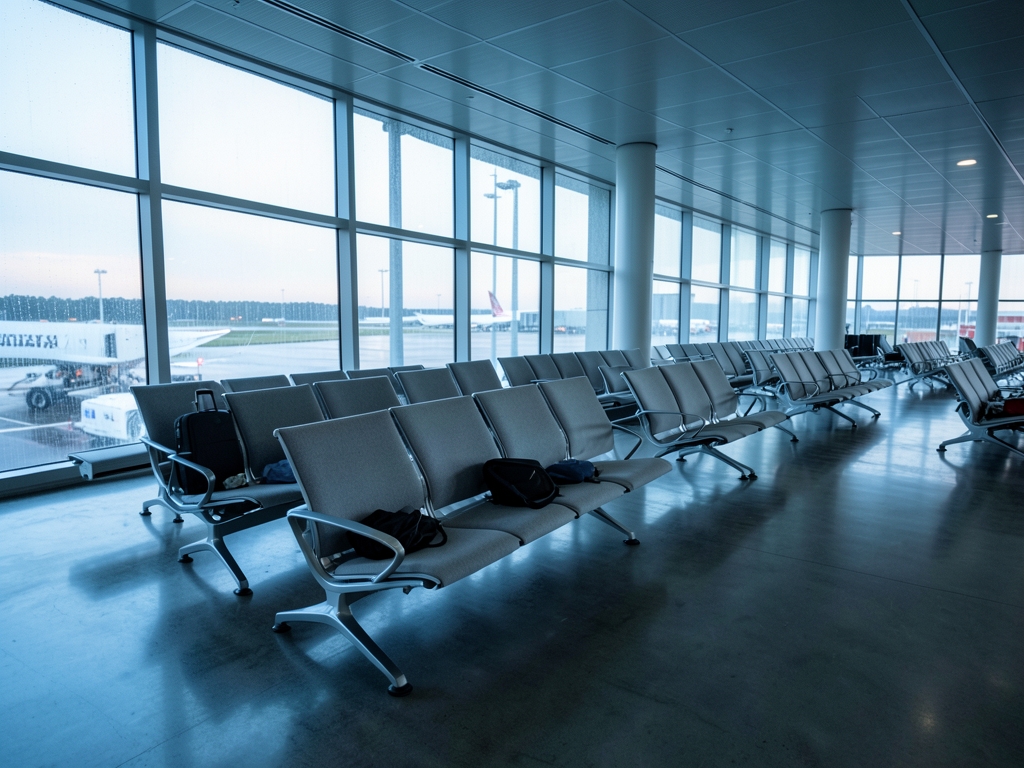
Practically, that means you should first ask the airline to place you on the earliest nonstop it can confirm under the waiver, even if the departure looks inconvenient. Flight expert Derek Cann, quoted by USA Today, advised that “the earliest flight of the day and nonstops are your best bets for avoiding knock-on delays.” That advice fits the waiver path: you keep the original fare basis and take the most reliable seat the carrier can give you, rather than restarting the transaction as a shopper.
Use the 24-hour rule only when you are the one creating a new booking and the replacement fare you find is worse than what the waiver channel can hold for you. Before you cancel anything, compare the exact new-ticket price with the waiver option in front of you, then check that the new purchase meets the DOT advance-purchase condition and that your confirmation email shows the refundable window. If the new fare is better and the timing qualifies, cancel the new ticket for a full refund and rebook; if it is worse, stay with the waiver and let the airline move the trip you already own.
Costs: what rebooking should cost you
The cost-of-being-wrong framing here is simple: if your original ticket was disrupted and you use the airline’s waiver channel, the rebooking should cost $0 in change fees and may carry $0 fare difference if you accept a comparable flight. If you cancel that disrupted ticket and rebook as a fresh purchase into the post-stop sellout, you can be exposed to the current fare difference — potentially hundreds of dollars — because scarce seats after a systemwide disruption tend to price like last-minute inventory.
Start with the waiver path because it preserves the economics of the ticket you already bought. Before you accept any replacement flight, open your airline’s alert page or disruption waiver notice and verify the exact terms: whether the waiver covers your origin and destination, what date range it applies to, whether it permits a change to a comparable flight, and whether the airline is waiving both the change fee and any fare difference. If the replacement is genuinely comparable and the waiver says the fare difference is waived, your out-of-pocket cost should be $0. That is the benchmark every other option has to beat.
The wrong path is treating your disrupted ticket like a cancellation and then shopping for a new fare. Once you cancel, you are no longer protected by the original ticket’s value in the same way; you are buying whatever the airline is currently selling. After a nationwide ground stop, that matters. The New York Times reported that at least 3,000 flights scheduled for Saturday were canceled as airlines and airports struggled to recover, and other coverage described thousands of travelers still rebooking after the stop. When seats are scarce, the current cash price can be far above the fare you originally locked in.
To measure your exposure before you touch the ticket, pull up your original confirmation and identify the fare basis and the total price you paid, keeping in mind whether that figure is one-way or round-trip. Then search the same itinerary as a new cash purchase and compare like with like: one-way against one-way, round-trip against round-trip, and fare against fare rather than taxes or add-ons. The gap between those two numbers is the rough cost of abandoning the waiver path. If the new fare is higher, that difference is the price of being wrong — and it can dwarf any convenience gained by clicking “cancel” first.

What the evidence does not establish
The waiver-first rule has real limits, and they are worth knowing before you assume the airline’s disruption language covers your ticket. The ground stop itself did not publish per-program rebooking rules for award travel, loyalty redemptions, or tickets issued outside the carrier’s own channel. That does not mean you lose protection; it means the mechanism you use to recover may differ. Start by identifying who issued the ticket and who controls the change, then match that to the carrier’s disruption policy rather than guessing from the general waiver language.
Award tickets are the clearest example. The available sources contains no loyalty-program-specific rebooking terms, so check your program’s disruption policy directly instead of assuming the cash-ticket waiver terms apply in the same way. The practical check is whether the program allows involuntary changes back into award inventory, whether it charges or refunds redeposit fees after a disruption, and whether it will confirm a replacement itinerary through the airline’s waiver desk or only through the loyalty servicing line. If the first available nonstop is available for cash but not as award space, ask the agent to quote both paths before you commit; the goal is to preserve the value of the original redemption without paying a new fare.
Codeshares and third-party bookings create a similar split between who operates the flight and who can change the ticket. The ground stop does not state how online travel agencies process FAA ground-stop waivers, so call the operating airline first and ask whether the waiver applies to your ticket even though it was issued elsewhere. If the airline confirms the waiver, ask whether it can make the change directly or whether the change must be routed back through the OTA. Do not let an OTA interface push you into a voluntary cancellation flow before you have that answer; a voluntary cancellation can turn a protected change into a new purchase.
| Situation | What the evidence establishes | Best check before acting |
|---|---|---|
| Standard cash ticket bought directly from the airline | The waiver-first approach is the baseline for disrupted travelers. | Use the airline’s waiver channel and ask for the earliest nonstop at no added cost. |
| Award ticket | The available sources gives no per-program rebooking rules. | Check the loyalty program’s disruption policy and ask how award space, redeposits, and fees are handled. |
| Codeshare or OTA-issued ticket | The available sources does not explain OTA waiver processing. | Call the operating airline first, then follow its instruction on whether the OTA must complete the change. |
| New ticket bought after the stop began | This is the edge case where cancel-and-rebook can still be useful. | Compare the replacement nonstop under the 24-hour rule only if the new booking qualifies and the fare is better. |
The 24-hour rule still has a narrow role, but it is not a general workaround for a disrupted original ticket. It matters when you bought a new ticket after the stop began and then found a better nonstop: in that case, canceling the fresh booking and rebooking may be the cleaner path, provided the purchase still qualifies under the rule and the replacement fare is actually lower. For the original trip caught by the ground stop, the first move remains the airline’s waiver channel, because that is the route most likely to preserve the fare you already bought.
One more practical check: when you speak to an agent, use precise language. Say your flight was disrupted by the FAA ground stop and ask for rebooking under the airline’s waiver, not a voluntary cancel. Then ask the agent to confirm whether the new itinerary is nonstop, whether any fare difference or change fee is being waived, and whether the ticket remains in the same form of payment or award program. Those questions expose the edge cases early, before a workaround creates a cost that the waiver path would have avoided.

Rebooking a canceled flight
Start with status, not strategy. Open the airline app and confirm whether your flight is marked canceled rather than merely delayed; with thousands of flights disrupted across the recovery period, that single status line determines whether you are using the airline's waiver channel or watching a delay. If it says canceled, move to waiver rebooking; if it says delayed, keep monitoring and do not cancel a ticket the airline has not canceled.
Checkpoint 1 is the status check. Screenshot the canceled status and note your original confirmation number, flight number, date, and route in one place. A delay can still become a cancellation, but a cancellation is what triggers free rebooking under the waiver; the 24-hour rule is for a ticket you just purchased, not for a flight the airline canceled.
Checkpoint 2 is the waiver window. Go to the airline's travel alerts or waivers page, find the notice tied to the Nov. 13 ground stop, and confirm your travel dates are inside the covered range. Before you pick any replacement, write down the waiver's book-by and rebook-by dates; if your dates are not covered, stop and use the carrier's normal change rules instead of assuming the waiver applies.
Checkpoint 3 is seat selection. As Going flight expert Derek Cann told USA Today, "The earliest flight of the day and nonstops are your best bets for avoiding knock-on delays." Search nonstop options first, then the earliest departure that gets you in the same day; if you must connect, choose a connection with enough buffer to absorb a late inbound aircraft rather than the shortest legal connection.
Copy-usable checklist:
| Step | Action |
|---|---|
| 1 | Confirm canceled, not delayed, in the app; save screenshot and original details. |
| 2 | Open travel alerts; confirm dates covered; record book-by and rebook-by dates. |
| 3 | Search nonstop first, then earliest departure; avoid tight connections. |
| 4 | Rebook through the waiver channel; keep original confirmation until ticketed. |
| 5 | Use the 24-hour rule only if you bought a new ticket and it is within 24 hours. |

Worked Example: Run the Numbers
Here is the one worked example this section runs end to end. Illustration only: a solo traveler booked a round-trip ticket from Philadelphia International Airport (PHL) to Sarasota-Bradenton International Airport (SRQ) for travel in 2026. The original round-trip fare paid was $300. The traveler’s flight was disrupted by the nationwide ground stop, and the airline’s waiver channel offered the earliest available nonstop replacement at no additional cost while preserving the original $300 round-trip fare. Separately, the traveler checked the cash price of buying a brand-new ticket on that same replacement itinerary and found a new round-trip fare of $450. Those are the only inputs: $300 original round-trip fare, $0 waiver change cost, and $450 new round-trip replacement fare.
Step one is to price the waiver route. Illustration only: original round-trip fare paid, $300, plus waiver rebooking charge, $0, equals $300 total out of pocket for the replacement round trip. The check here is not just the dollar amount; it is whether the airline’s waiver channel keeps the fare intact and places you on the earliest nonstop with a seat. USA Today’s Nov. 13, 2026 report quoted flight expert Derek Cann advising that “the earliest flight of the day and nonstops are your best bets for avoiding knock-on delays,” which is the operational reason to price that option first.
Step two is to price the cancel-and-rebook route on the numbers as given. Illustration only: new replacement round-trip fare, $450, minus original round-trip fare paid, $300, equals $150 of additional fare if the traveler cancels and starts over. This calculation compares round-trip to round-trip, so the units match. If you are checking a one-way quote against a round-trip ticket, stop and convert the comparison correctly before treating the difference as savings.
Step three is the head-to-head. Illustration only: waiver route total, $300, versus cancel-and-rebook total, $450, leaves a $150 difference in favor of the waiver route. That is the break-even trigger for this example: cancel-and-rebook would only become financially competitive if the new round-trip replacement fare were $300 or less, because $300 minus the original $300 round-trip fare equals $0 additional cost. At $450, the new-ticket route is worse by $150.
The winner for this example is the waiver rebooking: it preserves the $300 round-trip fare, adds $0 in stated rebooking cost, and beats the $450 new-ticket price by $150. The practical rule is to run the same arithmetic with your own quotes: write down the original fare, the waiver-channel replacement cost, and the new-ticket replacement fare in the same trip unit, then compare totals. If the new ticket is cheaper than the preserved fare after all stated costs, the break-even trigger has been crossed; if it is higher, the waiver route wins on this calculation.

Decision rules for the next outage
Use these if/then rules in order, and keep them separate from the broader comparison of rebooking channels. Start with the status of the ticket you already hold. If that ticket existed before the ground stop and your flight was canceled or significantly delayed, use the airline’s disruption or waiver channel to move to the earliest available nonstop at no cost under the waiver. Do not voluntarily cancel that original ticket first. Voluntary cancellation can put you into a different refund and fare path, while the waiver channel is the route that preserves the disrupted booking and its fare treatment.
Your check is straightforward: open the original confirmation, confirm the booking was made before the disruption, then look for the airline’s waiver or rebooking tool tied to the outage. If the tool offers a replacement itinerary, compare it against the earliest nonstop the airline can actually confirm. As flight expert Derek Cann advised USA Today, “The earliest flight of the day and nonstops are your best bets for avoiding knock-on delays.” That matters during a system recovery, when a later departure can inherit aircraft, crew, and connection problems from earlier in the day.
If you bought a new ticket during or after the stop and now regret that purchase, switch rules. The 24-hour cancellation rule is for the fresh booking, not for rescuing an older disrupted itinerary. Check the exact purchase time in your confirmation email and calculate the cutoff from that time, not from the time you first checked the airline app or spoke with an agent. If you are still inside the window, cancel the new ticket for a refund under the rule, then price the replacement separately before buying again.
The knock-on-delay rule applies most sharply if you are traveling in the recovery window on Saturday and after. USA Today reported that travelers were still facing delays and cancellations on Saturday, and the New York Times reported that at least 3,000 flights scheduled for Saturday were canceled. In that environment, do not choose a later itinerary just because it looks cheaper or more convenient on a map. Prioritize the earliest nonstop of the day, because later flights have more chances to absorb residual cancellations and aircraft rotations from the prior disruption.
So the practical sequence is: disrupted preexisting ticket, use the airline waiver first; new ticket bought during or after the stop, check the 24-hour refund window; recovery-period travel, take the earliest nonstop available when avoiding knock-on delays is the priority. Before you commit, verify three things in writing: the original purchase time, the airline’s stated waiver terms for the affected date, and the final fare or refund amount shown before payment. If those checks point in different directions, pause and contact the airline before giving up the original booking.
Also worth reading Award Rebooking After a Ground Stop Newark Ground Stop Rebooking US Flights Grounded Nationwide: Cash
What to do next
| Step | Action | Why it matters |
|---|---|---|
| 1 | Confirm your flight was canceled or delayed by the Nov 13, 2026 nationwide ground stop, then start in your airline's waiver channel. | Waiver rebooking is free and keeps your fare; recovery disruption after at least 3,000 Saturday cancellations can constrain options. |
| 2 | Choose the earliest nonstop available replacement flight. | Derek Cann advised the earliest flight of the day and nonstops are best bets for avoiding knock-on delays. |
| 3 | Do not voluntarily cancel a disrupted ticket to chase a cheaper fare. | That forfeits waiver protection; the 24-hour rule is not for disrupted tickets. |
| 4 | If you bought a NEW ticket after the stop, verify it appears in your account within 24 hours before cancel-and-rebook under the 24-hour rule. | The rule limits cancel-and-rebook to newly purchased tickets. |
| 5 | Recheck your airline's waiver channel after the Nov 13, 2026 ground stop as recovery proceeds. | Recovery disruption affects rebooking options, so availability can change. |
| 6 | Keep the disrupted ticket in place until the waiver replacement is confirmed. | Prevents losing your fare while rebooking through the waiver channel. |
Frequently Asked Questions
Should I take an early nonstop that looks inconvenient if the airline offers it under the waiver?
Practically, that means you should first ask the airline to place you on the earliest nonstop it can confirm under the waiver, even if the departure looks inconvenient.
Why would an early nonstop be preferable when knock-on delays are a concern?
Flight expert Derek Cann, quoted by USA Today, advised that “the earliest flight of the day and nonstops are your best bets for avoiding knock-on delays.”
What do I keep if I accept the airline's most reliable available seat instead of starting over as a shopper?
That advice fits the waiver path: you keep the original fare basis and take the most reliable seat the carrier can give you, rather than restarting the transaction as a shopper.
When is it appropriate to use the 24-hour rule instead of the waiver channel?
Use the 24-hour rule only when you are the one creating a new booking and the replacement fare you find is worse than what the waiver channel can hold for you.
What should I compare and verify before canceling anything to pursue a new ticket?
Before you cancel anything, compare the exact new-ticket price with the waiver option in front of you, then check that the new purchase meets the DOT advance-purchase condition and that your confirmation email shows the refundable window.
If the new fare is better and the timing qualifies, what should I do with the new ticket?
If the new fare is better and the timing qualifies, cancel the new ticket for a full refund and rebook; if it is worse, stay with the waiver and let the airline move the trip you already own.
Quick answers
| What should you first ask the airline to do after a disruption? | You should first ask the airline to place you on the earliest nonstop it can confirm under the waiver, even if the departure looks inconvenient. |
| What did flight expert Derek Cann advise? | Derek Cann advised that “the earliest flight of the day and nonstops are your best bets for avoiding knock-on delays.” |
| When should you use the 24-hour rule? | Use the 24-hour rule only when you are the one creating a new booking and the replacement fare you find is worse than what the waiver channel can hold for you. |
| What should you check before canceling anything? | Before you cancel anything, compare the exact new-ticket price with the waiver option in front of you, then check that the new purchase meets the DOT advance-purchase condition and that your confirmation email shows the refundable window. |
| What should rebooking cost if your original ticket was disrupted and you use the airline’s waiver channel? | If your original ticket was disrupted and you use the airline’s waiver channel, the rebooking should cost $0 in change fees and may carry $0 fare difference if you accept a comparable flight. |
Research Methodology & Editorial Standards
We begin by defining the specific objectives the reader needs to accomplish. Primary product documentation and authoritative secondary sources inform every guide before drafting begins.
Figures and rules are checked against the sources available at the time of publication. Travel pricing changes constantly — always confirm current fares, rates, and terms with the provider before booking.