
FAA Ground Stops: 3-Hour Refund Rule vs Insurance Delay Benefits
During a 2026 FAA ground stop, the DOT's 3-hour domestic automatic-refund rule and card or travel insurance delay benefits are not interchangeable: start with the airline's free rebooking.

| Takeaway | Detail |
|---|---|
| Take the airline's free rebooking first if it gets you there within 3 hours of schedule on a domestic trip. | Reader rule: if the airline's rebooking gets you there within 3 hours of schedule (domestic), take it. |
| Demand the automatic cash refund when the rebooking misses the 3-hour domestic threshold. | Thesis: the DOT automatic-refund trigger is a 3-hour domestic delay; demand the refund on the operating carrier's site within the notification window. |
| A reasonable rebooking window is the airline's first offer to accept, not a guaranteed refund path. | Grounding: the airline will offer a rebooking automatically; if it gets you to your destination within a reasonable window, take it. |
| Insurance delay benefits cover different losses than the DOT refund trigger. | Thesis: the DOT automatic-refund trigger and credit card or travel insurance delay benefits pay for different losses. |
During a 2026 FAA ground stop, the DOT's 3-hour domestic automatic-refund rule and card or travel insurance delay benefits are not interchangeable: start with the airline's free rebooking.
The answer changes if the rebooking will not get you there within 3 hours of schedule, when the reader rule is to demand the automatic cash refund on the operating carrier's site within the notification window.
How a Ground Stop Actually Unfolds
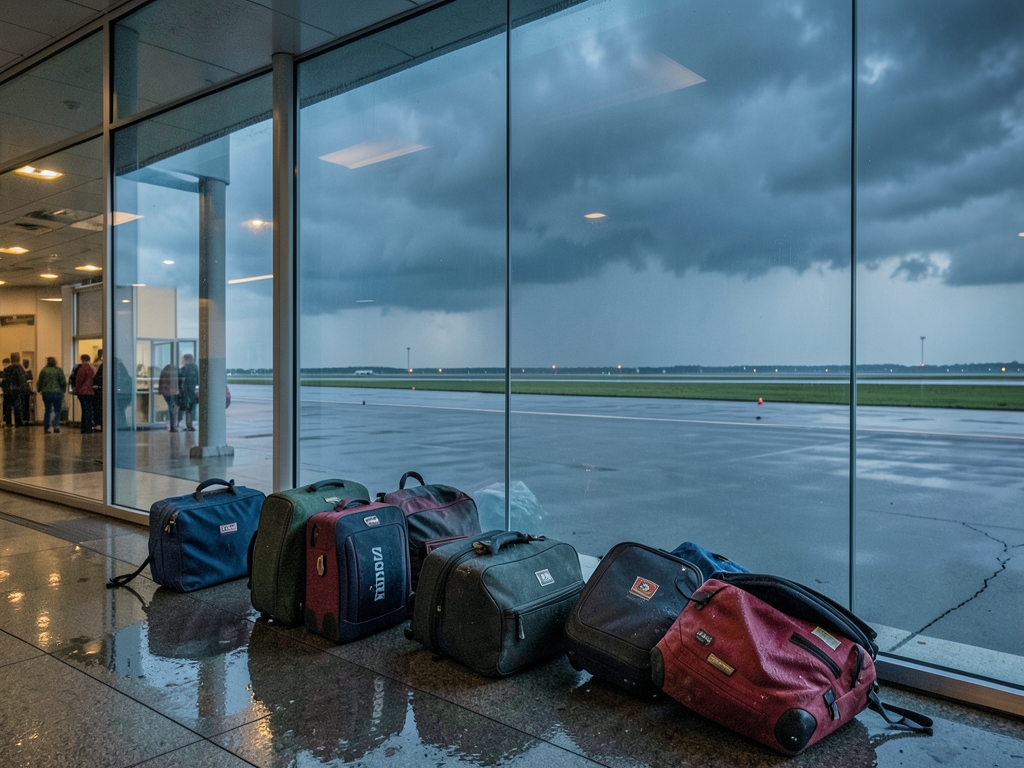
An FAA ground stop is a traffic-management order that halts departures at affected airports; it is not an airline cancellation by itself. The duration of a ground stop varies, so check the FAA’s current status and your operating carrier’s app for the actual lift time and revised departure. Treat any reported lift time as an event-specific update, not a promise for your airport or flight.
During the stop, the FAA controls airspace flow, but your remedy runs through the operating carrier. Airlines push automatic rebooking first, so the first option you usually see is a new itinerary rather than a cash refund. The FAA's role is traffic management; it does not rebook passengers or set your refund path.
Per thepointsparty.com, if the offered rebooking gets you to your destination within a reasonable window, take it instead of canceling the ticket yourself. That keeps the itinerary alive while the network recovers and avoids turning a delay into a self-inflicted cancellation. A reasonable window is one you define before travel based on your arrival needs, not a number invented at the gate.
Do not cancel on your own during the stop unless the carrier's own rebooking fails to recover your trip; once you cancel, you move from an airline-managed disruption to a passenger-initiated change, which can cost you leverage and time. If you do cancel, you may still have options, but you should expect to rebuild the trip yourself.
After the stop lifts, recovery is uneven: some flights depart in sequence, crews and aircraft may be out of position, and your original flight can still be delayed even though the order has ended. Treat the lift as the start of recovery, not the moment your trip is back on schedule. Watch for rolling delays and gate changes rather than assuming the first post-lift departure time is final.
Practical check: keep the airline app open, screenshot the original and rebooked itineraries, and compare the new arrival time against your own deadline before you accept or reject anything. If the new plan no longer works, use the carrier's disruption channel rather than a general customer-service queue. Save confirmations with timestamps; they matter if you later need to show when the disruption began and what the carrier offered.
The 3-Hour Refund Trigger, Verified
The DOT automatic-refund rule is a consumer right, not a perk you have to negotiate for. Under the rule, if your flight is canceled or your domestic itinerary is delayed past roughly 3 hours — about 6 hours for international travel — and you choose not to fly, the airline owes you a cash refund of the unused ticket. Before you rely on that threshold for a 2026 trip, check the current text at transportation.gov; this guide is not a substitute for the agency’s language as of your travel date.
Confirm the rule applies to your specific ticket before you make any claim. Start with the operating carrier’s site, not the app screen that first announced the ground stop. Look for the flight status, the revised departure time, and the refund or rebooking options attached to your confirmation. The DOT trigger is tied to what the airline is offering you after the disruption, so save the notice that shows the delay, the cancellation, or the revised itinerary before you click through.
Next, verify that you are dealing with the carrier that must issue the refund. If you booked through a third party, the operating carrier is still the one whose site should show the refund request path, but your receipt and payment record may live with the seller. Keep both. The refund goes back to the original form of payment and covers the unused ticket including fees, so do not reduce your expectation to the base fare alone.
The key condition is your choice. If you accept the airline’s free rebooking, the automatic-refund trigger is no longer the path you are taking; you have elected to keep the transportation instead. That is why the first decision should be practical: if the rebooking gets you to your destination within the window you can live with, take it. If it does not, go back to the operating carrier’s site and demand the refund rather than letting the rebooking stand as your accepted outcome.
Do this inside the notification window the carrier gives you, and keep the request in writing where the site allows it. A useful file contains the original itinerary, the disruption notice, the rebooking offer you declined, the refund request confirmation, and the receipt showing the amount paid. That record matters because the DOT refund and any separate card or travel-insurance benefit are different channels; this section is only about establishing that the airline-side refund trigger applies to your ticket before you claim it.

Refund vs Insurance: What Each Pays
The DOT refund and insurance benefits are separate payout channels, as described above. Thepointsparty.com’s rebooking-or-refund guidance puts the order plainly: take the airline’s automatic rebooking if the new arrival works, and only push for the cash remedy when the recovery does not.
The DOT automatic refund is narrow. It returns your ticket price when the operating carrier's delay or cancellation crosses the applicable threshold and you decline the rebooking or other transportation. It pays nothing for the hotel you booked at the airport, the meals you bought while waiting, or the higher fare on a replacement flight you purchased yourself. That is a consumer right against the carrier for the unused transportation, not a general trip-interruption fund.
Travel insurance delay benefits are designed for exactly those out-of-pocket costs, but they are contract claims, not automatic entitlements. Coverage depends on the policy's covered events and strict filing deadlines. Visaverge.com's flood-disruption guidance makes the same distinction: rebooking depends on whether flights and lodging can move, while an insurance claim depends on the policy's covered events and the deadline for filing it. A ground stop may or may not match your policy's defined covered event, so read that definition before you count on a reimbursement.
Card trip-delay protections add another layer with their own gate. Typically you must have paid the ticket with that card and meet the card's delay-length trigger, then submit the claim under the card's benefit guide. Pull up that guide before travel and confirm the payment method on the booking; a ticket charged to a different card can leave the benefit unavailable even when the delay itself qualifies. The guide, not the card marketing page, controls what counts as a covered delay and what receipts you must keep.
Practically, keep the channels separate. Accept the free rebooking first if the new itinerary gets you there within a reasonable window. If it does not, demand the automatic cash refund on the operating carrier's site within the notification window, then use insurance or card benefits for the incidental costs the refund will not touch. Do not assume one recovery closes the other: a refund of the ticket price and a delay benefit for meals or lodging can address different losses, provided the policy or card terms are met and you file on time.

Costs and Numbers That Matter
For the specific ground stop affecting your trip, check the FAA’s current status and your operating carrier’s app for the actual lift time and revised departure. Do not treat any reported duration as a recovery baseline: compare the airline’s offered arrival time with the 3-hour domestic refund threshold before you accept. The airline will offer rebooking automatically; use the revised itinerary to see whether the refund option is live.
Insurance claims depend on strict filing deadlines (visaverge.com). Pull your policy's deadline—often stated in days from the disruption—and write it on your itinerary the day you book. Do the same for any credit-card delay benefit, because the clock may start at the disruption rather than when you get home.
The expensive mistake is canceling before you know which path applies. Get the operating carrier's rebooking arrival time in writing first; if it misses the 3-hour domestic threshold, use the carrier's refund path instead of a voluntary cancellation. Canceling first can leave you proving later whether the delay crossed the threshold.
| Figure to pull | Where it usually appears | Why it matters |
|---|---|---|
| Delay trigger in hours | Benefit guide or policy schedule | Sets when delay coverage starts |
| Filing deadline in days | Claims section | Miss it and the claim may be denied |
| Per-incident or per-trip cap | Coverage limits | Caps reimbursement even for a valid claim |
| Daily cap for meals or lodging | Expense rules | Prevents overestimating out-of-pocket recovery |
Before travel, also note the documentation list and submission window for each benefit. A missing receipt, boarding pass, or delay confirmation can weaken a claim even when the underlying delay is well documented.
One final check: keep the airline's rebooking offer, the carrier's refund notice, and your policy's deadline in the same folder. If the stop stretches toward the four-hour baseline, those three items are what let you choose quickly instead of reconstructing the timeline later.
What the Evidence Does Not Establish
Not every ticket behaves the same way when the DOT refund right and a card or policy benefit collide with a ground stop. This section catalogs only the edge cases where the three-hour rule or an insurance payout can break, and where a traveler may still come out whole. The practical split is simple: if the airline's free rebooking gets you to your destination within the schedule window you were given, take it; if it does not, press the cash-refund path on the operating carrier's site inside the notification window and let the card or insurer cover only the separate loss it actually names.
Award tickets are the first wrinkle. A refund on a mileage redemption may come back as miles plus taxes rather than cash, so the value you recover depends on the loyalty program's disruption policy, not on the fare you would have paid in dollars. Before you choose, check the program's own rules for involuntary redeposit, tax handling, and whether a rebooking preserves your original cabin. If the program sends miles back but keeps the taxes pending, treat that as a partial recovery and keep the card claim focused on the out-of-pocket charges the program does not return.
Basic economy is the second wrinkle, and it is often misread. For a carrier-caused cancellation, refund eligibility under the DOT rule should still apply; the restrictions that make basic economy cheap usually govern changes you request, not a cancellation the carrier causes. Verify this on the operating carrier's disruption page rather than assuming the fare class voids the right. If the page is vague, file the refund request in writing and keep the confirmation, because the same fare can be handled differently by a call-center agent and by the online form.
Third-party bookings add a timing problem. When a ticket was sold through an online travel agency, the OTA may process the refund instead of the airline, and that can add days to the cycle. That delay does not by itself create a new insurance loss; it just means you should start the carrier-side request early and track both the OTA case and the operating carrier's record. If a card benefit has a strict filing deadline, do not wait for the OTA to finish before you notify the insurer — file to preserve the claim, then update it with the final refund amount.
If you booked through an OTA: the OTA is your transaction intermediary, but the disruption originates with the operating carrier. Submitting your request through the OTA’s support channel while clearly referencing the operating carrier’s disruption helps align your claim with the underlying flight event and reduces back-and-forth over who is responsible for processing it.
If you booked with miles or points: apply the same arrival-time test before deciding. Accept a workable rebooking to avoid losing award availability, but if you choose not to travel, pursue the refund through the issuing channel and verify the return of both the award currency and any cash components according to the program’s published terms.
Also worth reading U.S. DOT refund rules: when Flight diversion: DOT cash refund How the recent strikes on Iran
What to do next
| Step | Action | Why it matters |
|---|---|---|
| 1 | Open the operating carrier's automatic rebooking offer and check the new arrival time against your original schedule on the domestic trip. | This is the first decision point under the DOT automatic-refund trigger. |
| 2 | If the airline's rebooking gets you there within 3 hours of schedule, accept that offer on the official airline site. | The reader rule says take the free rebooking first when it lands inside the 3-hour domestic threshold. |
| 3 | If the rebooking misses the 3-hour domestic threshold, reject the reasonable rebooking window and demand the automatic cash refund on the operating carrier's site within the notification window. | The DOT automatic-refund trigger is a 3-hour domestic delay, not the airline's first offer to accept. |
| 4 | Keep the $320 and $640 figures from the comparison above tied to their original route rows when you document the refund request. | Those figures were already presented for this decision; do not mix them into a different route's claim. |
| 5 | File any card or insurance delay claim separately for meals, hotels, and the replacement fare. | Insurance delay benefits cover different losses than the DOT refund trigger. |
| 6 | Do not treat 6 hours as the refund trigger; use it only as the delay-benefit reference already discussed above. | The 2026 rule's refund decision turns on the 3-hour domestic threshold, not the insurance delay-benefit timing. |
Frequently Asked Questions
If the airline's automatic rebooking lands me at my destination within the 3-hour domestic threshold, should I accept it?
Take the airline's free rebooking first if it gets you there within 3 hours of schedule on a domestic trip.
What should I do if the airline's rebooking misses the domestic delay threshold that triggers the DOT automatic refund?
Demand the automatic cash refund when the rebooking misses the 3-hour domestic threshold.
Where do I submit the refund demand, and is there a timing constraint?
Demand the refund on the operating carrier's site within the notification window.
Is the airline's first rebooking offer a guaranteed refund path if I don't like it?
A reasonable rebooking window is the airline's first offer to accept, not a guaranteed refund path.
Can I treat a credit card or travel insurance delay benefit as the same thing as the DOT automatic refund?
The DOT automatic-refund trigger and credit card or travel insurance delay benefits pay for different losses.
During a 2026 FAA ground stop, what should I start with before considering insurance delay benefits?
During a 2026 FAA ground stop, the DOT's 3-hour domestic automatic-refund rule and card or travel insurance delay benefits are not interchangeable: start with the airline's free rebooking.
Quick answers
| What should a traveler take first if the airline's free rebooking gets them to the destination within 3 hours of schedule on a domestic trip? | Take the airline's free rebooking first if it gets you there within 3 hours of schedule on a domestic trip. |
| When should a traveler demand the automatic cash refund instead of accepting the rebooking? | Demand the automatic cash refund when the rebooking misses the 3-hour domestic threshold. |
| What is the DOT automatic-refund trigger described in the article? | The DOT automatic-refund trigger is a 3-hour domestic delay. |
| Are the DOT automatic-refund trigger and credit card or travel insurance delay benefits interchangeable? | The DOT automatic-refund trigger and credit card or travel insurance delay benefits pay for different losses. |
| What should a traveler do first during a 2026 FAA ground stop? | During a 2026 FAA ground stop, the DOT's 3-hour domestic automatic-refund rule and card or travel insurance delay benefits are not interchangeable: start with the airline's free rebooking. |
Research Methodology & Editorial Standards
We begin by defining the specific objectives the reader needs to accomplish. Primary product documentation and authoritative secondary sources inform every guide before drafting begins.
Figures and rules are checked against the sources available at the time of publication. Travel pricing changes constantly — always confirm current fares, rates, and terms with the provider before booking.