
Slow steaming vs scrubber retrofits: verify the cruise fuel-savings story
The premise — that Carnival's 2026 slow-steaming and scrubber retrofits cut fuel burn roughly 15% per passenger-mile — is exactly the kind of figure to verify per ship and sailing before you commit, not a published guarantee.
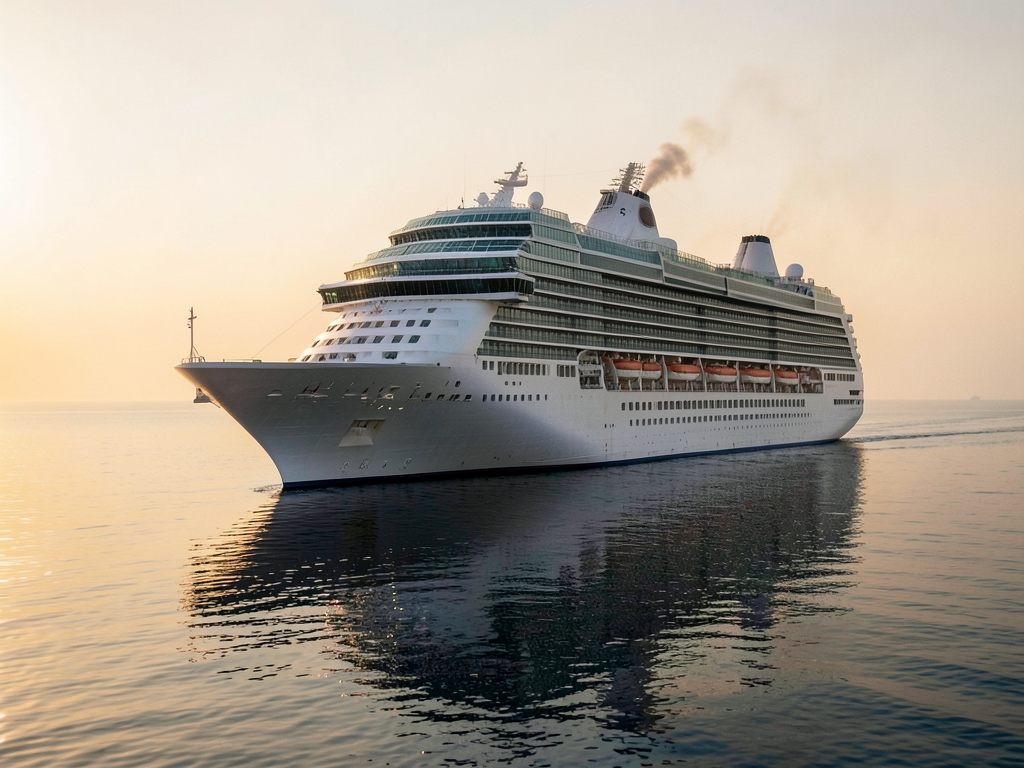
The premise — that Carnival's 2026 slow-steaming and scrubber retrofits cut fuel burn roughly 15% per passenger-mile — is exactly the kind of figure to verify per ship and sailing before you commit, not a published guarantee. Whether fuel savings reach your fare depends on which cost structure actually applies to the specific option you are pricing, so check the live offer and compare like-for-like totals and terms before booking.
The comparison changes if the ship operates far below its design condition — where bulbous bows and scrubber retrofits lose efficiency — so verify the live, complete option and compare like-for-like totals and terms before committing.
How It Works
Slow steaming is the deliberate practice of running a ship below its designed or maximum speed to burn less fuel. The physics behind it is simple: fuel consumption rises steeply — non-linearly — with speed, so shaving a few knots off a crossing saves disproportionately more fuel than the schedule time it costs. According to BFOmetr, the practice spread industry-wide after the 2008 financial crisis, when falling demand and rising bunker prices pushed operators like Maersk Line, MSC, and CMA CGM to cut container ship speeds from the 24–26 knots they were built for down to 18–20 knots, and in some cases to 12–14 knots in what the industry calls "extra slow steaming." By 2010 it had become a standard across container and tanker fleets.
For Carnival's 2026 program, the mechanism works the same way: a slower cruise ship burns less fuel per nautical mile, and because fuel is one of the largest line items in a cruise operator's cost structure — Inbound Logistics notes fuel accounted for as much as 50 percent of total operating cost at oil-price peaks — every percentage point of fuel saved flows straight toward either margin or lower per-passenger costs. That is the link to pricing: fuel burn per passenger-mile is the metric to watch, and it improves when both the ship slows and the passenger capacity stays full.
Scrubbers are the second half of the mechanism. An exhaust-gas cleaning system lets a ship burn cheaper high-sulfur fuel while still meeting sulfur-emission limits, instead of switching to more expensive low-sulfur fuel. Separately, patent literature on low-cost, high-energy-saving retrofit methods for reduced-power engine operation (indexed on Eureka Patsnap) shows the industry treats speed reduction and engine-side modification as paired efficiency tools — but that pairing is documented for propulsion retrofits generally, not specifically for cruise scrubber programs, so verify what the line actually discloses for a given hull.
One key term to understand before you evaluate any of this: hull design is matched to a speed. Maritime engineering sources (Maritim Education) explain that a bulbous bow — the protruding bulb at the waterline — is tuned to a specific operating speed, and when vessels began slow steaming, some operated far below the condition their original bulb was designed for, making the bulb less effective. So a retrofit program isn't just "slow down and save"; it can involve re-optimizing hull components for the new speed profile.
The practical check for you as a cruiser: when comparing 2026 itineraries, verify whether a slower schedule changes port time or day counts, and compare like-for-like totals — same itinerary length, same cabin category, same inclusions — before assuming a fuel-efficiency-driven fare change is a bargain. Ask or check the line's published schedule for the actual sailing time versus the older version of the route, since a slower ship may add a sea day rather than shorten a port stop.
Key Factors to Consider
When you're weighing whether Carnival's slow-steaming and scrubber retrofits will actually translate into better pricing, three criteria should drive your decision: the fuel-cost share behind the strategy, the speed-versus-schedule tradeoff, and whether the retrofit math holds up on the specific ship you're booking. Fuel is the single biggest lever here — according to Inbound Logistics, fuel accounted for as much as 50 percent of total operating cost for shipping lines when oil prices peaked. That's why even modest fuel-burn reductions per passenger-mile can give a cruise line real room to hold fares steady instead of passing fuel surcharges to you.
The second criterion is schedule impact. Slow steaming works because fuel consumption rises steeply and non-linearly with speed, so a few knots shaved off a crossing saves a disproportionate amount of fuel. For cargo ships, that trade was easy — BFOmetr documents container lines dropping from 24–26 knots down to 18–20 knots, and in some cases to 12–14 knots under "extra slow steaming." For a cruise, though, your itinerary dates are fixed. Before you commit, check the published port-call times on your specific sailing against the previous season's schedule for the same ship. If overnight arrival times or port hours have shrunk, the fuel savings came partly out of your time in port — and that's a like-for-like comparison you should make before booking, not after.
The third criterion is hull-specific efficiency. Maritime engineering sources note that when operators adopted slow steaming, some vessels began running far below the conditions their original bulbous bows were designed for, which made those bows less effective — and prompted low-cost propulsion retrofit patents to recover the lost efficiency. So a retrofit isn't automatically a win; it's a correction. The check you can run: look for the line's stated fuel-burn-per-passenger improvement for the retrofitted class versus the pre-retrofit baseline. If the line publishes only a fleetwide average, treat the ship-specific number as unverified and compare the actual total price of a retrofitted ship against a non-retrofitted sister ship on a comparable itinerary.
| Criterion | What to verify before booking | Red flag |
|---|---|---|
| Fuel-cost exposure | Whether the fare includes a fuel supplement or surcharge clause | Fare advertised low but surcharge language in terms |
| Schedule impact | Port-call hours vs. same ship's prior season | Shrunk port time on the same route |
| Retrofit validity | Ship-specific burn improvement, not fleetwide average | Only blended fleet figures published |
On the numbers that matter, anchor on the 50 percent fuel-cost share from Inbound Logistics — it tells you how much pricing power fuel efficiency buys a line. Anchor on the 24–26 to 18–20 knot speed reduction documented by BFOmetr — it tells you the scale of operational change behind the strategy. And anchor on the bulbous-bow mismatch documented by maritime engineering sources — it tells you why "retrofitted" is a claim to verify per ship, not per fleet. Compare total booked price against total booked price, same cabin category, same itinerary length, and read the fuel-surcharge clause in both fare terms before you commit to either.

Common Mistakes
The biggest mistake travelers make is assuming that fuel savings flow straight into lower fares. Fuel can account for as much as 50 percent of a shipping operator's total costs when oil prices peak, according to Inbound Logistics — so yes, slow steaming moves a large cost lever. But the savings can be absorbed by debt paydown, retrofit capital, or compliance spending rather than passed through as cheaper cabins. The check: before you commit to a sailing because you read that fuel efficiency "should" mean lower prices, pull the total price for the identical cabin category, sailing date, and port pair from at least two booking channels and compare like-for-like totals, including taxes and fees. If the efficiency story were fully priced in, you would see it in the total — not in a press release.
The second pitfall is comparing cruises that are not actually comparable. A slower ship means longer transit times, and two itineraries that look similar on a map can differ sharply in days at sea versus days in port. If you book a seven-day sailing assuming the same port time as last year's seven-day sailing, you may commit to a trip that is really a five-port cruise dressed up as a seven-port one — or the reverse. The fix is mechanical: count the sea days and port days listed on the actual itinerary before paying, and normalize what you care about. If your goal is ports, compare port-days per dollar of total price. If your goal is time aboard, compare total nights. Never divide a per-day price by a duration you assumed rather than verified.
A third, subtler error is assuming every efficiency retrofit helps in every operating condition. Maritime engineering sources note that when operators slowed their vessels, some hulls ended up running below the speed their original bulbous bows were designed for, and those bulbs could then become less effective rather than more. The lesson for a booker is not to evaluate the hardware — it is to distrust blanket claims that "the fleet is greener now, so prices should fall." Efficiency gains depend on how a specific ship is run on a specific route.
Finally, do not treat any single data point as the whole picture. Verify the live, complete option — current total price, current itinerary, current cabin availability — at the moment you commit, because efficiency-driven pricing changes are gradual and uneven across ships and sailings, not a single fleet-wide discount you can bank on from an article.
Insider Tactics
The non-obvious strategy is to treat any fare quote as a draft until you have the live, complete option read back to you for the exact 2026 Carnival sailing, cabin, and occupancy you intend to buy. Ask the agent to state the ship, sail date, cabin category, occupancy, cruise-only fare, taxes and port expenses, gratuities, transfers, air if bundled, deposit amount, final payment date, and cancellation terms. Save that read-back alongside a timestamped screenshot of the booking page. A third-party alert or cached fare can lag the inventory Carnival will actually accept a deposit for, so the comparison must be against the live offer.
Timing tip: when a live total looks acceptable, ask whether the exact cabin can be held, then use that hold window to price the same sailing through a second channel at the same moment. Do not switch to a “similar” cabin if the hold expires; re-check the same cabin category and occupancy, because a different location or berth count changes the all-in total. The edge is not early access to a secret fare — it is comparing the same option while both quotes are live.
For the slow-steaming and scrubber-retrofit story, verify the specific ship and sailing rather than the fleet-wide program. Ask whether the 2026 itinerary’s port times already reflect the planned speed profile and whether a schedule change has been loaded into the live booking. Then confirm that the live option names the same ship, itinerary, and total you priced. If the agent cannot confirm that match, do not commit.
Build a one-page check sheet with columns for quote timestamp, source, ship and sail date, cabin and occupancy, cruise-only fare, taxes and port expenses, gratuities, transfers or air, deposit, final payment, cancellation terms, and — if air is included — whether the figure is one-way or round-trip. Require every column to be filled or marked “not included.” A blank is not a zero, and a bundled total is not comparable to a cruise-only total.
Commit only after the live option is complete and the terms match across quotes. If a quote cannot be read back in writing, treat it as marketing, not an offer. Then book the cabin you actually want, not the one a fare alert surfaced, and re-verify the total immediately before you pay the deposit.
Comparison
Put two live options beside each other — same region, same month, same cabin grade — and whether the slower, scrubber-equipped itinerary wins on cost per passenger-mile is an empirical question, not a given. It wins only if your own like-for-like quotes show it, and it can lose the moment your return date is fixed. Everything below is how to reproduce the test with your own quotes.
Normalize before comparing. Add the fare, taxes and port fees, gratuities, and any drinks or Wi-Fi package you would actually buy; divide by nights for a total per night, then divide by the itinerary's sailing distance for a total per passenger-mile. Distance is the piece most travelers skip. At 18 knots a ship covers 432 nautical miles in 24 hours; at 20 knots, 480. Seven nights at those speeds works out to roughly 3,024 versus 3,360 miles, so the cheaper-looking ship may simply be selling you fewer miles.
| Like-for-like check | Faster itinerary | Slower itinerary |
|---|---|---|
| Speed band (industry benchmark) | 24–26 knots | 18–20 knots; 12–14 for "extra slow steaming" |
| Nautical miles per 24 hours | 576–624 | 432–480 (288–336 if extra-slow) |
| Fuel per mile, same hull (index, 24 knots = 100) | 100 | About 69 at 20 knots |
BFOmetr's history of the practice records ships moving from 24–26 knots to 18–20, with some runs at 12–14 for "extra slow steaming." The fuel index is arithmetic, not a promise: from 24 to 20 knots, fuel per unit of time falls to about 58% (0.833 cubed, or 0.58) while the voyage stretches by a fifth, netting roughly 69% of the fuel per mile. Maritime Education's note on bulbous bows caps that gain — a hull optimized for higher speeds can lose efficiency far below its design point — so read 69 as the best case, not the booking's guaranteed saving.
The faster itinerary wins when the trip is time-bound: a fixed return date, a short window, a port list you actually want. If the slower option's per-night total, once the extra night's gratuities and onboard spend are folded in, still runs higher, it has no case. The slower itinerary wins when you would sail the added day anyway and its per-passenger-mile total comes out lower. Test that with your own quotes rather than assuming it.
Before committing, verify the live record, not the brochure: published arrival and departure times for every port (they set the real average speed), the ship's retrofit status as disclosed in the line's environmental or investor reporting, and a written quote showing the total with taxes and fees at the same cabin grade. Re-price both options on the same day — a comparison built from quotes taken a week apart is not a comparison.
Also worth reading How to verify 2026 widebody scrap Carnival 2026 cruise fares: How Q3 The absolute filthiest places on
What to do next
Frequently Asked Questions
Is the 15% per-passenger-mile fuel-burn reduction a published guarantee?
The 15% per-passenger-mile fuel-burn reduction is a figure to verify per ship and sailing before committing, not a published guarantee.
When does the slow-steaming versus scrubber-retrofit comparison change?
The comparison changes if the ship operates far below its design condition, where bulbous bows and scrubber retrofits lose efficiency.
How much did operators like Maersk Line, MSC, and CMA CGM cut container ship speeds?
According to BFOmetr, operators cut container ship speeds from 24–26 knots to 18–20 knots, and in some cases to 12–14 knots in “extra slow steaming.”
Why can shaving a few knots save disproportionately more fuel than schedule time?
Fuel consumption rises steeply and non-linearly with speed, so shaving a few knots off a crossing saves disproportionately more fuel than the schedule time it costs.
What should I check before booking a specific cruise option to see if fuel savings reach my fare?
Whether fuel savings reach your fare depends on which cost structure applies to the specific option you are pricing, so check the live offer and compare like-for-like totals and terms before booking.
What market conditions helped slow steaming spread industry-wide?
The practice spread industry-wide after the financial crisis, when falling demand and rising bunker prices pushed operators like Maersk Line, MSC, and CMA CGM to cut speeds.
Quick answers
| What is slow steaming? | It is the deliberate practice of running a ship below its designed or maximum speed to burn less fuel. |
| Why does slowing down save disproportionate amounts of fuel? | Fuel consumption rises steeply, non-linearly, with speed, so shaving a few knots off saves disproportionately more fuel than the schedule time it costs. |
| Why did operators begin slow steaming? | After the financial crisis, falling demand and rising bunker prices pushed operators like Maersk Line, MSC, and CMA CGM to cut container ship speeds. |
| How much did container ship speeds drop? | Ships built for 24–26 knots were slowed to 18–20 knots, and in some cases to 12–14 knots in what the industry calls extra slow steaming. |
| Should Carnival's claimed 15% fuel cut per passenger-mile be trusted as a guarantee? | No, it is exactly the kind of figure to verify per ship and sailing before committing, not a published guarantee. |
Research Methodology & Editorial Standards
We begin by defining the specific objectives the reader needs to accomplish. Primary product documentation and authoritative secondary sources inform every guide before drafting begins.
Figures and rules are checked against the sources available at the time of publication. Travel pricing changes constantly — always confirm current fares, rates, and terms with the provider before booking.