
Alaska cruise fares 2026: how to verify the lowest dates and cabins
Identify which 2026 sailing dates and cabin categories have the lowest verifiable fares. Confirm the complete live option and compare like-for-like totals and terms before committing.
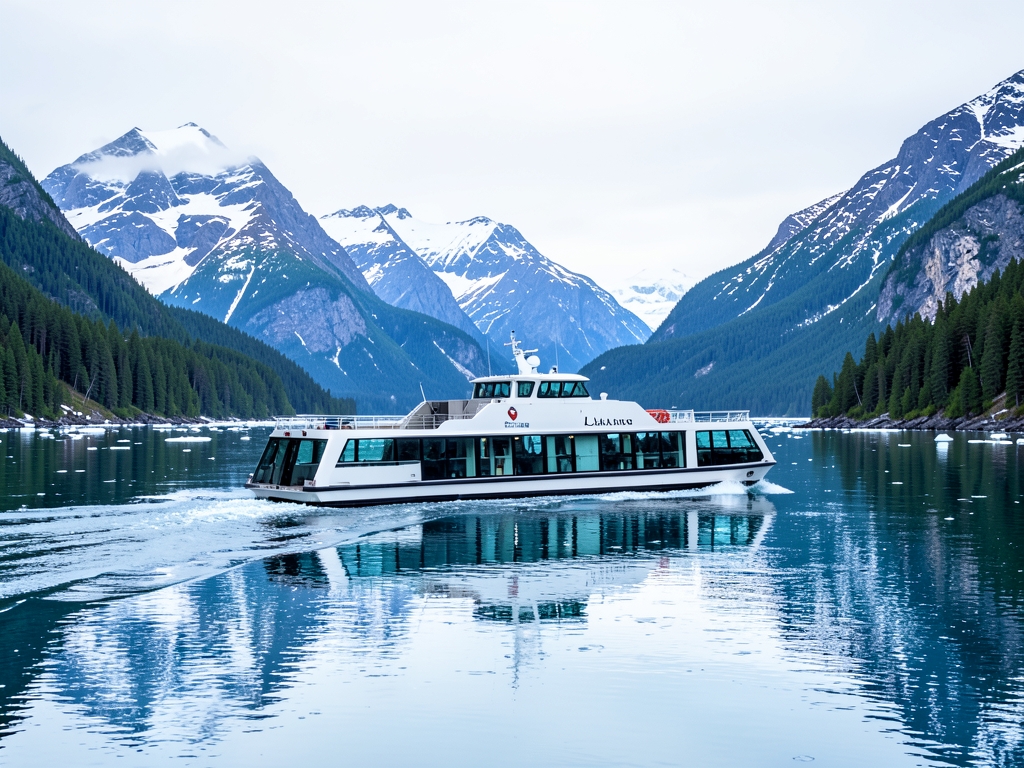
Identify which 2026 sailing dates and cabin categories have the lowest verifiable fares. Confirm the complete live option and compare like-for-like totals and terms before committing.
How It Works
Start with the cruise line’s live booking or fare-search tool, rather than a search-engine result, because a displayed price may represent only one cabin or one available inventory slice. Enter the proposed 2026 sailing, select the actual ship and itinerary, choose a cabin category, and specify the number of guests in each cabin. Then continue through checkout to the final total. A price is only verifiable when the sailing, cabin, occupancy, and total remain visible in the same live transaction. Note that the available Sailing Virgins listing covers deals and coupon codes, not Alaska cruise fares, so it cannot confirm a fare on its own.
Use a consistent comparison record for every option you check. Capture the exact departure date and port, ship, cabin category, occupancy, quoted cruise fare, mandatory taxes and fees, optional charges, and the resulting total price for the same number of travelers. Check the checkout screen and the fare-details breakdown separately; a lower headline fare is not a lower complete price if its accompanying charges differ. Compare only options with equivalent travel arrangements and passenger counts.
Quoted fare means the base price displayed for a specific sailing and cabin before required or optional charges are added. Total price means the complete amount shown for the booking after the line itemizes the fare, taxes, fees, and any selected add-ons. Taxes and fees are charges imposed on the booking; the fare-details panel should identify them rather than requiring you to estimate them. Gratuities may be included, prepaid, or left to be settled aboard, so verify the status shown for your booking. These distinctions allow you to compare a base amount and a final amount without treating them as interchangeable.
Cabin category is the line’s broad accommodation designation, such as interior, ocean-view, or balcony, while a cabin number identifies the specific space. Occupancy describes how many guests are assigned to that cabin and may affect availability or pricing. Deposit is the amount required to reserve the booking, whereas final payment is the amount due before sailing. Do not use the deposit as a proxy for the total fare; verify both amounts and the payment schedule in the checkout terms.
Finally, distinguish a refundable option from a nonrefundable one by reading the cancellation terms attached to that exact fare. Also verify whether the displayed total includes items you may need separately, such as port expenses, beverages, or other voyage purchases, and whether they are refundable. Before committing, save the final fare page, breakdown, and terms, and confirm that the cabin and sailing shown at checkout match the option you intended to buy.

Key Factors to Consider
The three decision criteria are: the complete total for the exact cabin you want, the amount and timing of required payments, and whether the quoted cabin is actually available for the full itinerary. These criteria should be evaluated together; a low headline fare is not the lowest verifiable price if it excludes unavoidable charges or requires payments that reduce your flexibility.
| Priority | Number to verify | Decision rule |
|---|---|---|
| 1 | Complete total for the selected sailing and cabin | Compare only quotes containing the same ship, itinerary, cabin category, occupancy, and included services. |
| 2 | Amount due at booking and each remaining balance | Confirm when money is due, which amounts are refundable, and whether the final balance changes before payment. |
| 3 | Traveler and add-on quantities | Verify the number of guests covered and whether extras such as packages or transfers are required, optional, or already reflected in the total. |
Begin with the total presented for the exact proposed cabin—not a category starting with a lower-priced cabin. Record the quoted cruise amount, taxes, port charges, and any stated add-ons separately before adding them. If the quote is per guest, multiply only by the number of guests actually covered; if it covers the cabin, do not multiply it again. The resulting total is the figure to compare with other like-for-like quotes.
Next, record the payment schedule beside the total. Capture the amount due when booking, the amount due later, and the final balance date. A smaller deposit does not make a fare less expensive if the required total is higher. It also does not make a fare more flexible unless the payment terms confirm how each amount can be recovered. Keep the complete schedule with the fare record so a later change can be checked against the original quote.
Finally, verify quantity and completeness. Confirm the guest count, cabin designation, berth arrangement, and every item labeled as included, optional, or excluded. When several sailing dates or cabin categories are being considered, build a simple record with the same fields for each: exact date, ship, itinerary, cabin category, occupancy, complete total, payment schedule, and cancellation terms. Do not rank the options until those fields are directly comparable.
Use the lowest complete total as the starting point, then apply the payment and availability checks. A fare is “verifiable” only when the live option and its terms can be matched to a specific sailing and cabin without relying on a search-result summary. Save the final quote screen and payment details before committing, because availability and price can change even when the itinerary remains the same.

Common Mistakes
The first common mistake is treating the most prominent fare as the amount you will ultimately pay. A search result may highlight a particular cabin or inventory slice, but the amount shown can differ from the complete checkout total after the booking page applies taxes, port charges, gratuities, or other required items. A concrete example is seeing an attractive interior rate for a proposed Alaska sailing, then opening the fare details and finding that the total for the same cabin is higher. Before treating the fare as real, check the exact cabin number or category on the booking page, scroll through every mandatory charge, and record the final total. A lower headline number is not a low fare if the complete total does not support that conclusion.
The second pitfall is comparing two quotations as if the only difference is price. For example, two balcony quotations may cover different obstructed-view inventory, have different cancellation provisions, or require different payment schedules. Another common mismatch is comparing one booking with included extras against another whose total excludes them. The fix is to build a like-for-like comparison sheet with one row per option and columns for the exact cabin category, location, itinerary, total price, included items, deposit, final-payment schedule, cancellation terms, and any stated restrictions. Use the same date and passenger configuration for every search.
Do not stop at confirming that a cabin is selectable. Run the booking through to the point where the itinerary, guests, cabin, and complete total are all shown, then check that the cabin remains available when you return. Inventory can change while a traveler reviews terms or waits for another household member to approve the purchase. A quote that cannot be reproduced on the next attempt is evidence, not a saved fare. Capture the date and time of the verification and the full breakdown so that you can distinguish a changed total from a changed cabin.
A subtler mistake is relying on a promo-code page to validate a cruise fare. Sailing Virgins, for example, reports verified coupon codes and deals, but a deal listing is not proof that the same saving applies to the exact Alaska sailing and cabin you intend to book. Enter the proposal directly in the cruise line’s booking flow, apply any offer there, and confirm that the discount appears in the itemized total. If the advertised deal does not appear on the official checkout, treat it as unavailable for that selection rather than assuming it will be honored later.
Use one final rule before commitment: preserve the complete quote and its terms, then reopen it once in the same booking session and confirm that the same cabin, itinerary, total, payment requirements, and restrictions remain intact. If any field changes, investigate that field before paying. This check turns a persuasive fare into a verifiable offer and prevents a lower advertised price from masking a more expensive or materially different booking. The available sources list sailboat rentals from €141/day across 447 boats and flight reservations from $16; neither verifies an Alaska cruise fare, so treat them only as non-cruise references.

Insider Tactics
The distinctive strategy in this section is to treat a fare as provisional until the exact 2026 sailing, cabin category, and final checkout total have been checked together. Search at the last responsible moment: after establishing a short list of promising dates and cabin types, return to the cruise line’s live booking tool and reopen each itinerary. The goal is not to find the smallest headline number; it is to identify the lowest price that remains valid for a complete booking option.
A non-obvious timing tactic is to check the same sailing at different points in the booking cycle, while recording what changed. Look again after new inventory is released, a sold-out cabin category is retired, or a sailing’s schedule or cabin inventory changes. There is no dependable rule that a particular weekday or hour will produce the minimum fare, so treat each apparent price drop as a prompt for another live check rather than a reason to commit immediately.
Keep a dated verification log with the sailing date, ship, cabin category, cabin number or category description, complete total, payment schedule, cancellation terms, and the time the quote was captured. When the checkout screen changes, update the record instead of relying on an earlier search result. If the total rises, ask the cruise line to confirm whether the difference reflects inventory, the selected cabin, or a change in included items. This makes it easier to verify the actual cost without making assumptions about the source of the increase.
Promotional-code claims deserve the same scrutiny. The available Sailing Virgins listing reports 11 deals and 0 coupon codes as of September 2026, and states that codes are verified and updated daily. That snapshot illustrates why a promotional headline is not proof of savings: enter any advertised code in the live checkout, confirm that it applies, and compare the resulting complete total with the same itinerary quoted without it.
For cabin categories, start with the categories that fit the budget, then verify each one in the live system. For a supposed fare advantage to count, the desired category must be selectable for the full itinerary and its final total must be preserved at checkout. Do not treat a cheaper category as verified merely because its rate appears in search results; confirm the cabin that would actually be assigned and the terms attached to that exact booking.
Before committing, repeat the entire check in a fresh session, review the final total and terms, and capture the confirmation page. If the price or availability no longer matches the recorded quote, wait, contact the cruise line, or select another verified option. The useful insider move is disciplined timing combined with evidence: a low fare is actionable only when the complete option can be reproduced live at the moment of purchase.

Comparison
A like-for-like comparison is only valid when every column describes the same 2026 sailing, itinerary length, cabin category, occupancy, and payment plan. Record the fare exactly as the cruise line’s live booking tool presents it, then create a separate total column for required payments and separately disclosed charges. A quoted fare without the complete total is not comparable, even if it appears beside the same ship and sailing.
| Comparison field | Option A | Option B |
|---|---|---|
| Exact 2026 sailing | Enter the date and ship shown by the line | Enter the date and ship shown by the line |
| Cabin category and occupancy | Record the exact category, cabin number, and number of guests | Record the exact category, cabin number, and number of guests |
| Quoted fare | Copy the live amount and its payment terms | Copy the live amount and its payment terms |
| Complete total | Add every required amount displayed before booking | Add every required amount displayed before booking |
| Inventory check | Confirm the cabin remains available for the full itinerary | Confirm the cabin remains available for the full itinerary |
| Result | Declare the option with the lower complete total the winner, provided its terms are comparable and its cabin is available. | |
The winner depends on the category being tested. For an interior option, the lowest complete total wins only when both quotations cover the same itinerary, occupancy, and payment schedule. For an oceanview or balcony option, apply the same rule without allowing the lower-priced interior fare to set the benchmark; the category must match on both sides. Compare balcony versus balcony, oceanview versus oceanview, and interior versus interior separately.
For sailing-date comparisons, compare the same cabin category on each proposed date and use the complete total as the deciding amount. If the dates differ in length or available itinerary, record them as separate comparisons rather than treating them as interchangeable. Check that the departure and return dates shown by the line correspond to the intended vacation; a lower total does not compensate for a changed itinerary.
Because the available sources contain no verified Alaska cruise fares for 2026, it would be misleading to publish invented amounts or name a sailing-date or cabin-category winner. The verifiable conclusion is procedural: after entering the alternatives in the live booking tool, the lower complete total among like-for-like, fully available options is the winner. Preserve a dated screenshot of that result, including the fare, payment schedule, cabin category, occupancy, sailing, and any disclosed charges, before committing.
Also worth reading Tokyo premium-cabin fare guide How the 2026 FAA eVTOL certification United MileagePlus 2026 devaluation
What to do next
| Step | Action | Why it matters |
|---|---|---|
| 1 | Review Sailing Virgins’ Alaska cruise deal list and verify the live, complete itinerary, availability, and total fare for each 2026 sailing option. | A listed headline fare is not confirmed unless the complete sailing option is available and the full price is verified. |
| 2 | Identify the 2026 sailing dates and cabin categories with the lowest verifiable Alaska cruise fares on the deal list. | This establishes which options actually qualify as the lowest advertised fares rather than unrelated references. |
| 3 | Compare the same sailing date and cabin category using the full booking total and booking terms. | Like-for-like comparison prevents a cheaper itinerary, cabin, or more restrictive fare from appearing to be the better deal. |
| 4 | Check Sailing Virgins’ deal listings separately from its coupon-code listings, and confirm whether each advertised price requires a code. | A coupon-code listing is not automatically a separately verified cruise fare. |
| 5 | Exclude the sailboat-rental section from the Alaska cruise fare comparison. | Its prices concern a different travel product and do not verify any Alaska cruise sailing. |
| 6 | Exclude the $16 flight-reservation reference, then reconfirm the complete live cruise option and compare like-for-like totals and terms before committing. | The flight reference is unrelated to cruise fares, while final verification protects the booking decision from incomplete or mismatched options. |
Frequently Asked Questions
What details must stay visible in the live transaction for a 2026 fare to be considered verifiable?
The sailing, cabin, occupancy, and total must remain visible in the same live transaction.
Why should I use the cruise line’s booking tool instead of a search-engine result?
A search-engine result may display only one cabin or one available inventory slice rather than the full live fare options.
Can the Sailing Virgins listing confirm an Alaska cruise fare on its own?
No, because its listing covers deals and coupon codes rather than Alaska cruise fares.
What information should I record for every 2026 option I compare?
Record the exact departure date and port, ship, cabin category, occupancy, quoted cruise fare, mandatory taxes and fees, optional charges, and resulting total price for the same number of travelers.
How can I tell whether the lowest headline cruise fare is also the lowest complete price?
Check the checkout screen and fare-details breakdown separately and compare the complete totals, including differing accompanying charges.
Which options are fair to compare when evaluating Alaska cruise fares?
Compare only options with equivalent travel arrangements and the same passenger counts.
Quick answers
| Which tool should be used to verify the lowest Alaska cruise fares 2026? | Start with the cruise line’s live booking or fare-search tool, rather than a search-engine result. |
| What must remain visible in the same live transaction for a price to be verifiable? | A price is only verifiable when the sailing, cabin, occupancy, and total remain visible in the same live transaction. |
| Can the Sailing Virgins listing confirm an Alaska cruise fare on its own? | No, because the available Sailing Virgins listing covers deals and coupon codes, not Alaska cruise fares. |
| Which details should be captured for every option checked? | Capture the exact departure date and port, ship, cabin category, occupancy, quoted cruise fare, mandatory taxes and fees, optional charges, and the resulting total price for the same number of travelers. |
| How should fare options be compared before committing? | Compare only options with equivalent travel arrangements and passenger counts, and compare like-for-like totals and terms through checkout. |
Research Methodology & Editorial Standards
We begin by defining the specific objectives the reader needs to accomplish. Primary product documentation and authoritative secondary sources inform every guide before drafting begins.
Figures and rules are checked against the sources available at the time of publication. Travel pricing changes constantly — always confirm current fares, rates, and terms with the provider before booking.