
Premium Economy Upgrade 2026: Pay Only If Fare Gap Under 30% on 7+ Hours
This guide explains when a 2026 premium economy upgrade is worth paying for on flights of 7 hours or longer. It provides a fare-gap rule and booking checks to help you choose between economy, premium economy, miles, or waiting for a fare drop.
| Takeaway | Detail |
|---|---|
| Pay for premium economy on 7+ hour flights only when the fare gap is under ~30%. | Calculate (premium fare − economy fare) ÷ economy fare; if the gap is roughly 30% or more of the economy price, the comfort gain per dollar collapses. |
| On ocean flights of 10 hours or more, premium economy comfort can justify the upgrade. | For long-haul flights across the ocean lasting 10 hours or more, the extra comfort may make a meaningful difference compared to economy. |
| Skip premium economy on short domestic hops when the upgrade cost is hard to justify. | On a short hop across the country, the extra cost for premium economy is often not worth it relative to the flight duration. |
| Compare fares on the same cabin-basis before booking. | Price economy and premium economy as one-way vs one-way or round-trip vs round-trip so the fare gap calculation is accurate. |
This guide explains when a 2026 premium economy upgrade is worth paying for on flights of 7 hours or longer.
It provides a fare-gap rule and booking checks to help you choose between economy, premium economy, miles, or waiting for a fare drop.
What Premium Economy Actually Sells You
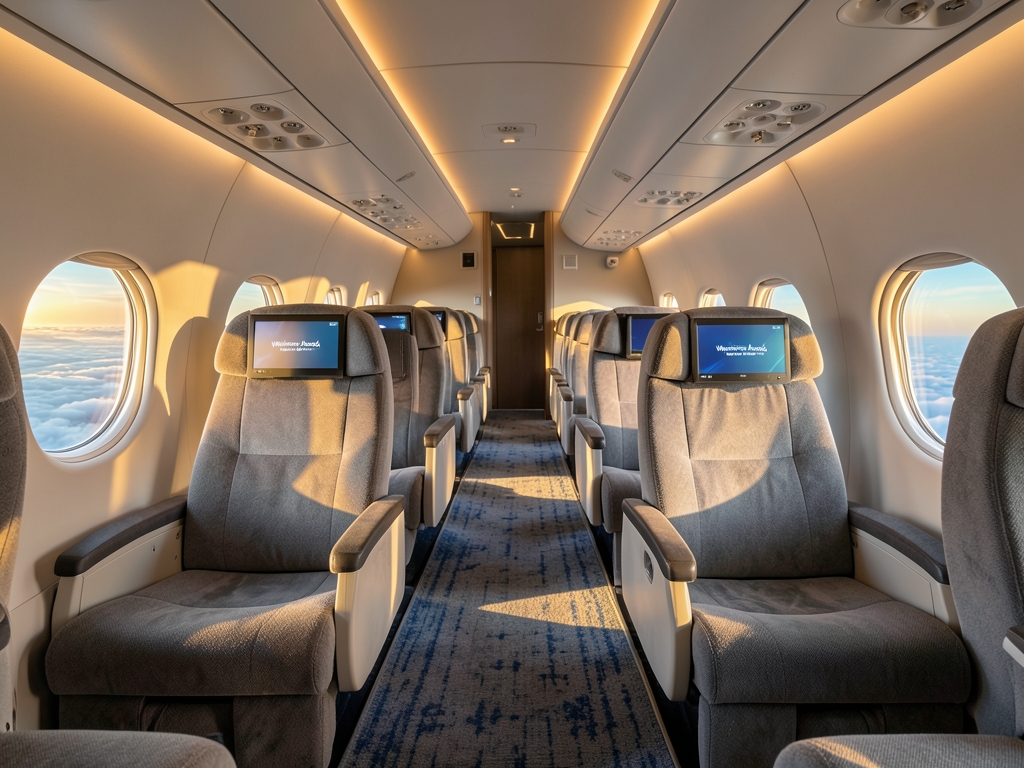
Premium economy is a distinct cabin class positioned between economy and business, not just a better seat in the same section. According to KAYAK’s September 2025 comparison of economy and premium economy, the step up typically buys a wider seat, more legroom, upgraded meals, and a higher level of onboard service. When you pay the fare difference, you are purchasing a specific physical product and service bundle—space to sit, eat, and rest with less compromise than standard economy allows.
The core value is measurable in how you use the seat over a long flight. Extra legroom and a wider seat change what is practical in the air: you can shift position more easily, work on a laptop with fewer elbow conflicts, and rest without feeling as compressed. The service tier matters too, because upgraded meals and more attentive cabin service reduce the small frictions that add up over many hours. Because airlines configure these cabins differently, the smartest check before booking is to confirm the exact seat layout and included amenities for your specific aircraft and route, not just the fare label.
To judge whether that product is priced fairly, it helps to know the market baseline. KAYAK reports that premium economy typically costs about 1.3 times the economy fare on domestic flights and about 1.45 times on international routes. Trip.com’s comparison of carriers including Delta, United, and British Airways similarly indicates that premium economy averages around 1.5 times the economy fare. These multipliers describe what airlines commonly charge for the added space and service, giving you a reference point when you compare fares in the same cabin basis (one-way to one-way or round-trip to round-trip).
Use that reference as a quick screening tool. Pull up the economy and premium economy prices for the same flights and dates, then calculate how far the premium fare sits above the economy fare. If the quoted premium price clusters near the typical market multipliers, you are paying a standard rate for the cabin’s physical and service upgrades; if it is meaningfully lower, the product may deliver stronger value for the same comfort gain. This framing keeps the decision grounded in what premium economy actually sells—seat space, service, and a more workable long-haul experience—rather than in the label alone.
Why 30% Is the Cutoff on 7+ Hours
The 7-hour floor reflects how flight length changes the value of an upgrade. Jack’s Flight Club advises that short hops rarely justify paying extra for premium economy, while ocean crossings of 10 hours or more are where added comfort can materially change the trip. Setting the floor at 7 hours captures the point at which seat comfort becomes a dominant variable on many medium- and long-haul itineraries, without limiting the rule to only the longest routes. Before you compare prices, confirm the scheduled block time for your specific flight, because winds, routings, and aircraft assignments can push similar city pairs above or below that line.
The 30% ceiling is anchored to typical market pricing. KAYAK reported in September 2025 that premium economy costs roughly 1.3 times the economy fare on domestic flights and 1.45 times on international routes, while Trip.com describes an average premium-economy cost of about 1.5 times economy. Against those benchmarks, a gap under 30% of the economy fare means you are buying the upgrade at a meaningful discount to its usual multiplier. That is the condition under which the comfort gain per dollar remains favorable; once the gap climbs well beyond that level, you are paying closer to the cabin’s normal premium without getting a better product.
To apply the rule, price economy and premium economy on the same basis before you book: compare one-way to one-way or round-trip to round-trip, on the same dates and flights. Calculate the gap as (premium fare − economy fare) ÷ economy fare. If the flight is at least 7 hours and the result is under 30%, the cash upgrade clears the bar. If the flight is shorter, or the gap is 30% or higher, treat the upgrade as optional rather than automatic and reassess your options before paying.
Use this rule as a screening check, not a guarantee. Published fare relationships can shift by route, season, and airline, so verify the current prices in the same search session and recheck if the fare changes before ticketing. The goal is to make the decision consistent: pay for premium economy when time in the seat is long and the price is unusually favorable, and pass when the market is charging its typical premium.
The Evidence: What Sources Converge
To judge whether a premium economy fare is reasonably priced, it helps to anchor your quote against what independent travel sources report. Three widely cited comparisons published between 2025 and 2026 converge on a narrow band: premium economy typically costs about 1.3 to 1.5 times the economy fare, depending on route type and how the average is calculated. The table below brings those published multipliers into one view so you can compare them on the same basis before you run your own numbers.
Unit discipline is where most people break the formula. Always compare one-way to one-way or round-trip to round-trip. Dividing a round-trip cash gap by a one-way upgrade price — or the reverse — inflates or deflates the percentage by roughly a factor of two, which is enough to push a 27.5% gap over the cutoff or drag a 55% gap under it. Before you divide, confirm both fares are quoted on the same basis: same trip type, same dates, same number of segments. If the site shows premium economy only as an add-on per segment, convert the economy fare to the same per-segment basis first, then run the division.
One more check before you commit: re-price the pair a day later. Fare shapes shift, and a premium cabin that prices at 55% today can drop under 30% on a fare refresh — the formula is cheap to rerun, and rerunning it is often what turns a decline into a book.
JFK–LHR Decision
The JFK–London route is a useful example for testing this rule, so let's run it end to end. Checkpoint 1: does the route qualify? Confirm the scheduled block time for your specific flight meets the 7-hour floor; JFK–London eastbound is commonly around that threshold, so verify the actual flight before applying the rule. Simple Flying's 2026 coverage of London–New York premium-economy pricing is a named source to consult for fare context, but it does not replace checking your own date and flights. If the flight meets the duration floor, move to pricing.
Checkpoint 2: price both cabins on the same basis. Pull economy and premium economy for the same date and the same flights, one-way against one-way or round-trip against round-trip — never mix the two, or your gap percentage is meaningless. Calculate premium fare minus economy fare, then divide by the economy fare. If the result is under the 30% cutoff, the rule says to book premium economy at booking — Path A, the straightforward cash purchase. If the result is 30% or higher, move to the fallback check instead of paying automatically.
Checkpoint 3: if the gap fails, don't book premium yet — check the alternatives before settling for economy. Look at whether the premium seat is reachable with miles or an upgrade instrument on your itinerary, and set a fare alert to catch a drop. KAYAK's September 2025 comparison pegs international premium economy at roughly 1.45x the economy fare, and Trip.com's 2026 comparison puts the average near 1.5x — so a gap pushing toward 45–50% is common, and that's exactly the territory where the rule says walk away or wait rather than pay.
Here's the copy-usable worksheet. Run your own numbers through these three rows before you click purchase:
Two checks before you trust your own version of this table. First, confirm the flight clears the 7-hour duration floor — a 10-hour leg does, so the rule applies in full. Second, sanity-check your gap against the published multipliers: KAYAK's roughly 1.45x international figure and Trip.com's average of about 1.5x both imply gaps well above 30% at list prices, which is the normal state of affairs. That means the upgrade usually only passes when an airline is discounting premium economy specifically — so if your gap lands under 30%, you have found a genuine fare anomaly, and you should book it before it disappears.
Decision Rules and Where 30% Breaks
The 30% rule is a discipline, not a law, and this section is where I list the edge cases where it fails or still wins. Treat everything above as the default; treat what follows as the deliberate exceptions you price before you break the rule.
First edge case: duration. If your flight is under 7 hours, do not pay even a sub-30% gap. Jack's Flight Club's guidance is blunt on this — on a short hop across the country, the extra cost for premium economy might not be worth it, because the comfort gain doesn't compound enough to justify any premium. The 30% ceiling was built for flights long enough for cabin comfort to matter hour after hour; a three- or four-hour sector never reaches that compounding. Book economy and bank the difference.
Second edge case: the long overnight. If the gap is 30% or more but you're on a 10-plus-hour overnight flight where sleep determines whether the next day works, you may consciously override the rule. Jack's Flight Club makes the same distinction — across an ocean for 10 hours or more, the extra comfort could make all the difference. The point is that overriding is a priced decision, not an impulse: you know the gap, you know what it buys, and you accept the cost on the record. What you should not do is override on a daytime flight of the same length, where you lose nothing by landing tired.
Third edge case: availability. If premium economy is sold out, or offered only as an upsell at check-in, the fare you compared at booking no longer exists. The check-in upsell is a different transaction with a different price basis — compare it against the economy fare you actually paid, on the same one-way or round-trip basis, before accepting. If the airport-offered gap blows past 30% of that fare, decline and keep the cash; there will be other flights.
A quick sanity table for where the market itself sits, so you know when a quote is unusual:
| Route type | Typical premium economy multiplier | Source |
|---|---|---|
| Domestic flights | Roughly 1.3x economy | KAYAK, Sept 2025 |
| International routes | Roughly 1.45x economy | KAYAK, Sept 2025 |
| Average across carriers | Around 1.5x economy | Trip.com |
Read that table as a screening tool, not a target. A quote at 1.3x on an international 7-plus-hour flight clears the 30% test with room to spare — book it. A quote at 1.5x sits right at the edge, so run the exact division: premium fare minus economy fare, divided by the economy fare, both priced on the same one-way or round-trip basis. If the result clears 0.30, the comfort gain per dollar has collapsed — book economy, try miles, or set a fare alert and wait for the drop.
Also worth reading Premium Economy 2026: Upgrade Only Is Premium Economy Worth It: Use How Premium Travel is Reshaping
What to do next
| Step | Action | Why it matters |
|---|---|---|
| 1 | Confirm the total scheduled flight time meets the 7-hour threshold, and note whether it reaches the 10-hour mark for an ocean crossing. | The upgrade decision in this guide applies only to longer flights, where premium economy comfort can meaningfully outweigh the added cost. |
| 2 | On the official airline site, price economy and premium economy on the same cabin-basis (one-way vs one-way, or round-trip vs round-trip). | Matching the cabin-basis ensures the fare gap you calculate reflects the true cost of the upgrade, not a pricing mismatch. |
| 3 | Calculate the fare gap using the formula in this guide and compare it to the 30% threshold shown above. | This keeps the decision objective and prevents paying for comfort when the value per dollar collapses. |
| 4 | If the gap is under the 30% threshold on a qualifying long-haul flight, book premium economy; if it is at or above the threshold, book economy or pursue an award/miles path. | Following the canonical decision rule aligns your spend with the comfort gain you can realistically expect. |
| 5 | For short domestic hops, skip premium economy even if the fare difference looks small. | On shorter flights, the limited time in the seat makes the upgrade harder to justify relative to the cost. |
| 6 | Before completing your booking, re-check the comparison table above to confirm the fare gap, percentage, and flight duration all support your choice. | A final review catches pricing changes and ensures your decision matches the 2026 guidance in this article. |
Frequently Asked Questions
How do you calculate the fare gap to decide if a premium economy upgrade is worth it?
Calculate the fare gap by subtracting the economy fare from the premium fare and dividing the result by the economy fare.
What happens to the value of a premium economy upgrade when the fare gap reaches the recommended threshold?
When the fare gap reaches roughly the recommended threshold or more of the economy price, the comfort gain per dollar collapses.
Is premium economy just a better seat within the economy cabin?
No, premium economy is a distinct cabin class positioned between economy and business, not just a better seat in the same section.
Why might premium economy be justified on long-haul flights across the ocean?
On long-haul flights across the ocean, the extra comfort may make a meaningful difference compared to economy.
How should you compare fares to ensure an accurate premium economy fare-gap calculation?
Price economy and premium economy on the same cabin-basis, comparing one-way versus one-way or round-trip versus round-trip before booking.
Is paying for premium economy recommended on a short hop across the country?
On a short hop across the country, the extra cost for premium economy is often not worth it relative to the flight duration.
Quick answers
| When is a premium economy upgrade worth paying for on long-haul flights? | Pay for premium economy only when the fare gap is below the recommended percentage threshold on flights that meet or exceed the minimum duration specified in the guide. |
| How do you calculate the premium economy fare gap? | Calculate the fare gap by subtracting the economy fare from the premium fare and dividing the result by the economy fare. |
| On which flights can premium economy comfort justify the upgrade? | For long-haul flights across the ocean lasting at least the longer duration mentioned, the extra comfort may make a meaningful difference compared to economy. |
| Why should you skip premium economy on short domestic hops? | On a short hop across the country, the extra cost for premium economy is often not worth it relative to the flight duration. |
| How should you compare fares before booking a premium economy upgrade? | Price economy and premium economy on the same cabin-basis, such as one-way versus one-way or round-trip versus round-trip, so the fare gap calculation is accurate. |
Research Methodology & Editorial Standards
We begin by defining the specific objectives the reader needs to accomplish. Primary product documentation and authoritative secondary sources inform every guide before drafting begins.
Figures and rules are checked against the sources available at the time of publication. Travel pricing changes constantly — always confirm current fares, rates, and terms with the provider before booking.