
Is Premium Economy Worth It: Use the $175-Per-6-Hours Rule to Book or Skip
This guide uses the $175-per-6-hours rule to decide when a premium economy upgrade is worth booking or skipping.
| Takeaway | Detail |
|---|---|
| Apply the $175-per-6-hours rule | Divide the one-way premium (premium economy minus cheapest bookable economy) by flight hours, multiply by 6; book only if the result is $175 or less. |
| $600 is a known jump | An example shows economy at $850 jumping to premium economy at $1,450, a $600 difference on a 12-hour flight. |
| Flights under four hours are often rejected | For flights under four hours, doubling your ticket cost may not justify the marginal comfort improvement. |
| Cabin size is limited | Cathay Pacific A350 Premium Economy has space for 32 passengers in four rows of 2-4-2-across. |
This guide uses the $175-per-6-hours rule to decide when a premium economy upgrade is worth booking or skipping.
It weighs known fare jumps and flight duration against that threshold to filter out most domestic and short-haul upgrades.
How the $175-per-6-Hours Rule Works
To turn any fare quote into a book-or-skip verdict, use this calculation: take the one-way premium economy fare minus the one-way cheapest bookable economy fare to get the one-way fare premium. Divide that one-way fare premium by your one-way flight hours, then multiply by 6.
The result is your premium per 6 hours. With this formula, book premium economy if the result is $175 or less per 6 hours, and skip it if the result is higher. This single cutoff is the only number needed to apply the rule to a live quote.
The $175 benchmark is a time-normalized ceiling: convert any quote to dollars per 6 hours so a long flight and a short flight can be compared on equal footing. Because premium economy typically runs 1.5x–3x economy (per Trip.com), most quotes that clear the threshold will be long-haul ones, while short flights spread the same dollar premium over fewer hours and blow past the ceiling.
The math must be hours-based because, as Trip.com reports, premium economy runs 1.5x to 3x economy on average. A fixed multiplier fails for that exact reason: the same dollar amount of one-way fare premium will look drastically different depending on how many one-way hours it is spread over. Only by converting to a per-6-hours figure can you compare a longer flight to a shorter flight on equal footing, without letting the multiplier disguise the true cost.
For this to work, strict unit discipline is required. Only use one-way fares for both cabins, only use the cheapest bookable economy for that direction, and only use the confirmed one-way flight hours for that booking. If any of those pieces are missing from your quote, do not guess them. Run the formula only with verified figures, because the verdict comes from the math, not from assuming a route or a preset percentage.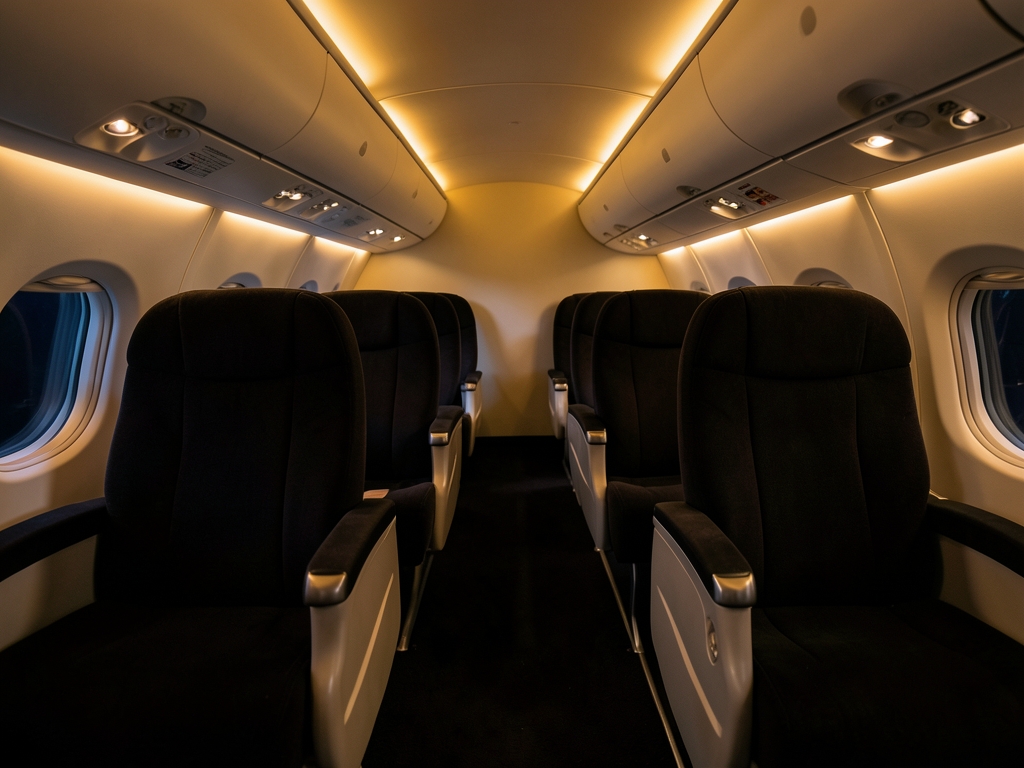
What the Fare Data Shows in 2026
As the evidence base for 2026, this section alone points to the worked fare pair from TheFlyingEngineer.com: economy at $850 round-trip versus premium economy at $1,450 round-trip. That $600 round-trip premium is the clearest benchmark to see how a fixed gap behaves across different flight lengths, since the same round-trip spread will dilute far more on a long trip than it will on a short one. The value of that pair is not the total, but the spread itself when measured against time.
That benchmark, however, is not representative of the wider market. According to Trip.com, for a $1,000 round-trip economy ticket, premium economy can run $1,500–$3,000 round-trip, placing it at 1.5x–3x that round-trip economy fare. This 1.5–3x multiplier range is the evidence base for volatility, as it can swing wildly by airline, route, and demand. With such a broad band, a fare that looks close to the benchmark on one route can be near the top of that band on another, making live quotes far less predictable than the single pair suggests.
Even if a quote falls near the lower end of that band, duration still weighs heavily on the case. Nomad Lawyer notes that for flights under four hours, the marginal comfort improvement may not justify doubling your ticket cost. This duration finding does not apply to every short trip, but it serves as a reason to scrutinize any premium on a very short block of time, especially when the multiplier is pushing toward the higher end of the 1.5x–3x range.
With only these figures to anchor the market, the takeaway is one of comparison, not assumption. The $850/$1,450 round-trip pair shows a contained spread, while the $1,500–$3,000 round-trip range from Trip.com shows how quickly that spread can expand. Paired with the under-four-hours caution from Nomad Lawyer, these are checks to run against your own live quote, keeping in mind that the round-trip spread must be judged against your one-way hours, not the round-trip total alone.
Cabin Comparison: Where Your Premium Goes
When judging where an upgrade premium actually goes, the physical layout is far more telling than the cabin name. According to AirlineReporter.com, Cathay Pacific A350 premium economy is a concrete example of this: 32 seats in four rows at 2-4-2. However, that same report points out a key split between variants, as A350-900 premium economy passengers must walk back to the bathrooms in economy, while the A350-1000 avoids this. With cabin design varying aircraft-to-aircraft, the seat map must be checked before pricing the upgrade, not assumed from the route alone.
That geometry is what determines value per inch. Wide-body premium economy in a 2-4-2 layout has the most room to justify its extra space, as the width is spread across fewer seats per block compared to tighter configurations. By contrast, narrow-body recliners and premium rows in a 3-3 layout deliver the least extra width for the same premium. The gain can be real on a wide-body, but on a narrow-body it is often more about a small recline than any meaningful increase in personal space.
Even the label itself cannot be taken at face value.
As shown on csair.com for the A350-900, China Southern Airlines lists its section as "Economy Class" on international routes despite referencing "Premium Economy Class" elsewhere. For any booking, this means the name on the offer is not proof of a separate, fully partitioned cabin, so check the carrier's own seat map and cabin description for your exact flight.
All of these factors compound the same task: verify the exact aircraft. A 2-4-2 wide-body with its own bathroom access is a different product than a 3-3 narrow-body with no cabin separation, even if both are sold under the same premium economy title. Before looking at any fare quote, the seat map should confirm the layout, the variant, and the bathroom situation for that specific flight. Only then can the physical product be weighed against the premium being asked for, without relying on the marketing name to do that work for you.

Costs: Premiums, Taxes, Fare Classes
Before applying any verdict to a live quote, the only task for this step is verification. The checkpoint list below is meant to be run first, and it comes with one strict unit-discipline rule: never mix one-way and round-trip fares in the calculation. Dividing mismatched units invalidates the math, so every fare you pull must be labeled one-way or round-trip and kept in that same unit for subtraction.
The first checkpoint is the fare class of the premium economy bucket. The cabin name alone is not enough, as many carriers sell deep-discount premium economy that forfeits seat selection and changes. Before subtracting anything, confirm the exact bucket code for that premium economy fare, because a cheaper bucket can be a different product than a more flexible one.
The second checkpoint is unit confirmation. Check whether the quoted premium economy and the quoted economy are both shown as one-way, or both shown as round-trip. If the display flips units between the two options, do not convert them by guessing. Only compare like units, and do not relabel taxes as the fare to force a match. This is the direct application of the unit-discipline rule, and it must be done before any subtraction.
The third checkpoint is the economy baseline. Confirm whether the cheapest bookable economy being used is basic economy or standard economy. These are not interchangeable baselines, so identifying which one is actually bookable for that itinerary is required. Skipping this check can make a restricted baseline look cheaper than it is, or make a flexible baseline look more expensive than the one you would actually choose.
With those checks in place, the cost of being wrong both ways is a matter of direction, not just total. Skipping a premium that passes means giving up the comfort for the full duration of that direction without recouping it, while buying a premium that fails means paying for that upgrade while keeping a baseline you could have secured in a less restricted form. Since volatile prices shift by quote, the checks above are the only way to judge that trade without relying on a past total.
What This Rule Cannot Tell You
While the math can filter many quotes, this section alone points to the rule's documented failure edges: seat-width variance, sub-4-hour red-eye exceptions, and status/upside scenarios. The largest blind spot is that the rule prices time, not seat quality. Two different premium economy products can both pass the same per-6-hour result, yet be completely different buys. A true, dedicated premium economy seat is not interchangeable with an airline that simply takes a standard economy seat and adds legroom in a cramped 3-3 recliner. In that specific case, the rule breaks: skip even fares that would pass, as you are not buying a meaningfully different seat for your time.
Another edge comes from overnight flights under 6 hours, such as some US transcon red-eyes. By the time-based filter, most of these will be rejected, but the value of sleep can justify paying up. That override, however, should only be considered for red-eyes landing before 8 a.m. Landing later can cut too far into the rest of your day, making that sleep value far less likely to hold up against the premium.
Finally, the rule does not establish that premium economy awards price at any spec. A cash fare that passes the filter does not mean an award will be priced in line with it, and there is no verified basis from the available sources to assume otherwise. These are the only places to question the time-based filter, not a reason to abandon it for every quote.
$600 Premium on 12 Hours
Using the worked fare pair from TheFlyingEngineer.com, $850 round-trip economy versus $1,450 round-trip premium economy gives a $600 round-trip premium, or $300 one-way premium. For a trip with 12 flight hours each way, divide that $300 one-way premium by 12 hours to get $25 per flight hour, then multiply by 6 to get $150 per 6 hours. Since $150 is at or under $175, the verdict for that direction is to book premium economy.
Now apply that same $600 round-trip premium ($300 one-way premium) to a 6-hour round-trip route with 3 flight hours each way. Divide $300 by 3 hours to get $100 per flight hour, then multiply by 6 to get $600 per 6 hours. At $600 per 6 hours, this is far above the $175 ceiling, so the verdict for that direction is to book economy and pocket the $600.
The cost of being wrong is measurable: approving the 3-hour each way case would mean paying the $300 one-way premium at $100 per flight hour — $600 per 6 hours, far above the $175 ceiling. By contrast, the 12-hour each way case prices the upgrade at only $150 per 6 hours, which is under the ceiling. These are direction-based costs, so they cannot be averaged away by looking at the round-trip total alone.
For a copy-usable booking checklist: (1) Pull the one-way premium economy fare and the one-way cheapest bookable economy fare for the exact direction you're booking. (2) Subtract them to get the one-way fare premium. (3) Divide that one-way fare premium by your one-way flight hours. (4) Multiply by 6 to get dollars per 6 hours. (5) If that number is $175 or less, book premium economy for that direction. If it is over $175, book economy for that direction. Run this per direction every time, since a good direction and a bad direction can exist on the same round-trip.
Decision Rules: Book, Bid, or Skip
When the quote clears the threshold, timing is the first decision point. IF the quote passes at ≤$175 per 6 hours AND the seat map shows a 2-4-2 or better cabin → book premium economy at ticketing; do not wait for a sale that may not open. The seat map check is just as important as the math, as a tighter layout can take away much of the breathing room you are paying for. Pulling the trigger at this point is about securing that cabin, not gambling on it reappearing later.
Not every quote that comes close is worth buying outright. IF the fare lands just above $175 per 6 hours → set a fare alert and re-check before the fare changes; premium economy buckets frequently drop when business fills and coaches stay open. Failing the rule is not a pass, but it can be a window of opportunity. However, this only works if you can act quickly once a drop appears, as those buckets can vanish just as fast as they open.
For those with leverage, the ladder shifts away from purchasing the cabin entirely. IF you hold elite status or systemwide upgrade instruments → book the cheap economy fare and apply the upgrade; the rule only applies to a cash purchase of premium economy. This is the upgrade-bid play, as you are not paying the premium economy fare, you are paying the cheapest bookable economy fare and spending an instrument. Treat this as a separate path, not a way to justify stretching the cash premium past its limit.
Lastly, there is the rarest play of all, and it should never be your default. IF you spot an error fare where the premium economy one-way fare is priced near or below the cheapest bookable economy one-way fare for the same flight → verify it is bookable and refundable in practice before committing, as this is pure error-fare arbitrage. Do not hunt for this, but if it appears, it can bypass the threshold entirely. Outside of these actions, skip.
Also worth reading Emirates Premium Economy Seats: Is How Premium Travel is Reshaping United Polaris vs Economy Plus
What to do next
Frequently Asked Questions
What formula do I use to calculate the premium per 6 hours?
Take the one-way premium economy fare minus the one-way cheapest bookable economy fare to get the one-way fare premium, divide that by your one-way flight hours, then multiply by 6.
At what threshold should I book a premium economy upgrade?
Book premium economy if the result is $175 or less per 6 hours, and skip it if the result is higher.
Can you give an example of a known premium economy fare jump?
An example shows economy at $850 jumping to premium economy at $1,450, a $600 difference on a 12-hour flight.
Why are flights under four hours often not recommended for an upgrade?
For flights under four hours, doubling your ticket cost may not justify the marginal comfort improvement.
How many seats are in the Cathay Pacific A350 Premium Economy cabin?
Cathay Pacific A350 Premium Economy has space for 32 passengers in four rows of 2-4-2-across.
What is the main goal of using this rule?
This guide uses the $175-per-6-hours rule to filter out most domestic and short-haul upgrades.
Quick answers
| How does the $175-per-6-hours rule work? | Take the one-way premium economy fare minus the one-way cheapest bookable economy fare to get the one-way fare premium, divide that by your one-way flight hours, then multiply by 6. |
| When should you book premium economy according to this rule? | Book premium economy if the result is $175 or less per 6 hours. |
| What is an example of a known fare jump? | An example shows economy at $850 jumping to premium economy at $1,450, a $600 difference on a 12-hour flight. |
| For what flight length are premium economy upgrades often rejected? | For flights under four hours, doubling your ticket cost may not justify the marginal comfort improvement. |
| How many passengers can fit in Cathay Pacific A350 Premium Economy? | Cathay Pacific A350 Premium Economy has space for 32 passengers in four rows of 2-4-2-across. |
Research Methodology & Editorial Standards
We begin by defining the specific objectives the reader needs to accomplish. Primary product documentation and authoritative secondary sources inform every guide before drafting begins.
Figures and rules are checked against the sources available at the time of publication. Travel pricing changes constantly — always confirm current fares, rates, and terms with the provider before booking.