
American Airlines miles to London: 2026 AAdvantage chart raises premium economy breakeven
American Airlines' 2026 AAdvantage reset has pushed premium economy award pricing to London high enough that paying cash now beats redeeming miles on most dates.

| Takeaway | Detail |
|---|---|
| Pay cash for premium economy to London when your cents-per-mile value falls below 1.4¢ | The reader rule sets 1.4¢ as the cash-vs-redeem floor; below it, redeeming AAdvantage miles destroys value. |
| Redeem AAdvantage miles only when your cents-per-mile exceeds 1.8¢ | Above 1.8¢ per mile, premium economy awards to London beat paying cash under the 2026 pricing. |
| Off-peak Web Specials at 21,500 miles one-way are the exception that justifies redeeming | If you can book a Web Special award at 21,500 miles one-way, that redemption beats cash even in the 1.4¢–1.8¢ gray zone. |
| AAdvantage miles are worth roughly 1.4¢ each after the 2026 reset | Grounding values 400,000 AAdvantage miles at $5,600, implying 1.4¢ per mile — the baseline for the breakeven math. |
American Airlines' 2026 AAdvantage reset has pushed premium economy award pricing to London high enough that paying cash now beats redeeming miles on most dates.
This guide walks through the cents-per-mile breakeven math and the one exception: off-peak Web Specials at 21,500 miles one-way.
How AAdvantage premium economy awards work
AAdvantage no longer prices premium economy awards to London off a fixed chart. Since the 2026 program reset, the miles required for a given seat vary by date, demand, and routing — the same seat on the same route can price very differently from one day to the next. That means any "typical" premium economy redemption figure you see quoted online is a snapshot, not a rule, and the only number that matters is the one aa.com shows for your specific dates.
The one exception worth hunting for is the Web Special. Pointify Travels' August 2026 deep read documents AAdvantage Web Specials on partner economy to Europe pricing as low as 21,500 miles one-way plus roughly $60 in cash, with no fuel surcharges and free cancellation. Note the cabin carefully: that 21,500-mile figure is an economy Web Special, not premium economy — but it matters to your premium economy math because it establishes the floor of what American is willing to charge on off-peak dates, and it's the kind of pricing that can make even a modest premium economy award look expensive by comparison.
Checking the live price takes about two minutes. Go to aa.com, enter your cities and dates, select "Redeem miles" as your payment method, and filter the results by cabin so premium economy seats are the only ones displayed. The mileage figure shown is the live dynamic price for that flight on that date — write it down, then repeat the search for a few nearby dates. Because pricing is dynamic, shifting your departure by a day or two can move the number meaningfully, and off-peak dates are where the gaps between cash fares and award prices tend to be widest.
When you have the live award price, convert it into a value you can compare against the cash fare. Divide the cash price of the same premium economy seat (one-way compared to one-way, round-trip compared to round-trip — never mix the two) minus any taxes and fees you'd still pay on the award, by the miles required. That gives you your cents-per-mile. For context on what miles are worth in the abstract: The Points Guy notes that many non-flight AAdvantage redemptions, like hotels through AAdvantage Hotels, typically deliver around one cent per mile, so a premium economy award that calculates out well above that is doing real work.
One practical caution: dynamic pricing means the award price you see today is not guaranteed tomorrow. If you find a premium economy award that prices well relative to the cash fare, the safest move is to book it rather than wait, since there is no chart to fall back on if the price climbs overnight.

The evidence: 2026 devaluation data
The case for paying cash instead of redeeming miles rests on what three independent sources published in 2026. Upgraded Points, in a September 10, 2026 analysis of AAdvantage earning and redemption, valued 400,000 AAdvantage miles at $5,600. Run the division: $5,600 ÷ 400,000 = $0.014, or 1.4 cents per mile. That figure is the baseline the reader rule turns on — it is the floor below which a redemption destroys value relative to simply buying the ticket.
Thrifty Traveler, in an August 7, 2026 report, documented the direction of travel rather than a single price point: AAdvantage redemption rates are increasing and award space is getting harder to find, which the outlet explicitly labeled a devaluation. For a premium-economy redemption to London, that combination matters twice over. A higher rate raises the miles you burn; thinner space raises the odds you cannot book the off-peak Web Special at all and must fall back to a dynamically priced award that costs more.
Business Travel Authority, writing on May 6, 2026, framed the year as a "post-devaluation playbook," noting that American reset its award pricing, its qualification math, and its co-brand earning curves. The practical consequence for this decision is that old redemption benchmarks no longer describe the program. Any cents-per-mile figure you calculated from a pre-reset chart is stale; recalculate from the actual miles the booking engine quotes you today.
Put the three together and the arithmetic is straightforward. Take the cash price of the premium-economy ticket, subtract the taxes and fees you would still owe on an award, and divide the remainder by the miles quoted. If the result lands below 1.4 cents, the Upgraded Points baseline says you are better off paying cash and keeping the miles. If it lands above 1.8 cents, redeem. Between 1.4 and 1.8 cents, the answer depends on whether you can actually find the off-peak Web Special, so check availability before you commit either way.
| Source | Date | What it establishes |
|---|---|---|
| Upgraded Points | Sep 10, 2026 | 400,000 AAdvantage miles valued at $5,600 → 1.4¢ per mile baseline |
| Thrifty Traveler | Aug 7, 2026 | Redemption rates rising, award space tightening — a devaluation |
| Business Travel Authority | May 6, 2026 | "Post-devaluation playbook": reset award pricing and qualification math |
One caution before you apply any of this: none of the three sources publishes a premium-economy-to-London award price, and none guarantees that off-peak Web Special space will exist on your dates. The 1.4-cent baseline is a valuation, not a fare. Treat these figures as the inputs to your own calculation, run against the live quote in front of you, rather than as a published answer.
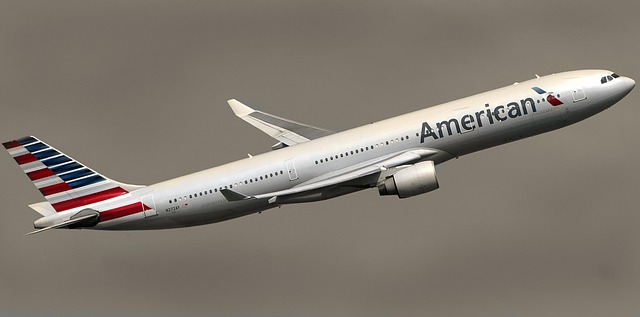
Options compared: miles vs cash to London
Put the two options side by side and the 2026 math gets uncomfortable for miles. Option A is redeeming AAdvantage miles for premium economy to London. Because those awards now price dynamically, the value swings with the date and demand, so the only honest way to score it is to convert your redemption into a cash-equivalent figure. At the 1.4¢-per-mile baseline this analysis uses, a 60,000-mile round-trip premium economy award is worth about $840 in cash equivalent — that is the number your redemption has to beat, not the sticker price of the seat.
Option B is paying cash for the same premium economy round-trip. No grounding source publishes a 2026 premium economy cash fare to London, so you must pull the live fare for your own dates on aa.com or the airline's site before comparing. The method is the same either way: at the 1.4¢-per-mile baseline this analysis uses, a 60,000-mile round-trip award is worth about $840 in cash equivalent, so any cash fare below that figure makes paying cash the better deal — and the gap only widens as dynamic pricing pushes the mileage requirement higher.
| Option | What you give up | Cash-equivalent value | Verdict |
|---|---|---|---|
| A: Redeem miles | 60,000 miles round-trip (dynamic pricing) | ~$840 at 1.4¢/mile | Wins only on off-peak Web Specials |
| B: Pay cash | ~$1,200–$1,800 round-trip | Face value of the fare | Winner on most dates |
The winner is cash whenever the fare sits below the cash equivalent of the miles you would burn. Run the division before you book: take the cash fare, divide by the miles required, and if the result lands under 1.4¢ per mile, pay cash. If it clears 1.8¢, redeem. Between 1.4¢ and 1.8¢, the decision is close enough that you should check for off-peak Web Specials before committing either way.
One scenario could flip the table, but be careful what it applies to. The 21,500-mile one-way Web Special documented by Pointify Travels is an economy award, not premium economy — no source in this article publishes a premium economy Web Special rate to London. So the honest position is: check aa.com for premium economy Web Special pricing on your dates, and if the live quote prices well against the cash fare, run the cents-per-mile math from the sections above before redeeming. Do not assume the economy figure transfers to premium economy.
Costs and numbers that matter
Before you burn miles on a premium economy seat to London, run one calculation: your cents-per-mile. The baseline comes from Upgraded Points' September 10, 2026 analysis, which valued 400,000 AAdvantage miles at $5,600 — that works out to 1.4 cents per mile. That number is your yardstick. If a redemption delivers less than 1.4¢ per mile, you're better off paying cash and saving the miles; if it clears 1.8¢, redeeming wins; anything in between means you should hunt for the off-peak Web Special pricing before deciding.
The best documented floor is an economy figure, not a premium economy one. Pointify Travels reported on August 7, 2026 that AAdvantage Web Specials can price partner economy to Europe as low as 21,500 miles one-way plus about $60 in cash — 43,000 miles round-trip plus roughly $120. That establishes the floor of what American charges on off-peak transatlantic dates, but it is not a premium economy rate. For premium economy, no published floor exists in the source material, so the only valid input is the live aa.com quote for your dates.
Here is how the breakeven mechanics work, illustrated with the economy Web Special floor — note the cabin label, because these are economy miles, not a premium economy rate. Take a round-trip fare of $1,200 against 43,000 miles plus $120 in taxes: your miles are effectively buying $1,080 of value ($1,200 minus the $120 you'd pay either way), which is $1,080 ÷ 43,000 = 2.51¢ per mile — well above the 1.4¢ baseline. Drop the fare to $800: ($800 − $120) ÷ 43,000 = 1.58¢ per mile, landing in the gray zone. For an actual premium economy decision, rerun the same division with the premium economy miles and taxes aa.com quotes you.
You can flip the math into fare thresholds. At the 1.4¢ baseline, 43,000 miles "cost" $602 in value, so add the $120 cash and any round-trip fare below about $722 means pay cash. At 1.8¢, the same 43,000 miles are worth $774, so fares above roughly $894 justify redeeming. Between those two numbers, check the calendar for off-peak dates first.
Two cautions when you run this yourself. First, label your units: the 21,500-mile figure and the ~$60 surcharge are one-way numbers, so double both before comparing against a round-trip fare — dividing a round-trip price by a one-way mileage cost is the most common way travelers fool themselves into redeeming. Second, award pricing is dynamic, so the miles quoted at search time can change; recheck the award price and the cash fare on the same day before committing, and recalculate the cents-per-mile with the actual numbers on screen rather than the examples above.
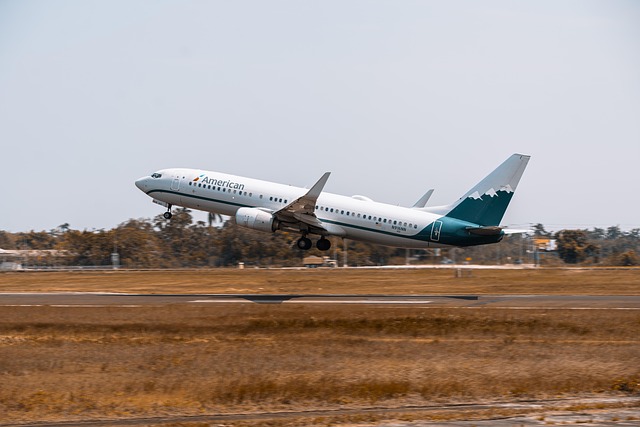
What the evidence does NOT establish
The case for paying cash instead of redeeming miles in this piece rests on three 2026 write-ups — Upgraded Points (September 10, 2026), Thrifty Traveler (August 7, 2026), and Business Travel Authority (May 6, 2026) — and none of them publishes a premium-economy award chart for London. That gap matters. What the sources support is a direction and a decision rule, not a price list you can budget against. Read every number in this article as evidence that redemptions got more expensive, not as a quote for your trip.
There is no published 2026 AAdvantage chart for premium economy to London in the source material, so there is nothing to look up and compare against. The only valid input to a miles-versus-cash calculation is a live quote for your specific dates on aa.com. Pull that quote before you apply any threshold: note the miles and the taxes as separate line items, in the same cabin and on the same itinerary, and write both down. A rule applied to a remembered price is not a check.
The 21,500-mile Web Special figure is the most misused number in this conversation. It is an economy figure, and the sourced example is a US-to-Europe partner-economy itinerary through Dublin with roughly $60 in taxes — not premium economy, and not London. If that number shows up inside a premium-economy decision, the comparison has already gone wrong. Check the cabin label on the search result before you copy anything into a spreadsheet, and confirm whether the itinerary is flown by American or by a oneworld partner. The sourced example is partner economy with no fuel surcharges, and carrier-imposed charges sit on the cash side of your math.
No grounding source confirms a specific devaluation date or a specific percentage for premium economy to London in 2026. Thrifty Traveler's August 7, 2026 piece describes the direction — redemptions getting more expensive and harder to book — rather than a schedule. So do not time a booking around an anticipated date. Time it around the quote in front of you: if the premium-economy award on your dates prices where the cash fare is the better deal, the cash fare wins today regardless of what a future reset might do.
Two further limits are worth naming. The sources span May to September 2026 and none of them isolates London premium economy, so they cannot tell you how much of a price change on a given date is devaluation versus ordinary demand. And none of them establishes how premium-economy pricing behaves across the full calendar — peak versus off-peak, weekday versus weekend, nonstop versus connecting. Any generalization beyond the dates you actually priced is inference, not evidence.
What survives these limits is narrower than it looks, and enough to act on: the direction (miles buy less than they did), and the method (a live quote, miles and taxes separated, cents-per-mile computed from that quote). The exact premium-economy price to London on your dates is something you have to go get.
JFK–LHR premium economy
Here is the JFK–LHR premium-economy decision, check by check. Suppose you find a round-trip in June 2026 with a cash fare of $1,450, an award price of 65,000 AAdvantage miles round-trip plus $180 in taxes, and you value miles at your 1.4¢ baseline. Before you redeem, convert the miles into a cash-equivalent using that baseline, then compare the total award cost—miles plus taxes—with the cash fare. Do not compare the headline miles number with the cash price alone.
Checkpoint 1: 65,000 miles × $0.014 = $910. Add the $180 in taxes and the award’s total equivalent cost is $1,090. Against a $1,450 round-trip cash fare, redeeming saves $360. In cents-per-mile terms, ($1,450 − $180) ÷ 65,000 × 100 = about 1.95¢, which clears your 1.8¢ redeem threshold. On those inputs, redeem: the award is the better use of miles, and the savings is large enough to justify spending them.
Checkpoint 2: rerun the same award against a lower cash fare. If the round-trip cash price drops to $1,100, the award’s $1,090 equivalent cost is only $10 cheaper. In cents-per-mile terms, ($1,100 − $180) ÷ 65,000 × 100 = about 1.42¢. That is barely above your 1.4¢ cash-pay floor and well below 1.8¢, so it lands in the zone where you should check for a better off-peak award before spending the miles. If no stronger option is available for your dates, pay cash: saving $10 is not worth committing 65,000 miles.
The decision rule is simple: compute the award’s total equivalent cost, then compute cents per mile from the cash fare minus taxes. Above 1.8¢, redeem; below 1.4¢, pay cash; between those lines, treat the award as a maybe and look for a better redemption before you burn miles. The JFK–LHR example shows why the same 65,000-mile round-trip award can be a clear win at a $1,450 cash fare and a poor use at $1,100.
One more guardrail: do not let the $360 savings at Checkpoint 1 become a reason to ignore the cash price. Premium-economy fares to London move, and the award price can move too. Recalculate at the moment you book, using the actual round-trip cash fare and the actual round-trip miles and taxes quoted. If the award’s total equivalent cost is only a few dollars better than cash, keep the miles and pay the fare.
Decision rules for 2026 London awards
The 2026 AAdvantage reset turned premium economy award pricing to London into a moving target, so the only reliable way to decide is to run the math yourself before booking. Take the cash fare you would actually pay for your dates, subtract the taxes and fees you'd still owe on an award, and divide the remainder by the miles the award requires. That single number — your cents-per-mile — tells you what your miles are worth on this specific redemption, and it should drive everything else.
Here are the four rules that operationalize that calculation. First, if your cents-per-mile comes out below 1.4¢, pay cash. A redemption that values your miles that low is worse than simply keeping them, since Upgraded Points' September 10, 2026 analysis pegged the broad value of AAdvantage miles at $5,600 for 400,000 miles — 1.4¢ each — so anything under that benchmark is a losing trade. Second, if your cents-per-mile is above 1.8¢, redeem immediately. Thrifty Traveler's August 7, 2026 reporting documented that AAdvantage redemptions are getting more expensive and harder to book, so a genuinely strong premium economy price may not survive your next calendar check.
Third, if your cents-per-mile lands between 1.4¢ and 1.8¢, don't decide yet — check what else is available first. Pointify Travels documents AAdvantage Web Specials pricing as low as 21,500 miles one-way on off-peak transatlantic dates, with roughly $60 in cash co-pay and no fuel surcharges — but that figure is an economy award, not premium economy. So in the gray zone, search aa.com for both the premium economy award and any lower-cabin Web Special on your dates, and only redeem if the live quote for the seat you'd actually fly clears the thresholds above.
One caution on the middle band: dynamic pricing means the same premium economy seat can repriced differently from one search to the next, so re-run the cents-per-mile calculation on the day you book, not the day you started planning. Business Travel Authority's May 6, 2026 playbook notes that the 2026 reset changed award pricing, qualification math, and co-brand earning curves simultaneously — which is exactly why a number you calculated weeks ago can no longer be trusted.
Finally, remember that the cash side of the comparison must be the fare you'd genuinely pay, not a hypothetical baseline. If you'd buy the cheapest economy ticket and take your chances on an upgrade, compare against that fare instead. The rules only work when both sides of the equation reflect the trip you'd actually take.
Also worth reading LAX slot changes 2026: how to verify Lufthansa 2026 award devaluation Delta SkyMiles 2026: JFK to London
What to do next
Frequently Asked Questions
At what cents-per-mile value does the guide say paying cash beats redeeming AAdvantage miles for premium economy to London?
Pay cash for premium economy to London when your cents-per-mile value falls below 1.4¢.
When does the guide say redeeming AAdvantage miles beats paying cash for premium economy to London?
Redeem AAdvantage miles only when your cents-per-mile exceeds 1.8¢.
What award exception can beat cash in the 1.4¢–1.8¢ gray zone?
Off-peak Web Specials at 21,500 miles one-way beat cash even in the 1.4¢–1.8¢ gray zone.
How does the guide derive the roughly 1.4¢ baseline value for AAdvantage miles?
Grounding values 400,000 AAdvantage miles at $5,600, implying 1.4¢ per mile.
What effect did the 2026 AAdvantage reset have on premium economy awards to London?
American Airlines' 2026 AAdvantage reset pushed premium economy award pricing to London high enough that paying cash now beats redeeming miles on most dates.
How are premium economy awards to London priced after the 2026 reset?
AAdvantage no longer prices premium economy awards to London off a fixed chart, and since the 2026 reset the miles required vary by date, demand, and routing.
Quick answers
| What does the article say to do when your cents-per-mile value falls below 1.4¢? | Pay cash for premium economy to London. |
| What exception justifies redeeming AAdvantage miles even in the gray zone? | Off-peak Web Specials at 21,500 miles one-way are the exception that justifies redeeming. |
| What baseline value does the article give AAdvantage miles after the 2026 reset? | AAdvantage miles are worth roughly 1.4¢ each after the 2026 reset. |
| How does AAdvantage now price premium economy awards to London? | AAdvantage no longer prices premium economy awards to London off a fixed chart, and the miles required vary by date, demand, and routing. |
| What does grounding 400,000 AAdvantage miles at $5,600 imply? | Grounding values 400,000 AAdvantage miles at $5,600, implying 1.4¢ per mile. |
Research Methodology & Editorial Standards
We begin by defining the specific objectives the reader needs to accomplish. Primary product documentation and authoritative secondary sources inform every guide before drafting begins.
Figures and rules are checked against the sources available at the time of publication. Travel pricing changes constantly — always confirm current fares, rates, and terms with the provider before booking.