
Los Angeles hiking trailheads reachable by Metro 2026: parking under $10 or free lots
This guide does not publish a pre-verified trailhead list; instead, it gives you the method to build your own 2026 shortlist: keep only trailheads where a Metro rail line or direct bus stop sits within a 1-mile walk and the posted day-use lot fee is $0–$10 or free, using metro.

| Takeaway | Detail |
|---|---|
| Transit test: Metro line or direct bus stop within 1 mile. | Reader rule: pick a trailhead only if a Metro line or direct bus stop is within a 1-mile walk. |
| Parking test: posted day-use fee $0–$10 or free. | Reader rule: the lot's posted day-use fee must be $0–$10, or the lot must be free. |
| Arrival rule: on foot or bus means no vehicle-tied fee. | Reader rule: arrive on foot/bus and owe no vehicle-tied fee; parking fees and lot reservations are tied to a vehicle. |
| Decision frame: 2026 car-free LA hikes are a two-variable problem. | Thesis: the two variables are Metro/bus proximity and posted lot cost; the guide gives the verification method plus a worked itinerary for both. |
This guide does not publish a pre-verified trailhead list; instead, it gives you the method to build your own 2026 shortlist: keep only trailheads where a Metro rail line or direct bus stop sits within a 1-mile walk and the posted day-use lot fee is $0–$10 or free, using metro.net and the managing agency's own pages.
The answer changes when the posted day-use fee falls outside $0–$10 or the arrival creates a vehicle-tied fee.
How Metro-to-trailhead access works
For a car-free LA hike, start with LA Metro's official "Line Schedules and Maps" page at metro.net. It is the single source for which rail lines (A, B, C, D, E, K) and which bus lines serve a trailhead area. Because schedules and routings change, re-check that page before each trip instead of relying on an older screenshot or third-party map.
The key mechanism is that trailhead parking fees and lot reservations are tied to a vehicle, not to the hiker. According to myft.net's 2026 guide "How to Get to a Trailhead Without a Car: 6 Options," a walker or cyclist arriving by bus typically skips those vehicle-tied charges. That is why arriving by bus can remove the lot fee from the trip, while the same hiker arriving in a car would still face it.
Separate the two charges that are often confused: the trailhead lot or parking fee, which is vehicle-tied, and the park or forest entry fee, which is a separate charge. myft.net notes that entry fees for the park or forest still apply even when a hiker arrives without a car. A free or low-cost lot does not automatically mean a free entry, and a paid lot does not tell you whether an entry fee exists.
| Fee type | What it covers | Bus arrival |
|---|---|---|
| Trailhead lot or parking fee | Vehicle space or reservation | Typically not owed (vehicle-tied) |
| Park or forest entry fee | Area access | Still applies (separate charge) |
Use metro.net to confirm the line and stop, then confirm on the land manager's own page whether the fee you see is a vehicle lot fee or an entry fee. If the page lists a reservation or day-use fee for parking, treat it as vehicle-tied; if it lists an entry or use fee for the area, treat it as separate. Re-check both before you go, because either can change.
This distinction matters because a trailhead can look expensive on a driving-oriented page while costing less on foot or by bus. The lot fee is not a hiker fee; it is a vehicle fee. The entry fee is the one that follows the person. Keep the two in separate columns when you compare options, and do not assume that a parking page's total is your total.
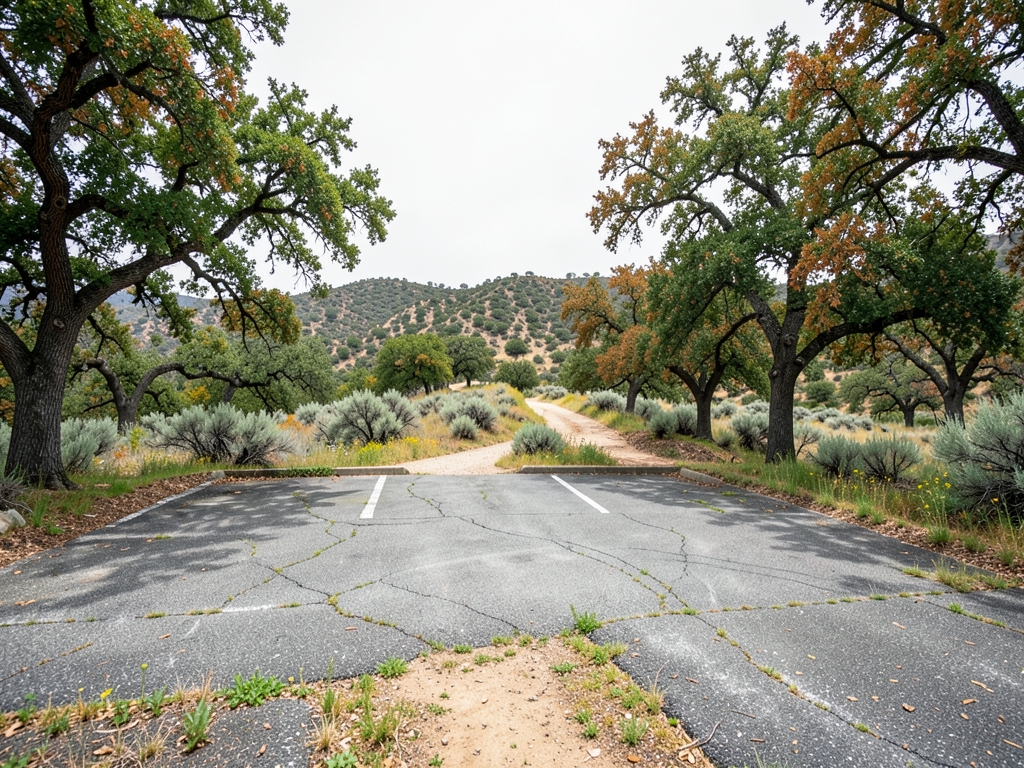
Verify each trailhead in 4 checks
Verify a trailhead with four checks, in this order, and treat any failed check as a reason to choose another trailhead. The method is deliberately sequential: transit access first, walk distance second, lot fee third, and agency entry fee last.
Check 1 — line and stop: On Metro's schedules and maps page, find the nearest rail station or bus stop to the trailhead, then confirm that the route actually runs on your hike day. Weekend schedules can differ from weekday schedules, so check the day you plan to hike rather than assuming the route is available.
Check 2 — walk distance: Measure the stop-to-trailhead gap in a mapping app and apply the 1-mile walkability threshold. If the gap is longer than 1 mile, treat that trailhead as a drive-in trail for this decision rule and move on.
Check 3 — lot fee: Confirm that the posted day-use parking fee is free or within the $0–$10 range. If the source page does not list a fee, do not treat the lot as free; verify the current fee with the managing agency before marking this check as passed.
Check 4 — agency entry fee: Confirm whether the managing agency charges a separate entry fee, and whether that fee is assessed per person or per vehicle. Record it separately from the lot fee so the two costs are not confused during trip planning.
| Check | What to verify | Pass condition |
|---|---|---|
| 1. Line and stop | Nearest rail station or bus stop; service on the hike day | Route runs that day |
| 2. Walk distance | Stop-to-trailhead gap in a mapping app | 1 mile or less |
| 3. Lot fee | Posted day-use parking fee | Free or $0–$10 |
| 4. Agency entry fee | Separate entry fee and how it is assessed | Fee identified and recorded |
Keep the four results together when comparing trailheads; a trailhead that fails one check should not be rescued by a strong result on another.

Arrival options compared: bus vs drive
For any trailhead with a paid lot, arriving by bus or Metro wins on total cost, because the vehicle-tied lot fee falls to zero. That is the single cost conclusion here; everything else is a comparison of how each mode earns or loses that advantage. If the lot is free, this conclusion does not apply and the comparison becomes a schedule question instead.
Metro rail plus a walk is the lowest-cost and most schedule-reliable option, but it is only valid when the station-to-trailhead distance stays within the one-mile walk threshold. Verify that specific distance for each trail instead of assuming a nearby station is close enough. A station that looks close on a map can still add an unsafe or unpleasant walk, so treat the mile as a hard filter, not a suggestion.
A bus that stops at or near the trailhead skips the vehicle-tied parking fee entirely, per myft.net, but it trades money for schedule risk, especially on weekends. Check the line's Sunday and holiday frequency before committing, because a missed or canceled return bus can erase the savings. Write down the last return time before you leave, not after you are on the trail.
Driving to a paid lot is fastest, yet you absorb the lot fee, which must stay under $10 to fit this guide's scope, plus any separate entry fee. If the posted lot fee is at or above that ceiling, the drive option fails the reader rule before fares are even compared. Add the entry fee to the lot fee before deciding that driving is "only a few dollars more."
A free lot is the only drive case that can challenge bus arrival on cost, and even then it only ties or wins if the lot is actually free on the day you go and you do not add a paid shuttle or reservation. Treat "free" as a posted condition to verify, not a default. If the lot fills early, the fallback is usually a paid overflow or a longer walk, which changes the math.
| Option | Cost position | Check before choosing |
|---|---|---|
| Metro rail + walk | Lowest cost, most reliable | Station-to-trailhead distance within one mile |
| Metro bus to trailhead | No vehicle-tied lot fee | Sunday/holiday frequency and return trip |
| Drive + paid lot | Fastest, but absorbs lot fee | Posted day-use fee under $10 |
| Drive + free lot | Only drive case that can tie bus | Posted free status on your date |
Costs that decide the trip
Price the trip as a three-line cost stack—Metro fare, agency entry fee, and trailhead lot fee—before comparing modes. Keep the lines separate: fare is per rider, entry fee may be per vehicle or per person, and lot fee is posted for the vehicle. Add them only after each line is verified for the specific trailhead and date.
Metro fare is the volatile line. Verify the current base fare and any day cap on metro.net before pricing; fares are set by Metro and change, so treat any figure read elsewhere as stale until confirmed. Multiply the fare by group size, and check whether a day cap applies to the number of rides your itinerary needs.
Entry fee is separate from parking. The RouteForLess Colorado reference point is a standard $30 vehicle fee in designated national parks; use it only as a prompt to check whether your LA-area trailhead's agency charges an entry fee and whether it applies per vehicle or per person. A per-vehicle fee can lower the per-person cost for a group, while a per-person fee does not.
The lot fee is the optional line. Include it only if a posted day-use fee applies and a vehicle-tied fee is owed; a posted fee in the $0–$10 range or no fee owed means it does not enter the transit stack. Verify the posted fee and its vehicle-tied status before adding it to either mode's total.
Three checkpoints make the checklist auditable. First, screenshot the Metro schedule for your exact date, because routings and times can change. Second, screenshot or write down the agency’s posted lot fee so you are not relying on memory or a third-party summary. Third, note the last return bus or train time and build your turnaround point backward from it; a late hike that misses the last departure strands you more expensively than any parking fee.
The cost of being wrong runs in both directions. If you assume a lot is free and it is posted otherwise, you may owe the posted day-use fee and face citation risk; if you assume a paid lot applies to you and you arrive by bus, you may budget for a vehicle-tied fee that typically does not apply to a walker. Either mistake is cheaper to catch on the checklist than at the trailhead.
If any check is unresolved, a screenshot is missing, or the last return time does not fit your plan, treat that as a failed check and pick another trailhead. The verification steps above are not paperwork for a decision already made; they are the decision.
Also worth reading Explore the most beautiful bike L.A. hikes by Metro: how to audit The European airports where parking
What to do next
| Step | Action | Why it matters |
|---|---|---|
| 1 | Open the 2026 list and keep only trailheads with a Metro line or direct bus stop within a 1-mile walk. | This applies the transit test before any parking decision. |
| 2 | For each remaining trailhead, check the lot's posted day-use fee and keep only $0–$10 or free lots. | This applies the parking test using the posted fee, not an assumed cost. |
| 3 | If arriving on foot or by bus, confirm you owe no vehicle-tied fee or reservation. | Parking fees and reservations are tied to a vehicle, so arrival mode changes the cost. |
| 4 | Require both variables to pass together: Metro/bus proximity plus the posted lot cost or no vehicle-tied fee. | The decision is a two-variable problem, not a single test. |
| 5 | Use the worked itinerary as the verification method for both variables, then recheck the posted fee before leaving. | It supports verification but does not replace checking the lot's posted cost. |
| 6 | If either variable fails, drive or switch trails instead of forcing the hike. | This follows the canonical decision rule and avoids an invalid trailhead choice. |
Frequently Asked Questions
Which LA Metro rail lines does the article name as serving a trailhead area?
The article names rail lines A, B, C, D, E, and K.
Where should a car-free hiker start to verify Metro-to-trailhead access?
Start with LA Metro's official "Line Schedules and Maps" page at metro.net.
Does the guide publish a pre-verified trailhead list?
No, it gives a method to build your own shortlist using metro.net and the managing agency's own pages.
What condition changes the answer for a trailhead?
The answer changes when the posted day-use fee falls outside the allowed range or the arrival creates a vehicle-tied fee.
What fee rule applies when arriving on foot or by bus?
Arriving on foot or by bus means owing no vehicle-tied fee, while parking fees and lot reservations are tied to a vehicle.
What is the transit proximity threshold for keeping a trailhead?
A Metro rail line or direct bus stop must sit within a 1-mile walk.
Quick answers
| What is the transit test for picking a trailhead? | Pick a trailhead only if a Metro line or direct bus stop is within a 1-mile walk. |
| What is the parking test for a lot's posted day-use fee? | The lot's posted day-use fee must be within the stated fee range, or the lot must be free. |
| What does the arrival rule say about vehicle-tied fees? | Arrive on foot or bus and owe no vehicle-tied fee; parking fees and lot reservations are tied to a vehicle. |
| What does the guide give instead of a pre-verified trailhead list for the guide year? | It gives the method to build your own shortlist for the guide year, using metro.net and the managing agency's own pages. |
| Where should a car-free LA hike start for Metro-to-trailhead access? | Start with LA Metro's official 'Line Schedules and Maps' page at metro.net. |
Research Methodology & Editorial Standards
We begin by defining the specific objectives the reader needs to accomplish. Primary product documentation and authoritative secondary sources inform every guide before drafting begins.
Figures and rules are checked against the sources available at the time of publication. Travel pricing changes constantly — always confirm current fares, rates, and terms with the provider before booking.