
LA hike parking: verify Griffith, Runyon, Eaton lot fees with a break-even check
For 2026, this guide gives no verified $0–$15 parking-fee answer for Griffith, Runyon, or Eaton; it gives a break-even rule instead.

For 2026, this guide gives no verified $0–$15 parking-fee answer for Griffith, Runyon, or Eaton; it gives a break-even rule instead.
The answer changes when round-trip transit fare × hikers is lower than the posted lot fee and the door-to-door condition is met.
Why the lot sign beats every 2026 price list
Griffith, Runyon and Eaton are three separately posted parking jurisdictions, so no single fee table can answer the headline for all three. That is the reason to stop treating any 2026 price list as authoritative before you have a gate in mind. A table can organize what someone observed somewhere; it cannot bind the lot you will actually enter. The binding number is the one printed at the gate and on the pay station the morning you arrive.
Griffith is not one parking lot. The acreage behind the name is National Park-scale: Griffith J. Griffith donated 3,015 acres to the City of Los Angeles, according to the Wikipedia entry on Griffith J. Griffith. That scale means several distinct trailheads and lots, each with its own posted rate. Check the sign at the specific gate you intend to use, not a search result for “Griffith parking.” A result that collapses every entrance into one quoted figure has already made the mistake you are trying to avoid.
The same discipline applies to Runyon and Eaton. They are not governed by the Griffith sign you photographed last month, and a rate screenshotted weeks earlier or quoted in a blog is a planning placeholder, not a price. Before you pay, log three things from the sign: the unit, the hours it covers, and the payment method the station accepts. If the unit is per vehicle, write that down exactly; do not silently convert it into a per-hiker number in your head.
Then run the reader rule against the sign in front of you. Multiply the round-trip transit fare by the number of people in your group and compare that total to the posted lot fee for your planned hours. Take transit if that total is lower and the door-to-door trip still fits the time you have. If the sign is unreadable, the pay station disagrees with the gate, or the posted hours do not cover your stay, treat the fee as unresolved rather than filling the gap with a number from a list.
A useful way to keep the comparison honest is to write two lines on your phone: “drive = posted lot fee, unit as printed” and “transit = round-trip fare × hikers.” Keep the units attached to each line. The point is not to prove that one mode is cheaper everywhere; it is to make the decision at the lot you chose, using the sign that governs that lot, with your own group size and planned hours. That check travels cleanly across Griffith, Runyon and Eaton because it does not assume they share a rate.
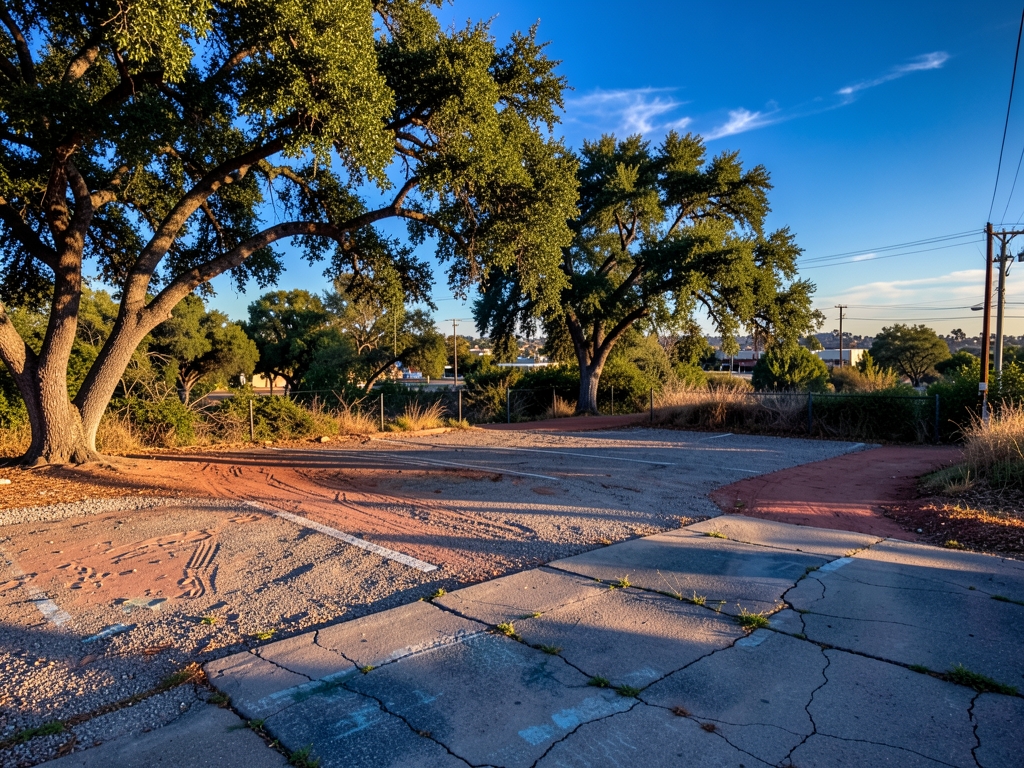
Three sources, zero published parking rates
Start with the land itself. Wikipedia’s entry on Griffith J. Griffith records that he donated 3,015 acres to the City of Los Angeles. That single fact explains why “Griffith parking” cannot be treated as one quoted rate: a donation that large is not a single gate with a single cashier. It is a sprawling public property with many ways in, and the place where you stop determines what you pay. Before you trust any general parking figure, name the exact access point you plan to use.
The same scale means a citywide or parkwide label is too coarse for a budget. If your plan says only “Griffith,” you have not yet identified the fee you will face. Write down the lot, street edge, or facility you are aiming for, then check the posted terms for that specific place. A number attached to the whole park cannot substitute for the sign at the place where you actually park.
A City of Los Angeles .gov release about Mayor Bass cutting filming fees by 70% at Griffith Observatory is useful for a different reason than the filming discount itself. It shows that Griffith Observatory fee schedules are set and revised by the City. That is the signal: a fee associated with a City-managed facility can change by official action, so a figure copied from an old page is not a substitute for the current schedule or the sign on site.
That does not mean every fee in the area is the same kind of fee. Filming charges and visitor parking charges are separate categories. Do not read the filming change as evidence of what a visitor pays to park. Use it only as a reminder that the City can revise its published charges, and that the operative figure for your trip is the one posted for your chosen facility and your planned hours.
For a practical check, build a two-column note before you leave: your destination’s posted parking terms on one side, and your group’s round-trip transit fare total on the other. Multiply the round-trip fare by the number of hikers, then compare that total with the posted lot fee for the time you expect to stay. If the transit total is lower and the door-to-door trip still fits your plan, transit is the defensible choice.
Keep the comparison tied to the sign, not to a headline range. If the posted fee is unclear, budget against the higher amount you can verify rather than assuming the low end applies. The point is not to guess a universal price; it is to make a break-even check for your own group, your own access point, and your own hours.

Six ways in, and the one you can price early
There are six practical ways in: the posted lot, street parking, rideshare dropped at the gate, public transit, a friend dropping you off, and walking in from outside the paid area. Only one of those rows has a price you can confirm before you leave home: public transit. That is the claim this section adds, and it is narrow. The published fare is a published fare; the lot fee is a sign you have not yet read, the street space is a condition you have not yet found, and the rideshare quote is a live number that moves with demand.
So compare the rows on price certainty, not on price. The lot row is unknown until you are at the gate and can read the sign for your planned hours. The street row is unknown until you find a legal space and check the posted restrictions. The rideshare row is unknown until the app prices your specific trip. The transit row is the only one you can total in advance from the published fare, which is why it is the only row that can be put into a real pre-trip budget rather than a guess.
| Access row | Unit on the price | What you can confirm at home |
|---|---|---|
| Posted lot | Per vehicle, per lot | Nothing final; read the sign on arrival |
| Street parking | Per vehicle | Nothing final; find the space and read the restriction |
| Rideshare | Per seat / per trip quote | Nothing final; price appears in the app |
| Public transit | Per person, published fare | The fare, which can be multiplied by group size |
| Friend drop-off | Not a posted access fee | Only your own arrangement |
| Walk in | Not a posted access fee | Route and time, not a fee |
Unit discipline is the whole table. Lot and street rows are per vehicle; transit and rideshare-per-seat rows are per person. If you convert nothing, you will compare one car payment against one rider ticket and call the smaller number the winner. That is the wrong arithmetic. Put every row into a group total first: one vehicle fee for the car rows, fare times hikers for the per-person rows. Only then are the numbers in the same unit.
Transit wins narrowly, and for a testable reason: it is the only row where the number in your hand before departure is the number you can actually multiply. The check is simple. Multiply the round-trip transit fare by the number of hikers, then compare that total with the fee on the sign at the lot you plan to use for the hours you plan to stay. If the transit total is lower and the door-to-door trip still fits your day, take transit. If the sign total is lower, park. The point is not that transit is always cheap; the point is that its price is confirmable early enough to use.

The units that break the $0–$15 comparison
The headline’s $0–$15 band and 15–45 minute band are presented as different kinds of measurements, and neither is verified in the available sources. A lot fee, if posted, is charged per vehicle and may scale by hours; a transit fare is charged per rider and must be doubled for the return trip before multiplying by group size. Convert both sides to the same unit before comparing, and treat any headline range as a prompt to check the sign or schedule rather than as a confirmed price or time.
The unit mismatch is the trap in the headline figure. If a lot sign shows a per-vehicle total, that total applies once per vehicle, not once per hiker; compare it with the group’s round-trip transit total (fare × hikers). The same posted fee can look expensive or cheap depending on headcount, so keep the units attached: do not mix a one-way fare with a round-trip comparison, and do not compare an hourly rate without applying your planned hours.
Use this conversion before you leave: round-trip transit fare × number of hikers, then set that beside the fee on the sign × hours stayed. Do not mix a one-way fare into the multiplication and do not relabel a day cap as a single ride. The arithmetic only works when the left side is a group total for the full journey and the right side is a vehicle total for the full stay. If either side is missing a figure, leave it as a blank to fill from the sign or the fare product rather than guessing a number.
Check the fare product, not just the fare. A day cap or multi-ride pass can change a two-hike weekend: if the cap covers both days’ rides, the per-person cost you multiply by headcount is the capped amount, not the single-ride amount repeated. Read the product terms for whether the cap is daily or multi-day, whether it applies to the return leg, and whether each hiker needs a separate product. Only then multiply. A cheaper-looking single fare that resets on the way back can lose to a higher-priced cap once the round trip and the second hike are counted.
Keep the time band in its lane. The 15–45 minute band describes duration, not price, so it cannot be subtracted from, divided into, or compared against the $0–$15 band. Its only role here is to tell you which hours to enter into the parking side of the check. Pick your planned stay, read the posted fee for those hours, and convert that to the vehicle total. Then compare it with the group transit total. Take transit only if that total is lower and the door-to-door timing still works for your group.

Also worth reading Help Protect Eaton Canyon How You Give Back While Exploring Volunteer Chime fees vs checking account
A worked check: four hikers, one wallet
Use this as a worked check, not a price quote: park if (round-trip transit fare × hikers) is greater than (posted hourly rate × hours + any flat entry); otherwise ride. For four hikers, the left side is four times one person’s round-trip fare, and the right side is whatever the sign at your chosen lot says for your planned hours. Because no 2026 rate for these lots is confirmed by a posted sign in this article, leave both sides as your own readings; the formula is the only concrete relationship this section gives you.
Frequently Asked Questions
When does the break-even rule change the parking answer?
The answer changes when round-trip transit fare × hikers is lower than the posted lot fee and the door-to-door condition is met.
Why can't one fee table settle the headline for Griffith, Runyon, and Eaton?
Griffith, Runyon and Eaton are three separately posted parking jurisdictions, so no single fee table can answer the headline for all three.
What posted information should a driver rely on at arrival?
The binding number is the one printed at the gate and on the pay station the morning you arrive.
What acreage figure is cited for Griffith's donation?
Griffith J. Griffith donated 3,015 acres to the City of Los Angeles, according to the Wikipedia entry on Griffith J. Griffith.
What is wrong with a search result that gives one Griffith parking figure?
A result that collapses every entrance into one quoted figure has already made the mistake you are trying to avoid.
Why can't a table bind the lot a driver will enter?
A table can organize what someone observed somewhere; it cannot bind the lot you will actually enter.
Quick answers
| Does the guide give a verified parking-fee answer for Griffith, Runyon, or Eaton? | For 2026, this guide gives no verified $0–$15 parking-fee answer for Griffith, Runyon, or Eaton; it gives a break-even rule instead. |
| When does the answer change according to the guide? | The answer changes when round-trip transit fare × hikers is lower than the posted lot fee and the door-to-door condition is met. |
| Why does the lot sign beat every 2026 price list? | Griffith, Runyon and Eaton are three separately posted parking jurisdictions, so no single fee table can answer the headline for all three. |
| What should you check before treating any 2026 price list as authoritative? | That is the reason to stop treating any 2026 price list as authoritative before you have a gate in mind. |
| What is the binding number for the lot you will actually enter? | The binding number is the one printed at the gate and on the pay station the morning you arrive. |
Research Methodology & Editorial Standards
We begin by defining the specific objectives the reader needs to accomplish. Primary product documentation and authoritative secondary sources inform every guide before drafting begins.
Figures and rules are checked against the sources available at the time of publication. Travel pricing changes constantly — always confirm current fares, rates, and terms with the provider before booking.