
LA Metro bike share cost: $5 day pass vs 3 single rides
Using the article's $1.75 single-ride example, the $5 24-Hour Access pass beats three separate sub-30-minute LA Metro Bike Share rides: 3 × $1.75 = $5.25 versus $5.00.

| Takeaway | Detail |
|---|---|
| The $5 24-Hour Access pass beats three separate rides only at a confirmed single-ride price of $1.75 or more. | 3 × $1.75 = $5.25, which is more than the $5.00 pass. |
| The pass rule requires 3 or more separate rides of 30 minutes or less in one 24-hour window. | Buy the $5 24-Hour Access pass only if both the ride-count rule and the price check are met. |
| The deciding check happens at app or station checkout. | Checkout must show a single-ride price of $1.75 or more. |
| The comparison is specifically between one $5 pass and three separate sub-30-minute rides. | The thesis compares $5.00 for the pass with 3 × $1.75 = $5.25 for separate rides. |
Using the article's $1.75 single-ride example, the $5 24-Hour Access pass beats three separate sub-30-minute LA Metro Bike Share rides: 3 × $1.75 = $5.25 versus $5.00. Because the article also calculates a $5.00 ÷ 3 = $1.6667 break-even, check the actual displayed single-ride price before choosing; the pass is not shown to beat three singles at every price.
That answer changes if the app or station checkout shows a single-ride price below $1.75.
How the 24-hour pass billing works
A 24-Hour Access purchase is described here as opening a 24-hour window rather than buying one ride. Before relying on that, check the official LA Metro Bike Share app or station checkout for the pass price, the included ride length, and any overage charge. Treat the pass as a temporary account status only if checkout confirms you can start and end separate trips during the window while tracking the 24-hour clock and each trip's ride clock separately.
The 30-minute boundary applies to each ride, not to the whole day. A trip returned at or before 30 minutes should add no overage under the pass, while a trip that exceeds 30 minutes moves into overage pricing. The only published overage line is $1.75 per 30 minutes thereafter, so use the app or station receipt to confirm whether that overage clock resets on each new ride or stacks across rides within the same 24-hour window.
A single ride is a separate checkout path from 24-Hour Access, so the products are not interchangeable at the station or in the app. The official fare snippet does not publish a standalone single-ride price, which means the comparison between one pass and separate short rides cannot be settled from the fare snippet alone. Check the price shown before confirming any single-ride checkout.
For a valid comparison, keep the two clocks and two products separate: note when the 24-hour window starts, measure each ride against its own 30-minute limit, and record the single-ride price shown at checkout. If a ride is likely to exceed 30 minutes, the overage rule matters as much as the base price, so verify the receipt's overage wording before starting that trip.
Use the pass only after those checks agree with your plan: the window must cover all intended trips, each intended trip must fit the 30-minute boundary or have a verified overage cost, and the single-ride checkout price must be visible for any ride you might take without the pass.

Published fare numbers and their limits
For any fare claim, verify it against the official LA Metro Bike Share app or station checkout rather than relying on a secondary summary. The article can compare the pass and separate rides only after checkout shows the current pass price, the included ride length, the single-ride price, and any overage charge; if those details are not displayed, the comparison remains unverified.
The Metro Bike Share – LA's Bike Share page speaks to operations, not money. Its claim is that hundreds of self-service bikes are available anytime, which confirms the system's scale and the odds that a bike will be on the street when you want one. It supplies no single-ride fare, no pass price, and no overage rate, so it cannot anchor a cost comparison on its own.
Wikipedia's Metro Bike Share entry contributes the institutional fact: it describes the system as the first U.S. bike share integrated as part of a city's existing public transit. That is the evidence that a Metro-run fare page is the right place to look for bike share pricing, and it is a link claim only — the entry lists no fare.
| Source | Figure/claim it supplies | Fare role |
|---|---|---|
| Metro Bike Share Sign Up page | 24-Hour Access $5 to start; rides 30 min or less free; $1.75 per 30 min thereafter | Publishes the pass price and the per-30-minute rate |
| Metro Bike Share – LA's Bike Share page | Hundreds of self-service bikes available anytime | Confirms scale/availability; no fare figure |
| Wikipedia – Metro Bike Share | First U.S. bike share integrated into a city's existing public transit | Confirms the LA Metro link; no fare figure |
Read together, the sources divide cleanly: one page owns the price, one owns the hardware, one owns the transit connection. The practical rule for any fare sentence is to attach each number to the page that prints it — the access price and the per-30-minutes charge belong to the Sign Up page alone.
One caution on limits: these are published figures, and published figures can lag what a station kiosk or the app displays at the moment of checkout, so treat the Sign Up page as the reference to re-check rather than a guaranteed quote. The availability and integration claims carry the same caveat in kind — they describe the system as published, and a quick look at the LA's Bike Share page before a trip is the cheap way to confirm the bikes are still out there.
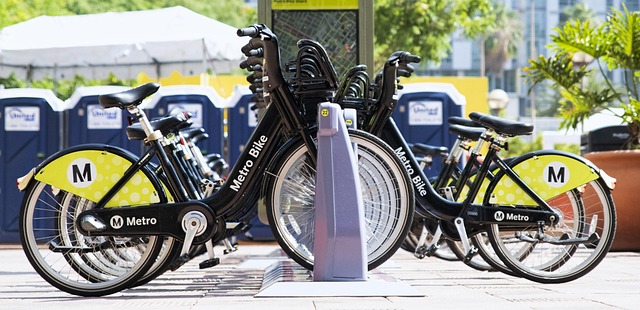
Day pass vs 3 singles: explicit winner
Here is the side-by-side decision:
Use the price shown for one ride at checkout, not a remembered fare or a rounded guide figure. The break-even test only works when the same price basis is used for all three rides.
Before buying, recompute with the exact checkout price: multiply by three, compare with $5.00, and confirm every planned ride is 30 minutes or less and fits inside the purchase-time window. If any of those three checks fails, the $1.6667 break-even no longer answers the question.
What the fare snippet does not prove
The available fare snippet does not establish a standalone single-ride price, an unlock fee, taxes, or membership discounts for LA Metro Bike Share. Because those pieces are missing, the $1.75 figure used in this guide should be treated as a planning assumption rather than a confirmed fare. Do not treat $1.75 as a single-ride price unless checkout confirms it.
A pass price alone cannot prove the total cost of one short ride. Taxes, unlock fees, or membership discounts can move the actual single-ride price above or below the assumed $1.75, so the checkout screen is the only place to verify that number.
The snippet also does not state whether an overage charge tied to a 30-minute increment resets with each separate ride or accumulates across rides. The reset rule changes whether a third short ride stays within the expected cost or adds an overage charge, so the app receipt is the only acceptable check before buying the pass.
| Edge case | Rule breaks? | Check |
|---|---|---|
| Single ride < $1.6667 | Yes, pay singles | App checkout |
| Only 2 rides in 24h | Yes, pass loses | App checkout |
Before buying, confirm three receipt-level items: the single-ride price shown at the station or in the app, any fee or tax line attached to that price, and whether the overage resets per ride. If any item is missing or unclear, the pass-versus-singles comparison remains unverified.
The two edge cases in the table are not an exhaustive list; they mark the first places where the assumed rule fails. A ride priced below $1.6667 or a two-ride day can make paying singles the better checkable option even before taxes or reset rules are considered.
Until those details are confirmed, use the checkout screen rather than the guide's assumed $1.75 price to decide. The $5 pass threshold applies only after the single-ride price and reset rule are verified.
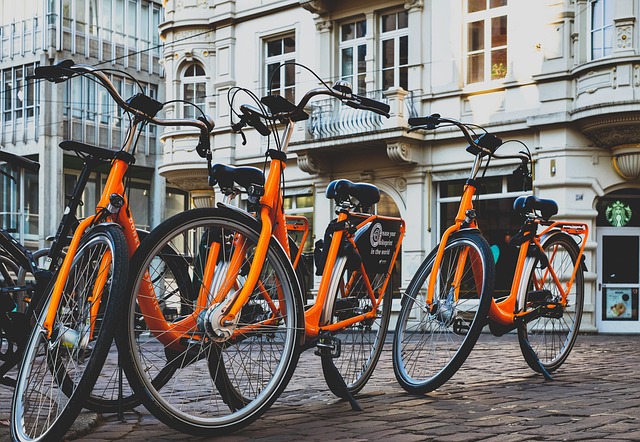
Three 25-minute rides
Three 25-minute rides make the arithmetic easy to check. Assume three separate rides, each 25 minutes, all started inside one 24-hour access window; the article's $5.00 pass example; a $1.75 per 30 minutes after the 30-minute mark example, which these rides do not reach; and a single-ride price you must confirm in the app or at the station before choosing. The calculation for this case is 3 × 25-minute rides, checked against the confirmed pass price and against three separate single-ride charges.
Checkpoint 1 is the checkout screen. If the app shows a single ride at $1.75, then three separate rides cost 3 × $1.75 = $5.25. The pass costs $5.00, so the pass wins by $0.25. That quarter is the whole margin in this scenario. If the displayed single-ride price is lower than $1.75, stop and rerun the comparison with the displayed number; the $5.00 pass no longer has the same verified advantage from this arithmetic alone.
Checkpoint 2 is ride length. Each ride is 25 minutes, so every ride stays within the 30-minute boundary and the published $1.75 overage after 30 minutes is not triggered. That matters because the comparison is between the $5.00 pass and three short single rides, not between the pass and three longer rides with extra charges attached. If any one of the three rides stretches past 30 minutes, this 3 × $1.75 comparison no longer describes what you would pay.
Checkpoint 3 is timing. All three rides must fit inside the same 24-hour access window for the pass to cover them as planned. In this example, they do: three 25-minute rides inside one 24-hour window. On those facts, with checkout confirming $1.75 per single ride, the rule is to buy the $5.00 pass. You are paying less than the three separate charges and keeping every ride under the 30-minute limit.
The wrong-choice cost runs in both directions. If you buy the $5.00 pass but take only two rides at the verified $1.75 single-ride price, your separate-ride total would be 2 × $1.75 = $3.50. The pass would cost $1.50 more than paying per ride. That is the cost of buying the pass before you are sure the third ride will happen. The other mistake is skipping the pass when checkout confirms $1.75 for a single ride and you truly have three 25-minute rides in one window: you would pay $5.25 instead of $5.00, leaving $0.25 on the table.
Use the three checkpoints in order: confirm the single-ride price, confirm each ride is 30 minutes or less, then confirm all three rides sit inside one 24-hour window. For exactly three 25-minute rides with a $1.75 checkout price, those checks all pass and the $5.00 pass is the cheaper choice by $0.25. If any checkpoint fails, the arithmetic changes, and the pass should not be treated as the verified winner for this scenario.

Also worth reading Metro Bike Share vs. Owning a Bike Disney World October 2026 tickets American Airlines award pricing
Five if/then purchase rules
Use these five if/then rules as the final decision step after you have checked the live checkout price and your ride count. They convert the earlier checks into a buy-or-skip answer without repeating the billing, source, or break-even details covered elsewhere.
Frequently Asked Questions
At what displayed single-ride price does the pass stop being the cheaper option for three rides?
The pass is not shown to beat three singles at every price, and that answer changes if the app or station checkout shows a single-ride price below $1.75.
What ride-count and timing conditions must be met before relying on the pass comparison?
The pass rule requires 3 or more separate rides of 30 minutes or less in one 24-hour window.
Where should I confirm the single-ride price before deciding?
The deciding check happens at app or station checkout, which must show a single-ride price of $1.75 or more.
How does the article calculate the break-even point for the pass versus three separate rides?
The article calculates a $5.00 ÷ 3 = $1.6667 break-even.
What exactly is being compared in this cost guide?
The comparison is specifically between one $5 pass and three separate sub-30-minute rides.
Does buying the pass purchase a single ride or open a time window?
A 24-Hour Access purchase is described here as opening a 24-hour window rather than buying one ride.
Quick answers
| When does the 24-Hour Access pass beat three separate rides? | The 24-Hour Access pass beats three separate rides only at a confirmed single-ride price at or above the threshold specified in the article. |
| What conditions must be met before buying the 24-Hour Access pass? | You should buy the 24-Hour Access pass only if both the ride-count rule and the price check are met. |
| Where does the deciding check for the single-ride price happen? | The deciding check happens at app or station checkout. |
| What must the checkout show for the 24-Hour Access pass to be the better option? | Checkout must show a single-ride price at or above the threshold specified in the article. |
| Why should you check the actual displayed single-ride price before choosing? | You should check the actual displayed single-ride price before choosing because the pass is not shown to beat three single rides at every price. |
Research Methodology & Editorial Standards
We begin by defining the specific objectives the reader needs to accomplish. Primary product documentation and authoritative secondary sources inform every guide before drafting begins.
Figures and rules are checked against the sources available at the time of publication. Travel pricing changes constantly — always confirm current fares, rates, and terms with the provider before booking.