
Metro Bike Share vs. Owning a Bike on Ballona Creek: Comparing 2026 E-Bike Costs
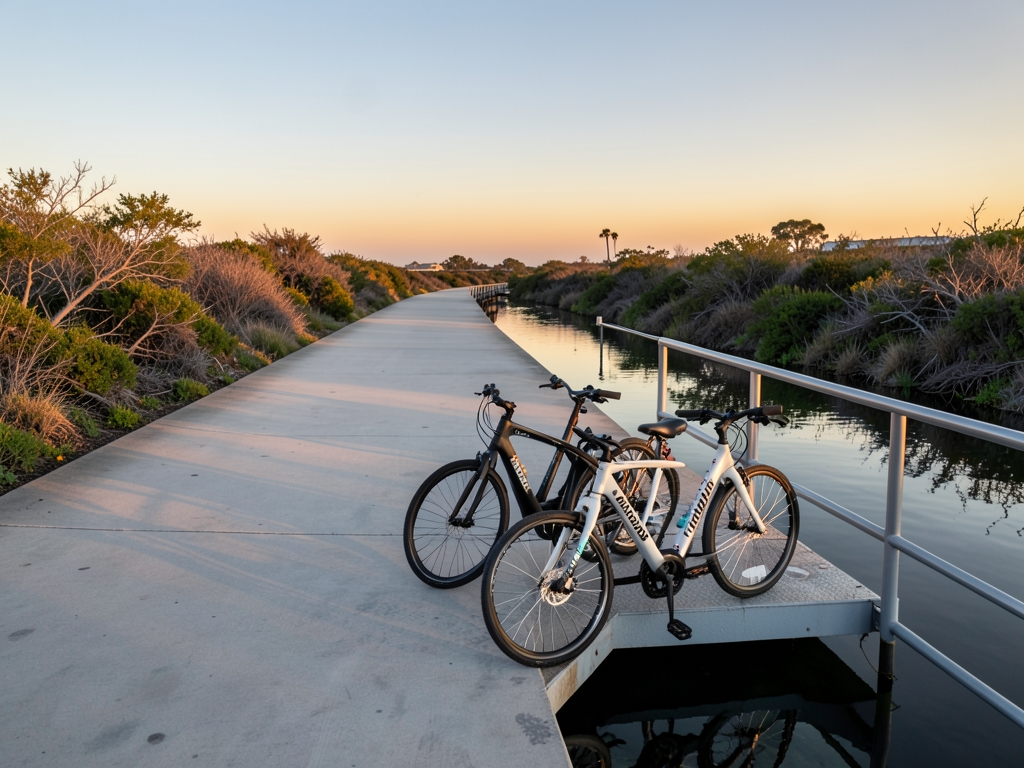
This guide provides a framework for comparing Metro Bike Share e-bike pricing against the cost of owning a bike for trips along the Ballona Creek path in 2026.
| Takeaway | Detail |
|---|---|
| Metro Bike Share e-bike rides are priced at $1.75 per 30 minutes in 2026. | Use the live 2026 Metro Bike Share rate of $1.75 for each 30-minute e-bike increment when comparing Ballona Creek trips. |
| The 2026 Metro Bike Share expansion changes e-bike pricing on the Ballona Creek path. | Check the current post-expansion e-bike rate and service area before assuming the $1.75 per 30-minute figure applies to your ride. |
| A $1.75 per-30-minute ride can beat owning a bike only after like-for-like totals. | Compare total rental cost, including all 30-minute increments, with ownership costs and terms for the same Ballona Creek use. |
| Verify the live, complete option before committing. | Confirm current pricing, availability, and terms directly with Metro Bike Share rather than relying on a static headline. |
This guide provides a framework for comparing Metro Bike Share e-bike pricing against the cost of owning a bike for trips along the Ballona Creek path in 2026.
It shows when renting beats ownership and how to verify live rates and terms before committing.
How It Works
Metro Bike Share runs on a simple clock: you unlock a bike from a station, ride it, and re-dock it to end the trip. Pricing is built from two parts — a per-ride time charge and whatever pass or plan you've attached to your account. The figure to verify before your first Ballona Creek ride is the per-30-minute e-bike rate shown in the Metro Bike Share app or on the bike itself at the dock; the widely cited number is $1.75 per 30 minutes, but rates and plan structures change, so treat the live app screen as the source of truth, not an article — including this one.
Here's the mechanism in practice. When you check out an e-bike, the meter starts at unlock and runs in 30-minute blocks. Ride 29 minutes, you pay one block. Ride 31 minutes, you pay two. That rounding rule is the single biggest driver of what a Ballona Creek out-and-back actually costs, because the path tempts you into stops — the marsh overlook, the bridge crossings — and every pause keeps the clock running until you dock. The verify-before-you-commit move: before riding, open the app, confirm the current per-30-minute e-bike rate and whether your plan includes e-bikes at all, since some plans cover classic bikes but bill e-bikes separately.
Key terms, defined once so the rest of the decision gets easier. Ride time is the unlocked-to-docked window, not your moving time. Unlock fee is a flat charge some plans apply at checkout; check whether yours has one. Pass vs. pay-as-you-go: a pass bundles a set amount of ride time per day or month, while pay-as-you-go bills each 30-minute block at the standard rate. Re-dock means physically locking the bike into a station — ending the ride in your head does not end the charge. Out-of-station or non-dock penalties may apply if you leave a bike outside the system's designated areas; the app's station map is the checklist.
A worked example of the rounding rule, using the $1.75-per-30-minute figure as the rate to confirm in-app: a 55-minute Ballona Creek round trip is two blocks, so 2 × $1.75 = $3.50. A 62-minute trip is three blocks, 3 × $1.75 = $5.25. Docking six minutes earlier saves $1.75 — that's the entire decision margin on a short ride, and it's why the dock-at-30 habit matters more than the headline rate.
| Trip length (unlocked to docked) | 30-min blocks billed | Cost at $1.75/block (verify in app) |
|---|---|---|
| 29 minutes | 1 | $1.75 |
| 55 minutes | 2 | $3.50 |
| 62 minutes | 3 | $5.25 |
| 91 minutes | 4 | $7.00 |
One final check before you commit to riding versus owning: pull up the app's station map and confirm there is a working dock at both ends of your intended Ballona Creek segment on the day you plan to ride. The pricing math only holds if the trip can actually start and end inside the system — a dock outage turns a $3.50 ride into a walk, and that availability check is part of the like-for-like total, not a footnote.
Key Factors to Consider
When you're weighing the 2026 Metro Bike Share expansion against owning a bike for Ballona Creek trips, three criteria should drive the decision: how often you actually ride, how long each ride lasts, and how reliable docking availability is at the stations you'd use. Everything else — bike weight, app experience, weather — is secondary to those three, because the economics of a per-30-minute time charge collapse or hold depending entirely on your ride frequency and duration pattern.
The first criterion is frequency. Count your realistic trips per week over a month, not your aspirational ones. A rider who commutes on the creek path five days a week is doing a fundamentally different cost calculation than someone who rides on weekends when the weather is nice. Before committing to either option, pull a month of actual behavior — calendar entries, phone location history, whatever you have — and count real rides. If the honest count is low, ownership costs spread across few rides get ugly fast.
The second criterion is ride duration. Time-based pricing rewards short trips and punishes long ones, so the question isn't just "how often" but "how many minutes each time." Log a few typical rides from your usual starting point to your usual destinations along the creek. If your trips consistently run short — a station-to-destination hop rather than a long recreational loop — the per-ride math tilts one way; if you settle in for hour-plus rides, it tilts the other. Duration also interacts with frequency: many short rides and few long rides can produce similar totals, so you need both numbers before you can compare anything.
The third criterion is station coverage and docking reliability at your specific endpoints. A price is meaningless if there's no dock with an open space where you arrive, or no bike where you depart. Check the live system map for stations near both ends of your regular route, then verify at the times you'd actually ride — morning and evening peaks behave differently from midday. The expansion changes this picture, so verify current station locations and availability directly in the Metro Bike Share app rather than relying on articles, including this one.
On the numbers that matter: the figures you need are your own, not the fare schedule's. Build a simple comparison — monthly cost of the pass or pay-per-ride option at your verified frequency and duration, versus the amortized monthly cost of ownership (purchase price spread over realistic years of use, plus maintenance, storage, and theft risk). Run both totals for the same month, like-for-like, using the same trip count. The table below is the template; fill it with your verified inputs.
| Input to verify | Where to check | Why it matters |
|---|---|---|
| Rides per month (honest count) | Your own calendar/location history | Drives both sides of the comparison |
| Average ride minutes | Timed test rides on your route | Time-based charges scale with this |
| Stations at both endpoints | Live Metro Bike Share app map | Price is irrelevant without a dock |
| Current pass/ride rates | Metro Bike Share official pricing page | 2026 expansion may change terms |
| Ownership monthly cost | Purchase price ÷ years of use + upkeep | The like-for-like comparison total |
One rule ties it together: never commit based on a single ride's price or a single month's estimate. Verify the complete option — rates, stations, and your own usage pattern — and only then compare totals. The winner is whichever side survives your real numbers, not the advertised one.

Common Mistakes
Common mistakes in this comparison usually come from pricing a single ride against a single purchase, then treating both as complete. The safer habit is to verify the live, full option—terms, availability, and downstream costs—before committing, and to compare like-for-like totals rather than headline prices.
| Pitfall | What to verify before committing |
|---|---|
| Assuming the trip fits the base window and a dock is open | Live station status, current overage terms, and your actual ride length |
| Treating ownership as paid off after purchase | Lock, storage, maintenance, theft or damage risk, and total cost over the same period |
Pitfall one: assuming the trip will fit the base time window and that a dock will be open at the end. A rider who plans a straightforward out-and-back on Ballona Creek can still end up riding past the destination station to find an open dock, or walking to another station after finding none available. That extra movement is part of the real trip cost and time, so check live station status and the current overage terms before you treat the advertised ride price as your total.
Pitfall two: treating ownership as finished once the bike is bought. A personal bike for the same route can still require a lock, storage, routine maintenance, and replacement after theft or damage. If you compare only the purchase price to a per-ride fare, you leave out the costs and friction that arrive after day one; build a total-cost-of-ownership estimate for the same period and usage pattern instead.
Before committing either way, verify the complete live option: the current pass or plan terms, station availability at your actual start and end points, overage and re-docking rules, and a log of your real ride lengths. Then compare that full total with the full cost and convenience of owning for the same trips.

Insider Tactics
Before you commit to any Ballona Creek trip, price the complete option you will actually use rather than the headline rate. Check the live app for the bike type available, station status at both ends, any pass or plan attached to your account, and the full time you expect to be riding. A low per-30-minute figure only helps if the clock, docking, and plan terms all line up for that specific trip.
One non-obvious strategy is to treat docking as part of the cost calculation rather than an afterthought. If your destination station is full or your origin station is empty, the cheapest posted rate may not produce the cheapest completed trip. Verify alternate docks, walking distance, and whether a short repositioning ride changes the total before you unlock.
| Tactic | Verify before committing |
|---|---|
| Complete-trip pricing | Bike type, station status at both ends, plan terms, expected ride time |
| Non-obvious strategy | Alternate docks and whether repositioning changes the total |
| Timing tip | Return capacity immediately before ending the ride |
| Ownership comparison | Same trip length, frequency, storage, maintenance, and risk assumptions |
A timing tip is to check station availability immediately before starting and again before you need to end. If return capacity is uncertain, build a buffer into your route or choose a shorter segment you can complete with confidence. The goal is to avoid paying for extra time while searching for a dock.
When comparing with ownership, use like-for-like totals and terms rather than a single ride against a single purchase. Include the same trip length, frequency, storage, maintenance, and risk assumptions in both columns, and verify any ownership cost against current local quotes. If a figure is not verifiable, leave it out of the comparison.
Finally, test any pass or plan against your actual pattern, not an idealized one. Run the numbers for your real ride count and durations, then recheck the live terms before enrolling, because plan rules and availability can change. Commit only after the verified total beats the alternative on the same assumptions.

Comparison
Compare the full, like-for-like cost of each option, not just the headline rate. A Metro Bike Share trip at $1.75 per 30 minutes is easy to price for one ride; an owned bike requires adding purchase or financing, maintenance, storage, locks, and theft or damage risk. The winner is the option with the lower verified total for your actual trip pattern, not the one with the lower first payment.
| Option | Cost basis | Tends to win when | Verify before committing |
|---|---|---|---|
| Metro Bike Share e-bike | $1.75 per 30-minute block | Occasional, short, one-way, or storage-constrained trips | Live station availability, current rate, and any added fees |
| Owned bike | All-in annual cost spread over rides | Frequent rides where fixed costs amortize below per-ride charges | Insurance, maintenance, storage, and replacement assumptions |
For share, multiply your planned 30-minute blocks by $1.75 and add any verified fees; if the live rate is still $1.75 per 30-minute block, a 60-minute ride is two blocks, or $3.50, before extras. For ownership, divide your verified all-in annual cost by $1.75 to get the break-even number of 30-minute rides; if you expect more rides than that, ownership has the lower per-ride cost, while fewer rides favor share.
Ownership also wins more easily when rides are longer than a single 30-minute block, because the marginal cost of extra minutes on a bike you already own is usually small, whereas share pricing keeps stacking by block. Share wins when you need a bike only at one end of a trip, cannot store one, or want to avoid repair and theft exposure.
Do not declare a winner from a single ride or a single purchase price. Re-run the comparison with your verified annual ownership cost, your verified ride count, and the live complete share option, including docking availability at both ends. If any of those inputs is unverified, treat the result as provisional and choose the option with the lower downside for your situation.
Also worth reading Air Botswana navigates a challenging Portugal Alentejo rail pass prices Exploring Stoney Creek Metro Park
What to do next
| Step | Action | Why it matters |
|---|---|---|
| 1 | Check Metro Bike Share's live 2026 post-expansion e-bike rate and Ballona Creek service area before assuming the 30-minute rate shown above applies to your ride. | The 2026 expansion can change both pricing and where e-bikes are available. |
| 2 | Confirm current pricing, availability, and terms directly with Metro Bike Share rather than relying on a static page. | Live details prevent committing to an outdated or incomplete option. |
| 3 | Add every 30-minute increment for your planned Ballona Creek ride and compare the resulting total with the multi-increment totals shown above. | Like-for-like totals require counting all increments, not just one ride. |
| 4 | Compare that rental total with ownership costs and terms for the same Ballona Creek use. | A per-30-minute ride only beats owning after full cost and term comparison. |
| 5 | Verify the live, complete option before committing. | This is the canonical decision rule for choosing between rental and ownership. |
| 6 | Re-check the rate and service area if your ride falls after the 2026 expansion changes. | Post-expansion conditions may differ from the rate used in your first comparison. |
Frequently Asked Questions
What should I check before assuming the $1.75 per 30-minute e-bike rate applies to my Ballona Creek ride?
Check the current post-expansion e-bike rate and service area before assuming the $1.75 per 30-minute figure applies to your ride.
When can a $1.75 per-30-minute ride beat owning a bike?
A $1.75 per-30-minute ride can beat owning a bike only after like-for-like totals.
What must be compared with ownership costs and terms?
Compare total rental cost, including all 30-minute increments, with ownership costs and terms for the same Ballona Creek use.
How does a Metro Bike Share trip end?
You unlock a bike from a station, ride it, and re-dock it to end the trip.
What are the two parts of Metro Bike Share pricing?
Pricing is built from two parts — a per-ride time charge and whatever pass or plan you've attached to your account.
What should I do before committing to a rental option?
Confirm current pricing, availability, and terms directly with Metro Bike Share rather than relying on a static headline.
Quick answers
| What is the stated 2026 Metro Bike Share e-bike price per 30 minutes? | The article states Metro Bike Share e-bike rides are priced at the $1.75 per 30-minute rate in 2026. |
| What should riders verify before assuming the per-30-minute figure applies? | Riders should check the current post-expansion e-bike rate and service area before assuming the $1.75 per 30-minute figure applies to their ride. |
| When can a per-30-minute ride beat owning a bike? | A $1.75 per-30-minute ride can beat owning a bike only after like-for-like totals. |
| What should be compared with ownership costs? | Total rental cost, including all 30-minute increments, should be compared with ownership costs and terms for the same Ballona Creek use. |
| How is Metro Bike Share pricing built? | Metro Bike Share pricing is built from a per-ride time charge and whatever pass or plan is attached to the account. |
Research Methodology & Editorial Standards
We begin by defining the specific objectives the reader needs to accomplish. Primary product documentation and authoritative secondary sources inform every guide before drafting begins.
Figures and rules are checked against the sources available at the time of publication. Travel pricing changes constantly — always confirm current fares, rates, and terms with the provider before booking.