
How to Verify Airline Bike Policies: 62-Inch Limits and Full Costs
A practical guide to which U.S. airlines allow bikes in the cabin and how the 62-inch threshold, fees, and route availability shape the cheapest option.
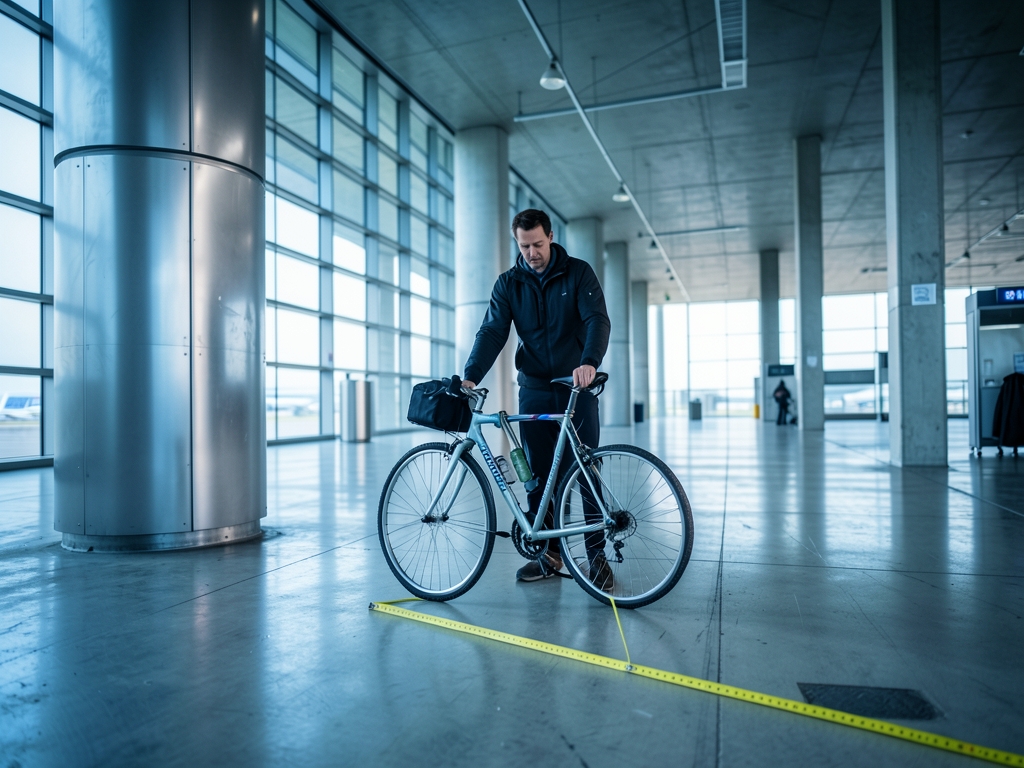
| Takeaway | Detail |
|---|---|
| A 62-inch bike limit is the key cabin threshold to verify. | Compare the airline’s stated bike dimensions before booking; an airline may apply a different size rule or require advance notice. |
| Travelport Smartpoint identifies the airline using the trip’s plating carrier when available. | Closed-equivalent terminal formats and Travelport+ (1G) filtering support airline identification, but travelers should confirm the carrier before committing. |
| Shenzhen Airlines accepts domestic and international bike reservations through its official website. | Online booking and check-in are available, with a 24-hour booking hotline listed as 0086-755-95361; 81795080 is listed for Hong Kong. |
| The cheapest route requires comparing baggage and seat-assignment fees together. | NerdWallet’s 2026 analysis evaluates both fee types, while airline pricing can vary with demand and the total revenue opportunity available to the carrier. |
A practical guide to which U.S. airlines allow bikes in the cabin and how the 62-inch threshold, fees, and route availability shape the cheapest option. It identifies the live airline and confirms bike policy before travelers commit.
How It Works
Cabin-bike acceptance works through two linked systems: the airline’s baggage policy determines whether and how a bicycle may travel, while the booking system determines whether the aircraft and itinerary can accommodate it. Start on the operating airline’s official site and review the current bicycle policy for the exact route. Check whether the bicycle may remain assembled, what measurements apply, whether it must be disassembled, and where it must be stored. Policy language is not a reservation guarantee, so retain the confirmation showing that your specific booking and bicycle are accepted.
Several key terms describe different parts of the transaction. The operating carrier is the airline that actually flies a segment; the marketing carrier is the airline whose code appears on the ticket. A marketed itinerary can therefore include another airline, whose baggage rules may apply to a connection. Travelport’s Smartpoint documentation explains that its air-availability results use the plating carrier to identify airlines for each trip. Confirm the operating carrier for every segment rather than assuming the policy of the first airline listed applies throughout the journey.
A fare is the price attached to a city pair, but the fare includes rules beyond its headline amount. As explained in the Travel Stack Exchange discussion of airline ticketing, the fare rules determine when that price is valid and how the journey may be used. The fare class identifies the specific tariff used to construct the itinerary. For a bicycle, the relevant term is usually the checked-baggage allowance: a bicycle accepted as baggage may still carry weight, size, handling, or service conditions. “Cabin” and “checked” are separate categories, and permission for one does not establish permission for the other.
Before paying, verify the complete itinerary directly with the airline and compare like-for-like totals. A displayed base fare is not the full cost of traveling with a bicycle. Confirm the applicable bicycle charge, any standard baggage fee, taxes, and whether the quoted baggage service is included in the fare. The airline should show the complete price before you commit; if the booking flow does not reflect the bicycle, do not treat the visible ticket total as a confirmed all-in price.
Finally, separate fare rules from operational confirmation. The fare controls the ticketed journey’s price and conditions, while the airline’s current baggage policy and the ability to load the bicycle determine whether the baggage service is available as expected. If the itinerary involves multiple carriers, obtain the applicable policy from each operating carrier and request written confirmation for any unusual item. That verification closes the gap between a policy that says bikes are permitted and a documented booking for which your particular bicycle can actually travel.
Key Factors to Consider
The first decision criterion is policy fit: the airline’s current baggage rules must explicitly cover the bicycle you intend to bring. Before booking, record the permitted bike type, whether it can remain assembled, any required bag or container, the size and weight limits, and the applicable cabin-bike fee. Also check whether the policy varies by fare class or route. A fare that appears inexpensive may not be eligible if the bike exceeds the published limits or the airline requires advance notice.
The second criterion is itinerary availability across every operating carrier. A bike that qualifies under an airline’s general policy still has to be permitted on the specific flight and through the relevant connection. If booking through a travel agent, pay particular attention to the operating carrier: Travelport notes that Smartpoint uses the plating carrier for each trip when available, while published fare data can cover flights operated by different airlines. Compare the itinerary’s operating flights with each carrier’s live baggage rules rather than relying only on the ticket’s primary airline.
The third criterion is the complete price for the same booking, not merely the advertised ticket price. Build a like-for-like total that includes the airfare, bike charge, taxes, and any baggage-service or seat-assignment charges. Make sure every amount is labeled as one-way or round-trip; a one-time bike fee and a per-bag fee are not interchangeable. NerdWallet’s 2026 airline-fee analysis likewise treats baggage and seat-assignment charges as separate parts of the cost picture, so exclude or include them consistently across every candidate.
The numbers that matter are the bike’s actual dimensions and weight, the airline’s published limits, the bike fee, the base fare, the final checkout total, and the number of operating flights on which the same bicycle must be accepted. Measure the bike and its required container before entering the booking flow, then record each policy number exactly as published. Because fare tariffs can change and airline pricing is shaped by demand, supply, route popularity, and seasonality, as Skyscanner explains, treat policy figures and search results as live inputs that need confirmation.
Use the airline’s official site or baggage tool to confirm the current terms, and verify the operating carrier and total in the checkout before paying. Compare candidates only after applying the same measurements, itinerary, fare type, and fee inclusions to each. If an airline does not publish a clear cabin-bike specification or cannot confirm acceptance for the relevant flights, treat that uncertainty as part of the choice rather than assuming the standard checked-bag allowance applies.
Common Mistakes
The most common mistake is treating the airline named in a search result as the airline responsible for every part of the trip. Before committing, check the operating carrier for each flight—not just the ticketing or listing airline—and then verify the bicycle rules under that carrier’s name. Travelport explains that Smartpoint uses the plating carrier for each trip when available, which is a useful reminder to distinguish the carrier attached to a fare from the carrier actually flying each segment.
Another frequent error is assuming that the first bicycle policy found applies throughout the itinerary. Open the complete itinerary, identify every operating carrier, and locate the current bicycle rule for each one. If the airline sells the journey as a single ticket, confirm whether a bike request must cover the entire journey rather than being resolved separately for each segment.
The second major pitfall is comparing only the displayed airfare. Compare like-for-like totals: the same trip, the same passengers, the same cabin, the same baggage terms, and the same bicycle arrangement. Do not treat a quoted base fare as the final cost if the checkout introduces a separate bicycle charge.
Make the comparison from the fully configured booking page, not from the initial route search. Skyscanner notes that airlines adjust fares according to factors such as demand and supply, while NerdWallet’s analysis separates airline charges such as baggage and seat-assignment fees when evaluating fee levels. If one option includes a bicycle in the total shown at checkout and the other does not, confirm what must still be added before treating either price as the cheaper choice.
Use a final pre-commitment check: review every operating carrier, open each applicable bicycle rule, add every required charge to the fare, and confirm that the booking page shows the bicycle arrangement for the complete itinerary. If any item remains unclear, contact the airline and obtain confirmation before paying. The goal is to identify the lowest complete option whose bicycle terms match the trip you actually intend to buy.

Insider Tactics
The most useful insider tactic is to treat the airline’s checkout page—not a search result—as the final verification point. Build the complete itinerary first, then check the live passenger total, the exact bicycle treatment, and the fare rules for that itinerary before paying. Keep a screenshot or written record of the quoted total and the bike allowance. This creates an evidence trail if the price or terms change between your research and purchase, and it prevents a cheaper fare from obscuring a materially different bike policy.
For a second check, use the airline’s official site and a travel-agent booking system as independent ways to review the journey. In Travelport Smartpoint, the system uses the “plating carrier” for each trip when that information is available, according to Travelport’s Smartpoint documentation. Use that carrier information to verify which airline is attached to each trip, but still confirm the bicycle terms in the final booking flow.
Timing matters because a displayed fare is not necessarily the fare that will be issued. Travel Stack Exchange’s deep read explains that airline fares are distributed through global distribution systems and that published fare tariffs can change several times a day, although the systems are generally not designed to update more frequently than about once an hour. Start with a broad search, but return to the airline’s booking flow shortly before committing and verify the final total, including the bicycle charge if one appears. For award travel, apply the same discipline: the airline that sets the award chart may differ from the airline operating the flight, as Thrifty Traveler notes, so confirm the redemption terms and bicycle terms for the actual itinerary.
Compare candidates on the same basis: identical dates, connection structure, passenger type, and bicycle configuration. Put the base fare, required bicycle fee, and any optional services shown at checkout into one like-for-like total. Do not compare a fare that includes a bicycle with a lower base fare that excludes it. NerdWallet’s 2026 analysis of baggage and seat-assignment fees reinforces the value of reviewing fees explicitly, although its airline rankings are not substitutes for itinerary-specific checkout information.
Before paying, open the fare rules and confirm what happens if the itinerary changes or the reservation is canceled. The fare-construction explanation cited by Travel Stack Exchange distinguishes the ticket’s total price from the rules governing its use, including the conditions under which the price remains valid. Verify those conditions on the current booking, then complete payment only when the displayed total, bicycle arrangement, and fare terms all match what you researched. This final pass is the practical safeguard against committing to an incomplete or outdated option.

Comparison
Put every realistic itinerary in the same table and compare the complete total, not just the bicycle charge. For each airline, enter the airfare exactly as quoted, taxes, the applicable bicycle fee, seat or standard checked-bag charges, and any fee for required packaging or a seat. Keep one-way and round-trip quotes separate, and use the same passenger count and itinerary for every option. A fare that appears cheaper can lose after the bicycle-specific costs are added.
| Option | Airfare and bike cost | Terms that must match | Result |
|---|---|---|---|
| Airline A | Verified total from the live checkout | Same route, trip type, and passenger count | Compare final totals |
| Airline B | Verified total from the live checkout | Same route, trip type, and passenger count | Compare final totals |
| Airline C | Verified total from the live checkout | Same route, trip type, and passenger count | Compare final totals |
The lowest total is the winner only when the bicycle itself qualifies under that airline’s current rules. A carrier may offer a lower checkout price while charging more for the bike, requiring a different container, or failing to accept the bike on the relevant aircraft. Record those restrictions beside the total so a price comparison does not become an invalid comparison. NerdWallet’s 2026 analysis of airline fees is useful context for comparing ancillary charges, but its baggage-fee analysis should not be treated as a bicycle-policy quote.
When checking availability, capture the actual operating carrier for each trip rather than relying only on the marketed itinerary. Travelport’s Smartpoint guidance says its air-availability results use the plating carrier when available, which means the airline shown in the booking result may not be the airline that handles the bicycle on every segment. Confirm the bike arrangement separately for each operating carrier before purchase.
Use the airline’s own checkout and official support channels to close the comparison. Shenzhen Airlines, for example, provides official reservation and online check-in channels, but neither those channels nor a third-party listing is proof that a specific bicycle is accepted on a specific flight. Save a screenshot of the final itinerary, bicycle fee, and restriction, and retain written confirmation from the responsible carrier.
This side-by-side comparison has one clear winner: the qualifying option with the lowest complete, like-for-like total after all bicycle, baggage, seat, and fare conditions are verified. If the apparent winner cannot produce a complete live quote or explicit acceptance for the exact bike and itinerary, select the next-lowest verified option rather than committing on the strength of an estimate.
Also worth reading The era of quiet cabins is ending as Inside the new Qantas plane set The safest airlines in the world
What to do next
| Step | Action | Why it matters |
|---|---|---|
| 1 | On Shenzhen Airlines’ official website, check the live bike-reservation option for both domestic and international travel before selecting a flight. | This confirms that the complete booking option is available for your specific itinerary rather than relying on a general baggage policy. |
| 2 | Compare the bicycle’s dimensions with Shenzhen Airlines’ stated size rule, including the 62-inch cabin threshold and any separate advance-notice requirement. | Airlines may use different bike limits or reservation conditions, so a bicycle that qualifies on one route may not qualify on another. |
| 3 | In Travelport Smartpoint, identify the airline from the trip’s plating carrier when that information is available, and confirm the carrier before committing. | The plating carrier is the most relevant airline to verify for the itinerary, but it should still be checked against the live booking option. |
| 4 | Use the closed-equivalent terminal formats and Travelport+ (1G) filtering to identify the operating carrier for each itinerary. | These tools help narrow the airline options so the bike policy is verified with the correct carrier. |
| 5 | Compare each eligible fare by adding the bike fee and seat-assignment fee to the same base fare, then cross-check the result against NerdWallet’s 2026 analysis. | The cheapest route depends on the complete total: baggage and seat-assignment fees can change which option is actually least expensive. |
| 6 | After online booking or check-in, use Shenzhen Airlines’ 24-hour booking hotline at 0086-755-95361; for Hong Kong, use 81795080, and confirm the bike reservation before finalizing the journey. | Direct confirmation helps resolve any mismatch in the bicycle dimensions, carrier identity, fees, or reservation status. |
Frequently Asked Questions
How can travelers verify which airline’s baggage policy applies to a bike reservation?
Travelport Smartpoint identifies the airline using the trip’s plating carrier when available, and travelers should confirm the carrier before committing.
What should travelers check before booking a bicycle for the cabin?
Compare the airline’s stated bike dimensions before booking, because an airline may apply a different size rule or require advance notice.
How can closed-equivalent terminal formats and Travelport+ filtering help identify the airline?
Closed-equivalent terminal formats and Travelport+ (1G) filtering support airline identification, but travelers should confirm the carrier before committing.
How can travelers reserve a bike with Shenzhen Airlines?
Shenzhen Airlines accepts domestic and international bike reservations through its official website, where online booking and check-in are available.
Which phone numbers does Shenzhen Airlines list for booking assistance?
Shenzhen Airlines lists a 24-hour booking hotline at 0086-755-95361 and 81795080 for Hong Kong.
How should travelers determine the cheapest way to bring a bike?
Compare baggage and seat-assignment fees together, using NerdWallet’s 2026 analysis while accounting for airline pricing that can vary with demand and total revenue opportunity.
Quick answers
| How should travelers verify an airline’s bike size policy before booking? | Compare the airline’s stated bike dimensions before booking, because an airline may apply a different size rule or require advance notice. |
| What is the key cabin-bike size threshold to check? | A 62-inch bike limit is the key cabin threshold to verify. |
| How can travelers identify the airline associated with a trip when using Travelport Smartpoint? | Travelport Smartpoint identifies the airline using the trip’s plating carrier when available, but travelers should confirm the carrier before committing. |
| Where can travelers book and check in for bike travel with Shenzhen Airlines? | Shenzhen Airlines accepts domestic and international bike reservations through its official website, where online booking and check-in are available. |
| What should travelers compare to find the cheapest route for traveling with a bike? | The cheapest route requires comparing baggage and seat-assignment fees together, while also considering whether the airline’s baggage policy permits the bicycle and whether the booking system can accommodate it. |
Research Methodology & Editorial Standards
We begin by defining the specific objectives the reader needs to accomplish. Primary product documentation and authoritative secondary sources inform every guide before drafting begins.
Figures and rules are checked against the sources available at the time of publication. Travel pricing changes constantly — always confirm current fares, rates, and terms with the provider before booking.