
Flight Attendant's Guide to Packing a Suitcase: 22x14x9-Inch Carry-On Limit, 50-Pound Checked Bag Rule…
This guide shows how to pack to a 22x14x9-inch carry-on, a 50-pound checked bag, and the 3-1-1 liquids rule. Because 22x14x9 is a common guide for many airlines, not all, verify your specific airline's rules before you fly.
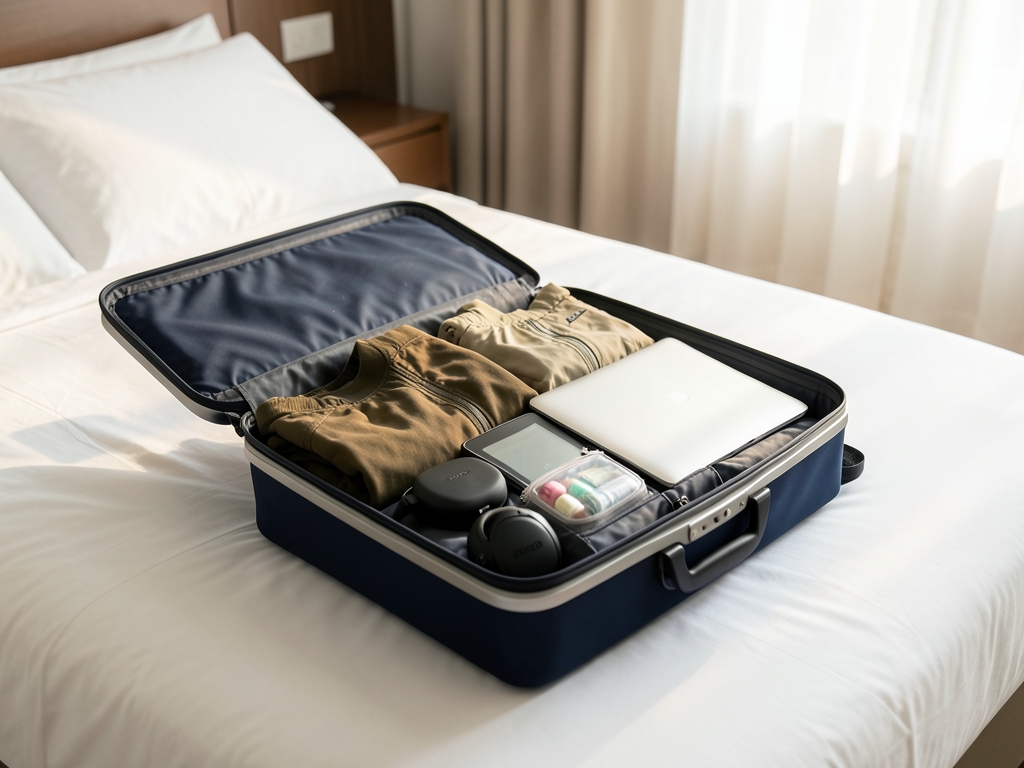
| Takeaway | Detail |
|---|---|
| Carry-on external size: 22x14x9 inches (45 linear inches) | 22x14x9 is overall external dimensions, totals 45 linear inches, and typically fits most domestic overhead bins when not over. |
| Checked bag weight: 50 pounds maximum | Keep any checked bag at or under 50 pounds. |
| Liquids: 3.4-oz containers in one quart bag | The 3-1-1 rule limits liquids to 3.4-oz containers in one quart bag. |
| Airline-specific rules can differ from the common guide | 22x14x9 is a common carry-on size guide for many airlines, not all. |
This guide shows how to pack to a 22x14x9-inch carry-on, a 50-pound checked bag, and the 3-1-1 liquids rule.
Because 22x14x9 is a common guide for many airlines, not all, verify your specific airline's rules before you fly.
How the 22x14x9 Limit Works
Walmart’s luggage guidance confirms that 22x14x9 inches refers to a bag’s overall external dimensions, totaling 45 linear inches (22 + 14 + 9). That sum—length plus width plus height—is the common domestic carry-on ceiling and defines the physical space your bag must occupy. Understanding this math is the first check: if any single side pushes past those measurements, or if the combined total exceeds 45 linear inches, the bag is over the limit before you ever reach the airport.
Airlines enforce that limit with rigid physical sizers at the gate, not with a tape measure and not with flexibility in mind. External dimensions are what matter because the sizer tests the bag’s full footprint, including every protrusion. A suitcase marketed as “carry-on” that exceeds 22x14x9 on the outside can fail the sizer even if it is soft-sided or partially compressible, leaving the final decision to the gate agent and the equipment in front of them.
This is why a manufacturer’s size label is not a reliable substitute for your own measurement. Product listings may highlight interior capacity or the dimensions of the main compartment while omitting wheels, handles, side pockets, or expanded sections. Gate agents measure what the bag actually is in its travel-ready form, so the number printed on a tag or product page does not determine whether it fits.
To verify compliance, measure your empty bag yourself with a tape measure. Stand the bag upright, include the wheels in the height, include fixed or extended handles in their travel position, and measure the widest points for depth and width. Record each dimension, add them to confirm the 45-linear-inch total, and compare those external measurements to the carry-on limit published by your specific airline before you pack.
Treat this measurement as a pass-fail test you control at home. If your tape shows the bag exceeds 22 inches tall, 14 inches wide, or 9 inches deep once wheels and handles are included, choose a smaller bag rather than relying on discretion at the gate. Packing to verified external dimensions is the only way to ensure the 45-linear-inch limit works in your favor.
The Evidence: What Sources Agree
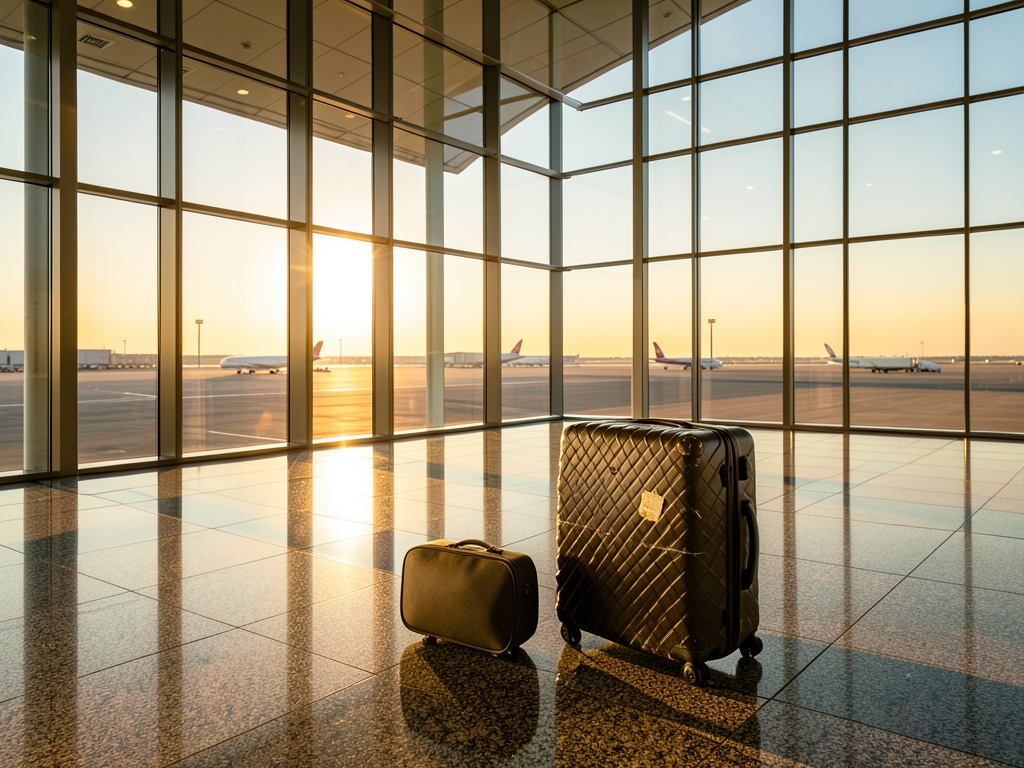
Independent retail listings across marketplaces, big-box stores, and travel media converge on a single carry-on size class, indicating that 22x14x9 inches is the dominant airline-approved standard in the current luggage market. This alignment gives travelers a practical benchmark: when multiple sellers and industry observers point to the same dimensions, shoppers can treat that size as the default starting point before confirming the rules for a specific carrier.
Marketplace volume provides the clearest signal of that dominance. According to Amazon search results, a query for “Carry On Suitcase 22x14x9” returns 895 results, reflecting a large, standardized category built around those exact measurements. For buyers, that concentration is useful evidence: filtering for 22x14x9 surfaces a deep pool of options rather than a niche subset, making it easier to compare materials, features, and prices within the size class most commonly marketed for airline use.
Big-box retail listings reinforce the same pattern. Target sells “airline approved” 22x14x9 hard-shell carry-on bags equipped with TSA locks and spinner wheels, confirming retailer-airline alignment in both labeling and product design. When a national retailer explicitly markets bags at these dimensions as airline approved, it signals that manufacturers and merchants are building inventory around the same external-size expectation that travelers encounter at the airport.
Travel media adds a behavioral check from industry professionals. Travel + Leisure, via Google News, reports that flight attendants favor a $57 Amazon luggage set, offering evidence that crew members themselves pack to compact, carry-on-friendly dimensions. While individual preferences vary, crew endorsement of a low-cost, widely available set suggests that the prevailing market standard is practical for frequent flyers who navigate overhead-bin constraints as part of their work.
Taken together, high marketplace volume, explicit “airline approved” retail labeling, and reported crew preference all point to 22x14x9 inches as the size class most consistently supported by the market. Travelers can use this convergence as a screening rule when shopping: prioritize bags marketed to these exact external dimensions, then verify the selected airline’s current carry-on policy before purchase to ensure the bag aligns with the carrier’s enforcement at the gate.
Carry-On vs Checked vs Personal Item
Choosing between a personal item, a carry-on, and a checked bag comes down to trip length, cost tolerance, and how much uncertainty you are willing to accept at the gate. For a typical domestic trip, the right choice balances access to your belongings against the risk of fees or last-minute bag handling. The comparison below outlines how the three options stack up.
| Bag Type | Typical Cost | Key Limit or Risk | Best For |
|---|---|---|---|
| Personal item | Free on all carriers | Must fit under the seat in front of you | Winner for short trips (1–2 nights) |
| Carry-on (22x14x9) | No fee on most domestic fares | Gate-check risk on full flights | Winner for trips of 3+ nights |
| Checked bag | Varies by airline and fare | Must stay at or under the 50-pound rule; overweight fees apply above it | Trips requiring bulky items or larger wardrobes |
A personal item is the most reliable way to avoid baggage charges, as it is free on all carriers and stays with you under the seat. For short trips of one or two nights, it is the clear winner: you keep essentials within reach, bypass overhead-bin competition, and eliminate the possibility of a gate check or checked-bag fee.
A 22x14x9-inch carry-on, the common domestic size reflected across retail listings from sellers such as Walmart and Target, offers more packing capacity without a fee on most domestic fares. That convenience comes with a trade-off: on full flights, airline staff may require you to gate-check the bag. For trips of three or more nights, the carry-on is the winner, providing enough space for additional clothing while still avoiding the checked-bag counter when overhead space is available.
A checked bag is the practical choice when you need to transport more than a cabin bag can hold, but it requires closer cost and weight management. Your bag must stay at or under the 50-pound rule stated in the headline, as overweight fees apply above it. Because checked-bag and overweight charges vary, check your airline’s current fee schedule before flying to confirm what you will pay for your specific fare and route.
The 50-Pound Rule and 3-1-1
The 50-pound checked limit is the standard U.S. threshold for a standard checked bag, but the scale at the airline check-in counter is the measurement that matters. Weigh your fully packed bag on a bathroom scale before you leave home, then leave a small margin rather than packing to the exact ounce. If the home reading is close to 50 pounds, move dense items such as shoes, toiletries, or books into your carry-on or personal item, or remove them entirely, because an overweight bag can trigger an added fee or require repacking at the counter.
The 3-1-1 liquids rule means liquids, gels, aerosols, creams, and pastes must be in containers of 3.4 ounces (100 milliliters) or less, all fitting inside one quart-sized clear, resealable bag, with that bag removed from your carry-on for screening. Pack the quart bag at the top of your carry-on so it can be pulled out quickly, and remember that the limit applies to container size, not just the amount inside; a larger bottle that is only partly full still does not qualify.
Because airline enforcement and allowances can vary by route, fare type, and aircraft, confirm your airline’s exact carry-on dimensions, carry-on weight rules, checked-bag allowance, and liquids guidance on its official baggage page before each trip. Regional flights and basic-economy fares are common places where a stricter or different rule applies, so check the page for the specific itinerary rather than relying on a general travel blog or an old screenshot.
Make the verification part of your packing routine: measure and weigh at home, then compare those numbers with the airline’s current page. If your bag is near a limit, adjust before you leave; if the airline lists a lower carry-on weight than you expected, move weight into a checked bag or leave items behind. This keeps the decision at home, where changes are free, instead of at the counter or security line.
For trips with connections or multiple carriers, repeat the check for each airline on the itinerary, since the most restrictive rule usually governs the bag. Save or print the relevant baggage page if you want a quick reference, but treat it as a snapshot of current policy rather than a permanent guarantee.
What the Evidence Does Not Settle
The 22x14x9 assumption is a strong default, but it is not a universal pass. It breaks in three edge cases: smaller aircraft sizers, international carry-on weight rules, and retailer marketing language. The table separates where the assumption fails from where it still holds.
| Where 22x14x9 breaks | Where it still wins |
|---|---|
| Regional jets and some international carriers with sizer limits smaller than 22x14x9 | Mainline domestic flights with standard overhead bins |
| International itineraries where the operating carrier sets a carry-on weight limit | Flights on most US carriers, which generally do not weigh carry-ons |
| Retailer "airline approved" labels treated as certification | The airline's own published size rule and sizer test |
On regional jets and some international carriers, the sizer can be smaller than 22x14x9, so a bag that fits a mainline domestic bin may not fit or may be rejected at the gate. The assumption still wins on mainline domestic flights with standard overhead bins, where the common domestic ceiling applies.
Weight is the second break point. Some international airlines set carry-on weight limits, while most US carriers do not weigh carry-ons. Before an international itinerary, check the operating carrier's weight rule rather than assuming the size limit is the only test.
The third break point is labeling. Retailer "airline approved" claims are marketing, not certification. As shown in the marketplace evidence above, the 22x14x9 category is large, but none of those listings is an airline guarantee.
Treat the label as a starting point, then verify the bag's external dimensions and the airline's published limit.The reliable method is to measure the bag yourself, compare it with the specific airline's current rules, and repeat that check when the aircraft or carrier changes. Size, weight, and liquids rules all need to be verified against the itinerary, not inferred from packaging or product descriptions.
Also worth reading Everything You Need To Know About Carry-On and Personal Item Sizes Arch Support Shoes for Travel
A Worked Packing Example
For a 5-day trip, pack to a fixed loadout: one 22x14x9-inch softside carry-on, one quart liquids bag, and one personal item. Check the product listing or the bag's tag for its empty weight if you are cutting it close on a carry-on weight rule, since empty weight varies by model.
Place five shirts, two pairs of pants, undergarments, sleepwear, and one extra pair of shoes in the carry-on. Keep toiletries in the quart bag and reserve the personal item for electronics, medications, and travel documents. This concrete setup maps every item you bring against the three limits before you leave home.Run three checkpoints against that loadout. First, confirm the packed carry-on stays within the airline’s size limit by measuring its exterior, including wheels and handles. Second, confirm every toiletry container complies with the liquids limit and fits inside the single quart bag. Third, if your trip requires a second bag that will be checked, confirm its total weight stays within the checked-bag limit using a home scale.
Frequently Asked Questions
Does the common carry-on size guide measure internal or external dimensions?
Walmart’s luggage guidance confirms that 22x14x9 inches refers to a bag’s overall external dimensions.
What does the 45-linear-inch total represent?
That sum—length plus width plus height—is the common domestic carry-on ceiling and defines the physical space your bag must occupy.
When is a bag considered over the carry-on limit before reaching the airport?
If any single side pushes past those measurements, or if the combined total exceeds 45 linear inches, the bag is over the limit before you ever reach the airport.
How is the carry-on size limit enforced at the gate?
Airlines enforce that limit with rigid physical sizers at the gate, not with a tape measure and not with flexibility in mind.
What is the checked-bag weight rule?
Keep any checked bag at or under 50 pounds.
What does the 3-1-1 liquids rule restrict?
The 3-1-1 rule limits liquids to 3.4-oz containers in one quart bag.
Quick answers
| What are the overall external dimensions for a carry-on bag according to the guide? | The carry-on bag's overall external dimensions are 22x14x9 inches, totaling 45 linear inches. |
| What is the maximum weight allowed for a checked bag? | A checked bag must be kept at or under 50 pounds. |
| What does the 3-1-1 liquids rule require? | The 3-1-1 rule limits liquids to 3.4-oz containers in one quart bag. |
| Do all airlines follow the 22x14x9-inch carry-on size guide? | No, 22x14x9 is a common carry-on size guide for many airlines, not all, so you should verify your specific airline's rules before you fly. |
| How do airlines enforce the carry-on size limit? | Airlines enforce the carry-on limit with rigid physical sizers at the gate. |
Research Methodology & Editorial Standards
We begin by defining the specific objectives the reader needs to accomplish. Primary product documentation and authoritative secondary sources inform every guide before drafting begins.
Figures and rules are checked against the sources available at the time of publication. Travel pricing changes constantly — always confirm current fares, rates, and terms with the provider before booking.