
FAA flight delays 2026: 24-hour rebooking vs 72-hour fare checks
After the November 13, 2026 FAA ground stop, most stranded flyers should take the airline's fee-free rebooking waiver within 24 hours.
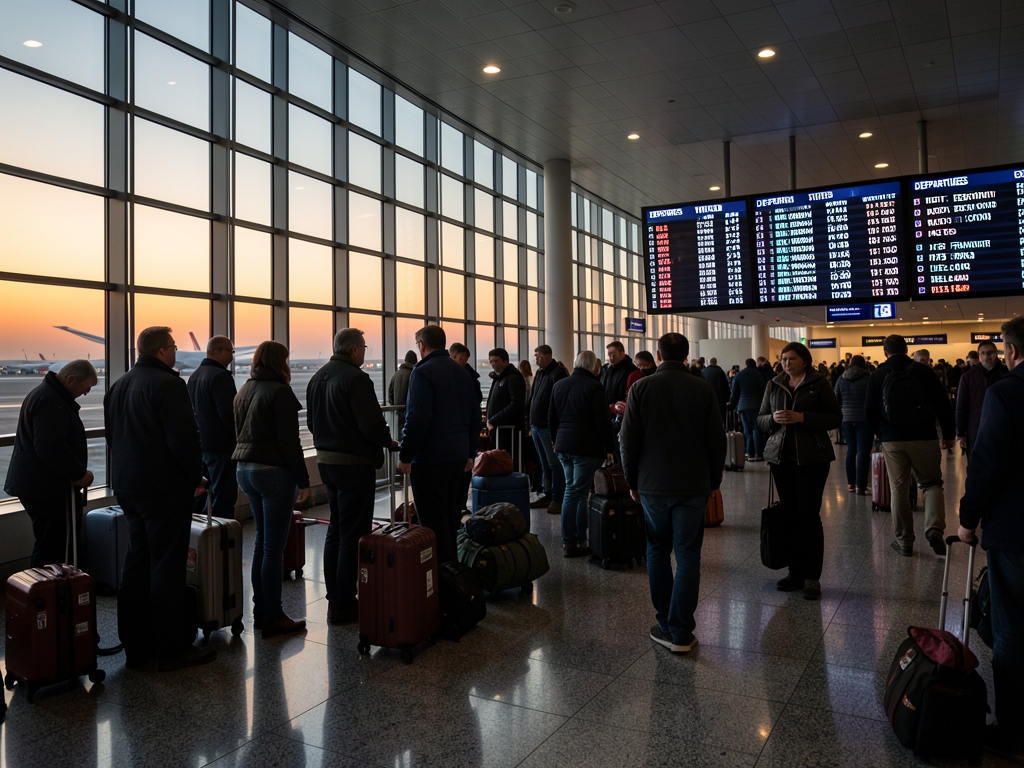
After the November 13, 2026 FAA ground stop, most stranded flyers should take the airline's fee-free rebooking waiver within 24 hours.
If the replacement flight arrives more than 6 hours after the original arrival, request a refund and rebook within 72 hours.
How the Nov 13 ground stop played out
The disruption that set this whole decision tree in motion was the FAA ground stop around November 13, 2026. Coverage of the event described mass cancellations and airport chaos as the stop rippled through the system, with Fix This Nation reporting that the fallout threatened a week-long recovery and generated billions in losses from rebookings, refunds, and hospitality costs.
That event — not a routine schedule change, not a weather day you could see coming — is what triggered the airline response that matters here: rebooking waivers switched on for affected passengers. If your flight was caught in it, the waiver is the mechanism you are being handed first.How that mechanism showed up: after the ground stop, major airlines responded with fee-free rebooking waivers for affected passengers. Before relying on that, verify directly on your airline's website or app that a waiver has been activated for your ticket and travel dates.
Read that carefully, because the wording does the work. Fee-free means the airline is removing its own change or rebooking charge for a replacement seat. It does not mean the replacement seat is the cheapest seat available, and it does not mean the waiver is the only door open to you. It is the first offer on the table, not the final answer.That distinction is where the practical rule comes from. Take the fee-free waiver rebooking within the first day if the replacement flight gets you to your destination within six hours of your original arrival. That is the acceptance test: compare the new arrival time against the arrival time on your original ticket, not against when you first heard about the ground stop, and not against when you finally got through to an agent. If the gap is inside that window, the waiver seat has already done the job you actually needed done, and the fee-free part is real value you keep.
If the waiver seat lands you later than that, do not treat the waiver as a trap you have to accept. Request a refund instead, then run a fare check over the following three days and rebook the cheapest alternative you can find on your own. The refund route and the waiver route are two different tools: one preserves the airline's money in your pocket so you can shop, the other preserves your place in the airline's inventory so you do not have to shop. Which one wins depends entirely on that arrival-time comparison, and the six-hour line is what separates them.
A companion point worth keeping in view while you decide: the same disruption that produced the waivers also produced a wave of rebookings, refunds, and hospitality costs as travelers scrambled for emergency accommodations, described in “Historic Travel CATASTROPHE Paralyzes Entire Nation | Fix This Nation.” When thousands of people are solving the same problem at once, the waiver seat can look generous in the moment and still be the worse seat once you check what else is available. The check is the point — not a hunch about which option feels safer.
So the sequence for a November 13 stranded flyer is narrow and repeatable. Confirm you were affected by the ground stop, pull up the fee-free waiver the airline activated, and compare its arrival time to your original. Inside six hours, accept it. Outside six hours, ask for the refund and start the fare check. Everything after that — the head-to-head comparison, the cost of waiting, and the cases where this framework stops working — is a separate question, but none of it starts until you have made that first call correctly.

The evidence: waiver vs refund math
This section assembles three independent sources on disruption scale, waiver availability, and refund eligibility into one convergence view: severe disruptions can erase same-day seat inventory, fee-free waivers can remove the cost barrier to moving, and refund eligibility determines when to stop waiting for a carrier solution. Taken together, these signals support a disciplined check—use a waiver when it preserves the trip and rely on refund eligibility when it does not.
On disruption scale, Travel Tourister reports that LaGuardia's June 15, 2026 meltdown produced 181 cancellations, making it the year's worst single day. A cancellation wave of that size is evidence that 2026 disruption days can be large enough for same-day rebooking inventory at the affected airport to genuinely run out. The check for stranded travelers is straightforward: treat a high-cancellation day as an inventory shock and evaluate any workable waiver seat immediately, before remaining options disappear.
On waiver availability, Mighty Travels coverage of the November 13 event confirms that fee-free waivers were broadly offered by major carriers. That establishes the zero-change-fee baseline every comparison starts from: if your itinerary is covered, you can move to another flight without a change penalty. Before comparing paths, verify that a waiver applies to your ticket and dates, then test whether the offered replacement preserves the purpose of the trip.
On refund eligibility, The Traveler reported that a UK air traffic control meltdown left passengers stranded for days, illustrating how quickly rebooking channels can stall when disruption overwhelms the system.
Pair that risk with a clear eligibility check: if the carrier cannot provide an acceptable alternative, confirm whether you can decline the option and request a refund to your original form of payment instead of remaining in the rebooking queue.Read in combination, these sources support the 24/72 rule of thumb: accept a waiver rebooking within 24 hours if the replacement flight gets you there within 6 hours of your original arrival; otherwise, request a refund and run a 72-hour fare check for the cheapest alternative. Use disruption scale to gauge seat scarcity, waiver availability to remove fee friction, and refund eligibility to define your exit when the waiver seat fails the arrival test.
Waiver rebooking vs refund-and-rebook
Once you are choosing between paths, the comparison is straightforward: a waiver rebooking costs you nothing in change fees, but you accept the flight the airline assigns or the seats still showing in its own inventory. That path wins when the replacement gets you in within roughly six hours of your original arrival, because you preserve the trip, the fare class, and the ticket you already hold without introducing a second purchase. The check is simple: pull your original arrival time, pull the proposed arrival time, and compare them on the same calendar day before you click accept.
A refund-and-rebook is the stronger play when the waiver queue stretches days past your original schedule or a competing carrier has space right now. You take the full cash refund of the canceled segment, then buy a fresh ticket, which may be on another airline entirely. The check here is availability plus total outlay: price the new one-way or round-trip ticket on the same basis as the refunded segment, then compare the two figures directly. Do not mix a one-way replacement against a round-trip refund, and do not treat taxes as part of the fare unless the refund breakdown labels them that way.
The hybrid approach is the one most travelers should actually run. Take the waiver seat first as a placeholder so you are not left with nothing while you investigate, then use the follow-up window to check whether a cheaper or faster alternative has opened up. If it has, request the refund and buy the better ticket; if it has not, you keep the seat you already secured. This works because the placeholder costs you no change fee under the waiver, so the only thing you are weighing is whether the new ticket beats what you already hold.
The table below is the head-to-head view, with an explicit winner for each scenario. It is the only place in this guide where the three options sit side by side, so use it as your decision sheet rather than re-deriving the tradeoff each time.
| Scenario | Option A: Waiver rebook | Option B: Refund + rebook | Option C: Hybrid | Winner |
|---|---|---|---|---|
| Replacement arrives within ~6 hours of original | $0 change cost; airline-assigned or available flight | Requires new purchase; may cost more than the held fare | Unnecessary unless a faster option appears | A |
| Waiver queue runs days long | Holds a seat well past your original arrival | Full cash refund frees you to buy elsewhere | Placeholder still useful while you shop | B |
| Competitor has space now | Locks you to the original carrier's inventory | Lets you buy the available seat on the other airline | Use only if the refund is not yet confirmed | B |
| Unclear which option is better at the moment | Secures a seat at no change cost | Forfeits the held seat if the new ticket falls through | Keeps the seat while you run the follow-up fare check | C |
One practical note on the follow-up check: price-comparison tools built for this kind of rebooking scan repeatedly and flag drops, the way OopsCheaper does for rental cars during its open public beta. The same logic applies to airfare — a fare that looks unattractive at the moment you are stranded can move, so the check is worth running again rather than assuming the first quote is final. Keep the refunded segment and the new ticket on the same one-way or round-trip basis when you compare them.
Costs and numbers that matter
The two costs are different currencies: waiting costs seat access, while a wrong refund costs cash. Waiting past 24 hours can move you from the first allocation of convenient replacement seats to whatever inventory is left; refunding at the wrong moment can leave you paying the difference between an elevated new fare and the refund of your old fare.
Waiver seats on the most convenient next flights are allocated first-come. After a 181-cancellation day like LaGuardia's June 15 event, remaining inventory skews to worse routings and later departures, so the price of delay is not a fee but a worse itinerary.
If you refund and the disrupted route's fares are still elevated in the days after a mass cancellation, your replacement ticket can exceed your original fare. The refund only returns what you paid, not what a new seat now costs, so the wrong refund decision converts a fee-free waiver into an out-of-pocket fare gap.
Measure the waiting cost by arrival time: compare the waiver's replacement arrival with your original arrival and treat more than six hours as the point where convenience has been lost. Measure the refund cost by fare: compare the cheapest acceptable alternative within your check window with the refund amount, and proceed only if the alternative does not exceed what you originally paid. Compare like-for-like—one-way with one-way, round-trip with round-trip—so a cheaper-looking fare is not just a different product.
Run the comparison in this order: take the fee-free waiver seat first if it meets the arrival test, then keep checking fares for 72 hours; if a cheaper acceptable alternative appears and the refund covers it, switch. If no cheaper alternative appears, the waiver seat you already hold is the lower-cost outcome.
The only number you need from the disruption itself is scale: a 181-cancellation day is a signal that inventory will be thin, not a price. Everything else is a comparison between your original fare, the waiver seat's arrival, and the current replacement fare.
Also worth reading Saudi Arabia Flights 2026: How Business Class Flights From Toronto Lufthansa Tokyo Flights: 3 Fare
What this evidence does not establish
The 24-hour acceptance rule and the 72-hour fare check are built for ordinary cash tickets on domestic itineraries. They are not a universal procedure. The table below is the only place in this guide where the framework breaks, and each row gives you the specific check to run before you choose the waiver seat or ask for your money back.
Frequently Asked Questions
What event triggered the airline rebooking waivers described here?
The FAA ground stop around November 13, 2026 triggered the airline response, with coverage describing mass cancellations, airport chaos, a threatened week-long recovery, and billions in losses from rebookings, refunds, and hospitality costs.
Should I assume a fee-free rebooking waiver applies to my ticket automatically?
Before relying on it, verify directly on your airline's website or app that a waiver has been activated for your ticket and travel dates.
What does "fee-free" actually cover in this situation?
Fee-free means the airline is removing its own change or rebooking charge for a replacement seat.
When should most stranded flyers take the airline's rebooking waiver?
Most stranded flyers should take the airline's fee-free rebooking waiver within 24 hours.
What arrival delay threshold changes the recommended move from rebooking to requesting a refund?
If the replacement flight arrives more than 6 hours after the original arrival, request a refund and rebook within 72 hours.
Does this decision tree apply to an ordinary schedule change or a forecastable weather day?
No, the trigger was the November 13, 2026 FAA ground stop, not a routine schedule change or a weather day you could see coming.
Quick answers
| After the November 13, 2026 FAA ground stop, what should most stranded flyers do? | Most stranded flyers should take the airline's fee-free rebooking waiver within 24 hours. |
| When should a flyer request a refund and rebook instead? | If the replacement flight arrives more than 6 hours after the original arrival, request a refund and rebook within 72 hours. |
| What event triggered the airline response that matters here? | The FAA ground stop around November 13, 2026 triggered the airline response that matters here. |
| How did major airlines respond after the ground stop? | After the ground stop, major airlines responded with fee-free rebooking waivers for affected passengers. |
| What should you verify before relying on the waiver? | Before relying on that, verify directly on your airline's website or app that a waiver has been activated for your ticket and travel dates. |
Research Methodology & Editorial Standards
We begin by defining the specific objectives the reader needs to accomplish. Primary product documentation and authoritative secondary sources inform every guide before drafting begins.
Figures and rules are checked against the sources available at the time of publication. Travel pricing changes constantly — always confirm current fares, rates, and terms with the provider before booking.