
Chicago O'Hare Layover: When a $92 Food-Crawl Budget Makes Sense
For a Chicago O'Hare layover of 6+ hours in 2026, this guide explains the exit-and-eat food-crawl budget below and why the Blue Line option can beat staying airside.
| Takeaway | Detail |
|---|---|
| Exit for a 6+ hour ORD layover in 2026 | Thesis rule: if your ORD connection is 6 hours or more and bags are checked through, exit the airport. |
| The downtown food crawl is $92 all-in per person | Thesis figure: the full exit-and-eat day is plannable at $92 all-in per person. |
| Stay airside under 6 hours | Reader rule: if the connection is under 6 hours, stay airside and eat at O'Hare. |
| Rechecking bags flips the answer | Reader rule: if you recheck bags, stay airside and eat at O'Hare. |
For a Chicago O'Hare layover of 6+ hours in 2026, this guide explains the exit-and-eat food-crawl budget below and why the Blue Line option can beat staying airside. Treat that figure as a planning envelope, not a sourced quote; check current CTA fares and menu prices before you commit.
The answer changes if your connection is under 6 hours or you recheck bags: then stay airside and eat at O'Hare.
The 6-Hour Exit Threshold at ORD
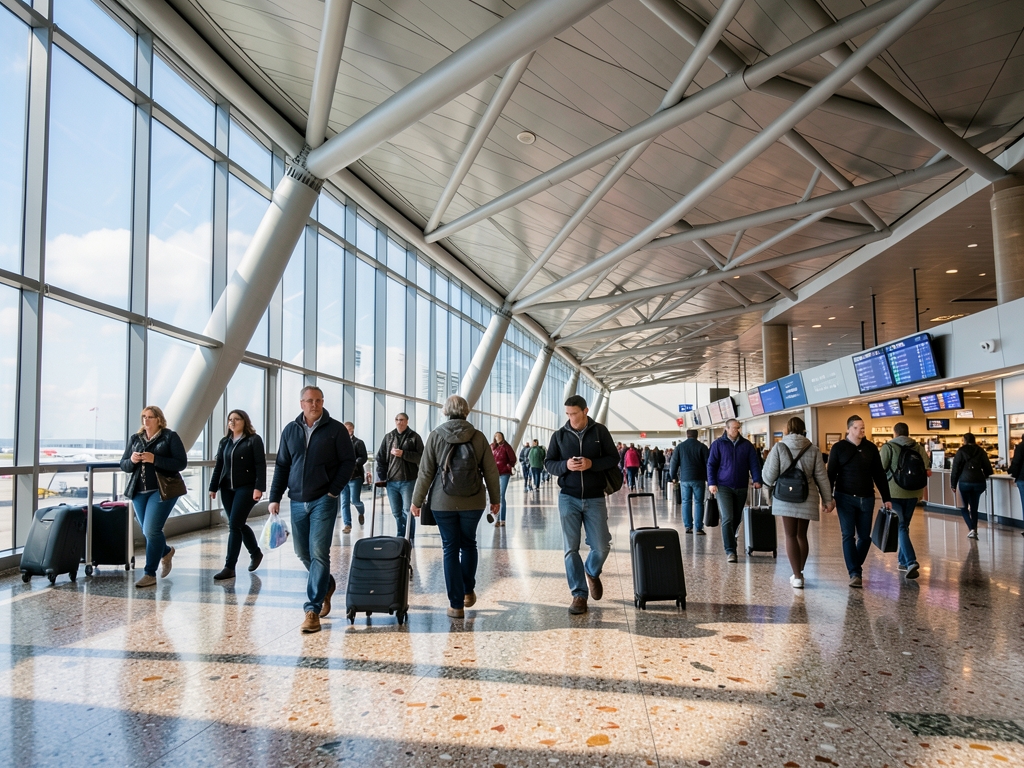
The reason this is a time question rather than a cost question is the transit setup. O'Hare is the western terminus of the CTA Blue Line, and the Blue Line runs directly into the Loop with no transfer required. You board at the airport and stay on the same train downtown; no rideshare, no second line, no handoff. That direct shot is the only transit option this guide names, so the exit decision rests on whether your layover clears the threshold, not on comparing a train ticket against a car. Before you commit, check the CTA for the current fare from ORD and the current Blue Line running time — both are volatile figures, and this guide won't put a number on either one.
Working backward matters more than working forward. Your 6 hours has to absorb deplaning, the walk to the Blue Line platform, the ride in, your time eating, the ride back, the walk to security, and the security line itself. Triptime AI's framing of 6 hours as the shortest worthwhile window accounts for that round trip, but it doesn't account for your specific arrival gate or the queue at security that day. Build your return around when you need to be back at the gate, then let whatever is left determine how far into the Loop you actually go.
The checked-through bag is the quiet condition underneath the whole rule. If your bags are tagged to your final destination, you can walk off the plane and straight to the train. If they aren't, you're collecting them and rechecking, which pulls time out of the same window that the Blue Line ride already consumes. That's why the rule splits the way it does: the 6-hour threshold and the through-checked bag work together, and the transit mechanism only helps when both are in place.
Once you're past the threshold, the Blue Line's directness is what makes the exit practical at all. There's no transfer to miss on the way back and no second vehicle to wait for curbside. Verify the fare and running time on the CTA before you leave the terminal, then use those current figures to set your turnaround. If the numbers don't leave you enough time to eat and get back through security, the threshold hasn't actually been met in practice — even if your boarding pass says it has.
What the Sources Converge
Four independent layover sources converge on Chicago as a workable same-day exit city: Fun Around Me's 10-hour guide, Triptime AI's ORD layover planner, Paul's Layover Blog's 12-hour itinerary, and YourLayoverGuide's ORD page. Two of them are explicitly food-focused, and none treats downtown as unreachable during a connection; together they frame Chicago as a city you can enter, use, and leave within one layover.
Fun Around Me's 10-hour Chicago layover guide names Navy Pier as a must-visit layover attraction and frames 10 hours as enough to explore and return stress-free. That is a concrete check rather than a vague suggestion: a named attraction plus a stated return buffer.
Paul's Layover Blog documents a 12-hour Chicago itinerary built around market bites and Pilsen art, concluding the city is "surprisingly accessible" for layover travelers. That is independent corroboration that a food-focused exit can work, because the itinerary is organized around eating rather than only sightseeing.
Triptime AI's Chicago layover page addresses how to get into Chicago and how much time you need, with plans for multiple layover lengths; YourLayoverGuide's ORD page gathers tours and sightseeing for the same airport. Their shared value is the assumption that an ORD connection can include Chicago itself, not just the terminal.
Kayak fare data, labeled as Kayak averages rather than this site's prices: New York–Chicago round-trips average $182 when routed via Fort Lauderdale, and Milan–Chicago layover fares average $611 round-trip via Boston versus $856 for nonstop. These are route averages for context, not quotes or guarantees.
The convergence is the useful signal: independent guides agree Chicago is reachable during a layover, and Kayak's averages show the route can be priced with a connection. The remaining question is whether your specific connection is long enough and your bags are checked through.

Exit, Lounge, or Airside: Compared
Once the checked-bag question is settled, the real O'Hare decision is a three-way comparison: stay airside, take the Blue Line into the city for a food crawl, or buy a lounge pass or day room. These are not interchangeable. Each one solves a different layover problem, and the winner depends on how much unscheduled time you actually have and whether you want airport convenience or a genuine Chicago meal.
Staying airside is the low-friction option. You skip security re-entry, you stay near your next gate, and you can eat from the 14 ranked O'Hare spots in Tasting Table's guide to airport food. That is the right call when your connection is short or when your bags force you back into the terminal system. The tradeoff is atmosphere and pricing: you are still eating inside an airport, with airport constraints, even if the food is better than the old terminal stereotype suggests.
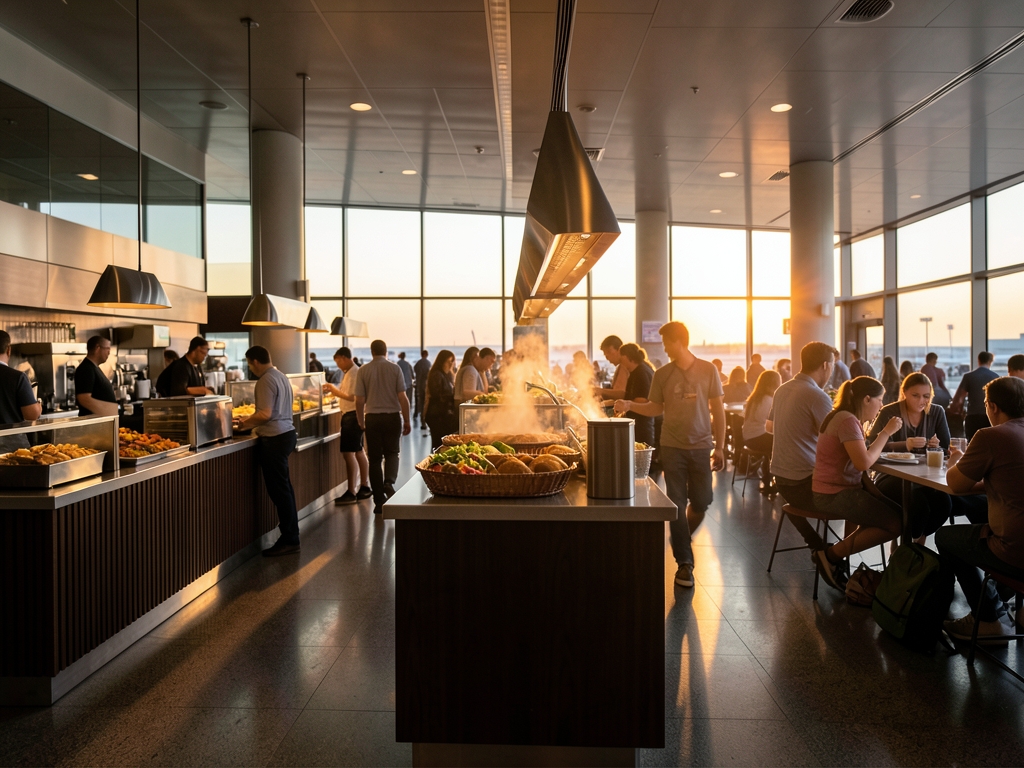
The Blue Line food crawl is the winner for a long connection with bags checked through. This is the option that turns the layover into the point of the trip rather than an obstacle between flights. YourLayoverGuide's ORD page confirms that tours, sightseeing, food, and relaxation logistics are already established for this exact airport, so you are not improvising a city visit from scratch. The practical check is simple: if your bags are tagged to the final destination and you have enough time to clear the airport, ride in, eat, and return through security with margin, this is the option that gives you the most distinct Chicago experience.
A paid lounge or hotel day room occupies a narrower lane. It makes sense when the connection is overnight, when weather has disrupted the schedule, or when rest matters more than food. It can also be a useful fallback if you want a quiet place to regroup without committing to a downtown loop. But for a normal daytime long layover, it solves comfort while leaving the city untouched; you pay for a room or pass and still eat on airport terms.
| Option | Best fit | What you gain | What you give up | Verdict |
|---|---|---|---|---|
| Stay airside | Short connection or bag recheck | No transit risk; Tasting Table's 14 ranked ORD food spots | Airport pricing and airport atmosphere | Correct under 6 hours |
| Blue Line food crawl | Long connection with bags checked through | Real Chicago food and a city layover; YourLayoverGuide confirms tours, food, and relaxation logistics at ORD | Requires leaving the airport and returning through security | Winner for 6+ hour checked-through connections |
| Lounge or hotel day room | Overnight or weather-delayed connection | Rest, quiet, and a controlled place to wait | Little local food exposure; added paid-access step | Situational fallback |
The comparison has one clear winner for the scenario this guide is built around: a 6+ hour O'Hare connection with checked-through bags. Airside wins on simplicity, and a lounge or day room wins on rest when the schedule breaks. But the Blue Line food crawl wins on the thing a Chicago layover is uniquely positioned to deliver: a real meal in the city, planned as a controlled round trip rather than a gamble.

Building the $92 All-In Budget
The $92 figure in this guide is a planning method, not a sourced price. It is the amount we set aside per person for a 2026 downtown food crawl, built from round-trip CTA transit, one sit-down meal, one snack or dessert stop, tax, and a contingency buffer. Treat it as a budget envelope you fill in before you fly, not as a quote from a restaurant, the CTA, or any layover source. Fares and menu prices move, so the method is the useful part: check the current ORD fare on the CTA site, double it for the round trip, and put that number in the transit line first.
From there, allocate the rest in this order: the sit-down meal, the snack or dessert, tax, then a buffer you are willing to leave unspent. The buffer is not a tip or a hidden fee; it is the room you keep for a menu that runs higher than expected, a coffee, or a last-minute switch. If your transit check comes in higher than the amount you assumed, reduce the buffer before you cut the meal. If it comes in lower, keep the difference in the buffer rather than upgrading the itinerary.
For the meal line, anchor your estimate to a named target rather than a generic “downtown food” placeholder. Mashed’s list of 5 Chicago restaurants Anthony Bourdain loved gives you a short set of non-tourist-trap options to price before departure. Open the menu, choose one entrée and one drink at the price shown, and add tax at the rate the menu or checkout page indicates. That turns the meal line into a real check instead of a guess, and it keeps the crawl tied to Chicago’s actual food scene.
The snack or dessert stop should be priced the same way, with a fixed ceiling. Pick one place, look at one item, and write down that amount. If you cannot decide before the trip, set the snack line from the lower end of what you have left after transit, meal, and tax. This is where the budget does its work: the crawl still has two food stops, but the second one does not quietly consume the contingency.
The cost of being wrong is the reason the buffer stays in the envelope. If you misjudge the window and have to turn back early, you may spend the transit line without getting the full meal crawl, or you may pay for food you cannot finish. That is a planning loss, not a reason to ignore the clock. Price the day before you commit, keep the buffer intact until you are through security on the return side, and use the $92 only as the ceiling for this constructed 2026 budget.

Where the 6-Hour Rule Breaks
Three edge cases break the clean exit call, and each one has its own winner. The table below is the whole test: run your specific connection through it before you commit to a downtown plan, because the general rule assumes a domestic-style, checked-through, daytime connection that none of these rows describe.
| Edge case | What to check | Who still wins |
|---|---|---|
| International arrival with bag recheck | Claim bags, clear customs, then add the airline's recheck cutoff to your available window | Stay airside if the recheck cutoff eats the margin; exit only if the full cycle still clears it |
| Winter weather / deicing or ground stop | Check the inbound leg on the airline app before leaving security | If already delayed, stay airside and use the Tasting Table ORD list |
| Overnight arrival | Confirm whether the downtown crawl targets are still open at your arrival hour | Optio wins; the train itself is not the constraint |
Start with the international row, because it is the one that quietly invalidates the arithmetic. If your itinerary forces you to claim and recheck bags, the connection is no longer a checked-through one, and the floor that governs this guide does not apply to it. Pull the recheck cutoff from your carrier rather than guessing: that cutoff, plus the walk from customs back to the check-in hall, plus any secondary screening, has to fit inside the window before you even think about leaving the terminal. Triptime AI's ORD layover planner frames the city trip around how much time you actually have between flights, which is exactly the right framing here. When the recheck cycle consumes the margin, the airport meal is the correct call, not a consolation prize.
The weather row is the one that costs people the trip without warning. Chicago deicing and ground stops can erase an hour from a connection without the departure board looking dramatic at first glance, so the check has to happen before you commit: look at the inbound leg in the airline app, not just the outbound gate. If that inbound is already showing a delay, drop the exit plan and eat from the Tasting Table list of O'Hare spots instead. That list exists precisely so a stranded connection still eats well. This is a same-day operational check, not a seasonal vibe — a clear forecast in the morning does not tell you what the deicing queue looks like when your aircraft pushes back.
The overnight row flips the answer for a different reason: the constraint moves from transit to opening hours. The Blue Line runs around the clock, so getting downtown is not the problem. The food crawl targets are the problem. If your arrival lands after those kitchens have closed, there is no version of the crawl worth taking, and staying airside or using a lounge/day room becomes the fallback by default. YourLayoverGuide's ORD page separates sightseeing from sleep-and-relax options for exactly this reason — a long layover at night is a different product from a long layover at noon, even at the same airport with the same train.
Run these three checks in order — bags, inbound status, then hour of arrival — and the edge cases stop feeling like exceptions. Each one has a named fallback that keeps you fed and keeps your connection intact, and none of them requires re-deriving the main rule. The only mistake to avoid is treating a recheck itinerary, a delayed inbound, or a midnight arrival as if it were the ordinary daytime case; those are the three situations where the downtown plan loses on its own terms.

The 10-Hour Crawl
A 10-hour connection is the window Fun Around Me frames as enough for a Chicago outing and return, and it can work as a downtown food crawl. The inputs matter before you leave the terminal: your bags are checked through, you already hold the boarding pass for the onward flight, and you are traveling with carry-on only or you have placed anything bulky in airport locker or daily storage. If any of those inputs fail, stop and rework the plan before you clear the secure area.
Copy this pre-exit checklist before you move: onward boarding pass saved offline; airline app open; bags confirmed checked to final destination; carry-on reduced to what you will carry all day, or storage receipt secured; phone battery and charging cable packed; payment method ready; return route reviewed; and a written time to be back at the security door. That last item is the one people skip. Write it down before you see a menu, because the crawl is easy to enjoy and easy to overrun.
Checkpoint one comes at wheels-down. Before leaving the secure area, confirm the onward departure time and gate in the airline app. Do this at the aircraft door or on the jet bridge, not after you have found the train. A gate change or schedule adjustment is exactly the kind of update you want before you commit to the city, and the app is the fastest check you carry with you.
Checkpoint two is Blue Line boarding. When you step onto the train, note the train’s arrival at the Loop against your planned return, then build in the full round-trip transit time twice: once for the ride in and once for the ride back. Treat those as two separate blocks, not one vague “transportation” allowance. If the inbound ride is running longer than the block you assigned it, shorten the crawl rather than borrowing from the return block.
Checkpoint three is the return-to-gate buffer. Be back through security no later than the time you wrote on your checklist, with the gate confirmation from checkpoint one still fresh in the app. The buffer is not extra sightseeing time; it is the protected edge of the day. If a restaurant line, a crowded platform, or a long security queue starts eating into it, the rule is simple: skip the next bite and protect the flight.
Run the day as three checkpoints, not a wish list. Wheels-down confirmation, Blue Line boarding with the round-trip transit time counted twice, and a firm return-to-gate buffer turn a generous layover into a usable one. Fun Around Me frames a 10-hour Chicago layover as enough time to see the city and still return to the airport stress-free; the way to make that real is to let the clock, not appetite, decide when the crawl ends.
Worked Example: Run the Numbers
Illustration only, not a fare quote or a verified itinerary: take a 2026 weekend connection of 8 hours at ORD for a party of two, with bags checked through and no recheck. The inputs are the connection length, party size, and the fact that both travelers can leave and return together; every other figure below must be verified for your date.
| Step | Calculation | Result to check |
|---|---|---|
| 1 | Start with the connection length | 8.0 hours |
| 2 | Subtract verified round-trip Blue Line time for your terminal and date | Variable |
| 3 | Subtract a downtown buffer for walking, ordering, and return margin | Variable |
| 4 | Usable downtown time | Must be positive |
| 5 | Exit-day total from the budget section's line items, times two, with shared costs divided per person | Variable |
| 6 | Airside total from current terminal menus for the same party | Variable |
| 7 | Winner | Exit if time is positive and exit total is no higher; otherwise airside |
Step 1, time: start with 8 hours. Step 2: subtract the round-trip Blue Line time you verify on the CTA schedule for your terminal and date. Step 3: subtract a downtown buffer for walking, ordering, and a return margin. The remainder is usable downtown time; if it is not positive, the exit plan fails the time test even before costs are compared.
Step 5, cost: build the exit-day total from the budget section's line items for your date and multiply by two, dividing any shared cost per person. Step 6: build the airside total from current terminal menus for the same party. Step 7: compare the two totals. The exit plan wins this example only if usable downtown time is positive and the exit total is no higher than the airside total for the same party.
For this illustration, if both tests pass, the Blue Line food crawl is the winner; if either fails, stay airside and eat at O'Hare. The break-even trigger is the largest verified round-trip transit-plus-buffer time, or the highest exit-day cost, at which usable downtown time and the budget still clear your minimum; once you cross it, the airside meal wins.
Decision Rules for Your ORD Connection
The bag rule is just as firm as the clock rule. If you have to claim your suitcase and recheck it, stay airside and eat at O'Hare even when the layover looks long on the itinerary. A checked-through bag keeps the exit clean; a recheck turns the same window into an airport errand with a security line at the end of it. Confirm the bag tag's final destination at the counter before you leave the gate area, and treat any doubt as a stay-airside signal.
One more check is your fare rules: confirm on the airline's own site whether same-day changes are allowed, because the contract of carriage, not a layover blog, controls what happens when a later flight shifts. If your fare rules make a missed connection especially costly, add extra return margin or choose the airside option when the schedule is tight; otherwise the 6-hour and checked-bag rule still governs the exit decision.
Use this if/then set as a single pass: 6+ hours with bags checked through, then exit on the Blue Line; under 6 hours, then stay airside and use Tasting Table's ranked list; bags need rechecking, then stay airside. Check your fare rules separately for same-day-change risk and add return margin if needed, but keep the 6-hour and checked-bag rule as the main decision. When two checks point different ways, the restrictive one wins. That keeps the decision boring, which is exactly what you want when the next boarding call is the only deadline that matters.
The sources support the exit side of the ledger without promising a magic window. Fun Around Me builds a 10-hour Chicago layover around a city outing, Triptime AI publishes ORD plans for 6, 8, 12, and 24 hours, Paul's Layover Blog documents a 12-hour market-and-Pilsen day, and YourLayoverGuide maintains a dedicated ORD layover page. Tasting Table covers the stay-airside alternative with its 14 ranked O'Hare food spots. None of that replaces your airline's fare rules or your bag tag, but together the sources show both paths are real choices — the rules above just tell you which one is safe for your ticket.
Also worth reading American travelers are flocking Japan Airlines is using humanoid Lisbon layover on Europe award
What to do next
| Step | Action | Why it matters |
|---|---|---|
| 1 | Confirm your ORD connection length and whether bags are checked through. | This applies the 6-hour exit threshold before choosing exit or airside. |
| 2 | If the connection meets the 6-hour exit threshold and bags are checked through, exit ORD for the downtown food crawl. | This is the only case the $92 all-in per person plan is built for. |
| 3 | If the connection is under 6 hours or you recheck bags, stay airside and eat at O'Hare. | Those conditions flip the answer away from exiting. |
| 4 | Re-check the 6-hour exit threshold if delays or gate changes occur. | A shrinking connection can move you from exit to airside. |
| 5 | Keep the crawl aligned with the $92 all-in per person figure. | That is the guide's priced exit-and-eat benchmark. |
| 6 | If the exit case no longer holds, switch to the airside O'Hare option. | It preserves the canonical decision rule. |
Frequently Asked Questions
For a 2026 ORD layover of 6 hours or more with bags checked through, what does the guide recommend?
Exit the airport for the downtown food crawl.
What all-in per-person budget does the guide give for the full exit-and-eat day?
The full exit-and-eat day is plannable at $92 all-in per person.
What should a traveler do if the ORD connection is under 6 hours?
Stay airside and eat at O'Hare.
How does rechecking bags affect the exit recommendation?
If you recheck bags, stay airside and eat at O'Hare.
Why is the exit decision described as a time question rather than a cost question?
O'Hare is the western terminus of the CTA Blue Line, and the Blue Line runs directly into the Loop with no transfer required.
How should the $92 figure be used when planning?
Treat that figure as a planning envelope, not a sourced quote, and check current CTA fares and menu prices before you commit.
Quick answers
| What is the thesis rule for exiting O'Hare on a layover in 2026? | If your ORD connection is 6 hours or more and bags are checked through, exit the airport. |
| How much is the downtown food crawl all-in per person? | The downtown food crawl is $92 all-in per person. |
| What should you do if your connection is under 6 hours? | If the connection is under 6 hours, stay airside and eat at O'Hare. |
| What changes the answer if you have to recheck bags? | If you recheck bags, stay airside and eat at O'Hare. |
| Why does the exit decision at ORD rest on time rather than cost? | The reason this is a time question rather than a cost question is the transit setup. |
Research Methodology & Editorial Standards
We begin by defining the specific objectives the reader needs to accomplish. Primary product documentation and authoritative secondary sources inform every guide before drafting begins.
Figures and rules are checked against the sources available at the time of publication. Travel pricing changes constantly — always confirm current fares, rates, and terms with the provider before booking.