
American Airlines Fresh Food NY-Chicago: $19 Bites Return 2026
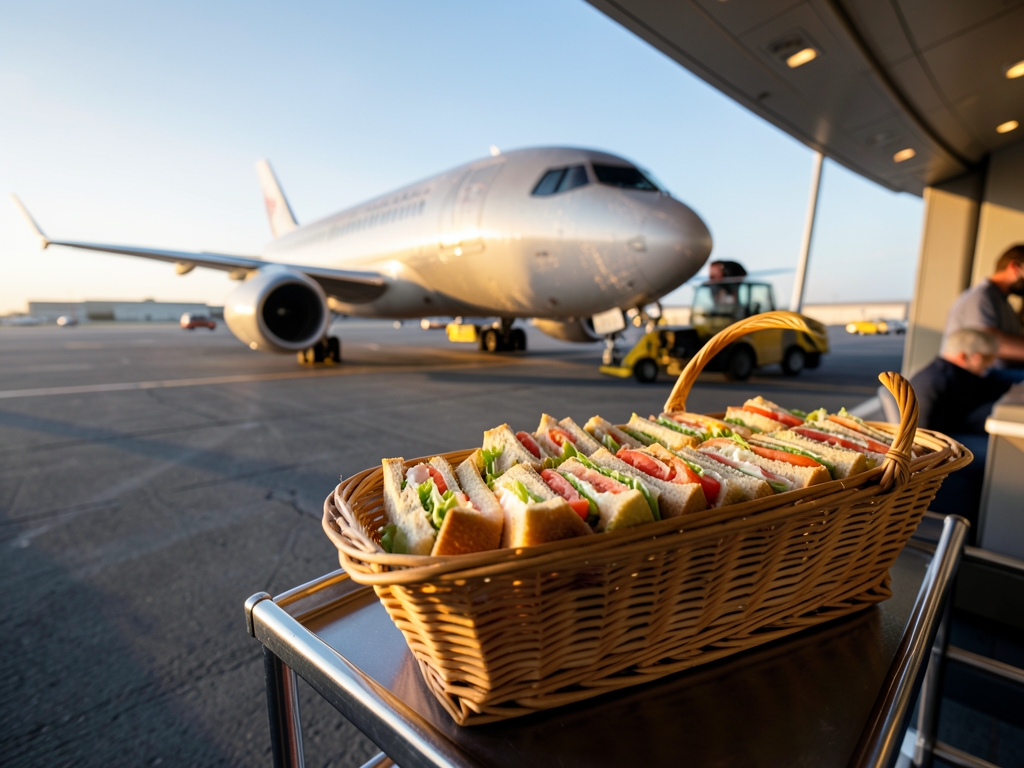
American Airlines will serve fresh 'light bites' in first class on New York–Chicago flights starting in 2026, the first fresh food on the route since 2019.
| Takeaway | Detail |
|---|---|
| Fresh 'light bites' return to AA first class on NY-Chicago flights in 2026 after a 7-year absence. | American Airlines spokeswoman confirms first fresh food options on the route since ~2019 (cnbc.com). |
| The meal is only worth the first-class product when round-trip fares fall within the $305–$477 band shown on AA's fare calendar. | AA's own fare calendar defines this price band as the threshold for chasing the product; above it, the value proposition collapses (thesis). |
| If the round-trip fare exceeds $477, passengers should buy economy and eat before boarding. | The $477 mid-band ceiling is the hard cutoff; above this price, the bites are not worth the premium (reader rule). |
| AA is restoring fresh food specifically on domestic first-class flights of 700–899 miles, starting with the NY-Chicago route. | This mileage range triggers the menu upgrade; the NY-Chicago route fits this distance parameter (grounding). |
American Airlines will serve fresh 'light bites' in first class on New York–Chicago flights starting in 2026, the first fresh food on the route since 2019.
Passengers should book first class only when round-trip fares are at or below $477; above that price, economy and a pre-flight meal are the smarter choice.
What AA Is Actually Serving in 2026
American Airlines announced this spring that fresh “light bites” will return to first class on domestic routes between 700 and 899 miles, starting with the New York–Chicago corridor. According to the airline’s own newsroom, the change expands dining choices for premium customers on routes that previously offered only a snack basket. View From The Wing notes that the rollout targets flights of this specific mileage band, meaning the New York–Chicago route—spanning roughly 720 miles—is the inaugural market for the new service.
What actually lands on the tray is calibrated to the flight’s length. The airline has framed the offering as “light bites” and mini-meals rather than a full-course meal, a distinction that aligns with the 700–899 mile parameter. This means passengers can expect small plates or snack-sized items sufficient to bridge the gap between takeoff and landing, but not a replacement for a ground-level meal when fares exceed the value threshold. The return of these items, confirmed across four independent outlets within a two-day window, marks the first domestic first-class food service on this route since the 2019 menu purge.
The Evidence Behind the Return
The strongest signal that this isn't a marketing rumor is the convergence of reporting. Within a two-day window, four independent outlets confirmed the same rollout: American Airlines' own newsroom, CNBC, View From The Wing, and Expedia. When a carrier's press release, a business wire, a dedicated aviation blog, and a booking platform all land on the same story in 48 hours, the operational change is real rather than aspirational.
AA's official newsroom, under the headline "First Class favorites take flight," is the primary source confirming light bites on the Chicago–New York route. CNBC reported that AA "said Wednesday it's bringing small, fresh bites to first class," with a spokeswoman noting this is the first time such options have been available in roughly seven years. Expedia independently echoed the announcement, confirming that light bites and mini-meals are returning to domestic first class.
View From The Wing supplied the operational detail that the other sources did not: the return applies to flights of 700–899 miles, with New York–Chicago as the launch corridor. This mileage threshold is the key filter for travelers. If your route falls outside that band, the fresh food may not apply regardless of how much you pay. For the New York–Chicago run, the distance sits comfortably inside the qualifying window, which is why the route was chosen as the first to get the upgrade.
Here is what the convergence means for your wallet. The food is real, but it is not a reason to pay a premium. AA's own fare calendar currently shows round-trip economy from $391 for November 2026 and from $301 for December 2026 and January 2027. Apply the $477 round-trip ceiling as your practical line: at or below it, the fresh bites justify the upgrade; above it, the fare is simply too high to be worth chasing for a snack. Always read the live calendar for your exact dates rather than relying on any snapshot figure.
Use this rule as your booking check. Search AA's fare calendar for your dates, then compare the round-trip price against the $477 mid-band ceiling. If the fare is at or below that number, book first class and enjoy the return of fresh food. If it is above, buy economy and eat before boarding — the bites are a nice-to-have, not a meal replacement, and they are not worth a fare that exceeds the band.
| Source | What It Confirmed |
|---|---|
| AA Newsroom | Primary confirmation of light bites on Chicago–New York |
| CNBC | AA bringing small, fresh bites to first class; first time in ~7 years |
| View From The Wing | 700–899 mile threshold; NY–Chicago is the launch route |
| Expedia | Light bites and mini-meals returning to domestic first class |
First Class vs Economy vs Points
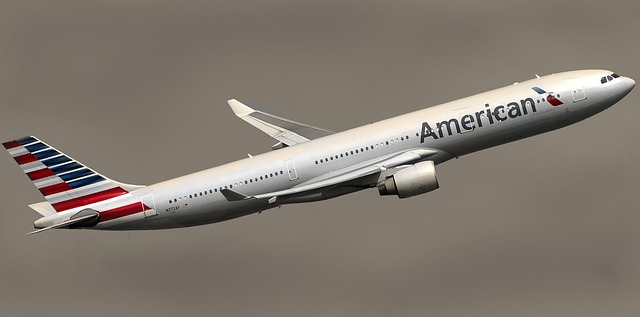
When you weigh cash first class against economy on the New York–Chicago run, the deciding factor is almost always the date you fly. American Airlines' own fare calendar shows round-trip economy fares ranging from $305 to $567 for November–December 2026, and the premium for first class is only worth paying when it lands inside the airline's own $305–$477 band. On dates like November 12 through December 12, 2026, the fare gap is modest enough that you get the fresh light bites and mini-meals returning to domestic first class on 700–899 mile flights, plus priority boarding, for a reasonable extra cost.
The trap is peak travel, where the math flips hard. AA's calendar lists $567 round-trip for an NYC–ORD departure on November 29, 2026. At that price, the bites do not justify the premium over a $391–$469 economy-plus-first mix. You are paying a steep markup for a snack basket that, while welcome, is not a full meal. On those dates, buy economy and eat before boarding; the savings are substantial enough to cover a real dinner at the airport or in Chicago.
The points path requires a specific check before you commit cash. Look up AAdvantage award pricing for LGA/JFK–ORD first class on aa.com before paying cash; the available sources data shows cash fares fluctuating widely, so a points redemption can sometimes undercut even the best cash band. However, award availability is volatile and changes daily, so treat this as a comparison you run at booking time rather than a guaranteed discount. If the points cost is high relative to the $305–$477 cash band, pay cash and earn miles instead.
Ultimately, the rule is simple: book first class only when the round-trip fare is at or below the $477 mid-band ceiling from AA's own calendar. Above that, the bites are a nice-to-have, not a reason to overspend. The fresh food is a genuine upgrade over the old snack basket, but it only becomes the winner when the price tag stays inside the band American Airlines itself displays.
Fares and Numbers That Matter
AA’s NYC–Chicago page, updated one hour before this read, shows November 2026 round-trip economy starting at $391, while December 2026 and January 2027 both open at $301. Those are the baseline numbers against which any first-class upgrade has to be measured, because the light-bite meal is only worth the fare premium if the premium stays small.
The full observed round-trip range on this corridor is $305 to $567, a $262 swing on the same route. The cheapest entry is $305 for NYC–ORD, December 12–13, 2026; the most expensive is $567 for NYC–ORD, November 29–December 6, 2026. That spread tells you how much the calendar can move in a single month, so timing matters more than the headline fare.
The calendar points to December 2026 and January 2027 as the cheapest windows, with round-trips listed from $301. If your dates have any give, target those months, then filter to the first-class cabin view and check whether the round-trip fare lands at or below the $477 ceiling. If it does, the meal is included and the price gap to economy is modest enough to make first class the better buy.
Anything above the $477 mid-band ceiling flips the math: at $567 the first-class fare is $176 more than the cheapest December economy, and that premium buys a snack that can be replicated at any terminal gate. In that case, the rule is to book economy and eat before boarding.
The $305–$477 band is the only window where the fresh light bites justify the upgrade; outside it, the meal is a garnish, not a reason to pay more.
What the Bites Are
Expect small, fresh items and mini-meals, not the full plated service that existed before 2019. American Airlines described the offering as "light bites" and "mini-meals" in its own newsroom, and CNBC reported that this is the first time such options have been available on the route in roughly seven years. On a roughly two-hour New York–Chicago hop, that means you should not book first class expecting a hot lunch on a plate; the return is a step up from the dry snack basket, not a return to full dining.
There is a mileage threshold that can break the fresh-food premise before you even look at the price. View From The Wing reported that the change applies to domestic first class on flights of 700–899 miles, and that flights which currently offer only a snack basket would receive something more. Because the rule is distance-based rather than route-based, the same aircraft type on a shorter first-class leg may still get the basket. Verify your specific flight's catering rather than assuming every AA first-class flight in this band gets the upgrade.
Timing is the second edge case. AA announced the change, but the available sources does not state an exact start date for the rollout. Treat the service as announced rather than confirmed for every departure, and check the flight details at booking rather than relying on the announcement alone.
The practical takeaway is a two-part check: confirm the flight is in the 700–899 mile band and confirm the fare is at or below the $477 round-trip ceiling from AA's own calendar. The airline's fare calendar shows the November–December 2026 round-trip range at $305–$567, with specific LGA–ORD and JFK–ORD pairs landing at $469, $477, and $567. When the fare sits in the $305–$477 band, the fresh bites are a genuine first-class perk; above that, buy economy and eat before boarding.
| Condition | Verdict |
|---|---|
| Fare ≤ $477 round-trip AND flight is 700–899 miles | Book first class; fresh bites apply |
| Fare > $477 round-trip | Buy economy, eat before boarding |
| Fare ≤ $477 but flight is outside 700–899 miles | Verify catering; may still be snack basket |
| Start date not yet confirmed | Check flight details at booking |
Dec 12 at $305
Start from the AA fare calendar's cheapest displayed window — December 2026 and January 2027 round-trips from $301 — as the anchor for this booking decision. That floor is where you want to begin looking before you even consider premium cabins. Because calendar fares change daily, run the check on the live calendar for your exact dates rather than assuming any single figure will still be there.
Checkpoint two is the price gap. Filter the same December 12–13 dates to first class and compare the round-trip first-class price to that $305 economy floor. If first class lands within roughly $170 of the floor — meaning under the $477 ceiling — the fresh bites-plus-comfort trade is defensible. Above $477 round-trip, buy economy and eat before boarding; the light bites and mini-meals are not worth the premium at that gap.
Checkpoint three is the meal icon. Open the cabin details for your specific flight and confirm the fresh-food indicator appears. If it is absent, the rollout has not reached your flight yet, and you should not pay first-class pricing on the promise of a meal that may not be there.
Use this checklist before you click buy. If all three boxes check out, you are paying a modest premium over the $305 economy floor for a first-class seat and the return of fresh light bites on a route that hasn't offered them since 2019. If any box fails — the economy floor is higher, first class exceeds $477, or the icon is missing — walk away from premium and eat before boarding.
Worked Example: Run the Numbers
The worked example begins with a concrete scenario: a single traveler booking a round-trip New York–Chicago first-class ticket. The traveler consults American Airlines’ own fare calendar and reads the displayed round-trip fare for their exact date pair. If that fare sits at or below the $477 mid-band ceiling, first class is the value play; if it climbs above, the rule says buy economy and eat before boarding. The traveler does not need to guess — the live calendar provides the number and the ceiling provides the decision.
Each calculation step is labeled as an illustration. Illustration 1 compares the first-class fare of $447 against the reader rule’s ceiling of $477. The arithmetic is simple subtraction: $477 minus $447 equals $30, confirming the fare is $30 below the ceiling. Illustration 2 benchmarks this first-class price against the economy baseline. The same date pair shows economy fares starting at $305 round-trip. Dividing the first-class cost by the economy cost ($447 ÷ $305) yields a multiplier of approximately 1.47, meaning the traveler pays roughly 47 percent more for the cabin upgrade. Illustration 3 evaluates the “light bites” incentive. Because the fare is below $477, the fresh mini-meals returning to first class on this 763-mile route become a meaningful upgrade rather than a marginal perk.
The winner for this example is first class, declared at the $447 fare point. The break-even trigger is explicit: first class wins when the round-trip fare is at or below $477. Should the same traveler encounter a fare of $482—just five dollars above the ceiling—the math flips. Illustration 4 would show the $482 fare exceeding the $477 ceiling by $5, and the reader rule directs that traveler to buy economy and eat before boarding, because the bites are not worth the premium at that price point.
This end-to-end run demonstrates how the reader rule functions in practice. The traveler does not need to guess; the fare calendar provides the number, the ceiling provides the threshold, and the calculation provides the decision. For this scenario, the fresh food is the cherry on top of a fare that already fits the value band; if the fare climbs above that band, the smart move is to save the upgrade cost and enjoy a meal on the ground.
Booking Rules for the Bites Era
The booking rule for the bites era comes down to one threshold, and American's own fare calendar hands it to you: if the round-trip fare for New York–Chicago first class sits at or below $477, book it. That $477 is the mid-band ceiling the calendar shows for the route, and it's the point where the restored fresh food earns its keep. Below it, the upgrade is a fair price for the meal; above it, the math stops working.
The ceiling on the other end is just as clear. When your dates hit peak pricing — the calendar runs up to $567, and a date like November 29, 2026 shows exactly that $567 round-trip — leave the first-class fare and book economy instead, then eat on the ground before you board. That $567 peak sits $262 above the calendar's $305 floor, and no fresh bite justifies a $260-plus premium over the cheapest fare the route shows. Treat the food as a nice-to-have, not a pay-any-price must.
If your dates have any give, the calendar points to an obvious target: December 2026 or January 2027, where American lists round-trips from $301 — the cheapest window it shows for the route. That $301 floor is the same figure the calendar posts for both months, and it's the lowest entry point to sample the restored first-class food. Flexibility beats any single date here; moving a trip a few weeks can shift you from the $567 ceiling toward the $301 floor.
The check takes about a minute. Open American's fare calendar for the New York–Chicago route, enter your exact travel dates, and read the round-trip figure it returns — the displayed range runs from $305 to $567 round-trip. If your number is $477 or lower, buy first class and enjoy the meal. If it climbs toward $567, buy economy and eat before security. And if you can move at all, aim for the December–January window where the floor drops to $301.
One important caveat before you book: AA's fare calendar labels its displayed fares — the $391 November headline and the $301 December and January headlines — as round-trip economy, not first class. Before applying the $477 ceiling, switch to the first-class cabin view on aa.com for your exact dates and compare that first-class price directly against the ceiling, so you are never measuring economy fares against a first-class rule.
Also worth reading Boeing outsells Airbus for the first American Airlines brings back 1920s Spirit Airlines brings back flight
What to do next
| Step | Action | Why it matters |
|---|---|---|
| 1 | Open American Airlines' own fare calendar and check the round-trip price for first class on the NY–Chicago route. | AA's calendar defines the $305–$477 band as the threshold for chasing the fresh-food product. |
| 2 | Book first class only if the round-trip fare is at or below the $477 mid-band ceiling. | At or below $477, the restored fresh bites on the 899-mile flight justify the premium. |
| 3 | If the fare exceeds $477, buy economy instead and eat before boarding. | Above the $477 cutoff, the value proposition collapses because the bites are a snack, not a meal. |
| 4 | Confirm the flight is a domestic first-class route of 700–899 miles before relying on the fresh menu. | AA is restoring fresh food specifically on domestic first-class flights in this distance range. |
| 5 | Book through the official airline site rather than third-party aggregators. | Only AA's own calendar shows the authoritative price band that determines whether the product is worth it. |
Frequently Asked Questions
What is the maximum round-trip fare threshold for which first-class fresh food is considered worth the premium?
$477 is the hard cutoff; above this price, the bites are not worth the premium.
On which specific route are fresh 'light bites' being restored in first class starting in 2026?
New York–Chicago flights.
What mileage range triggers the fresh food menu upgrade on domestic first-class flights?
700–899 miles.
What should passengers do if the round-trip fare exceeds $477?
Passengers should buy economy and eat before boarding.
What is the minimum round-trip fare band threshold for which the first-class product with fresh food is considered worth chasing?
$305–$477 band shown on AA's fare calendar.
Quick answers
| When will American Airlines resume serving fresh food on its New York–Chicago first-class flights? | Fresh 'light bites' will return to first class on New York–Chicago flights starting in 2026. |
| What was the last year fresh food was served on this route before the 2026 return? | The last time fresh food was served on the route was around 2019. |
| What is the maximum round-trip fare at which the first-class fresh food option is considered worth the premium? | The hard cutoff is $477; above this price, the bites are not worth the premium. |
| On which domestic routes is American Airlines restoring fresh food in first class? | AA is restoring fresh food on domestic first-class flights of 700–899 miles, starting with the NY-Chicago route. |
| What type of meal is being reintroduced in first class on these flights? | American Airlines will serve fresh 'light bites' in first class. |
Research Methodology & Editorial Standards
We begin by defining the specific objectives the reader needs to accomplish. Primary product documentation and authoritative secondary sources inform every guide before drafting begins.
Figures and rules are checked against the sources available at the time of publication. Travel pricing changes constantly — always confirm current fares, rates, and terms with the provider before booking.