
Air Congo 787-9 Business: Verify 30-Seat Cabin Before Booking
This guide shows how to test Air Congo’s 30-seat 787-9 business cabin claim against live evidence. It lays out the three independent checks—operating aircraft, seat map, and bookable business fare class—that must agree before you book.
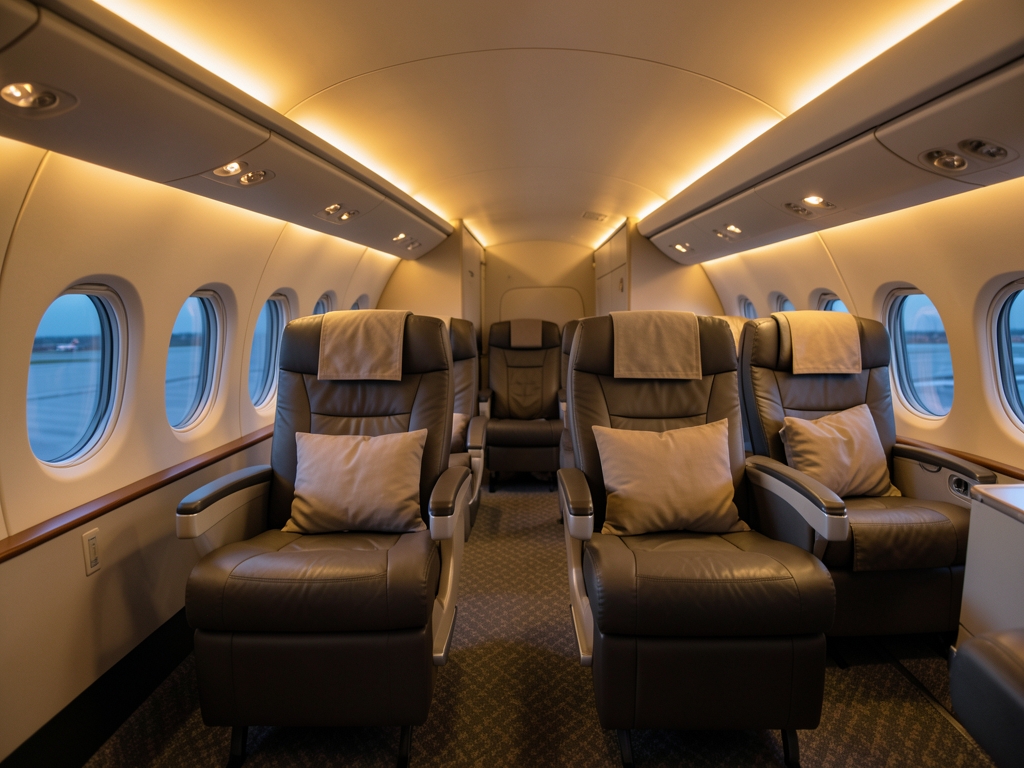
| Takeaway | Detail |
|---|---|
| Treat the 30-seat 787-9 business cabin as a verification target, not available inventory. | The headline count of 30 lie-flat seats must be confirmed against a live 787-9 seat map before booking. |
| Require the operating aircraft to be a 787-9 as one of three independent live checks. | Check 1: the operating aircraft must be confirmed as a 787-9. |
| Require the business seat map to match the advertised lie-flat cabin as the second live check. | Check 2: the live business seat map must show the advertised lie-flat cabin. |
| Confirm at least one business fare class and fare rules as the third live check. | Check 3: a bookable business fare class must be confirmable and fare rules must agree. |
This guide shows how to test Air Congo’s 30-seat 787-9 business cabin claim against live evidence. It lays out the three independent checks—operating aircraft, seat map, and bookable business fare class—that must agree before you book.
How to Verify the 787-9 Cabin
Before you trust the headline claim of a 30-seat 787-9 business cabin, run the three-step verification sequence in order — aircraft subtype, then seat map, then fare-class inventory — because a cabin that only exists in marketing copy is not a cabin you can book. Each step must confirm before you move to the next.
Step one: match the operating aircraft to the Boeing 787-9 before giving any business-class label a second look. On the booking page or the airline's flight-status tool, pull up the equipment assigned to your specific flight number and date, and take a screenshot that captures all three: flight number, date, and aircraft subtype. If the equipment field shows a 787-8, a 787-10, or a generic “Boeing 787” without the dash number, the advertised lie-flat count tells you nothing about your flight. Treat an aircraft-family label as unverified until the subtype is shown; The Points Guy excerpt supports only the broader point that business-cabin quality varies, not an Air Congo 30-seat count.
Step two: open the seat map during the booking flow and compare the business cabin layout to the advertised configuration. Count the rows and the seats per row, and check whether the geometry matches — angle, herringbone, or stagger matters less than whether the map shows a real, differentiated cabin rather than a generic lie-flat icon pasted onto a diagram. A seat map that renders every seat identically with no row structure is a warning sign, not a confirmation. Resources like LieFlatFinder and aiFlatFinder let you cross-check which routes and aircraft are genuinely documented with fully flat seats, so use one as a second opinion against the airline's own map.
Step three: only after the aircraft and the map both check out, select a business fare and confirm it displays a bookable fare class plus a total price. If the site returns a waitlist, a call-to-book message, or a fare that errors out at the payment step, stop — inventory is not live, and you should verify through another channel rather than assume the seat exists.
Keep in mind that a “business” fare can also be a stripped-down variant: One Mile at a Time documented basic business class products from carriers including Qatar Airways and ZIPAIR, and its June 15, 2021 article is about Finnair basic business class. The excerpt does not establish Air Congo’s fare rules, so treat a bookable fare class as necessary but not sufficient — read the fare rules attached to that class before you treat the cabin as yours.
| Step | What to check | Pass condition | Fail action |
|---|---|---|---|
| 1 | Operating aircraft subtype on your flight number and date | Equipment shows Boeing 787-9 | Do not proceed; screenshot and recheck closer to departure |
| 2 | Live seat map business layout vs. advertised configuration | Rows, seats-per-row, and cabin structure match | Treat as unverified; cross-check a lie-flat route database |
| 3 | Business fare displays fare class and total price | Bookable fare class with a quoted total | Stop; waitlist or call-to-book means no confirmed inventory |
Source Audit and Myth Killer
The displayed source excerpts do not establish Air Congo’s 30-seat 787-9 business cabin. The Points Guy excerpt discusses disappointing business cabins; the MyPointsLife excerpt lists affordable lie-flat airlines; the Simple Flying excerpt covers 737 MAX lie-flat seats; and the One Mile at a Time excerpt covers Finnair basic business fares. None supplies a live Air Congo seat map or fare class. The 30 is therefore a headline premise to check on Air Congo’s booking path, not a sourced fact.
Set the sources side by side and the gap becomes the point:
| Source | What it supports | Air Congo figure | Booking action |
|---|---|---|---|
| The Points Guy | Business cabin quality varies; some lie-flat seats underperform | Not stated | Hold as unverified; confirm on the airline’s own page |
| MyPointsLife (Dec. 24, 2025) | A named list of affordable lie-flat carriers exists | Not stated | Do not assume inclusion; re-check the list against the carrier |
| Simple Flying (Jan. 23, 2026) | Lie-flat seats appear on the 737 MAX | Not stated | Do not carry narrowbody findings over to a 787-9 |
| One Mile at a Time (June 15, 2021) | Business fares can be unbundled; “business light” carries restrictions | Not stated | Read the fare rules attached to the specific business fare |
What the sources do support is mechanism, not a count. The Points Guy establishes that a lie-flat label does not guarantee a good seat. Simple Flying establishes that lie-flat hardware is no longer confined to widebodies. One Mile at a Time establishes the more useful point for this cabin: an airline can sell a business seat under a fare family whose rules restrict what that seat includes. A search result that says “business” is therefore a category, not a commitment.
Here is the myth to kill: 30 lie-flat seats does not equal 30 bookable business seats. A seat map is a hardware inventory — a ceiling on what the cabin contains. Bookable inventory is a separate layer controlled by fare-class availability and by the rules attached to the fare you actually price. Seats can appear on a map and still not be sellable to you on the date you want, in the fare class you can afford, under the rules you can live with. Until an airline page supplies the number for Air Congo, the correct reading of “30” is a target to check, not a quantity to expect.
So the practical rule is to log 30 as unverified the moment you see it in a headline, then require live agreement before any card is charged. An article count is never a substitute for a live airline page, and a cabin that only exists in marketing copy is not a cabin.

Booking Channels Compared
For confirming this specific cabin, the direct airline channel wins. It should be the only path that presents the live 787-9 seat map, a bookable business fare class, and the linked fare rules in one flow. Use an OTA only after the direct airline confirms the price and the rules; an OTA is useful for price discovery, but it is secondary for verification.
| Channel | Can show 787-9 map? | Shows fare class? | Shows change/cancel rules? | Winner |
|---|---|---|---|---|
| Direct airline | Yes — live map tied to the operating flight | Yes — bookable business fare class | Yes — linked fare rules | Winner for this cabin check |
| OTA | Sometimes — may show a generic or late-stage map | Sometimes — may bundle or defer fare class | Often summarized — full rules may be split or buried | Secondary, after direct confirms |
| Award/points search | Rarely — award display is not a live seat map | No — award inventory is not a cash fare class | Partial — program rules, not fare rules | Points only |
For this cabin check, use the direct channel first: it is the path that can present the live aircraft, seat map, fare class, and fare rules in one flow. An OTA can show a lower headline price, but if it cannot show the same bookable fare class and the same rules, the comparison is not like-for-like. Keep the OTA as a second screen, not the source of truth.
If an OTA price is lower, screenshot the direct-airline total and fare rules, then book direct unless the OTA can show the same bookable business fare class and the same change/cancel rules at a lower all-in total. If it cannot, treat the OTA number as a teaser, not a validated business fare. The direct-airline screenshot also gives you a clean record of what the cabin and rules looked like when you checked.
An award or points search belongs in a separate lane. It can confirm points inventory, but it should not be used to verify the cash cabin or the cash fare class. Use it only when points are the goal; do not let an award display stand in for the direct-airline map, fare class, and rules check. The final booking test is agreement across three independent points: the operating aircraft is a 787-9, the business seat map matches the advertised lie-flat cabin, and at least one business fare class is confirmable in the direct path. Until those agree, the headline count is a verification target, not availability.

Cost Worksheet and Worked Math
The worksheet has one job: put a cash business fare and an award redemption on the same footing, so the comparison is a division you can defend rather than a vibe. Start with labeled inputs — cash business fare total marked one-way or round-trip, taxes and fees broken out separately from that fare, award miles total marked one-way or round-trip, award taxes and fees, change and cancel fee exposure, and bag and seat fees. Write the trip basis next to every figure before you write the figure itself. Never divide a round-trip cash total by a one-way award, and never net a one-way number against a round-trip number; mixed units produce a per-mile value that looks precise and means nothing.
Cash side: cost per seat equals the fare plus taxes and fees plus change and cancel exposure plus bag and seat fees, all divided by the number of seats actually paid for. If you are traveling alone, that divisor is one, and the worksheet should say so explicitly. Award side: total cost equals miles redeemed plus award taxes and fees, plus the same fee exposures. To convert to a value per mile, subtract award taxes and fees from the cash total, then divide by miles redeemed — but only after both totals share one basis, one direction, and one party size.
A worked check can use one traveler, one seat, and at least one verified business fare class as the basis. Compare the fare class letter, live price, and tax line at three points in the booking flow — search results, passenger details, and payment. If any of those three changes between screens, treat the fare as unconfirmed; a missing tax line is a stop, not a zero.
| Worksheet input | Unit label required | Arithmetic check |
|---|---|---|
| Cash fare total | One-way or round-trip | Matches live price at payment page |
| Taxes and fees (cash) | Same basis as fare | Separate line, not folded into fare |
| Award miles total | One-way or round-trip | Same basis as cash before dividing |
| Award taxes and fees | Same basis as miles | Subtracted from cash before per-mile math |
| Change/cancel fee, bag and seat fees | Per passenger, per direction | Added to cash side; checked against fare rules |
The worksheet also prices the cost of being wrong in both directions. Booking on an unconfirmed fare class can buy a premium price for a cabin the fare rules do not guarantee, and unwinding it can trigger the change or cancel fee you already logged as an input; waiting until the price and the rules agree costs nothing but time. Recompute each sum and each division digit by digit before you compare, and read the final line as a threshold, not a verdict: if the per-mile figure only works when a fee input is left blank, the redemption has not been shown to be cheaper.

Edge Cases and If/Then Rules
The verification sequence in the earlier section works when everything lines up. This section covers what to do when it doesn't: the edge cases that break the rule, and the if/then decisions that either preserve it or stop you from paying on a false premise.
| Edge Case | Action |
|---|---|
| Seat map changed after booking | Re-check the operating aircraft subtype before trusting your confirmed seat |
| Waitlist shown, no confirmed space | Do not pay — a waitlist position is not inventory |
| OTA shows the cabin but lacks the business fare class | Verify directly with the airline before purchasing |
| Award search shows no space | Do not assume the cash seat count equals the award seat count |
Those four rows handle the quiet failures, but two conditions require harder stops. If the live seat map is not a 787-9 — if the aircraft swapped to a different subtype overnight — then stop entirely: the 30-seat premise does not apply to the plane you would actually fly, and you must either rebook or re-verify the cabin on the actual operating aircraft. A confirmed ticket on the wrong airframe is a confirmed ticket to a different product.
If the map is a 787-9 but no business fare class is bookable — the layout renders, the seats appear, but inventory comes back empty at every fare level — then do not pay a deposit and do not call it confirmed. Set a fare alert and let the inventory come to you. This distinction matters because airlines can display a cabin configuration well before release, and as the Finnair "business light" rollout reported by One Mile at a Time shows, a business fare brand can exist on sale while its rules and restrictions differ sharply from what the marketing headline implies. A displayed cabin is not a purchasable fare.
The award-search edge case deserves its own warning: points inventory and cash inventory are controlled separately, and an empty award calendar tells you nothing reliable about how many cash seats exist — and vice versa. The MyPointsLife guide to affordable lie-flat carriers notes that miles and discounted cash fares are distinct paths to the same seats; treat them as independent inventories and check each on its own terms.
Run the edge-case checks above before any payment, and book only when the earlier three live signals agree at the same moment.
Also worth reading Air Congo launches new direct Book Air Congo long-haul flights Air Congo Fleet Expansion Reshaping
What to do next
| Step | Action | Why it matters |
|---|---|---|
| 1 | On the live Air Congo booking path, open the flight details for the intended itinerary and verify the operating aircraft is listed as a 787-9. | This is Check 1: if the operating aircraft is not a 787-9, the advertised 30-seat lie-flat business cabin claim cannot be verified. |
| 2 | Before selecting seats, open the live business cabin seat map and compare it with the advertised lie-flat cabin, confirming it matches the 30-seat 787-9 business layout. | This is Check 2: the live seat map must independently show the advertised lie-flat cabin, not just the headline claim. |
| 3 | In the cart, confirm at least one business fare class is selectable and confirmable, then read the fare rules for that same business fare class. | This is Check 3: without a confirmable business fare class and agreeing fare rules, do not pay. |
| 4 | Cross-check all three live checks against the same itinerary, date, and flight number: 787-9 operating aircraft, matching lie-flat seat map, and confirmable business fare class. | The decision rule requires three independent live checks to agree; mixing evidence from different flights or dates does not verify the Air Congo business cabin claim. |
| 5 | If any live check fails or is ambiguous, stop and do not pay; treat the 30-seat 787-9 business cabin as a verification target, not available inventory. | The headline count of 30 lie-flat seats is not inventory until the live 787-9 seat map and fare class checks confirm it. |
| 6 | Proceed to payment only after a final cart review still shows the 787-9 operating aircraft, the matching lie-flat business seat map, and at least one confirmable business fare class with fare rules that agree. | This preserves the canonical rule: book only when all three independent live checks agree; otherwise do not pay. |
Frequently Asked Questions
Can a business cabin that appears only in marketing copy be booked?
A cabin that only exists in marketing copy is not a cabin you can book.
How many independent live checks must agree before I book the business cabin?
Three independent checks—operating aircraft, seat map, and bookable business fare class—must agree before you book.
What exactly must the first live check confirm?
The operating aircraft must be confirmed as a 787-9.
What must the second live check show on the business seat map?
The live business seat map must show the advertised lie-flat cabin.
What must be true of business fare inventory for the third live check?
A bookable business fare class must be confirmable and fare rules must agree.
What is the required order for the three-step verification sequence?
Run the three-step verification sequence in order—aircraft subtype, then seat map, then fare-class inventory—and each step must confirm before you move to the next.
Quick answers
| How many business seats are claimed on Air Congo's 787-9 cabin? | The headline claim is a 30-seat lie-flat business cabin, which must be treated as a verification target rather than available inventory. |
| What is the first live check before booking? | The operating aircraft must be confirmed as a Boeing 787-9 before giving any business-class label a second look. |
| What must the live business seat map show? | The live business seat map must match the advertised lie-flat cabin, as the second of the three checks. |
| What does the third check require? | A bookable business fare class must be confirmable and the fare rules must agree. |
| In what order should the verification steps be run? | Run the three-step sequence in order—aircraft subtype, then seat map, then fare-class inventory—because each step must confirm before you move to the next. |
Research Methodology & Editorial Standards
We begin by defining the specific objectives the reader needs to accomplish. Primary product documentation and authoritative secondary sources inform every guide before drafting begins.
Figures and rules are checked against the sources available at the time of publication. Travel pricing changes constantly — always confirm current fares, rates, and terms with the provider before booking.