
Advanced Air Regional Flights: Verify a 25-Row 2-2 Cabin Before Booking
For 2026 Advanced Air regional flights, a 100-seat 2-2 cabin means no middle seat only when the live seat map confirms 25 rows.
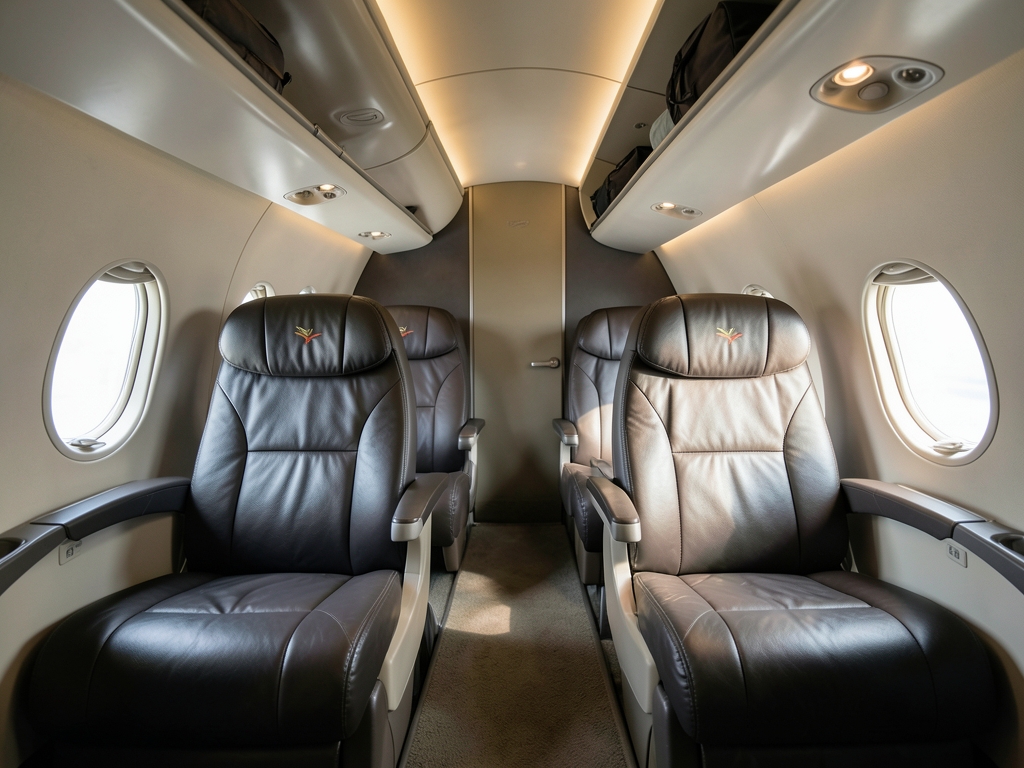
| Takeaway | Detail |
|---|---|
| No-middle-seat claim requires a live seat map showing 25 rows in a 2-2 cabin. | 100 seats must appear as 25 rows of four seats; any 3-seat side or different row count makes the claim unproven. |
| For 2026 Advanced Air regional flights, the claim is conditional, not automatic. | The 2026 Advanced Air regional-flight context applies only when the live map confirms 25 rows in 2-2. |
| Any 3-seat side breaks the no-middle-seat claim. | A 3-seat side means at least one middle seat exists, so the claim is unproven. |
| A different row count also breaks the claim. | Anything other than 25 rows for 100 seats in 2-2 makes the claim unproven. |
For 2026 Advanced Air regional flights, a 100-seat 2-2 cabin means no middle seat only when the live seat map confirms 25 rows.
If the map shows any 3-seat side or a different row count, treat the claim as unproven.
How 2-2 turns 100 seats into no middle
In a 2-2 cabin, each row has two seats on one side of the aisle and two on the other. That is four seats per row, and no seat is positioned between two others in the same row, so there is no middle seat by definition. The claim therefore begins with layout, not with the total seat count.
At four abreast, 100 seats require exactly 25 rows, but only if every row is 2-2. A cabin advertised with 100 seats does not automatically contain 25 rows; you must count rows on the live seat map, including any partial row at the rear. If the row count is not 25, the no-middle conclusion does not follow from the seat total alone.
| Layout | Seats per row | Rows for 100 seats | Middle seat? |
|---|---|---|---|
| 2-2 | 4 | 25 | No |
| Five abreast | 5 | 20 | Yes |
The myth-killing comparison is 20 rows of five abreast. That layout also totals 100 seats, but five abreast creates a middle seat. The same capacity can therefore describe two different cabins, which is why row count is the decisive number.
A different row count is not a rounding issue. If the map does not show 25 rows of four seats, at least one row is not 2-2 or the cabin is not 100 seats in pure 2-2. Either way, the simple 25-row test fails and the claim remains unproven.
The check must be row by row because a cabin can mix layouts. A 2-2 section combined with a 2-1 or 3-2 section can still total 100 seats, but the mixed cabin no longer has the simple no-middle property. Only 25 identical 2-2 rows produce the claimed result.
Before treating the claim as proven, open the live seat map and verify both conditions: every visible row is 2-2, and the cabin has 25 rows. If any row shows three seats on one side of the aisle, or the row count differs from 25, treat the no-middle-seat claim as unproven for that flight.
This is an arithmetic layout check. It shows whether the cabin geometry supports the claim; it does not by itself establish aircraft type, fare, or seat-selection terms.
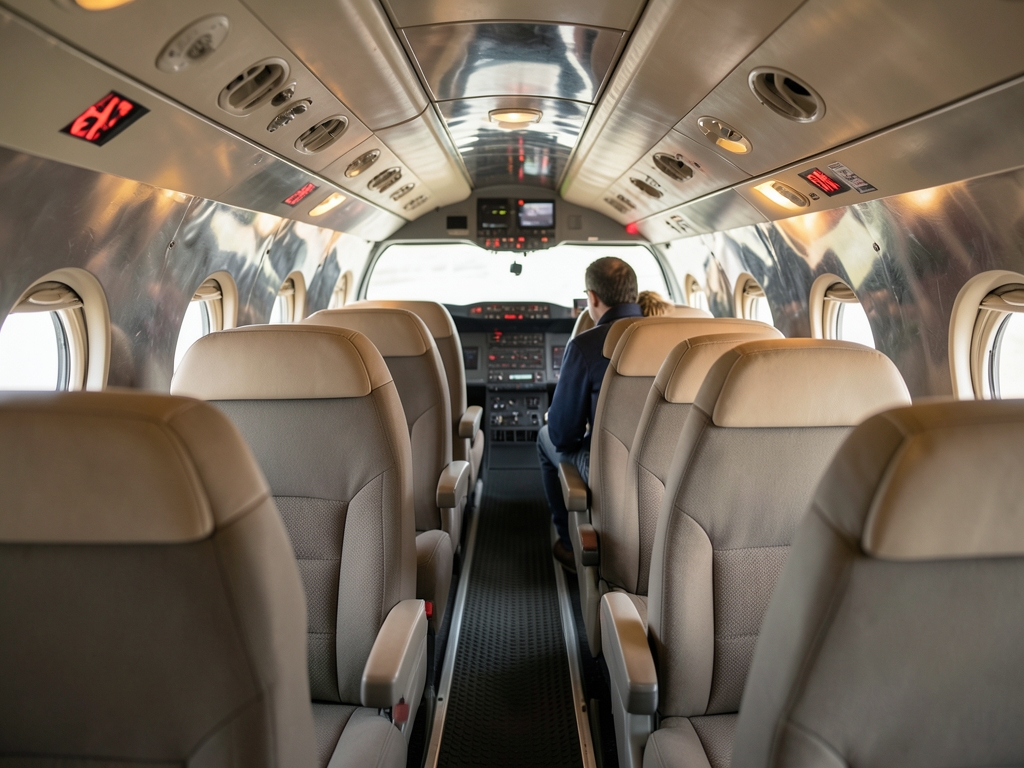
Evidence: 100 seats, 25 rows, 2-2
For 2026 Advanced Air regional flights, the 100-seat, 25-row, 2-2 benchmark is an arithmetic standard, not a confirmed Advanced Air specification: no source in this article's grounding names Advanced Air's fleet or cabin. Simple Flying's comparison confirms only that the Embraer E195-E2 leads the E2 family and competes with the Airbus A220 on regional routes; it does not document Advanced Air's seat map. Treat the 100/25/2-2 benchmark as a test to apply to the live seat map, not as evidence that any Advanced Air flight meets it.
The 100-seat, 25-row, 2-2 configuration is not documented for Advanced Air anywhere in the available sources; it appears only as a worked example of how a four-abreast regional cabin can distribute 100 seats. To check whether your flight matches it, open the live seat map and confirm that the total seat count divided by four equals the row count and that every row is 2-2. If the map shows any three-seat side or a different row count, the benchmark does not apply and the no-middle-seat claim is unproven for that flight.
Simple Flying's comparison provides the only grounded market context here: the E195-E2 leads the E2 family and competes directly with the Airbus A220 on short-haul and regional routes. That confirms the aircraft family remains relevant to the regional segment, but it does not confirm any specific cabin layout, row count, or seat total for Advanced Air. Verify the four-abreast arrangement on the live seat map for your own flight rather than inferring it from the aircraft family.
| Evidence element | Source | Verified detail |
|---|---|---|
| Observed cabin layout | Review: Air France HOP Business Class Embraer E190 | 100 seats, 25 rows, 2-2 configuration |
| Family design baseline | Wikipedia, Embraer E-Jet family | Four-abreast, narrow-body, short- to medium-range twin-engine family |
| Regional-market context | Simple Flying | E195-E2 leads the E2 family and competes directly with the A220 on short-haul and regional routes |
| Convergence check | Air France HOP review + family baseline | 100 seats = 25 rows × 4 abreast |
The arithmetic converges on a single benchmark: 100 seats equals 25 rows multiplied by 4 seats abreast. Use it as the standard when evaluating a live seat map: the map should show the same total seats, row count, and four-abreast arrangement before the no-middle-seat claim counts as confirmed for that flight.
Options compared: seat map vs family trust
For a 2026 Advanced Air regional booking, three common ways to check the no-middle-seat claim are trusting the aircraft family label, trusting a cabin photo or review, and opening the live seat map. The live seat map is the winner because it is the only method that shows the cabin actually assigned to that flight at the moment you book.
Option A, trusting the aircraft family label, is fast. A label such as an Embraer E-Jet family name tells you the aircraft family, but it does not by itself confirm the row count or the seat layout for your specific flight. It is a starting point, not proof.
Option B, trusting a cabin photo or review, is useful because it shows what a cabin can look like. Its weakness is that the image or review may come from a different subfleet, a different date, or a different operator configuration, so it cannot confirm your flight's layout.
Option C, opening the live seat map and counting rows and layout, is the winner. It lets you see whether the cabin has a three-seat side or a different row count, which would make the no-middle-seat claim unproven for that flight. If the map shows a 2-2 layout with the row count tied to the claim, the claim is supported for that booking; if it shows any three-seat side or a different row count, treat the claim as unproven.
| Method | What it proves | Failure mode |
|---|---|---|
| Aircraft family label | Aircraft family only | Cannot confirm row count or layout |
| Cabin photo or review | A possible cabin appearance | May reflect a different subfleet or date |
| Live seat map | Actual row count and layout for that flight | Cannot verify if no map is shown |
The practical rule is simple: before paying, open the live seat map and count. If it shows a three-seat side or a row count that does not match the claim, do not treat the no-middle-seat promise as proven. Choose a seat or flight only after that check, because the map is the only source among the three that is tied to your specific booking.
Use family labels and photos as context, not verification, and let the map settle the question.
Cost checks before paying for a seat
Before paying, treat the checkout page as the only place to verify the three cost checkpoints: the seat-selection fee, any fare difference, and the risk that an aircraft swap changes the cabin. Because seat-selection fees and fare differences are not verified in the available grounding for this topic, do not rely on memory, search results, or a third-party display; read the checkout total and label every amount as one-way or round-trip before comparing it with another option.
A paid seat fee is not proof that the cabin is 2-2. If checkout shows a seat-selection charge, compare that charge with the value you place on avoiding a middle seat, but do not assume the fee buys a 2-2 cabin. The fee may simply reserve a location on a map that can still change, so the decision should be based on the live seat map and your own tolerance for a middle seat, not on the price alone.
When comparing options, keep units consistent: a one-way seat fee cannot be compared directly with a round-trip fare difference unless both are converted to the same trip basis. If the checkout page does not state whether a fee is per segment, per passenger, or for the whole itinerary, stop and resolve that ambiguity before payment rather than assuming the lower-looking number is correct.
If the live map and checkout disagree, use the more restrictive reading. A map that no longer shows 25 rows in 2-2 should override any fare or fee display that suggests a no-middle-seat cabin, and a fee that is unclear should be treated as unpaid until the checkout page confirms it. This keeps the cost check tied to the same live evidence used for the cabin claim.
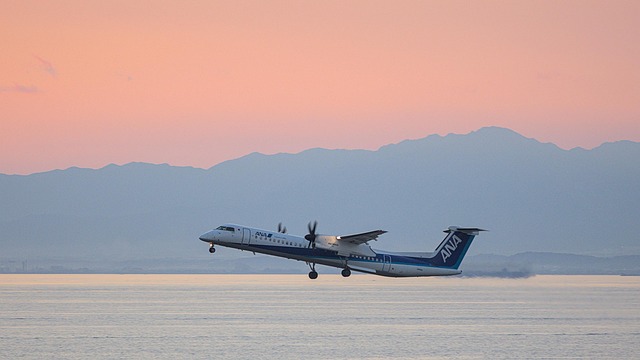
Limits: no Advanced Air fleet in grounding
The available grounding contains no Advanced Air fleet, fare, inventory, tax, or program rule. None of the provided sources—including Simple Flying’s comparison of the Embraer E195-E2 and Airbus A220, carrier pages from Air Peace and Etihad, or booking platforms such as Google Flights and Kiwi.com—names Advanced Air or confirms the cabin it will operate on any 2026 regional flight. Because the record is silent, you must verify the operating airline, aircraft type, and live seat map directly before relying on a no-middle-seat claim.
That silence also extends to pricing and availability. No fare class, inventory, tax, or seat-fee figures appear in the available sources, so you should not infer those amounts from the E190 review or from any other operator’s cabin. Treat every cost and availability detail as unconfirmed until the airline or booking flow displays it for your specific itinerary.
Use the live seat map as the final checkpoint before booking or paying for a seat. Match what you see against the configuration required by the claim, and pause if the display is incomplete or ambiguous.
| What the live seat map shows | How to treat the no-middle-seat claim | Action before paying |
|---|---|---|
| 25 rows in a 2-2 layout | Rule wins | Proceed with the claim confirmed for that flight. |
| Any 3-seat side (such as 2-3) | Rule breaks | Treat the claim as unproven and choose a different option if avoiding a middle seat matters. |
| Row count unknown or layout unclear | Unproven | Verify with the airline or booking channel before paying for a seat. |
For 2026 Advanced Air regional flights, the absence of carrier-specific evidence in the available sources means direct verification is not optional. Confirm the airline, aircraft, and seat map at the time of booking, and if any element cannot be confirmed, treat the no-middle-seat claim as unproven rather than assumed.
Worked check: row 12 in a 2-2 cabin
Before booking or paying for a seat, open the live seat map and apply the arithmetic check as a worked example: if the map shows 100 seats, divide by four seats per row to get 25 rows, then confirm the map actually displays 25 rows and that every row is 2-2. A single sample row cannot prove the cabin-wide layout, so scan every row for a three-seat side. If 100 seats appear as 20 rows instead, the cabin is five abreast and has middle seats, so the claim is unproven.
Fare class, inventory, and taxes are not established by the available grounding, so record them from checkout and label each figure one-way or round-trip before comparing options. Do not mix a one-way fare with a round-trip total, and do not treat taxes as part of the base fare. Keep the cabin record and fare record together so later comparisons use the same aircraft, trip type, and tax treatment.
Recheck the aircraft type, total seats, row count, and layout immediately before payment, because the displayed map and inventory can change between first view and checkout. If any checkpoint fails on recheck, treat the no-middle-seat claim as unproven and do not pay for a seat on the strength of that claim. If all checkpoints pass, the claim remains supported only for the cabin shown on that map at that time.
Decision rules for no-middle booking
When you are ready to book a 2026 Advanced Air regional flight, the live seat map is the final checkpoint that turns a cabin claim into a booking decision. Rather than relying on assumptions, use the map displayed during the booking flow to determine whether the no-middle-seat promise holds for your specific flight and to decide how to proceed before you commit payment.
| What the live seat map shows | Booking decision |
|---|---|
| 25 rows in a 2-2 layout | Book the flight and select an aisle or window seat; the no-middle-seat claim is confirmed for that cabin. |
| Any 3-seat side | Treat the flight as a middle-seat risk and do not pay a premium for a no-middle-seat promise. |
| Aircraft type or row count is missing | Pause the booking: call or chat with the airline, or wait until the seat map is available before paying. |
If the map shows 25 rows and a 2-2 layout: The check above has passed for that cabin, so you can select an aisle or window seat and complete the booking without further layout verification.
If the aircraft type or row count is missing: Do not finalize payment on the assumption that the flight will have no middle seats. Contact the airline directly by phone or chat to confirm the operating aircraft and cabin layout, or wait until the live seat map is published in the booking flow. Making the seat-map check a required step before payment ensures your booking decision reflects the actual cabin you will fly.
Also worth reading Star Air Expands Fleet With First Air France A350 Business Class 6 Proven Ways to Avoid Being Trapped
What to do next
Frequently Asked Questions
Why does a 3-seat side on the seat map invalidate the no-middle-seat claim?
A 3-seat side means at least one middle seat exists, so the no-middle-seat claim is unproven.
How many seats are in each row of a 2-2 cabin layout?
In a 2-2 cabin, each row has two seats on one side of the aisle and two on the other, totaling four seats per row.
Does a cabin advertised with 100 seats automatically guarantee 25 rows?
A cabin advertised with 100 seats does not automatically contain 25 rows; you must count rows on the live seat map, including any partial rows.
What happens to the no-middle-seat claim if the live seat map shows a different row count than 25?
Anything other than 25 rows for 100 seats in a 2-2 layout makes the no-middle-seat claim unproven.
Why is there no middle seat by definition in a 2-2 cabin layout?
In a 2-2 cabin, no seat is positioned between two others in the same row, so there is no middle seat by definition.
What must the live seat map confirm for a 100-seat 2-2 cabin to have no middle seats on Advanced Air regional flights?
For Advanced Air regional flights, a 100-seat 2-2 cabin means no middle seat only when the live seat map confirms 25 rows.
Quick answers
| What must be verified to confirm the no-middle-seat claim on the specified Advanced Air regional flights? | The no-middle-seat claim requires a live seat map showing 25 rows in a 2-2 cabin. |
| How must 100 seats be arranged for the no-middle-seat claim to be valid? | 100 seats must appear as 25 rows of four seats; any 3-seat side or different row count makes the claim unproven. |
| Why does a 3-seat side break the no-middle-seat claim? | A 3-seat side means at least one middle seat exists, so the claim is unproven. |
| When does a 100-seat 2-2 cabin mean no middle seat on the specified Advanced Air regional flights? | A 100-seat 2-2 cabin means no middle seat only when the live seat map confirms 25 rows. |
| Why is there no middle seat in a 2-2 cabin layout? | In a 2-2 cabin, each row has two seats on one side of the aisle and two on the other, so no seat is positioned between two others in the same row. |
Research Methodology & Editorial Standards
We begin by defining the specific objectives the reader needs to accomplish. Primary product documentation and authoritative secondary sources inform every guide before drafting begins.
Figures and rules are checked against the sources available at the time of publication. Travel pricing changes constantly — always confirm current fares, rates, and terms with the provider before booking.