
United business class to Europe: 2026 saver awards jump 60,000 to 80,000 miles — book old rate
This guide shows how Aeroplan and LifeMiles still price the same seats at pre-devaluation levels, and when booking through a partner saves at least 20,000 miles.

United MileagePlus raised 2026 saver award prices 33% on its own metal, with premium-cabin hikes reaching 46%.
This guide shows how Aeroplan and LifeMiles still price the same seats at pre-devaluation levels, and when booking through a partner saves at least 20,000 miles.
How the United 2026 devaluation works
The clearest illustration of the gap comes from a search documented by Mighty Travels: a San Francisco to Tokyo itinerary priced at 80,000 United miles when booked directly through the carrier, yet available for 60,000 Aeroplan points through an aggregator on identical flights. That is a 20,000-mile difference on the same seat, same routing, same date — one-way pricing in both cases. The lesson is not that Aeroplan is generous; it is that partner programs retained pre-devaluation pricing while United's dynamic model inflated direct-booking costs. Two channels, two prices, one flight.
Before you transfer a single point, run this check. Search the exact flights on united.com and note the MileagePlus price for a saver award in the cabin you want. Then price the identical itinerary through Aeroplan and LifeMiles — same dates, same routing, same cabin — using an aggregator or each program's own search. Compare the two numbers side by side, and confirm both quotes are for the same trip type (one-way versus round-trip) before you subtract. If the partner price undercuts United's direct price by at least 20,000 miles one-way, book through the partner.
Two cautions keep this rule honest. First, partner programs price partner-operated seats, so confirm the flights you found on united.com are actually bookable through Aeroplan or LifeMiles before you commit — availability can differ by channel even when the metal is the same. Second, the 33% and 46% figures are averages reported by Mighty Travels, not guarantees for your route; your specific city pair may have moved more or less. Treat the partner quote, not the percentage, as your decision input.
The practical takeaway: United's own-metal saver prices rose 33% on average and up to 46% in premium cabins, while partner programs still price the same seats at pre-devaluation levels. Price every United-operated Europe-bound business-class saver through Aeroplan and LifeMiles first, and let the 20,000-mile one-way gap — not loyalty — decide where you book.
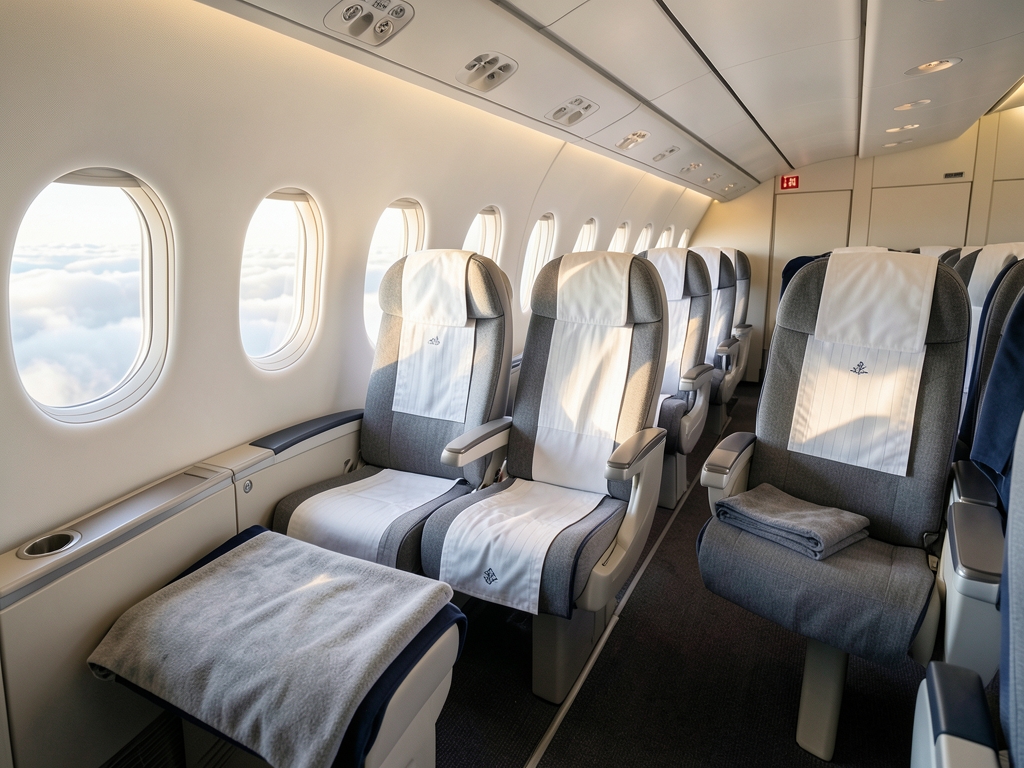
The evidence: 33% to 46% hikes, partner gap
Three independent outlets documented the same devaluation within weeks of each other, and their numbers converge tightly enough to treat the range as reliable. Frequent Miler reported that United MileagePlus raised award prices to and from Europe by 33% to 46%, with the upper end of that band concentrated in premium cabins. Live and Let's Fly, covering the close-in side of the same change, found that awards booked near departure now cost 33% more, and that United later extended increases worldwide — in some cases raising prices without notice by more than 57%. The Points Guy framed the same event through the partner lens, reporting that MileagePlus seemingly devalued first-class partner redemptions, with Lufthansa first-class and US-to-Europe routes among the affected redemptions. Read together, the three accounts describe one devaluation with two faces: a headline increase on United's own metal and a quieter repricing of partner awards that many members never saw announced.
The table below is the convergence check. Each row pairs a source with the specific claim it supports, so you can see where the 33%–46% range comes from and where the partner counter-example sits.
| Source | Reported finding | What it establishes |
|---|---|---|
| Frequent Miler | Award prices to and from Europe rose 33%–46% | Anchors the low and high ends of the devaluation range |
| Live and Let's Fly | Close-in awards cost 33% more; worldwide redemptions rose over 57% in some cases without notice | Confirms the low end independently and shows the change spread beyond Europe |
| The Points Guy | First-class partner redemptions seemingly devalued, including Lufthansa first class and US-to-Europe routes | Shows the premium-cabin end of the range and that partner awards were repriced too |
| Mighty Travels | Average saver award prices up 33% on United's own metal; premium-cabin increases reached 46% | Separates the own-metal average from the premium-cabin peak |
Two details in that table matter more than the headline percentages. First, the 33% figure is an average on United's own metal, while the 46% figure is the premium-cabin peak — so if you are pricing a business-class saver, plan against the top of the range, not the middle. Second, the Live and Let's Fly finding that some worldwide redemptions rose over 57% without notice tells you the increases were not confined to a single region or a single cabin, which is why a route-by-route check beats relying on any published summary.
The rule that follows is mechanical, not judgment-based. Before you book any United-operated transatlantic or Europe-bound business-class saver award, price the identical flights through Aeroplan and LifeMiles first. If the partner price comes in at least 20,000 miles below the United direct price on a one-way redemption, book through the partner. Verify the gap on the exact flights and date you want, since partner availability and pricing can differ from what United shows on its own site — and confirm the comparison is one-way to one-way before you decide.

Options compared: United vs Aeroplan vs LifeMiles
The cleanest way to see the gap is to price the same seat through three channels on the same day. In the example documented by Mighty Travels, a San Francisco–Tokyo saver itinerary priced at 80,000 United miles one-way when booked directly through MileagePlus. That 80,000-mile figure is the post-devaluation baseline for United's own metal — the number you get when you search united.com and accept the first saver result the dynamic engine returns.
Run the identical flights through Aeroplan, and the same one-way saver came back at 60,000 points, per the same Mighty Travels search. That is a 20,000-point difference on a single one-way seat, and it works out to Aeroplan pricing the same itinerary 25% cheaper than United direct (20,000 ÷ 80,000 = 0.25). Same flights, same cabin, same date — only the booking channel changed.
LifeMiles belongs in the same conversation. Mighty Travels names Aeroplan and LifeMiles together as the programs still delivering pre-devaluation saver levels, with increases capped at 46% against United's direct hikes on its own metal. The practical read: when United's premium-cabin saver prices jumped as much as 46%, the partner channels did not follow in lockstep. That divergence is the whole opportunity.
| Booking channel | SFO–NRT saver, one-way | vs. United direct |
|---|---|---|
| United MileagePlus (direct) | 80,000 miles | Baseline |
| Aeroplan (via aggregator search) | 60,000 points | 25% cheaper |
| LifeMiles | Pre-devaluation saver levels (per Mighty Travels) | Below United direct |
For Europe-bound business-class saver redemptions specifically, Aeroplan is the winner of this three-way comparison. It is the channel with a verified, concrete price on identical flights — 60,000 points against United's 80,000 miles one-way — and it is the one Mighty Travels pairs with LifeMiles as still holding pre-devaluation saver pricing. United direct loses on its own metal; LifeMiles remains a viable backup check, but Aeroplan is the first search to run.
So the rule before you book: pull up the exact United-operated transatlantic or Europe-bound business-class saver itinerary, then price those identical flights through Aeroplan and LifeMiles before touching the United direct price. If the partner quote undercuts United by at least 20,000 miles one-way, book through the partner. The March 2026 SFO–NRT example clears that bar exactly — 80,000 minus 60,000 equals 20,000 — which is why the partner channel, not MileagePlus direct, should be your default for these seats.
Costs and numbers that matter
The cleanest way to see what United's 2026 devaluation actually costs you is to run the same itinerary through two booking channels and subtract. Mighty Travels documented a San Francisco–Tokyo saver itinerary priced at 80,000 United miles when booked directly with the carrier, yet the identical flights were available for 60,000 Aeroplan points through an aggregator. That is a 20,000-mile gap on a single one-way redemption — and it is the minimum threshold this rule is built around. If a partner program prices the same United-operated seat at least 20,000 miles cheaper one-way, book through the partner.
The 33% figure is not an abstraction; it reconciles exactly against the old saver baseline. Take a 60,000-mile one-way saver and apply a 33% increase: 60,000 × 1.33 = 79,800 miles. That lands essentially on the 80,000-mile figure United now displays for the SFO–NRT example, which confirms the reported hike is the mechanism behind the number you see on screen. When you are pricing a route, multiply your pre-devaluation saver cost by 1.33 and compare the result to the live quote — if the live quote matches or exceeds it, you are looking at the full devaluation, not a temporary blip.
Premium cabins carry the steeper end of the range. A 46% increase on that same 60,000-mile one-way saver equals 60,000 × 1.46 = 87,600 miles. Treat 87,600 miles one-way as the ceiling you should expect to pay on United metal for a premium-cabin saver after this devaluation, and treat anything above it as a signal to stop and re-price through a partner before transferring a single point.
| Channel | One-way SFO–NRT saver | Delta vs. United |
|---|---|---|
| United MileagePlus (direct) | 80,000 miles | — |
| Aeroplan (partner) | 60,000 points | 20,000 miles cheaper |
| 33% hike on 60,000-mile saver | 79,800 miles | Confirms the 80,000 quote |
| 46% hike on 60,000-mile saver | 87,600 miles | Premium-cabin ceiling |
Translated into dollar-equivalent terms, the delta is what makes the rule worth the extra search. Valuations vary by source and by how you redeem, so rather than assert a single cents-per-mile figure, apply your own: multiply the 20,000-mile one-way gap by whatever value you assign to a mile, and that product is your real savings per seat, per direction. On a round-trip business-class redemption, the gap compounds across both directions, which is why the threshold is stated one-way — it is the smallest unit where the switch is already worth the effort.
The practical check takes minutes. Before you transfer any flexible currency into MileagePlus for a United-operated transatlantic or Europe-bound business-class saver, price the exact flights through Aeroplan and LifeMiles first. If either partner comes in at least 20,000 miles below the United quote one-way, book there. If the gap is smaller, the convenience of booking direct may still be worth it — but you will have made that call with the numbers in front of you instead of paying the devaluation by default.

What the evidence does NOT establish
The available sources behind this analysis does not hand you a finished rulebook, and the gaps matter before you move a single point. The most important unknown is the exact 2026 award-chart price each partner program charges for US-to-Europe business class. The sources confirm that Aeroplan and LifeMiles still price the same seats at pre-devaluation saver levels, but they never publish a confirmed figure for that specific route and cabin. The 60,000-point SFO-NRT example from Mighty Travels is a transpacific economy-and-premium comparison, not a US-to-Europe business-class rate, so do not carry it over. Run a live search in each program for your exact city pair and date before you assume any number applies to your itinerary.
Transfer ratios are the second unresolved variable. The available sources does not confirm whether Chase Ultimate Rewards, Amex Membership Rewards, or Capital One changed their transfer ratios to Aeroplan or LifeMiles in 2026. A partner award that looks cheaper on paper can lose its advantage the moment a transfer ratio shifts against you. Check the current ratio on each issuer's own site on the day you plan to transfer, and calculate the real cost in your source currency rather than in the partner's points. If a ratio has moved, the effective price of the same seat changes even though the award chart did not.
Dynamic pricing variance is the third gap. The sources establish that United's model inflated direct-booking costs and that average saver prices rose 33% on United's own metal, with premium-cabin increases reaching 46%. They do not establish that every route, cabin, and date moved by the same 33%, nor that the partner programs held their prices flat across all routes. Treat the published range as a documented average, not a per-itinerary guarantee. Price your specific flights on both channels and compare the actual numbers before drawing a conclusion.
Two further limits deserve a check. The available sources does not resolve whether partner programs impose their own close-in or peak-date surcharges that would narrow the gap on your travel dates, and it does not confirm that award space visible through one channel is bookable through another. Availability can differ by channel even when the underlying seat exists. Confirm space is live and bookable in the partner program before you transfer any points, because a transfer is generally irreversible.
The practical rule: treat every figure in this analysis as a starting hypothesis, not a quote. Verify the live partner price, the current transfer ratio, and actual bookable space for your exact itinerary before committing. Where the available sources is silent, the check itself is the answer.

SFO to Europe business saver
Start with a single search: San Francisco to a European gateway, business class, saver tier, one-way. Run it three ways before you touch the "book" button — United.com directly, then Aeroplan, then LifeMiles. The benchmark for what you will see comes from Mighty Travels' report: a San Francisco–Tokyo itinerary priced at 80,000 United miles when booked directly with the carrier, but just 60,000 Aeroplan points on the identical flights through an aggregator. Same seats, same metal, 20,000 miles of difference. Treat that gap as your benchmark, not an outlier.
Checkpoint 2 — Aeroplan via an aggregator. Search the identical flights through Aeroplan (or a tool that surfaces partner space) and compare point for point. In the documented case, Aeroplan priced the same itinerary at 60,000 points one-way — pre-devaluation saver levels that partner programs retained even as United's dynamic pricing inflated direct costs. If the partner price comes in at least 20,000 miles below the United quote, the partner channel wins and you book there.
Checkpoint 3 — LifeMiles. Run the same dates and cabin through LifeMiles before you commit. Mighty Travels found Aeroplan and LifeMiles still offering pre-devaluation saver levels on seats United had repriced upward, so LifeMiles is your tiebreaker if Aeroplan's space is thin. If neither partner shows saver space, wait — do not default back to the United price.
| Check | Channel | What to record | Rule |
|---|---|---|---|
| 1 | United.com direct | Business saver, one-way, SFO–Europe, March 2026 | Ceiling — do not book |
| 2 | Aeroplan (aggregator) | Same flights, same dates, points one-way | Book if ≥20,000 below United |
| 3 | LifeMiles | Same flights, same dates, points one-way | Tiebreaker if Aeroplan space is thin |
Pre-booking checklist, in order: confirm the date window and cabin match across all three searches; verify the flights are identical (same operating carrier, same routing); label every figure one-way; subtract the partner price from the United price and confirm the gap clears 20,000 miles; only then transfer points and ticket. If the gap is smaller, the partner advantage is gone and you are paying the devalued rate either way.
Decision rules: when to book the old rate
The entire value of this devaluation story collapses into a single decision: where you push the "book" button. The four rules below operationalize the reader rule for United-operated, Europe-bound business-class saver awards, and they apply the moment you have live pricing in front of you — not before. Pull the identical date, cabin, and routing on united.com, then on Aeroplan, then on LifeMiles, and compare the one-way prices side by side. Everything that follows keys off that gap.
Rule 1 — Gap of 20,000 miles or more one-way: book the partner. If Aeroplan or LifeMiles prices the identical United-metal Europe business saver at least 20,000 miles less one-way than United charges direct, that partner price is the old rate, and you book it. Mighty Travels documented exactly this pattern in August 2026: a San Francisco–Tokyo saver priced at 80,000 United miles direct but just 60,000 Aeroplan points on the identical flights — a 20,000-mile one-way gap that clears the threshold precisely. When the spread is that wide, paying United's inflated number is a voluntary surcharge.
Rule 2 — Gap under 20,000 miles one-way: book United direct. Below that threshold, the partner award stops being a clear win. You are trading a modest mileage savings for a longer booking path, separate ticketing risk, and the hassle of confirming the operating carrier's seat is genuinely the same one. Unless you already hold transferable partner currency sitting idle, book direct and keep the transaction simple. The 20,000-mile line is the point where the savings stop justifying the friction.
Rule 4 — Transferable currency in hand: always price the partner first. If you hold points that move to Aeroplan or LifeMiles, run the partner search before you touch united.com. The check costs you two minutes and routinely surfaces the pre-devaluation price on seats United now sells at the higher rate. The rule is not "always book the partner" — it is "always price the partner, then apply Rules 1 through 3."
| Your situation | Action | Why |
|---|---|---|
| Partner prices the same one-way saver 20,000+ miles lower | Book the partner award | That is the old, pre-devaluation rate |
| Partner gap under 20,000 miles one-way | Book United direct | Savings no longer justify the extra steps |
| United miles only, no transfer path | Book United direct | No route to partner pricing; expect the 33%–46% hike |
| Transferable currency available | Price the partner first, every time | Two-minute check that frequently wins |
Run the comparison before you commit, not after. The gap between channels is the whole game in 2026, and it only shows up if you look for it.
Also worth reading United MileagePlus award chart 2026 United 2026 award chart: Europe Delta SkyMiles business class
What to do next
| Step | Action | Why it matters |
|---|---|---|
| 1 | Pull up the exact United-operated transatlantic or Europe-bound business-class saver itinerary you intend to book, and note United's direct MileagePlus price for it. | This is the baseline number the entire decision rule is measured against — without it, you cannot tell whether a partner price is actually lower. |
| 2 | Price those identical flights through Aeroplan first, then through LifeMiles, matching the same dates, cabins, and United-operated segments. | Both partner programs still price the same United-operated seats at pre-devaluation levels, so they are the only way to sidestep the increase on United metal. |
| 3 | Compare each partner price one-way against United's direct price and check whether the gap is at least 20,000 miles lower. | The 20,000-mile threshold is the trigger: below it, the partner route is not worth the extra redemption friction; at or above it, the partner award wins. |
| 4 | If a partner price clears the threshold, book the partner award for those United-operated seats instead of the MileagePlus award. | This locks in the pre-devaluation rate and avoids the premium-cabin hikes that hit United metal hardest. |
| 5 | If neither Aeroplan nor LifeMiles beats United's direct price by the threshold, treat United's own chart as a last resort and only then book the MileagePlus saver award. | United's chart absorbed the full devaluation, so paying it should be the fallback, not the default. |
| 6 | Re-run steps 1–3 for every future United-operated transatlantic or Europe-bound business-class saver booking, since partner pricing can shift. | The rule is a standing check, not a one-time fix — the partner programs are the durable escape hatch from the increase. |
Frequently Asked Questions
How much more do I pay booking a saver award on United's own metal versus through a partner on the same seat?
A San Francisco to Tokyo itinerary priced at 80,000 United miles when booked directly through the carrier was available for 60,000 Aeroplan points through an aggregator on identical flights, a 20,000-mile difference on the same seat, same routing, same date.
Which partner programs still price the same premium-cabin seats at pre-devaluation levels?
Aeroplan and LifeMiles still price the same seats at pre-devaluation levels while United's dynamic model inflated direct-booking costs.
What is the minimum savings I should expect when booking through a partner instead of United directly?
Booking through a partner saves at least 20,000 miles.
What steps should I take before transferring a single point to a partner program?
Search the exact flights on united.com and note the MileagePlus price for a saver award in the cabin you want, then price the identical itinerary through Aeroplan and LifeMiles — same dates, same routing, same cabin — using an aggregator or each program's own search.
What must I confirm about both quotes before subtracting to compare prices?
Confirm both quotes are for the same trip type (one-way versus round-trip) before you subtract.
Was the 20,000-mile gap on the San Francisco to Tokyo example based on one-way or round-trip pricing?
That is a 20,000-mile difference on the same seat, same routing, same date — one-way pricing in both cases.
Quick answers
| What percentage did United MileagePlus raise 2026 saver award prices on its own metal? | United MileagePlus raised 2026 saver award prices 33% on its own metal, with premium-cabin hikes reaching 46%. |
| How much did a San Francisco to Tokyo itinerary cost in United miles versus Aeroplan points on identical flights? | A San Francisco to Tokyo itinerary priced at 80,000 United miles when booked directly through the carrier, yet available for 60,000 Aeroplan points through an aggregator on identical flights. |
| Why can partner programs offer the same seats for fewer miles after the United devaluation? | Partner programs retained pre-devaluation pricing while United's dynamic model inflated direct-booking costs. |
| What is the first step in the check before transferring a single point? | Search the exact flights on united.com and note the MileagePlus price for a saver award in the cabin you want. |
| What must you confirm before subtracting when comparing United and partner prices? | Confirm both quotes are for the same trip type (one-way versus round-trip) before you subtract. |
Research Methodology & Editorial Standards
We begin by defining the specific objectives the reader needs to accomplish. Primary product documentation and authoritative secondary sources inform every guide before drafting begins.
Figures and rules are checked against the sources available at the time of publication. Travel pricing changes constantly — always confirm current fares, rates, and terms with the provider before booking.