
United MileagePlus award chart 2026: saver business routes under 80,000 miles — book or verify
This guide shows how to book United MileagePlus saver business awards under 80,000 miles one-way in 2026. It explains why the chart is now a dynamic price band and how to verify live saver inventory before transferring miles.
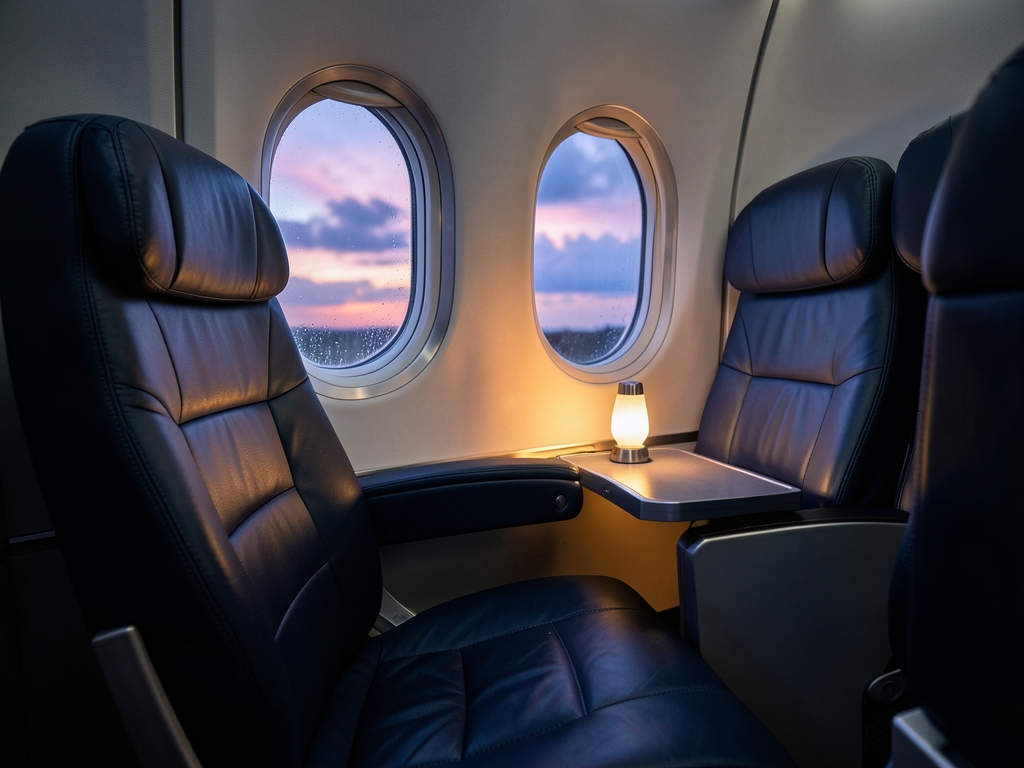
This guide shows how to book United MileagePlus saver business awards under 80,000 miles one-way in 2026.
It explains why the chart is now a dynamic price band and how to verify live saver inventory before transferring miles.
How United saver business pricing works
United MileagePlus does not publish a single, fixed saver business award chart that you can memorize and trust in 2026. Instead, the program prices each itinerary dynamically, and the number you see at search is the number that governs your redemption. The first mechanic to internalize is cabin-based pricing: MileagePlus prices an itinerary based on the highest class of service flown, so a mixed-cabin routing that includes one business-class segment prices at the business level rather than blending economy and business rates (awardwallet.com). That means a single lie-flat leg can pull your entire award into business pricing, even if the rest of the trip is in the back. Before you assume a mixed itinerary will be cheap, price the whole routing as business and confirm the live number.
The second mechanic is timing. Normal saver-level awards cost about 5% to 10% more if booked close in, and that premium applies both on United-operated flights and on partner flights (upgradedpoints.com). Treat that range as a directional check, not a promise: if you are booking inside the close-in window, expect the saver price you remember from months ago to be higher, and verify the live number rather than assuming the old figure still holds. The practical rule is to search the same route at the same cabin on the same day you intend to ticket, and to compare that live price against your own ceiling before you move any miles.
Partner awards have their own history that explains why the current numbers feel unfamiliar. One-way saver transatlantic awards for travel on partner airlines used to start at 30,000 miles in economy and 70,000 miles in business before devaluation (onemileatatime.com). Those figures are historical anchors, not current prices, and they are the clearest evidence that partner saver pricing has moved upward over time. If a partner nonstop is pricing well above what you remember, that is consistent with the devaluation record rather than a search error on your end.
Put the two mechanics together and the operating rule is straightforward. Price the exact itinerary you want, in the cabin you want, on the day you want to book. If the live one-way price for a United-operated or partner nonstop saver business award sits at or below your ceiling, the award clears your bar; if it does not, do not transfer miles, do not ticket, and re-check at the next search window. Because saver inventory is dynamic and close-in pricing carries a premium, the only reliable verification is the live price at the moment of booking.
| Pricing mechanic | What it means for your search |
|---|---|
| Highest class of service flown sets the price | A mixed-cabin itinerary with any business segment prices at the business level (awardwallet.com) |
| Close-in booking premium | Saver-level awards cost about 5% to 10% more booked close in, on United and partner flights (upgradedpoints.com) |
| Pre-devaluation partner transatlantic saver starting points | One-way: 30,000 miles economy and 70,000 miles business on partner airlines (onemileatatime.com) |

What the evidence actually shows
The only quantified anchors available for United saver business awards come from pre-devaluation partner pricing and close-in booking premiums, and both matter for how you set a ceiling in 2026. One Mile at a Time reported that partner saver transatlantic awards previously started at 30,000 miles in economy and 70,000 miles in business, one-way. Those figures describe where partner saver pricing sat before the devaluation, not what United charges today, so treat them as a historical floor rather than a bookable target. If a live partner nonstop prices at or below 80,000 miles one-way in business, you are still inside the range that made partner saver awards the better deal in the first place.
Upgradedpoints.com reports that normal saver-level awards cost about 5% to 10% more when booked close in, on both United and partner flights. That premium is the second anchor, and it tells you what to expect when you search inside the close-in window rather than months ahead. Run the arithmetic before you commit: a saver business award that prices at 70,000 miles one-way becomes roughly 73,500 to 77,000 miles one-way once the close-in premium is applied. If the live price you see is already above 80,000 miles one-way, the premium has pushed you past the threshold, and the correct move is to close the search and re-check at the next window instead of transferring miles.
Awardwallet.com confirms that MileagePlus prices itineraries by the highest class of service. That mechanism explains why a mixed-cabin routing — one leg in business, one in economy — can price at business levels rather than splitting the difference. Before you accept any price, read the cabin on every segment, not just the long-haul leg. A single business-class segment can pull the entire one-way itinerary up to business pricing, which is exactly how a search that looks like a bargain turns into a price above your ceiling.
Put the anchors together and the rule is mechanical. Verify the live one-way price on a United-operated or partner nonstop, confirm every segment's cabin, and compare the result against 80,000 miles one-way. If the verified price clears the threshold, book. If it does not, do not transfer miles and do not commit — re-check at the next window, because saver inventory on nonstops is the only thing that moves the number down.

Saver business options compared
When you are ready to book, compare the two live options side by side rather than trusting any remembered chart. United-operated nonstop saver business is the first place to look: run the search in the United booking flow, confirm the itinerary is a nonstop on United metal, and read the one-way price the results page actually returns. If that live number is at or below 80,000 miles one-way, you have a bookable saver business award and you can move to transferring or committing miles. If it is above 80,000, the rule is simple — do not book, and re-check at the next search window instead of hoping a later step in the flow will price it lower.
Partner-operated saver business is the second option, and it needs its own verification step. Search the same route through the partner award search on united.com, because partner inventory is priced separately from United-operated inventory and the live number you see there is the one that governs the redemption. After the devaluation, partner saver business frequently prices higher than United-operated saver business on comparable routes, so treat a partner result as a fallback only when its live one-way price still clears your 80,000-mile ceiling. One Mile at a Time documented the pre-devaluation partner saver transatlantic starting figures, which is the only quantified anchor available for judging how far partner pricing has moved.
| Option | Where to verify | Decision rule |
|---|---|---|
| United-operated nonstop saver business | Live price in the United booking flow | Winner when the live one-way price is at or below 80,000 miles |
| Partner-operated saver business | Live price in the united.com partner award search | Book only if the live one-way price still clears 80,000 miles; often higher than United-operated after devaluation |
| Mixed-cabin itineraries | Not applicable — avoid | Skip these; AwardWallet notes MileagePlus prices an itinerary by the highest class of service, so a single business segment reprices the whole trip |
Mixed-cabin itineraries deserve a hard pass, and the reason is mechanical rather than a matter of taste. AwardWallet explains that United MileagePlus typically prices itineraries based on the highest class of service, which means an itinerary with two flights in economy and one in business is priced as though the entire trip were business class. You would be paying a business-class mileage total for a trip that is mostly economy, so the effective value per mile collapses. If a search returns a mixed-cabin result as your only "saver business" option, treat it as a failed search, not a compromise.
The winner of this comparison is United-operated nonstop saver business, verified live at or below 80,000 miles one-way. It wins because it is the only option where the price you see maps directly to the cabin you fly, without the partner premium and without the highest-class repricing that mixed-cabin itineraries trigger. Partner-operated saver business remains a legitimate second choice when its live price clears the same ceiling, and mixed-cabin results should be excluded before you compare anything. Verify first, then transfer — never the reverse.
Costs and numbers that matter
For 2026, treat 80,000 miles one-way as the ceiling for a saver business award worth booking under this guide's rule. That number is not a published United chart — it is a decision threshold you apply to the live price you see at search. If the itinerary prices at or below 80,000 miles one-way in business saver, it clears the bar; if it prices above that, you do not book, and you re-check at the next search rather than transferring points or locking in a devalued rate.
Treat 80,000 miles one-way as a decision threshold you apply to the live price you see at search, not as a published United chart. One Mile at a Time reported that one-way saver transatlantic awards on partner airlines used to start at 30,000 miles in economy and 70,000 miles in business before devaluation; those are historical anchors, not current prices. Because the available sources do not confirm any live 2026 saver business price, the only way to know whether a given award clears your ceiling is to verify the live one-way price in the booking flow before transferring miles.
Timing moves the number, so build the close-in premium into your check. Upgraded Points reports that normal Saver-level awards cost about 5% to 10% more if booked close in, on both United and partner flights. Use that range as a directional check, not a quote: pull the live saver price, compare it against what the same award costs further out, and see whether the premium falls inside that band. If it does, you are looking at ordinary close-in behavior; if it does not, treat the number as unverified and re-check rather than assuming the baseline still applies.
| Decision number | Value | How to use it |
|---|---|---|
| Saver business ceiling | 80,000 miles one-way | Book only at or below this live price |
| Close-in premium | About 5% to 10% | Expect saver awards to cost this much more booked close in |
| Pre-devaluation partner saver business baseline | 70,000 miles one-way | Anything above 80,000 one-way is a devalued price |
Run the check before you commit. Pull the live one-way price on a United-operated or partner nonstop, confirm it is saver business, and compare it to 80,000 miles one-way. If it clears, book. If it does not, do not transfer miles, do not ticket, and re-check at the next search — because in a dynamic price band, the only number that matters is the one on the screen in front of you.
So the check is simple and it is the same every time: pull the live one-way price on a United-operated or partner nonstop, confirm it is saver business, and compare it to 80,000 miles. If it clears, book. If it does not, do not transfer miles, do not ticket, and re-check at the next search — because in a dynamic price band, the only number that matters is the one on the screen in front of you.

What the evidence does NOT establish
The most important thing this section can tell you is what the record does not yet contain: there is no confirmed live 2026 saver business price under 80,000 miles one-way anywhere in the available sources for this article. That is not a claim that such awards do not exist. It is a claim about evidence, and it changes your workflow. You cannot treat 80,000 miles as a verified ceiling that someone else has already checked for you. You have to confirm it yourself, in the booking flow, on the specific date and route you want, before you transfer a single mile or lock in a partner itinerary.
The same gap applies to partner pricing. The available sources does not state current partner saver business starting prices after United's devaluation. One Mile at a Time documented that one-way saver transatlantic awards on partner airlines used to start at 30,000 miles in economy and 70,000 miles in business, but those are pre-devaluation figures, not 2026 quotes. So do not walk into a partner search assuming a number. Open united.com, run the partner award search for your route, and read the live saver business price the way the program presents it. If the search returns only standard or dynamic pricing, that is your answer for that date, not a reason to guess at a lower one.
Close-in pricing is the third unknown. The available sources does not state current close-in saver pricing for 2026. Upgradedpoints.com reports that normal saver-level awards cost about 5% to 10% more when booked close in, on both United and partner flights. Use that range as a check, not a quote: pull the live saver price, compare it against what the same award costs further out, and see whether the premium falls inside that band. If it does, you are looking at ordinary close-in behavior. If it does not, treat the number as unverified and re-check rather than rationalizing it.
Put together, the honest position for 2026 is that the only reliable under-80,000-mile saver business award is one you have personally seen priced in the booking flow on a United-operated or partner nonstop. Everything else — blog charts, remembered redemption levels, forum screenshots from prior years — is context, not confirmation. The rule that follows is simple: verify the live one-way price first, confirm it is at or below 80,000 miles, and only then decide whether to transfer or commit. If the live price is above your ceiling, do not book. Close the search and re-check at the next opportunity, because saver inventory moves and a price that fails today may pass tomorrow.
| What you might assume | What the available sources actually supports | Your check in 2026 |
|---|---|---|
| A confirmed 2026 saver business price under 80,000 miles one-way exists | No such live price is confirmed in the available sources | Verify the live one-way price in the United booking flow before transferring miles |
| Current partner saver business starting prices are known post-devaluation | Only pre-devaluation partner figures are documented (70,000 miles one-way business, per One Mile at a Time) | Run the partner award search on united.com and read the live price |
| Close-in saver pricing for 2026 is established | Only the 5% to 10% close-in premium range is reported (upgradedpoints.com) | Compare the live price against that range; if it falls outside, re-check |

Verifying a saver business award
Start the verification in the United booking flow itself, not in a blog chart or a cached award table. Search a single one-way itinerary on a United-operated nonstop in business class, and read the live price the search returns for your dates. That number is the one that governs your redemption, and it is the only number worth acting on. Set your ceiling at 80,000 miles one-way before you open the search, so you are comparing against a fixed target rather than rationalizing whatever price appears.
Checkpoint 1 is the fare bucket label. Confirm the result you are looking at is saver inventory, not standard. If the search only surfaces standard-level pricing, the price will exceed your 80,000-mile ceiling, and no amount of re-running the same dates will change that. Saver and standard are separate buckets with separate prices; a standard result is not a saver result with a bad day. Close the search and come back at the next check rather than booking above your ceiling.
Checkpoint 2 is the class of service on every segment. United MileagePlus typically prices itineraries based on the highest class of service, per awardwallet.com, so a mixed-cabin itinerary — one leg in business, another in economy — can price differently than you expect. Confirm the highest class of service on the itinerary is business, not a mix, before you treat the number as a business saver price. If the highest class is economy, you are not looking at a business award at all.
Run both checkpoints against the live price in this order: saver bucket first, highest class of service second, price against your 80,000-mile ceiling third. Only when all three line up do you transfer miles or commit. The cost of being wrong runs both directions. Book above 80,000 miles one-way on a standard or mixed-cabin result and you have overpaid on a redemption you cannot undo. Walk away from a genuine saver result because you skipped the bucket check and you may lose the seat to another traveler while you re-verify.
Decision rules for booking or verifying
The rule that matters most is simple: before you transfer a single mile or commit to any United saver business award, confirm the live one-way price is at or below 80,000 miles on a United-operated nonstop. If it is, book. If it is not, close the tab and wait for the next schedule change. That is the entire decision, and everything below is just how to apply it without getting fooled by what the search results show you first.
Start with the operating carrier, not the price. United's search results mix United-operated flights with partner-operated flights on the same screen, and the two do not price the same way. If the itinerary you want is a United-operated nonstop and the live saver business price comes in at or under 80,000 miles one-way, that is your green light — book it before the seat disappears, because saver inventory at that level is not guaranteed to survive a refresh. If the same United-operated nonstop prices above 80,000 miles one-way, do not book. Do not transfer points speculatively, do not "lock in" a higher price hoping it drops, and do not assume a phone agent can override it. Re-check at the next schedule change, when United reloads inventory and saver space often reappears.
The trickier case is when only partner-operated saver space shows up. Partner saver pricing and United-operated saver pricing are separate animals, and a partner itinerary appearing at a low number does not tell you what the United-operated nonstop on the same route costs. Before you book a partner-operated saver business award, price the United-operated nonstop on the same date and route and compare the two directly. If the United-operated option is at or below 80,000 miles one-way, that is the one to take. If the United-operated option is above 80,000 miles one-way and only the partner flight sits under the ceiling, treat the partner price as unverified against your rule and hold off.
| Live one-way saver business price | Operating carrier | Action |
|---|---|---|
| At or below 80,000 miles | United-operated nonstop | Book now |
| Above 80,000 miles | United-operated nonstop | Do not book; re-check at next schedule change |
| At or below 80,000 miles | Partner-operated only | Verify against United-operated price before booking |
Two mechanics make these rules necessary. First, MileagePlus prices an itinerary by the highest class of service flown, per AwardWallet, so a mixed-cabin routing can price as if the whole trip were business class — check the cabin on every segment, not just the long haul. Second, close-in bookings carry a premium: Upgraded Points reports that normal saver-level awards cost roughly 5% to 10% more when booked close in, on United and partner flights alike. That premium is exactly why a price that looks acceptable today can drift above your ceiling tomorrow, and why the re-check rule is not optional.
Run the check in this order every time: confirm the operating carrier, confirm the live one-way price, compare against 80,000 miles, and only then move miles. If any step fails, stop and wait for the next schedule change.
Also worth reading United MileagePlus award chart 2026 Alaska Airlines award chart 2026 Alaska Airlines miles 2026: 3
What to do next
| Step | Action | Why it matters |
|---|---|---|
| 1 | Pull up live saver business award pricing for your specific route on United-operated and partner nonstops before you transfer or commit any miles. | MileagePlus saver business awards in 2026 are a dynamic price band, not a fixed chart, so the only price that counts is the one showing right now. |
| 2 | Compare the live one-way saver business price against the 80,000-mile ceiling from the canonical decision rule above. | That threshold is the single go/no-go test: at or below it, the award qualifies; above it, the award does not. |
| 3 | If the live price exceeds 80,000 miles one-way, do not book — close the search and hold your miles. | Booking above the ceiling locks in a devalued price you cannot undo, on routes where partner awards have already been devalued alongside United's increased award costs. |
| 4 | If the live price is at or below 80,000 miles one-way, book the saver business award on the United-operated or partner nonstop. | This is the only condition under which the canonical decision rule authorizes a booking. |
| 5 | If you did not book, re-check at the next schedule change or off-peak window rather than booking close in. | Normal Saver-level awards cost about 5% to 10% more when booked close in, so waiting for the next window protects you from that premium. |
| 6 | When re-checking, verify live saver inventory again on both United-operated and partner nonstops before transferring miles. | The rule applies on both United and partner flights, and the old partner starting points — 30,000 miles in economy and 70,000 in business one-way transatlantic — no longer hold after the devaluation. |
Frequently Asked Questions
Does United MileagePlus publish a fixed saver business award chart I can rely on in 2026?
No — MileagePlus does not publish a single, fixed saver business award chart you can memorize and trust in 2026; it prices each itinerary dynamically, and the number you see at search governs your redemption.
How is a mixed-cabin itinerary priced if only one segment is in business class?
MileagePlus prices an itinerary based on the highest class of service flown, so a mixed-cabin routing with one business-class segment prices at the business level rather than blending economy and business rates.
Can a single lie-flat leg change the pricing of my entire award?
Yes — a single lie-flat leg can pull your entire award into business pricing even if the rest of the trip is in the back, so price the whole routing as business and confirm the live number before assuming a mixed itinerary will be cheap.
Is there a close-in booking premium on saver awards, and does it apply to partner flights too?
Normal saver-level awards cost about 5% to 10% more if booked close in, and that premium applies both on United-operated flights and on partner flights.
Should I treat the close-in premium range as a guaranteed price?
No — treat that range as a directional check, not a promise, so if you are booking inside the close-in window, expect the saver price you remember to differ.
What number actually governs my redemption when I search a saver business award?
The number you see at search is the number that governs your redemption, since the program prices each itinerary dynamically.
Quick answers
| How does United MileagePlus price saver business awards in 2026? | United MileagePlus does not publish a single, fixed saver business award chart that you can memorize and trust in 2026; instead, the program prices each itinerary dynamically, and the number you see at search is the number that governs your redemption. |
| How is a mixed-cabin routing that includes one business-class segment priced? | MileagePlus prices an itinerary based on the highest class of service flown, so a mixed-cabin routing that includes one business-class segment prices at the business level rather than blending economy and business rates. |
| What can a single lie-flat leg do to your award price? | A single lie-flat leg can pull your entire award into business pricing, even if the rest of the trip is in the back. |
| What is the close-in premium on normal saver-level awards? | Normal saver-level awards cost about 5% to 10% more if booked close in, and that premium applies both on United-operated flights and on partner flights. |
| What should you do before transferring miles for a mixed itinerary? | Before you assume a mixed itinerary will be cheap, price the whole routing as business and confirm the live number. |
Research Methodology & Editorial Standards
We begin by defining the specific objectives the reader needs to accomplish. Primary product documentation and authoritative secondary sources inform every guide before drafting begins.
Figures and rules are checked against the sources available at the time of publication. Travel pricing changes constantly — always confirm current fares, rates, and terms with the provider before booking.