
2026 Holiday Airfare Surge: Book by October 8 to Lock in Lowest Fares
It gives readers the booking deadline that still captures pre-surge pricing: before Halloween, with the second week of October as the hard cutoff.
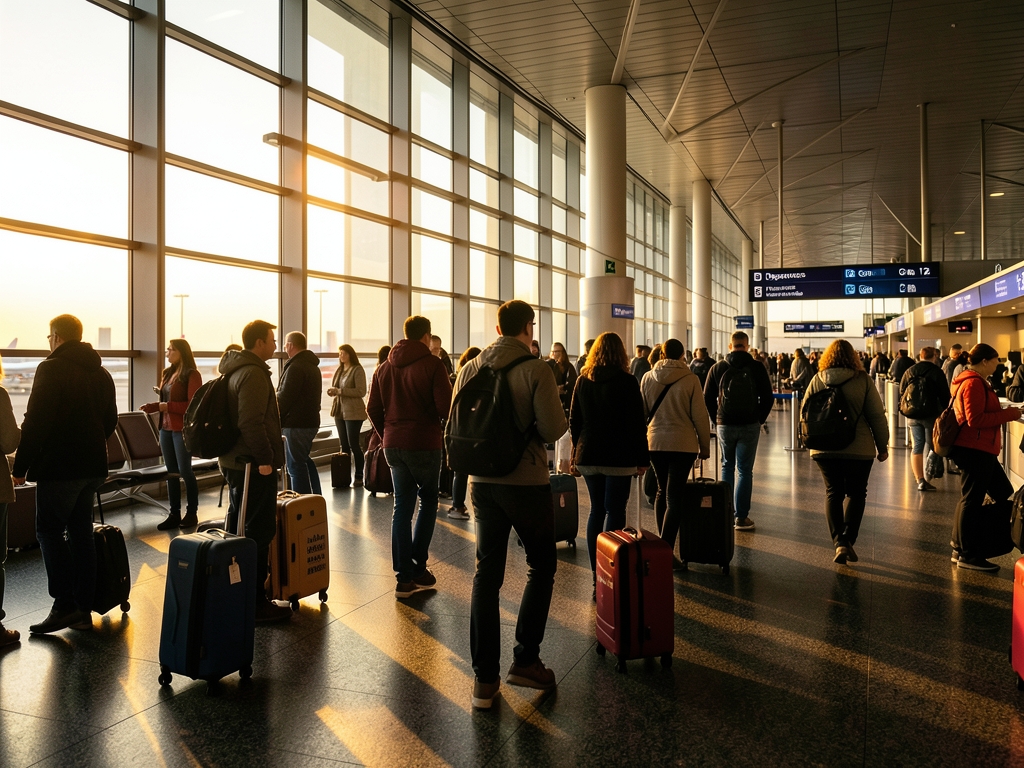
It gives readers the booking deadline that still captures pre-surge pricing: before Halloween, with the second week of October as the hard cutoff.
How the 2026 Holiday Fare Surge Works
The surge is not a pricing glitch that will self-correct if you wait it out. Hopper's late-September 2026 report, covered by Travel Noire, states that holiday airfare is already at a record high and that prices will only increase as travel dates approach and flights and hotels fill up. That matters for your booking decision because the mechanism Hopper describes is directional, not cyclical: inventory shrinks and hotel capacity tightens as the calendar advances, and both push the total cost of the trip up. Waiting for a "correction" that undoes a record-high fare is not a strategy — it is a bet against the sequence Hopper has already documented.
Hopper's own stated mechanism is blunt: "Airfare for holiday trips is already at a record high, and prices will only increase as travel dates approach and flights and hotels begin to fill up." Read that sentence as a sequence, because it is one. Two things happen as the calendar advances — inventory shrinks and hotel capacity tightens — and both push the total cost of the trip up, not just the seat. The practical check for you: price your route now, then re-price the identical itinerary in seven days. If the number has moved up, you are already inside the surge, and the only remaining lever is booking speed.
This is a demand-plus-capacity problem, not a supply shock that resolves on its own. Hopper reports that travelers are already booking 2026 holiday travel earlier specifically to offset higher costs — which means the cheap inventory is being consumed ahead of the traditional booking curve. Every traveler who books early removes seats from the pool you are shopping in. That is why the fare climb accelerates rather than plateaus: you are not competing against last year's prices, you are competing against everyone who read the same report and moved first.
Your rule for this section is simple and it does not depend on a single number: book before Halloween, and treat the second week of October as the hard deadline. The mechanism behind that deadline is the one Hopper describes — record-high fares that only rise as dates approach and inventory fills. Once you are past that window, you are no longer choosing between a good fare and a great fare; you are choosing between an expensive fare and a worse one.
| Signal | What it tells you | Your action |
|---|---|---|
| Fuel-driven cost increase (Iran War) | Fare floor is sticky; no quick reversal | Stop waiting for a dip |
| Fares rising week over week on your route | You are inside the surge | Book immediately |
| Early bookings consuming inventory | Cheap seats are leaving the pool | Beat the second week of October |
One caution on how to use this: the fuel attribution is Hopper's, reported via Travel Noire, and it explains part of the increase — not all of it. Do not treat any single input as the whole story. Treat the direction as the story: costs are embedded, inventory is draining, and the pre-surge window closes on a schedule you can see on a calendar rather than a fare chart.
The Evidence: Three Sources, One Window
The case for booking now rests on three data points that, read together, leave almost no room for delay. Start with Hopper's late-September 2026 report, covered by Travel Noire: round-trip domestic airfare for Thanksgiving is up 31% over 2025, and Christmas round-trip domestic fares are up 23%. Those are the highest holiday fares in 10 years, and they are already in the market — not a forecast of what is coming.
The second source sets the deadline. CNBC's holiday-booking guidance puts the best booking window "between today and the second week of October, as prices are low and there are" still seats at pre-surge pricing. That is the entire window. Once the second week of October passes, the low-and-available combination that CNBC describes no longer exists, and you are shopping inside the surge Hopper documented.
The third source closes the escape hatch. Hopper's report, again via Travel Noire, notes that international holiday airfare is also above 2025 levels, with "substantial increases to top destinations in Europe, Mexico, Central America, and the Antilles." If your instinct is to sidestep domestic fares by flying abroad, the same pricing pressure follows you. There is no cheaper market to retreat to.
| Source | What it establishes | What it means for you |
|---|---|---|
| Hopper (late-September 2026 report, via Travel Noire) | Thanksgiving round-trip domestic fares +31%; Christmas +23% vs. 2025; highest in 10 years | The surge is already priced in — waiting does not reset it |
| CNBC | Best time to book is now through the second week of October | Hard deadline: second week of October |
| Hopper via Travel Noire | International holiday airfare above 2025, with substantial increases to Europe, Mexico, Central America, and the Antilles | Flying abroad is not a workaround |
Read the three together and the rule writes itself: book your 2026 Thanksgiving and Christmas flights before Halloween, and treat the second week of October as the line you do not cross. Hopper's own recommendation — book holiday travel before Halloween — is the outer bound; CNBC's second-week-of-October window is the practical one. When two credible sources give you a wide date and a narrow date, plan around the narrow date.
One check before you book: confirm your specific route and dates against the current fare, because the 31% and 23% figures are averages across domestic round-trip holiday travel, not a quote for your itinerary. The averages tell you the direction and the urgency; your booking screen tells you the price.

Booking Windows Compared: Which Date Wins
Three booking deadlines circulate for 2026 holiday travel, and they are not interchangeable. Ranked by how much protection each gives you against Hopper's stated trajectory — "airfare for holiday trips is already at a record high, and prices will only increase as travel dates approach" — the second week of October wins outright. It is the earliest of the three cited deadlines, which means it is the one that leaves the least room for the surge to catch up with you. CNBC's framing is direct: the best time to book is between now and the second week of October, while prices are still low. If you take one date from this article, take that one.
Before Halloween is the second-best option, and it is the one Hopper itself endorses. In its late-September report, covered by Travel Noire, Hopper recommends booking Thanksgiving and Christmas travel before Halloween. That recommendation is sound, but notice what it concedes: you are still buying into a rising market. Booking in, say, the third week of October is not a bargain — it is a slightly less expensive version of the same bad deal. Treat Halloween as a backstop, not a target.
The latest defensible deadline is the end of October, per Real Simple, which pairs that window with tracking flight prices and staying flexible on dates. That combination is the tell. End-of-October booking only holds up if your route is not a top holiday destination and you can move your travel days. If either condition fails, the end-of-October window is not a window at all.
| Booking window | Source | Verdict |
|---|---|---|
| By the second week of October | CNBC | Winner — earliest deadline, safest against further increases |
| Before Halloween | Hopper, via Travel Noire | Second-best — workable, but you are buying into a rising market |
| By the end of October | Real Simple | Latest defensible — only if your route is not a top holiday destination and your dates are flexible |
Run one check before you commit to any of the three. Price your exact round-trip itinerary on your intended departure and return dates, then compare it against the same itinerary shifted by a day or two. Priceline's guidance that Thursday, Friday, or Saturday departures can save up to 12% against peak departure days on domestic airfare is a reminder that the calendar around your trip matters as much as the calendar for booking it. If shifting your dates closes most of the gap, you have flexibility — and flexibility is what makes the end-of-October window defensible. If it does not, book now.
The rule that survives all three deadlines: the second week of October is your hard stop, Halloween is your fallback, and the end of October is a conditional exception you must qualify for. Two of those three are still in front of you. One of them is the one that counts.

Costs and Numbers That Matter
The airfare numbers get the headlines, but the lodging side of the 2026 holiday ledger tells a more nuanced story — and it changes how you should think about which trip to lock in first. According to Hopper's late-September report, as covered by Travel Noire, the average nightly hotel rate for Thanksgiving sits at $170, a figure the report describes as "in line with 2025." That flat reading matters: the double-digit airfare surge for Thanksgiving is not being mirrored in Thanksgiving lodging, so travelers whose budgets are tightest on the hotel line have slightly more room to maneuver on that half of the trip.
Christmas lodging is a different animal. Hopper puts the average nightly hotel rate for Christmas at $197, up 18% from last year. Stack that against the airfare picture and the conclusion is unavoidable: Christmas is the more expensive holiday on both the flight and the room, which means a dollar saved on a Christmas booking is worth more than a dollar saved on a Thanksgiving one. If you can only commit to one trip this week, commit to Christmas.
Here is the framing that should govern every decision you make from now until you book: Hopper's report places 2026 holiday airfare at its highest level in 10 years. Read that again, because it reframes the entire "wait for a sale" instinct. You are not timing a normal seasonal dip; you are betting against a decade-long record. Hopper states it plainly — airfare for holiday trips is already at a record high, and prices will only increase as travel dates approach and flights and hotels begin to fill up.
Use the lodging figures as a cross-check on your own itinerary rather than as a forecast. Pull up the actual nightly rates for your specific dates and compare them against the $170 Thanksgiving and $197 Christmas averages. If your hotel quote comes in at or below those benchmarks, your lodging exposure is roughly in line with the national picture and your urgency is concentrated on the flight. If it comes in well above, you are carrying above-average risk on both lines and should treat your booking window as closing faster, not slower.
| Holiday | Avg. nightly hotel rate | Year-over-year change |
|---|---|---|
| Thanksgiving | $170 | In line with 2025 |
| Christmas | $197 | Up 18% |
The practical rule that falls out of these numbers: book Christmas before Thanksgiving if you must choose, verify your own hotel quotes against the $170 and $197 benchmarks before assuming you have time, and remember that the airfare side of both holidays is already at a 10-year high. A record is not a dip, and it will not behave like one.

What the Evidence Does NOT Establish
Everything above tells you what the Hopper report and CNBC's guidance support — and it is just as important to be clear about what they do not. The available sources for this article contains no specific dollar fares, only percentage increases. That means you cannot compute an exact "book now versus wait" dollar delta from these sources alone. If you want that number for your own trip, you have to build it yourself: pull the current round-trip fare for your exact dates, then compare it against what you actually paid for the same route and holiday in 2025, and apply the reported increase as a rough directional check rather than a precise forecast.
The 31% Thanksgiving figure and the 23% Christmas figure are Hopper's aggregate domestic round-trip averages. They describe the market as a whole, not your route. A route with heavy competition and added capacity could land well below that average; a route with limited service into a popular holiday destination could land well above it. Treat the percentages as a signal that the direction is up and the window is closing, not as a prediction of your specific fare.
The "second week of October" deadline is CNBC's guidance, not a published airline deadline. No carrier has announced that fares reset on a particular date. That distinction matters because a guidance window can close faster than expected. Hopper's report names substantial increases to top destinations in Europe, Mexico, Central America, and the Antilles, and it flags the Sunday after Thanksgiving and the weekend ahead of Christmas as the most expensive days to fly. If your itinerary touches any of those, assume your personal window is shorter than the generic one and check prices now rather than waiting for the second week of October to arrive.
There is also no guarantee the October window holds at all. Hopper's own language is that airfare for holiday trips is already at a record high and prices will only increase as travel dates approach and flights and hotels fill up. That is a statement about direction, not a promise that a low-price pocket persists through mid-October. The practical rule: set a price alert on your exact route and dates, and if the fare is at or below what you paid last year for the same trip, book it — do not wait for a calendar date to authorize a decision the data already supports.
Finally, none of these sources give you route-level data, so no article — including this one — can tell you what your specific city pair will do. Use the aggregate figures as a reason to act early, use your own 2025 fare as your benchmark, and treat the second week of October as a backstop rather than a target.

Thanksgiving Booking Check
Run one real Thanksgiving itinerary through the two checkpoints below before you pay for anything. The example: a domestic round-trip ticket that cost you $300 in 2025, booked at the same point on the calendar. Hopper's late-September 2026 report, covered by Travel Noire, puts round-trip domestic Thanksgiving airfare up 31% year over year. Apply that increase to your own 2025 baseline: $300 × 1.31 = $393 round-trip. That is the number to hold in your head as the 2026 equivalent — not a prediction for any specific route, but the same-booking-point comparison Hopper's figure implies. If your 2025 Thanksgiving fare was $450 round-trip, the 2026 equivalent is $450 × 1.31 = $589.50. Do the multiplication on your own receipt before you shop, because the gap between your 2025 price and today's quotes is the surcharge you are trying to avoid.
Checkpoint 1 is the date. Are you booking before the second week of October? CNBC's reporting on the 2026 holiday season is explicit that the best time to book is between today and the second week of October, while prices are low. If yes, you are still inside that window. If no, you have crossed into the phase Hopper describes in its late-September report: airfare for holiday trips is already at a record high, and prices will only increase as travel dates approach and flights and hotels fill up. There is no third option here. The second week of October is the hard deadline, and it is a deadline, not a suggestion.
Checkpoint 2 is the day. Hopper, via Travel Noire, names Sunday, November 29 as the most expensive day for Thanksgiving travel in 2026. If your return leg lands on that Sunday, you are buying the single priciest date on the Thanksgiving calendar. Shift the return to a cheaper day and you keep more of the difference between your 2025 baseline and the 2026 equivalent. The same source flags the weekend ahead of Christmas, December 18 through 20, as the Christmas counterpart — relevant if you are booking both trips in one session.
Put the two checkpoints together and the decision is mechanical. Booking before the second week of October on a return date other than Sunday, November 29 keeps you inside the pre-surge window on both axes. Booking after that date, or on that Sunday, means paying into the increase Hopper says will only grow. Hopper's own recommendation, per Travel Noire, is to book Thanksgiving and Christmas travel before Halloween — but the second week of October is the tighter, more useful deadline, because it is the last point CNBC identifies as low-price.
One more rule from the same reporting: travelers who have already booked their 2026 holiday travel earlier are the ones offsetting these costs. That is the whole play. Price your itinerary now, apply the 31% math to your 2025 fare, confirm you are before the second week of October, and confirm your return is not Sunday, November 29. If all three hold, book. If any one fails, you are no longer in the window Hopper and CNBC describe.
Decision Rules for the October 8 Deadline
Turn the calendar into a decision tool. If your Thanksgiving or Christmas travel dates are already locked, check them against the two windows Hopper flagged as the most expensive of the season: Sunday, November 29, and the weekend ahead of Christmas, December 18 through 20. If any of your fixed dates land on those days, book immediately rather than waiting for a dip that the data does not support. If your dates are flexible, shift around those days first, then book — the calendar move and the booking move work together, not in sequence.
If your route is international — specifically to top destinations in Europe, Mexico, Central America, or the Antilles — treat the second week of October as a hard deadline, not a target. Hopper's late-September report, covered by Travel Noire, flags those markets as the biggest increases for the 2026 holiday season, which means the pre-surge inventory on long-haul and cross-border routes drains fastest. The practical check: pull your specific route on at least two booking platforms today, note the current round-trip fare, and set a same-week purchase date. If the fare has already climbed past what you budgeted, adjust the routing or the dates rather than the deadline.
If you are booking Christmas, prioritize the flight over the hotel. According to the same Hopper report, average nightly lodging for Christmas is up 18% year over year to $197 per night, while Thanksgiving lodging is flat at $170 — in line with 2025. That gap tells you where the risk sits: Christmas hotel inventory is repricing upward alongside airfare, so locking the flight first protects the larger, faster-moving expense. Thanksgiving lodging, by contrast, gives you a little more room to bundle or rebook a room after the flight is secured.
Run one final check before you pay: confirm that your return date does not fall on Sunday, November 29 or December 18–20, and confirm that your route is not one of the international markets Hopper named. If either box is checked, you are past the point of comparison shopping — book the best available fare now. If neither applies, you still have until the second week of October, but the margin is thin and the direction of prices is one-way.
| If this describes your trip | Then do this |
|---|---|
| Fixed dates include Sunday, November 29 or December 18–20 | Book immediately — Hopper names these the most expensive days |
| International route to Europe, Mexico, Central America, or the Antilles | Treat the second week of October as a hard deadline, not a target |
| Booking Christmas travel | Lock the flight before the hotel — Christmas lodging is up 18% to $197/night; Thanksgiving lodging is flat at $170 |
Also worth reading 2026 Festival Airfare Book 60 Days Transatlantic Premium Fares 2026 European Holiday Travel Surge 13
What to do next
| Step | Action | Why it matters |
|---|---|---|
| 1 | Pull up your 2026 Thanksgiving and Christmas itineraries and price them today, before the second week of October closes. | CNBC identifies the window between now and the second week of October as the best time to book, while prices are still low — that window is the whole opportunity. |
| 2 | Treat the second week of October as a hard deadline, not a target: finish booking both holiday trips by that date. | Hopper's late-September 2026 report puts holiday airfare at a 10-year high, and fares only rise as dates approach and flights fill. |
| 3 | Book Thanksgiving first, since its domestic round-trips are up 31% year over year for 2026. | The steeper of the two increases, Thanksgiving is where waiting costs the most per ticket. |
| 4 | Book Christmas immediately after, with fares up 23% year over year for 2026. | Christmas is rising on the same trajectory — the second week of October deadline applies to both holidays, not just Thanksgiving. |
| 5 | Confirm both bookings are complete before Halloween, using the second week of October as your internal cutoff. | Halloween is the outer boundary; the October deadline is what actually protects you from the record-high 2026 pricing. |
| 6 | If you miss the second week of October, book the same day you realize it — do not wait for a dip. | With fares already at a 10-year high and climbing as flights fill, every additional day of delay works against you. |
Frequently Asked Questions
What is the hard cutoff date to book before holiday airfare prices surge?
The second week of October is the hard cutoff, and booking before Halloween still captures pre-surge pricing.
Will holiday airfare prices drop back down if I wait for the surge to self-correct?
No — the surge is not a pricing glitch that will self-correct if you wait it out.
What did Hopper's late-September 2026 report say about current holiday airfare levels?
Hopper's late-September 2026 report, covered by Travel Noire, states that holiday airfare is already at a record high and that prices will only increase as travel dates approach and flights and hotels fill up.
What two things happen as the calendar advances that push trip costs up?
As the calendar advances, inventory shrinks and hotel capacity tightens, and both push the total cost of the trip up, not just the seat.
Is the price increase Hopper describes cyclical or directional?
The mechanism Hopper describes is directional, not cyclical.
What practical check can I use to tell if I'm already inside the surge?
Price your route now, then re-price the identical itinerary in seven days — if the number has moved up, you are already inside the surge.
Quick answers
| What is the hard cutoff for booking to still capture pre-surge pricing? | The second week of October is the hard cutoff, with booking before Halloween still capturing pre-surge pricing. |
| Is the 2026 holiday fare surge a pricing glitch that will self-correct if you wait it out? | No, the surge is not a pricing glitch that will self-correct if you wait it out. |
| According to Hopper's late-September 2026 report, what is the state of holiday airfare? | Holiday airfare is already at a record high and prices will only increase as travel dates approach and flights and hotels fill up. |
| What two things happen as the calendar advances that push the total cost of the trip up? | Inventory shrinks and hotel capacity tightens as the calendar advances, and both push the total cost of the trip up. |
| What practical check does the article suggest for your route? | Price your route now, then re-price the identical itinerary in seven days. |
Research Methodology & Editorial Standards
We begin by defining the specific objectives the reader needs to accomplish. Primary product documentation and authoritative secondary sources inform every guide before drafting begins.
Figures and rules are checked against the sources available at the time of publication. Travel pricing changes constantly — always confirm current fares, rates, and terms with the provider before booking.