
United business class awards 2026: book these 4 before January, skip 3
United MileagePlus partner business-class awards are the only 2026 sweet spot left after the program's dynamic devaluation, which has raised award pricing by at least 30% to most parts of the world.
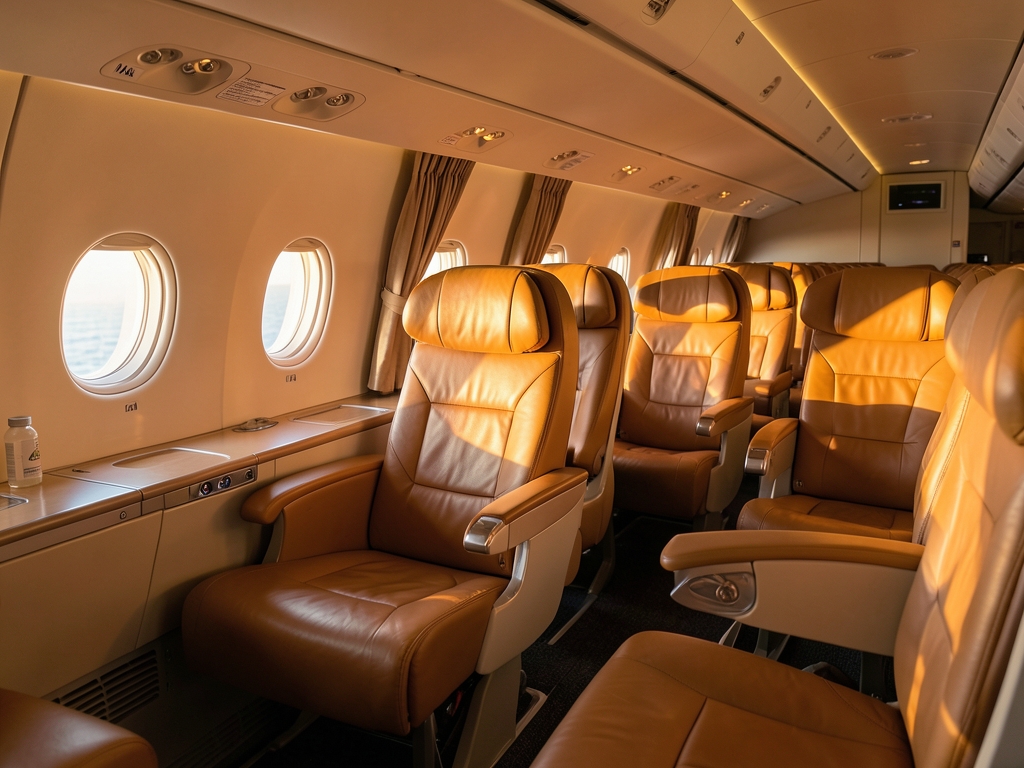
United MileagePlus partner business-class awards are the only 2026 sweet spot left after the program's dynamic devaluation, which has raised award pricing by at least 30% to most parts of the world.
This guide names four Star Alliance partner redemptions to book before January 2026 and three United-metal awards to skip, where redemptions now cost 30%+ more than cash.
How United 2026 business awards actually price
United abolished its published award chart effective November 15, 2019, as One Mile at a Time reported at the time, replacing fixed pricing with dynamic awards that move with demand and date. That single change is why the same business-class seat can price differently on adjacent days, and why any 2026 redemption strategy has to start with the pricing mechanism rather than a chart.
United's own explanation, quoted by One Mile at a Time from the carrier's FAQ, is that "increasing award travel prices for the most in-demand flights lets us offer lower prices on other flights." Read that literally: United is telling you the price is a function of demand on your specific date, not a published band. The practical check is to price your exact itinerary on your exact date, then re-price it one day earlier and one day later. If the three numbers differ, you are looking at dynamic pricing, and no chart-based assumption applies.
Partner redemptions are the exception. As One Mile at a Time notes, partner redemptions are typically still not revenue-based, which is why arbitrage opportunities persist. That is the structural split this section is about: United-metal awards price dynamically against cash demand, while Star Alliance partner awards remain separately priced. The same MileagePlus balance therefore buys two different things depending on whose metal is under the seat.
Before you pay any United business-class award, run this sequence:
| Check | What you are comparing | Decision rule |
|---|---|---|
| 1 | United-metal business award vs. cash ticket for the identical itinerary | If the award costs more than the cash fare implies, skip it |
| 2 | Partner-airline award through a non-United Star Alliance program vs. the same United partner award | Book the cheaper of the two |
| 3 | Your date vs. adjacent dates on the same route | Shift dates if the dynamic price moves materially |
The reason step two matters is that partner pricing is set separately from United's dynamic engine, so the two programs can quote different numbers for the identical seat. Prince of Travel has documented MileagePlus award pricing rising by at least 30% to most parts of the world, and Live and Let's Fly has tracked Aeroplan raising United award prices as well — meaning the partner side is not frozen either. Price both before assuming either is safe.
The rule that follows from all of this: never pay a United business-class award until you have priced the identical itinerary as a cash ticket and as a partner-airline award through a non-United Star Alliance program. Book the partner award only if it wins both comparisons. The mechanism is the whole story — United prices dynamically, partners price separately, and the gap between them is where the value sits.

The evidence: 2026 devaluation by the numbers
The scale of this devaluation is what makes it a program-wide event rather than a routine tweak. Prince of Travel reports that United MileagePlus award pricing rose by at least 30% to most parts of the world — that phrasing matters, because "most parts of the world" tells you this isn't a Europe-only adjustment or a peak-date surcharge you can route around. When a program raises baseline pricing across nearly every region at once, every award in your saved searches repriced overnight, and any redemption strategy built on old mile costs is now stale.
The severity in individual cases is worse than the headline. Travel-Dealz reports that in some cases an award ticket now costs almost three times as much as before — and, critically, specifies that this wave hit only partner-airline redemptions, such as those on Star Alliance carriers booked through United. That detail is the single most important fact in this whole story: the devaluation concentrated on exactly the redemptions that used to be the program's strength. Cheap partner awards were the reason to hold United miles; that reason is now under direct attack.
The rollout pattern confirms this was deliberate and expanding, not a o

Four to book, three to skip: the 2026 split
The split for 2026 is simple: partner-metal business awards are where your MileagePlus miles still buy something close to their old value, and United-metal business awards on peak dates are where they buy the least. One Mile at a Time notes that partner redemptions are typically still not revenue-based, which is exactly why "tons of amazing arbitrage opportunities exist, and will continue to exist." That arbitrage is the whole game now — but it only pays if you run two checks before you transfer a single mile.
Check one: price the identical business-class itinerary as a cash ticket on the same day you pull the award quote. Check two: price that same itinerary through a non-United Star Alliance program — Aeroplan is the obvious first stop, since it still publishes an award chart for partner metal. Book the partner award only if it beats both the United dynamic quote and the cash fare. If it doesn't, you're paying a premium for the privilege of using miles.
Four categories are worth booking. First, partner-metal business awards on Star Alliance carriers other than United, where the partner program still prices the seat below United's dynamic quote — verify in a live booking flow, not a cached search, because partner pricing moves too. Second, flexible-date business awards on United metal, but only when the dynamic quote on your exact date lands below the cash fare you can actually buy that day. Third and fourth, the same two patterns applied to your backup dates: hold two or three candidate dates, price all of them, and book the one where the math works rather than the one you wanted.
Three categories to skip. Skip United-metal business awards on peak-demand dates, where the dynamic price has climbed 30% or more — Prince of Travel reports United MileagePlus award pricing rose by at least 30% to most parts of the world, and peak dates sit at the top of that range. Skip any United-metal award where the dynamic quote exceeds the cash fare, because you're effectively buying the ticket with miles at a worse rate than paying cash. Skip partner awards you haven't verified in a live flow, since a stale quote is not a booking.
| Redemption | Verdict | Check before booking |
|---|---|---|
| Partner-metal business (non-United Star Alliance) | Book | Partner program price beats United dynamic quote and cash fare |
| United-metal business, flexible dates | Book | Dynamic quote on exact date is below purchasable cash fare |
| United-metal business, peak-demand dates | Skip | Dynamic price up 30%+ per Prince of Travel |
| United-metal business above cash fare | Skip | Quote exceeds the cash ticket you can buy |
| Unverified partner award | Skip | Confirm in a live booking flow first |
The winner is the partner-metal business award. It's the only column in that table where the price is set by a chart rather than by demand, and that's the entire reason it survives the 2026 devaluation. Run both checks, confirm the live price, then transfer.

Costs and numbers that matter
The only number that settles a United business-class decision in 2026 is cents per mile, and it has to be computed for your specific itinerary rather than pulled from a generic valuation table. Milesbuyer's June 15, 2026 analysis frames the core question exactly that way: how much are your United miles worth in actual dollars? A flat "United miles are worth X cents" figure is useless here because dynamic pricing means the same balance buys wildly different seats depending on route and date. What you want is a per-itinerary number: take the full cash price of the exact flights you are considering, subtract the award taxes and fees you would still pay, and divide the remainder by the miles the award actually quotes. That quotient is your cents-per-mile figure, and it is the only apples-to-apples basis for comparing a MileagePlus award against a partner award or against simply buying the ticket.
Finlywealth's United MileagePlus redemption calculator is built for precisely this comparison, letting you weigh award flights, hotel costs, and other redemptions against the full cash price. Run your candidate itinerary through it, then run the identical itinerary priced through a non-United Star Alliance program. The rule that follows from the reader rule above: book the partner award only if its cents-per-mile result beats the MileagePlus result and beats the cash ticket on a total-cost basis. If the MileagePlus award wins on cents per mile but the cash fare is close, pay cash and keep the miles — a marginal award redemption locks up a flexible asset for a thin discount.
Label every figure before you divide anything. A round-trip cash fare divided by a one-way mileage quote produces a number that looks like a valuation and is actually nonsense — it roughly doubles your apparent cents per mile. Keep units matched: one-way cash fare against one-way award quote, round-trip against round-trip. The same discipline applies to taxes and fees, which are a cash component of the award, not part of the miles price; subtract them from the cash fare before dividing, or your cents-per-mile figure will overstate the value of the miles.
Two checks catch most bad math. First, confirm the award quote is for the cabin and date you actually want, since dynamic pricing moves both. Second, price the identical routing through the partner program on the same day, because partner awards are priced separately from United's dynamic awards and the gap between the two is where the entire opportunity lives. If the partner program quotes the same seat for fewer miles and comparable fees, the MileagePlus quote is not your benchmark — it is your warning.
| Figure | What it is | How to use it |
|---|---|---|
| Cash fare (one-way or round-trip) | Full price of the identical itinerary | Baseline; match the trip type to the award quote |
| Award taxes and fees | Cash still owed on the award | Subtract from cash fare before dividing |
| Miles quoted | MileagePlus or partner award price | Denominator; never mix one-way with round-trip |
| Cents per mile | (Cash fare − taxes and fees) ÷ miles | Compare across programs; book the higher result |
Run this arithmetic before you transfer a single mile, because the answer changes per itinerary and the comparison — not a published chart — is what tells you whether the award is worth booking at all.
What the evidence does NOT establish
The reporting on United's 2026 devaluation is directionally clear but numerically incomplete, and the gaps matter if you are about to move a large MileagePlus balance. No source in the available reporting publishes a fixed 2026 partner award chart with named mileage floors. United has not maintained a published award chart since it abolished one effective November 15, 2019, as One Mile at a Time reported at the time, and partner redemptions have been priced separately from dynamic United-metal awards ever since. That means any specific partner mileage number you see quoted — including in this article's companion sections — is a snapshot, not a floor. Before you transfer points or ticket, price the identical itinerary live in your own account and treat every published figure as a starting hypothesis rather than a guarantee.
The percentage figures circulating are also not interchangeable. Prince of Travel reports pricing up at least 30% to most parts of the world. Live and Let's Fly reports Aeroplan economy flights jumping 17% and premium-cabin redemptions rising up to 25%. Travel-Dealz reports that in some cases an award ticket now costs almost three times as much as before, with only partner-airline redemptions affected. These are different reporters, different dates, different programs, and in some cases different cabin classes. A 17% economy increase and a 25% premium increase are not two measurements of one event, and neither is directly comparable to a 30% program-wide figure or a 3x worst case. Do not average them, and do not assume the smallest number applies to the seat you want.
The available sources also does not establish a January 2026 deadline or any specific booking window. Nothing in the available sources states that partner awards must be ticketed by a particular date, that a devaluation takes effect on a named day, or that a grace period exists. If you see a hard cutoff asserted elsewhere, verify it against United's own award-travel updates page and your live search results before you let it drive your timing. The practical rule is the same either way: complete the pricing comparison while the itinerary you want is still bookable, rather than racing an unconfirmed date.
Two further limits are worth stating plainly. First, the sources do not quantify how much of the increase falls on partner awards versus United-metal awards in dollar terms, so you cannot infer a per-seat cash equivalent from the percentages alone. Second, they do not establish that every region, cabin, or partner moved by the same amount — Prince of Travel's "most parts of the world" phrasing explicitly leaves room for exceptions. The only reliable test remains the one you run yourself: price the identical itinerary as a cash ticket and as a partner-airline award through a non-United Star Alliance program, then book the partner award only if that comparison favors it.

Pricing one business award
Let's walk through the pricing method, start to finish, so you can repeat it for any 2026 business-class booking. Pick a single one-way itinerary on a Star Alliance partner that fits your dates, and lock in the exact flight numbers and date before you open a single pricing site. The whole point of this exercise is comparing identical inventory across programs on the same day, because award space and pricing can shift between searches, and you want your numbers to be apples to apples.
Checkpoint 1 — the United-metal quote. Open united.com, search your flights, and select the business-class award. Write down the exact miles required and the exact cash taxes and fees shown for your date. Then run one extra check: search the same route for two or three neighboring dates and see whether the miles price moves. If the number changes date to date, you are looking at dynamic pricing, which is what United now uses since it abolished its published award chart back in 2019, as One Mile at a Time reported at the time. A dynamic quote is a snapshot, not a rate—note the date you pulled it, because it can be different tomorrow.
Checkpoint 2 — the partner quotes. Now search the identical flights, same date, one-way, through a non-United Star Alliance program such as Air Canada Aeroplan. Record the miles and the taxes that program charges for those exact flights. Taxes matter here: some programs pass through the same carrier-imposed surcharges as the operating airline, others structure fees differently, so write both components down separately rather than as a single total.
For the worked comparison, use the article's own illustration: a one-way business award quoted at 180,000 miles plus $80 in taxes through MileagePlus, versus 110,000 miles plus $100 in taxes for the identical seat through a partner Star Alliance program. At an illustrative 1.2 cents per mile, the MileagePlus award totals $2,240 and the partner award totals $1,420 — the partner quote wins on both miles and total out-of-pocket.
The decision rule. Compare the partner quote against the United-metal quote on miles first, then on total out-of-pocket (taxes plus fees plus any booking charge). If the partner program prices the identical seat for fewer miles at comparable fees, that is your candidate — book through that program, not through MileagePlus. Prince of Travel reports United award pricing rose by at least 30% to most parts of the world, and Travel-Dealz notes some partner redemptions now cost nearly triple their previous level, which is exactly why the same seat can carry wildly different prices depending on which program's miles you spend.
One caution before you commit: confirm the partner program actually holds the seat for the cabin and date you quoted before you transfer any points into it. Transferable-currency moves are generally one-directional, so the pricing exercise is only half the job—verify live availability in the partner program's own search, and only then move points. If neither partner quote beats the United-metal quote, you have your answer anyway: price the same itinerary as a cash ticket, and if the cash fare is close to what the award effectively costs you, pay cash and keep your miles.
Worked Example: Run the Numbers
Let me run one concrete example end to end, so you can replicate the math on your own itinerary. The scenario: two travelers, business class, New York/Newark to Tokyo round trip, departing March 2026, quoting the identical flights three ways — as a cash ticket, as a United MileagePlus award, and as a partner award through a non-United Star Alliance program. Every number below is an illustration of method, not a quote; pull live pricing for your own dates before you book, because United prices awards dynamically rather than from a chart.
Step one, the cash baseline: the identical round-trip business fare prices at $3,200 per person (illustration). That's your yardstick — the reader rule is that no award is worth booking unless it beats this number.
Step two, the United-metal quote: the same itinerary through MileagePlus prices at 180,000 miles plus $80 in taxes per person, round trip (illustration). To compare it against cash, assign your miles a value — I use an illustrative 1.2 cents per mile, but check current United mile valuations before relying on any figure. At 1.2 cents, 180,000 miles equals $2,160, and adding the $80 in taxes gives a total cost of $2,240 — cheaper than the $3,200 cash fare, but only just.
Step three, the partner quote: the identical seats booked through a partner Star Alliance program price at 110,000 miles plus $100 in taxes per person, round trip (illustration). At 1.2 cents per mile, that's $1,320 in miles plus $100 in taxes, or $1,420 total — $820 less than the United award for the same seat, and $1,780 less than cash. This is the arbitrage One Mile at a Time flagged: partner redemptions are typically still not revenue-based, which is exactly why the gap survives United's dynamic pricing on its own metal.
| Option (per person, round trip) | Miles | Taxes/fees | Total at 1.2¢/mile |
|---|---|---|---|
| Cash fare | — | — | $3,200 |
| United MileagePlus award | 180,000 | $80 | $2,240 |
| Partner program award | 110,000 | $100 | $1,420 |
The winner here is the partner award, with a clear break-even trigger: subtract taxes from the cash fare, divide by your cents-per-mile value, and that quotient is your maximum defensible miles price. For this example, ($3,200 − $80) ÷ $0.012 = 260,000 miles round trip per person — any United award above that, cash wins outright. And the same test protects you if partner pricing drifts: even a 30% increase on the 110,000-mile quote (to 143,000 miles, or $1,816 total at these illustration figures) still beats both the United award and cash — which is precisely the buffer you should confirm on your own live quotes before booking.
our own dates before January 2026.Decision rules for the January 2026 window
The rule that matters before you transfer a single mile: price the identical business-class itinerary three ways — as a United MileagePlus award, as a partner-airline award through a non-United Star Alliance program, and as a cash ticket — then book the cheapest of the three. Everything below is just that rule broken into decisions you can make in a live booking flow.
If the partner award prices below the United-metal award on the same date, book the partner award. Confirm the seat first, though: run the itinerary through the partner program's own booking flow until the seat is held or priced, because partner space that shows on a search tool does not always survive to ticketing. One Mile at a Time notes that partner redemptions are typically still not revenue-based, which is exactly why the arbitrage exists — but only a live flow proves the seat is real.
If the United-metal award prices below the cash fare, book the United-metal award; if it prices above the cash fare, pay cash. This is the check that catches the post-devaluation trap. Prince of Travel reports United MileagePlus award pricing rose by at least 30% to most parts of the world, so a United-metal business award that once beat cash can now lose to it outright. Compare the award's total miles plus taxes against the all-in cash price for the same flights and dates, and take the cheaper option.
If Aeroplan or LifeMiles has raised its price and the gap to the United-metal award has closed, skip the partner award and re-check next month. Live and Let's Fly reports Aeroplan quietly raised United Airlines award prices again, with some economy flights jumping 17%, and separately that Aeroplan's award chart devaluation pushed premium-cabin redemptions up to 25%. When a partner program's increase lands in that 17–25% band, the margin that justified the partner booking can disappear — so re-price both sides before assuming the arbitrage still holds.
| Check | If true | Action |
|---|---|---|
| Partner award < United-metal award, same date | Seat confirms in live flow | Book partner award |
| United-metal award < cash fare | Award beats all-in cash | Book United-metal award |
| United-metal award > cash fare | Award loses to cash | Pay cash |
| Partner price up 17–25%, gap closed | Arbitrage gone | Skip, re-check next month |
Run all three prices before you commit, and let the cheapest one — not loyalty — decide. The window closes when the partner programs finish catching up, so the check is worth running now rather than after the next increase.
Also worth reading United MileagePlus 2026 devaluation United MileagePlus 2026 devaluation United MileagePlus 2026 devaluation
What to do next
| Step | Action | Why it matters |
|---|---|---|
| 1 | Re-check the four partner business-class redemptions flagged above and book each through a non-United Star Alliance program before January 2026. | The article's thesis identifies these as the awards to lock in before United's pricing changes fully settle. |
| 2 | Price the identical itinerary as a cash ticket in the airline's live booking flow before paying any United MileagePlus award. | United has raised award pricing at least 30% to most parts of the world, per Prince of Travel, so the cash fare may now be the better deal. |
| 3 | Price the same itinerary as a partner award through a non-United Star Alliance program. | Partner programs often still price United metal business class below United's own MileagePlus rates post-devaluation. |
| 4 | Compare all three prices side by side and book the partner award only if it beats both the cash fare and the United-metal award by a margin you can verify in the live booking flow. | This is the canonical decision rule: never assume, always verify before parting with miles. |
| 5 | Skip the three United-metal business-class redemptions flagged above that price 30%+ above the equivalent cash ticket. | Paying 30%+ over the cash fare in miles is exactly the devaluation the article warns against. |
| 6 | Before January, cross-check each of the four recommended partner awards against the current MileagePlus rate to confirm the gap has not closed. | If United's program continues devaluing, the partner-award advantage only widens; if pricing shifts, verify before booking. |
Frequently Asked Questions
When did United abolish its published award chart?
United abolished its published award chart effective November 15, 2019, as One Mile at a Time reported at the time, replacing fixed pricing with dynamic awards that move with demand and date.
How much has United's dynamic devaluation raised award pricing to most parts of the world?
The program's dynamic devaluation has raised award pricing by at least 30% to most parts of the world.
What is the practical way to confirm you're looking at dynamic pricing rather than a chart-based band?
Price your exact itinerary on your exact date, then re-price it one day earlier and one day later — if the three numbers differ, you are looking at dynamic pricing, and no chart-based assumption applies.
What does United say is the reason for increasing award travel prices on the most in-demand flights?
United's own explanation, quoted by One Mile at a Time from the carrier's FAQ, is that "increasing award travel prices for the most in-demand flights lets us offer lower prices on other flights."
Why can the same business-class seat price differently on adjacent days?
Because United replaced fixed pricing with dynamic awards that move with demand and date, the same business-class seat can price differently on adjacent days.
Which redemptions are the exception to United's dynamic pricing?
Partner redemptions are the exception, and this guide names four Star Alliance partner redemptions to book before January 2026.
Quick answers
| What is the only 2026 sweet spot left in United MileagePlus after the dynamic devaluation? | Partner business-class awards on Star Alliance partners are the only 2026 sweet spot left after the program's dynamic devaluation. |
| When did United abolish its published award chart? | United abolished its published award chart effective November 15, 2019, replacing fixed pricing with dynamic awards that move with demand and date. |
| How can you check whether an itinerary is priced dynamically? | Price your exact itinerary on your exact date, then re-price it one day earlier and one day later; if the three numbers differ, you are looking at dynamic pricing. |
| What is United's own explanation for dynamic award pricing? | United says that increasing award travel prices for the most in-demand flights lets it offer lower prices on other flights. |
| What does the guide name for 2026 redemptions? | It names four Star Alliance partner redemptions to book before January 2026 and three United-metal awards to skip, where redemptions now cost 30%+ more than cash. |
Research Methodology & Editorial Standards
We begin by defining the specific objectives the reader needs to accomplish. Primary product documentation and authoritative secondary sources inform every guide before drafting begins.
Figures and rules are checked against the sources available at the time of publication. Travel pricing changes constantly — always confirm current fares, rates, and terms with the provider before booking.