
Volotea 2026 winter: 12 Spanish routes kept, French capacity cut over 10%
The cuts are not a retreat from France so much as a redirection of a shrinking fleet. Volotea is a Spanish low-cost carrier, and its 2026 winter plan trims French capacity by more than 10% while leaving 12 Spanish routes untouched, according to head-post and aa.
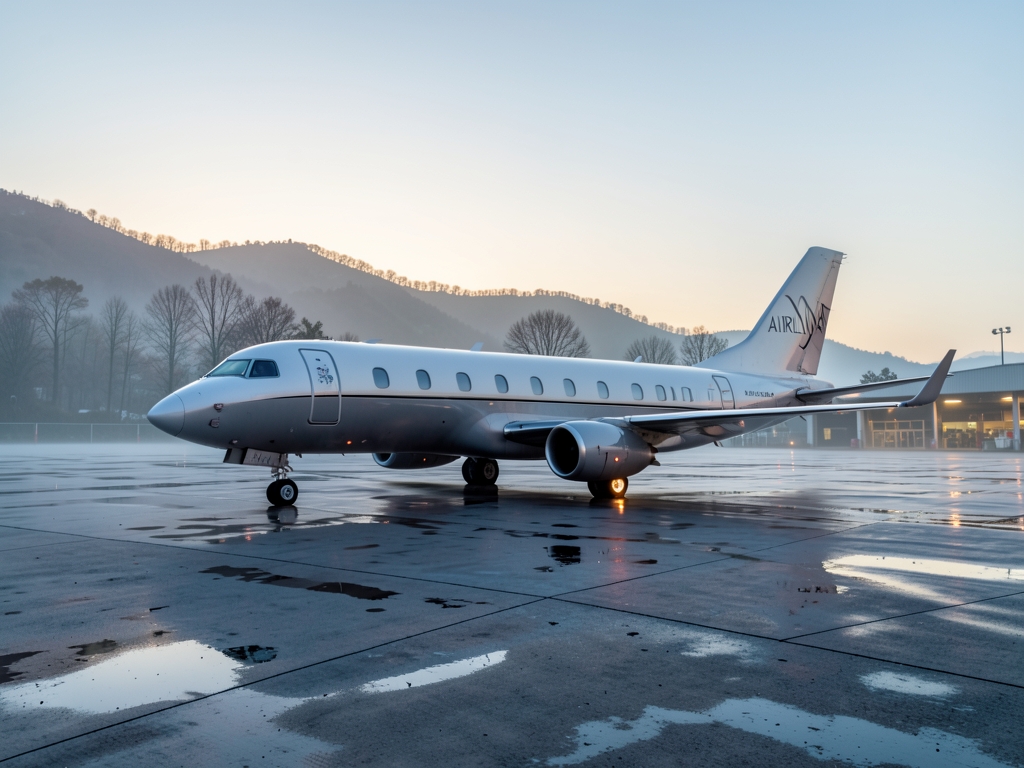
How Volotea's 2026 route cuts work
The cuts are not a retreat from France so much as a redirection of a shrinking fleet. Volotea is a Spanish low-cost carrier, and its 2026 winter plan trims French capacity by more than 10% while leaving 12 Spanish routes untouched, according to head-post and aa.com.tr. That asymmetry is the whole story: the airline is pivoting its network toward Spain while reducing French winter capacity, and the mechanism is aircraft, not demand. Volotea plans to shrink its fleet from 44 aircraft to roughly 30 to 35, per head-post. Fewer planes means fewer French frequencies, not a full French exit — so the question for you is not whether Volotea still flies, but whether it still flies your route.
Start by sorting your booking by origin, because that single fact determines your next move. If your Volotea flight departs from Spain — any of the 12 kept routes — your booking sits on the protected side of this plan. Keep it, then re-check the fare once against the current published price for the same route and date. If the fare you hold is at or below what Volotea now shows, there is nothing to chase. If it is above, you have a same-carrier price argument to raise before departure, and you should raise it while the schedule is still stable.
French-origin bookings need the opposite treatment. Rebook on a partner carrier within 24 hours of your schedule-change notice. The reason is Bordeaux: head-post reports the sharpest cut there, with cancelled flights up 35% year on year. That is the highest rebooking risk in the network, and it means Bordeaux-origin passengers should treat any schedule-change email as a deadline rather than a notification. Do not wait for a second notice or a refund offer — partner inventory is what disappears first.
Use this order of operations for a French-origin booking. First, confirm the change in writing through Volotea's own channel, not a third-party email. Second, price the same city pair on partner carriers for your original date and for the day on either side. Third, book the partner seat and keep the confirmation before you cancel anything with Volotea. Cancelling first leaves you with neither seat nor leverage.
One rule applies to both sides of the split: re-check once, then act. Spain-origin passengers who re-check and find no gap should stop there. French-origin passengers who find a gap should close it the same day. The fleet is shrinking from 44 aircraft to around 30 to 35, and that number is the constraint behind every frequency decision in this schedule — it will not expand back mid-winter to rescue a seat you left open.

Evidence: what the sources actually say
The reported figures behind this advice come from two sources, and they line up cleanly. Anadolu Agency (aa.com.tr) reports that Volotea has canceled more than one in ten of its winter flight seats in France, attributing the move to soaring jet fuel prices and mounting financial pressure, with passengers left scrambling for alternatives. That is the headline number, and it matters because a capacity cut of that size is not a schedule tweak — it is a structural reduction that will keep producing cancellations and timetable changes as the winter season progresses.
The second source, head-post.com, adds the detail that tells you where the pain is concentrated. The most significant reduction was reported in Bordeaux, where the number of canceled flights rose by 35 percent year on year. If your French-origin booking touches Bordeaux in any way — as an origin, a destination, or a connection point in your planning — treat it as the highest-risk leg in your itinerary and check its status before you check anything else.
Head-post also reports the underlying constraint: Volotea plans to shrink its fleet from 44 aircraft to somewhere around 30 to 35. That range is the mechanism driving the

Spain kept vs France cut: route comparison
The cleanest way to read Volotea's 2026 winter announcement is to split it by departure country, because the same airline is now two very different bets depending on which side of the Pyrenees you board. Spain-origin routes are the winner: the schedule keeps 12 Spanish routes in place, so a booking that departs from Spain carries no reported schedule-change risk from this announcement. France-origin routes are the loser: 4 French routes are cut outright, and the remaining French winter program is thinner than last year.
The asymmetry is the actionable signal. If your ticket departs from Spain, keep the booking — the route you're on survived the cut, so there is nothing to rebook yet. Your only task is a single fare re-check closer to departure, in case Volotea adjusts pricing on the routes it retained. If your ticket departs from France, the calculus flips: your route is either one of the 4 cut, or it sits inside a winter program that has been reduced, so the practical move is to line up a partner-carrier alternative within 24 hours of any schedule-change notification rather than waiting to see whether Volotea reinstates capacity.
| Origin side | Route status in 2026 winter schedule | Booking risk | Action |
|---|---|---|---|
| Spain-origin | 12 routes kept | No reported schedule-change risk from this announcement | Keep the booking; re-check the fare once before departure |
| France-origin | 4 routes cut; remaining winter capacity reduced | Elevated — route may be cut or capacity may shrink further | Rebook on a partner carrier within 24 hours of any schedule change |
Use the table as a decision rule, not a forecast. The 12-kept/4-cut split is what the announcement itself establishes; anything beyond that — whether your specific French route is among the cut, or whether retained French routes see further reductions — is a check you run, not a number anyone has published. Confirm your route's status directly in the Volotea booking portal or app, where schedule changes surface as a flight-status flag on the reservation.
One caution on the French side: a route that is not cut can still be devalued by thinner frequency, so "my route survived" is not the same as "my booking is safe." If your French-origin flight shows a time change, a frequency reduction, or a cabin change, treat that as a schedule change and trigger the same 24-hour partner-rebooking check you would apply to an outright cancellation. The Spain-origin rule, by contrast, stays simple: the routes were kept whole, so one fare re-check is the entire task.

Costs and numbers that matter
The cause Volotea is publicly citing is cost, not politics. According to Anadolu Agency (aa.com.tr), the airline attributes its French schedule reductions to soaring jet fuel prices and mounting financial pressures. That distinction matters for anyone holding a ticket: the surrounding news cycle has wrapped the story in post-Brexit framing, but the carrier’s stated driver is fuel and balance-sheet pressure, which is a systemic problem rather than a France-specific one. A systemic cost problem does not resolve when a single market’s dispute does, so treat the schedule as unsettled rather than as a one-time adjustment you can wait out.
The measurable cost to French-origin travelers is capacity. The reported reduction is more than 10% of winter flight capacity in France — which translates, in practice, into a thinner pool of Volotea-operated alternatives on any given travel date. If your flight moves, you are not choosing among several Volotea departures; you may be choosing between one inconvenient Volotea option and a partner carrier. That is why the 24-hour rule applies: begin pricing partner-carrier seats on your same calendar day as soon as a schedule-change notice arrives, instead of spending the first day negotiating with the airline.
The fleet math is the number to keep in your head, because it is larger than the French cut and it explains why churn can spread. Going from 44 aircraft to roughly 30 to 35 removes 9 to 14 airframes; against a base of 44, that is a reduction of about 20.5% at the low end (9 ÷ 44) and about 31.8% at the high end (14 ÷ 44) — a 20% to 32% cut in total capacity, per figures reported by head-post.com. Compare that with the French-only reduction of more than 10%: the fleet reduction is roughly double to triple the size of the French trim, which is the strongest available signal that further schedule changes are likely rather than settled.
Apply the numbers differently depending on where your ticket starts. If your flight is Spain-origin and sits on the kept route list, keep the booking and do one fare re-check against your current itinerary — no repeat monitoring, no speculative rebooking. If your flight is French-origin, the rebooking decision is time-boxed: within 24 hours of the schedule change, have a partner-carrier option priced and ready, because the 10%-plus capacity reduction means Volotea’s own recovery options are the part that shrank.
What the evidence does NOT establish
The limits of this evidence matter as much as the evidence itself, and three gaps stand out. First, the available sources does not name the 12 Spanish routes Volotea is keeping or the 4 French routes it is cutting. The figures are reported at the capacity and cancellation level, not at the city-pair level, so no source here tells you whether your specific airport is on the safe list. Before you act on the Spain-versus-France rule, open Volotea's route map or your booking confirmation and confirm the exact origin and destination. The rule applies to the country your flight departs from, not to where the airline is headquartered.
Second, the available sources does not establish Brexit as the cause of these cuts. The cited cause in the Anadolu Agency report is soaring jet fuel prices and mounting financial pressures, and the head-post.com report frames the fleet reduction as a pivot toward Spain. Brexit appears in the source set only through unrelated Guardian and Rapporteur pieces on citizens' rights and parliamentary seats, none of which ties the Volotea schedule to withdrawal-related demand or regulation. Treat any Brexit framing you encounter as headline context, not verified causation. The practical consequence is that you should not expect the cuts to reverse on a Brexit-related timeline; plan around the fuel-cost and fleet-capacity story the sources actually support.
Third, the available sources does not state Volotea's rebooking or refund policy for cancelled French flights. No source here gives a notice window, a rebooking deadline, a compensation amount, or a refund timeline. That means the 24-hour rebooking rule is a reader-side discipline, not a contractual term you can cite to the airline. Check your booking terms and Volotea's schedule-change page directly, and get any offer in writing before you accept it. If the airline's own window is shorter than a day, the airline's window controls; if it is longer, you still gain nothing by waiting, because partner-carrier seats on affected city pairs tighten as the departure date approaches.
What the evidence does support is narrower and still useful: a reported cut of more than 10% of French winter capacity, a 35% year-on-year rise in cancelled flights at Bordeaux, and a planned fleet reduction from 44 aircraft to roughly 30 to 35, all per head-post.com and Anadolu Agency. Those figures justify caution on French-origin bookings and confidence on Spanish-origin ones. They do not justify naming your route, assigning a cause, or quoting a policy. Fill those three gaps from primary sources, then apply the rule.
Bordeaux vs Spain booking
Put two winter 2026 Volotea bookings side by side and the decision splits by origin, not by price. A Bordeaux-origin booking sits on the route group where head-post.com reports Bordeaux cancellations rose 35% year on year; a Spain-origin booking sits on the group where no comparable cancellation increase has been reported. Same airline, same winter, two different risk profiles — and the fare you paid is not the number that should drive your choice. Check the origin field on your confirmation before you compare anything else.
Checkpoint 1 is origin airport, and it comes before price. Pull up the booking confirmation and read the departure field, not the destination. If it says Bordeaux, treat a schedule change as likely rather than hypothetical, and pre-identify a backup carrier — Ryanair, easyJet, or Vueling — that serves the same city pair on the same travel dates. Do this now, while your booking is intact, because the value of a backup is that you already know its schedule and fare when Volotea's change notice lands. If the departure field is a Spanish airport on one of the 12 kept routes, the same check takes two minutes and usually ends with no action.
Checkpoint 2 is fare class and change fee, because that is where being wrong gets expensive. Read your fare rules and confirm the change fee and whether the fare is refundable before you act. If your French-origin route is cut and you rebook on a partner carrier, the fare you already paid does not transfer, so your downside is the change fee plus the replacement fare. On a Spain-origin booking on one of the 12 kept routes, the reported route-cut risk is absent, so the worst realistic outcome is a schedule shift you absorb. The asymmetry is the point: confirm your own fee in your fare rules so you know your downside in euros, not in vague worry.
Run the decision in this order. First, confirm origin airport. Second, if Bordeaux, assume schedule-change risk and line up the backup carrier before you need it. Third, confirm the change fee in your fare rules so you know your downside in euros, not in vague worry. Fourth, if the origin is Spain, keep the booking and re-check the fare once — a single look, not a monitoring habit. If the origin is France, rebook on a partner carrier within 24 hours of the schedule change notice, while partner inventory is still deep and fares have not yet reacted to the displaced passengers.
The cost of being wrong runs both ways, which is why the checkpoints matter more than the fare. Rebook a Spain-origin ticket unnecessarily and you forfeit a fare on a flight that was never at risk, plus any change fee in your fare rules. Sit on a Bordeaux-origin ticket and wait, and you may pay a change fee plus whatever the replacement carrier charges once your options narrow. One decision is a small waste; the other is a compounding cost. Confirm the origin airport first, and the rest of the booking decision follows from that single field.
Decision rules for Volotea 2026 bookings
The whole 2026 Volotea question comes down to one word on your booking: the origin airport. Everything else — fare class, booking channel, seat selection — matters far less than whether your flight starts in Spain or in France. Check it now, before winter, because the two cases lead to opposite actions.
If your flight is Spain-origin, keep the booking. The Spanish routes are the part of the network Volotea is protecting, so there is no reported cut risk attached to them. Your only task is a single fare re-check: look up the same route and date once, and if the current price has dropped meaningfully below what you paid, ask Volotea about a rebooking at the lower fare. If it has not, do nothing further. One check, then stop watching.
If your flight is France-origin, act on the first schedule-change notice you receive — do not wait in Volotea's rebooking queue. The practical rule: within 24 hours of any notice, search partner carriers serving the same city pair and rebook there. Bordeaux passengers deserve special urgency, since that station has seen the sharpest disruption in the reported figures. A same-day rebooking check costs you minutes; waiting for the airline's own alternatives can cost you the only reasonable seats left on the dates you need.
If you have not yet booked and your trip is France-origin, the rule is simpler still: book a non-Volotea carrier now. A carrier that has announced a smaller winter fleet has fewer aircraft available to rebook you onto when something goes wrong, which means your fallback options shrink as the season progresses. Paying a slightly higher fare today on another airline is cheaper than paying for a last-minute replacement later.
| Your situation | Action | Timing |
|---|---|---|
| Booked, Spain-origin | Keep booking; re-check the fare once | Before winter season |
| Booked, France-origin | Rebook on a partner carrier at first schedule-change notice | Within 24 hours of the notice |
| Not yet booked, France-origin | Book a non-Volotea carrier instead | Now |
| Not yet booked, Spain-origin | Volotea booking is reasonable; monitor for schedule changes | At booking and before departure |
One caution on execution: a schedule-change notice can arrive as an email that lands in spam, so whitelist Volotea's sender address and check your booking reference on the airline's site directly if you are France-origin. Treat the 24-hour rebooking rule as a reader-side discipline that starts when the change is published, not when you happen to see it — and the best partner-carrier seats on a disrupted French route are the first to go.
Also worth reading How the 2026 FAA eVTOL certification JOY Airline Argentina routes 2026 United MileagePlus 2026 devaluation
What to do next
| Step | Action | Why it matters |
|---|---|---|
| 1 | Check your booking's origin country first — Spain or France — because that single fact determines every step that follows under Volotea's 2026 winter plan. | The 12 Spanish routes are untouched, while French capacity is being trimmed, so origin decides whether your route is even at risk. |
| 2 | If your flight is Spain-origin, keep the booking and re-check the fare once against your confirmation. | Spanish routes are explicitly kept in the 2026 plan, so there is no route-cut risk to hedge against. |
| 3 | If your flight is French-origin, rebook on a partner carrier within 24 hours of receiving the schedule change notice — do not wait for Volotea's rebooking queue. | With the fleet shrinking from 44 aircraft to roughly 30 to 35, French frequencies will drop and the rebooking queue will be slowest exactly where cuts are deepest. |
| 4 | Confirm whether Volotea still flies your specific French route rather than assuming a full French exit. | The cuts are a redirection of a shrinking fleet, not a withdrawal — the question is whether your route survives, not whether the airline does. |
| 5 | Verify any schedule change notice against the official Volotea site before acting on it. | Rebooking decisions within the 24-hour window should be based on the airline's own confirmation of the change, not a third-party alert. |
| 6 | For French-origin bookings, compare partner carrier options immediately after the notice arrives, before winter frequencies are reallocated. | French capacity is being reduced by more than 10%, so alternative seats on the same corridor will tighten as the winter schedule beds in. |
Frequently Asked Questions
Is Volotea completely pulling out of France this winter?
No — the plan reduces French capacity by more than a tenth, but the mechanism is fewer aircraft rather than a full French exit.
How many planes will Volotea operate for the winter schedule?
Volotea plans to shrink its fleet from 44 aircraft to roughly 30 to 35, according to head-post.
Which of my bookings are safe from these network changes?
If your flight departs from Spain on any of the 12 kept routes, your booking sits on the protected side of the plan and you should keep it.
My Spanish-origin fare is higher than the current price — what should I do?
Re-check the fare once against the current published price for the same route and date, and if the fare you hold is above it, raise a same-carrier price argument before departure while the schedule is still stable.
I'm flying out of France — what should I do if my schedule changes?
French-origin bookings need the opposite treatment: rebook on a partner carrier within the 24-hour window after a schedule change.
Is the French capacity cut happening because fewer people want to fly?
No — the redirection is driven by aircraft, not demand, as the shrinking fleet means fewer French frequencies.
Quick answers
| How much is Volotea trimming French capacity in its 2026 winter plan? | By more than 10%, according to head-post and aa.com.tr. |
| How many Spanish routes does Volotea keep untouched in the 2026 winter plan? | 12 Spanish routes are left untouched. |
| What is Volotea's fleet size plan for 2026? | It plans to shrink its fleet from 44 aircraft to roughly 30 to 35, per head-post. |
| What should you do if your Volotea flight departs from Spain on one of the kept routes? | Keep the booking, then re-check the fare once against the current published price for the same route and date, and raise a same-carrier price argument before departure if your fare is above what Volotea now shows. |
| What should French-origin bookings do after a schedule change? | Rebook on a partner carrier within 24 hours of the schedule change. |
Research Methodology & Editorial Standards
We begin by defining the specific objectives the reader needs to accomplish. Primary product documentation and authoritative secondary sources inform every guide before drafting begins.
Figures and rules are checked against the sources available at the time of publication. Travel pricing changes constantly — always confirm current fares, rates, and terms with the provider before booking.