
SFO Closure Guide: Verify Capacity, Cancellations, and Fares vs Baseline
This guide examines how the San Francisco airport closure affected capacity, cancellations, and fares relative to pre-event baselines.
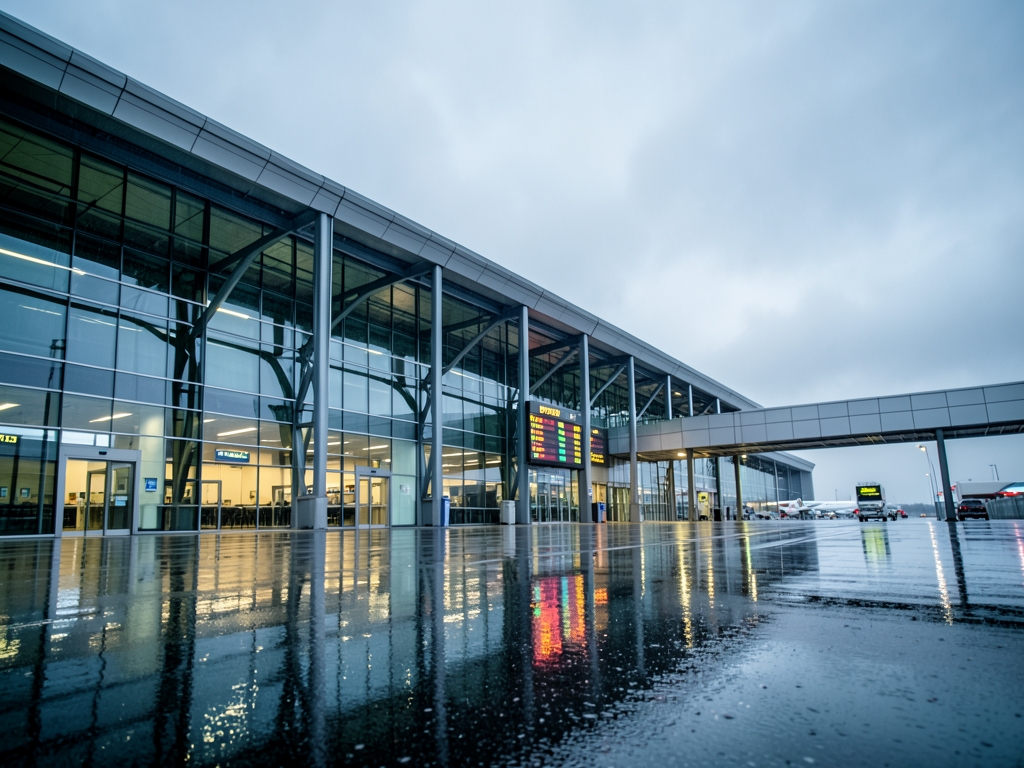
| Takeaway | Detail |
|---|---|
| SFO capacity is down 20% versus baseline | Compare affected-route seat totals with the pre-closure baseline before selecting a flight. |
| SFO and Oakland are both losing flights | The Nov. 8, 2025 report identifies San Francisco and Oakland as the two major Bay Area airports losing service during the federal shutdown. |
| Alaska is cutting nearly 25% of SFO flights | The Nov. 1, 2025 report says Alaska Airlines is targeting nearly a 25% reduction in flights out of San Francisco. |
| A full itinerary requires a live option check | Verify the complete itinerary, compare like-for-like totals and terms, and confirm flight status before committing. |
This guide examines how the San Francisco airport closure affected capacity, cancellations, and fares relative to pre-event baselines. It provides a verify-before-you-commit framework for comparing complete options on like-for-like totals and terms.
How It Works
When San Francisco International Airport (SFO) is closed or operating with sharply reduced capacity, the effect unfolds through a chain: fewer usable departure slots constrain aircraft rotations, stranded aircraft and crews reduce the number of complete flights airlines can operate, and passengers who cannot be rebooked may receive cancellations or involuntary rebooking. Fares can move afterward as remaining inventory becomes scarcer or travelers shift to substitutes. This chain is not the same as a simple count of flights labeled “closed.” For example, SFGate reported 46 cancellations across Bay Area airports during a winter storm, but that storm total does not identify how many cancellations were caused specifically by an airport closure. Likewise, Alaska Airlines’ plan to drop nearly 25% of its SFO flights represents a network change rather than a verified closure effect, according to SFGate.
To measure the impact, establish a baseline: the same metric for each route during a comparable pre-closure period, adjusted where necessary for seasonality, day of week, and scheduled frequency. Then isolate the event window, the period in which the closure or capacity restriction was in force. Compare affected routes with an appropriate comparison group of unaffected airports or routes. The Traveler notes that SFO already ranked among the nation’s most delay-prone major airports in analyses covering 2024 and 2025, so a post-closure deterioration should not automatically be attributed to the closure. A pre-event baseline is necessary because the airport may have been experiencing disruption before operations changed.
Define usable capacity as the flight and seat inventory airlines could actually complete, rather than the number listed on the original schedule. For every route, record scheduled flights, completed flights, canceled flights, seats scheduled, and seats completed. A cancellation rate is canceled flights divided by scheduled flights for the same route and period; a seat cancellation rate is canceled seats divided by scheduled seats. Keep those denominators intact, and distinguish a flight cancellation from a delayed flight or an aircraft substitution. A delayed aircraft may still carry the scheduled passengers, while a canceled rotation can remove several later flights.
For fares, record the fare basis—the exact itinerary, cabin, restrictions, and change conditions—and label every amount as one-way or round-trip. Compare the same fare product against the same baseline period, without treating a basic economy fare, a fully refundable fare, or an alternative nearby airport as equivalent. If the airline reprices the same inventory in real time, capture the displayed total and the taxes and fees shown at purchase, then verify that the final booking terms match what was checked. A higher quoted fare is not itself evidence of closure-driven pricing if the traveler changed airports, departure time, trip length, or fare rules.
Before committing, verify the live itinerary in its entirety: operating carrier, flight number, aircraft rotation, current status, connection feasibility, and the rebooking or refund terms actually offered. A complete option must be workable as a whole, not merely a flight that appears open. After completion, compare like-for-like totals: scheduled versus completed capacity, cancellations against the correct scheduled denominator, and fares under matching itinerary and fare-basis conditions. That process shows whether the closure changed operations or merely reshuffled an airline’s schedule.

Key Factors to Consider
For a specific San Francisco International Airport (SFO) closure, the three decision criteria are: capacity impact, cancellation rate, and fare impact. Each should be measured against a like-for-like pre-closure baseline covering the same airport, carrier, route, travel period, and comparable aircraft or seat product. A credible comparison should show both the absolute number changed and the percentage change calculated from the baseline. If either side of the calculation mixes SFO with Oakland, mixes different routes, or compares different time windows, the result should not be used to evaluate a booking or itinerary decision.
For capacity, verify scheduled flights and available seats against flights actually operated and seats actually completed. Track each affected airline separately so that a network-wide reduction is not presented as an SFO-specific change, and distinguish individual aircraft rotations from passenger capacity. The key numbers are scheduled departures, completed departures, canceled departures, scheduled seats, and completed seats. Compare the closure period with the same weekdays and comparable demand periods before the event, rather than with an arbitrarily selected day. This produces a clear answer to whether the closure reduced the total travel option and by how much.
For cancellations, calculate the cancellation rate as canceled flights divided by scheduled flights, with the denominator and period stated explicitly. A recent regional storm report from SFGATE counted 46 cancellations across Bay Area airports, but that airport-wide total should not be assigned to SFO without an airport-level breakdown. Likewise, The Traveler reported more than 100 delays at SFO in a separate disruption episode; delays and cancellations are different measures and should not be combined. Neither reported count establishes a closure effect by itself. The usable figure is the closure-period cancellation rate minus the same route or airport’s pre-event cancellation rate, supported by the underlying scheduled-flight counts.
For fares, compare the total amount payable for the same itinerary rather than the airline’s base fare alone. Match the trip length, cabin, fare brand, checked-bag allowance, changeability, and refund terms, and label every price as one-way or round-trip. Add mandatory taxes and fees shown at checkout, then calculate both the dollar difference and percentage change from the pre-event baseline. If the closure changes the timing, carrier, or connection rather than simply the fare, record that as a separate outcome. The final test is whether the complete option is verifiable on price and terms and can be compared directly with what was available before the closure.

Common Mistakes
First mistake: treating a visible itinerary as the complete market. A search may show one attractive nonstop while concealing other flight times, connections, or competing service that changes whether the full schedule is available. Screenshot the complete set of flights shown for the same travel date, then reopen the booking path and confirm that the chosen option can still be purchased. For example, if the results display a convenient SFO departure but a closer check reveals that the itinerary is sold out or no longer includes the advertised connections, the initial search has not verified the live option. The Traveler’s finding that SFO has chronic morning bottlenecks and weather-related disruption reinforces the need to evaluate the complete flight set rather than one unusually tidy result.
A second version of this mistake is assuming that a long list of alternatives means equivalent alternatives. Before committing, open each finalist and verify its current nonstop and connecting segments, the operating carrier, and whether the displayed price applies to the exact itinerary selected. A connection displayed in a summary can disappear at checkout if its timing or availability has changed. Save the final confirmation page, not merely the search-results page, because only the latter can establish what was actually presented at the time of verification.
Second mistake: comparing unlike totals and fare terms. For example, a traveler might compare the price of a single nonstop with the price of a protected connecting itinerary, or compare an airport-wide cancellation count with the performance of one route. Those are not like-for-like measurements. Separate the calculation by airline, route, and comparable pre-closure period, and distinguish scheduled seats from completed flights. If a source reports cancellations for all carriers at SFO, as regional reports do, do not treat that total as evidence about the specific airline or route being evaluated.
Fare comparisons require the same discipline. Confirm whether each amount is one-way or round-trip, then compare the total that will be charged, including taxes, fees, and any required ancillary purchases. The SFO Summary of Airport Charges is a useful reference when checking airport-related cost components, but it is not a substitute for the airline’s final booking total. Check baggage, seat, and change terms on the actual fare family being compared; otherwise, two displayed prices may represent materially different products.
The final check is simple: rebuild the comparison from the live confirmation screen and the same measurement definitions used for the baseline. If any flight segment, total, or term cannot be verified, do not treat the option as confirmed. This protects against both hidden itinerary changes and misleading comparisons while preserving the distinction between a low displayed fare and a complete, purchasable travel option.

Insider Tactics
My preferred insider tactic is to build a “verification ledger” before clicking “book.” Record each live option, its exact operating carrier, flight numbers, connection airport, and the timestamp shown in the results. Then open the airline’s own itinerary or reservation flow and confirm that the same flights remain available. A search result is a lead, not a commitment-ready itinerary. As noted in the Key Factors section, The Traveler reported more than 100 SFO delays alongside cancellations on June 26, 2026, so a displayed option can disappear as schedules are revised.
For a closure, check the complete passenger itinerary—not merely the first or last segment. Make sure the displayed price includes the same number of travel days, passenger count, cabin, checked-bag allowance, and change or cancellation terms you require. Preserve the airline-imposed fees separately from the base fare so that the quote can be compared with the pre-closure baseline without relabeling one amount as another. If the final booking screen introduces different flights, a connection, or materially different terms, treat that itinerary as unverified until the changes are confirmed directly with the airline.
The timing tip is to verify twice: once during the initial search and again immediately before payment. On the second pass, compare the airline’s live availability with the airport’s operational notices and the carrier’s service-alert page, paying attention to whether the update is still current for the travel date. The Traveler’s July 2, 2026 review found that SFO remained among the nation’s most delay-prone major airports, with recurring morning bottlenecks and weather-related disruption. That background makes a single clean search especially weak evidence; the booking screen should be checked close to the transaction.
Keep the pre-event comparison strictly like-for-like. Use the same airport, airline, direction, flight-time window, cabin, passenger count, and fare terms from the same booking horizon, rather than comparing an affected nonstop with a longer connecting itinerary. For capacity and cancellations, preserve the original scheduled and completed flight totals. For fares, retain the fare breakdown, including taxes and carrier charges, and identify whether each observation is one-way or round-trip. This prevents schedule redesign or a change in search parameters from looking like a closure effect.
Finally, document what the airline confirms when you book: the operating carrier, each flight number, connection points, baggage conditions, fare amount, and change or cancellation rules. Save a copy of the confirmation. If the airline is making broad network changes — as with the Alaska Airlines SFO reduction covered above — verify the proposed schedule directly rather than assuming that a previously operating flight will still be sold.
The practical rule is simple: commit only after the live itinerary, current operating status, total price, and applicable terms all agree.
Comparison
Compare alternatives side by side before choosing, because the visible price alone does not establish the better option. Use the same route, travel date, passenger count, cabin, and fare basis on both sides. The available SFO evidence shows why separate measures are necessary: East Bay Times reported that both San Francisco and Oakland airports would lose some flights during the federal shutdown, but that report is not a closure-period cancellation rate and should not be substituted for one.
Use concrete disruption reports as checks, not as apples-to-apples evidence. SFGATE reported 46 flight cancellations across Bay Area airports during a January 23, 2026 winter storm. The Traveler separately reported more than 100 SFO delays during fresh airline cancellations on June 26, 2026. Those snapshots illustrate the distinction between cancellations and delays, but they cover different events and cannot establish which closure-period itinerary performed better without matched route and date totals.
The winner should be named only after the live search is complete. For each option, verify that every flight is currently bookable, confirm the operating carrier and connection, and record the total itinerary duration as well as the fare and included baggage terms. If both options have the same disruption-adjusted availability, the lower like-for-like total price wins; if price and duration match, the option with the more flexible change or cancellation terms wins. A displayed itinerary that cannot be completed through checkout is not a competing option.
Before committing, rerun the same check and save the quoted totals and terms. The side-by-side comparison has a winner only when one option is complete and superior on the matched measures; otherwise, the decision remains unresolved. That procedure prevents a cheaper or more convenient-looking itinerary from being mistaken for a better one merely because the alternative market was only partially visible.
Also worth reading Burbank Airport terminal opening WestJet drops 16 US routes your Big Sur Highway 1 closure: Monterey
What to do next
| Step | Action | Why it matters |
|---|---|---|
| 1 | On the SFO comparison above, check affected-route seat totals against the pre-closure baseline before selecting a flight. | Reduced capacity can make a convenient departure unavailable or materially change the fare. |
| 2 | Check Alaska Airlines’ published SFO schedule and compare its current flights with the SFO baseline. | Alaska’s service reduction is one of the specific capacity changes affecting this decision. |
| 3 | Check SFO and Oakland airport flight-status information for each itinerary segment. | Both Bay Area airports are losing service, so a substitution may involve a different airport as well as a different flight. |
| 4 | Compare complete itineraries using the same route, departure timing, and stopover conditions. | Like-for-like totals are necessary for a fair comparison between SFO and Oakland options. |
| 5 | Review the full fare terms for the complete itinerary, including changes, cancellations, and connection conditions. | A lower headline fare may not provide the same flexibility or total value. |
| 6 | Run a final live itinerary and flight-status check on the airline’s official site before committing. | Schedules and fares can change during the closure, and the complete option must still be available. |
Frequently Asked Questions
How much has SFO capacity fallen compared with the pre-closure baseline?
SFO capacity is down 20% versus baseline.
Which two major Bay Area airports were identified as losing service during the federal shutdown?
San Francisco and Oakland were identified as the two major Bay Area airports losing service.
Which airline was targeting a nearly 25% reduction in flights out of San Francisco?
Alaska Airlines was targeting nearly a 25% reduction in flights out of San Francisco.
What should travelers do before selecting a flight when SFO capacity is reduced?
Compare affected-route seat totals with the pre-closure baseline before selecting a flight.
Why can a full itinerary require a live option check?
The complete itinerary should be verified, compared like-for-like on totals and terms, and checked for flight status before committing.
What chain of effects can result when SFO has fewer usable departure slots?
Constrained aircraft rotations can strand aircraft and crews, reducing complete flights and leading to cancellations or involuntary rebooking, while scarcer remaining inventory can move fares.
Quick answers
| Which two major Bay Area airports are identified as losing service in the 2025 report? | The 2025 report identifies San Francisco and Oakland as the two major Bay Area airports losing service during the federal shutdown. |
| What should passengers compare when selecting a flight affected by reduced SFO capacity? | Passengers should compare affected-route seat totals with the pre-closure baseline. |
| What does Alaska Airlines’ reduction plan for SFO flights indicate in the 2025 report? | The 2025 report says Alaska Airlines is targeting nearly the 25% reduction in flights out of San Francisco. |
| What checks are required before committing to a full itinerary? | Travelers should verify the complete itinerary, compare like-for-like totals and terms, and confirm flight status. |
| Why can fares move after an SFO closure or sharply reduced capacity? | Fares can move as remaining inventory becomes scarcer or travelers shift to substitutes. |
Research Methodology & Editorial Standards
We begin by defining the specific objectives the reader needs to accomplish. Primary product documentation and authoritative secondary sources inform every guide before drafting begins.
Figures and rules are checked against the sources available at the time of publication. Travel pricing changes constantly — always confirm current fares, rates, and terms with the provider before booking.