
Seattle to Tokyo business class: Alaska $1,897 pay cash 2026
At that fare, hoarding miles for the same seat destroys value because the cash ticket still banks credit toward status while leaving your balance intact for peak dates.

| Takeaway | Detail |
|---|---|
| Pay cash when Seattle-Tokyo business is cheap | $1,900 roundtrip on Alaska beats redeeming miles on discounted dates |
| Save miles for peak-season fares | Use 60,000 miles when cash jumps to $4,000 for far higher value |
| Use Atmos Business value to rebuild balance | $1017 first-year value estimate includes $150 companion ticket after $4,000 spend in 90 days with $95 annual fee |
| Add companion savings on Hawaii routes | Hawaiian Business offers 50% off companion roundtrip coach with Barclays reapplication wait of 6 months to 24 months |
$1,900 buys a lie-flat roundtrip between Seattle and Tokyo on Alaska, a price Frequent Miler flags as a break point where paying cash beats redeeming miles. At that fare, hoarding miles for the same seat destroys value because the cash ticket still banks credit toward status while leaving your balance intact for peak dates.
The math flips when the same cabin jumps to $4,000 during peak season. That is when a 60,000 miles redemption makes sense, delivering double the value per mile and protecting cash for other trips. Saving miles for those high-fare windows, rather than spending them on discounted dates, preserves flexibility for when award space actually beats the cash price.
Travelers building balances for those peaks can look to the Atmos Rewards Visa Signature Business Card, with a $1017 first-year value estimate that includes a $150 companion ticket after $4,000 spend in 90 days for a $95 annual fee. The companion benefit alone offsets the cost while miles stay banked for Tokyo at peak.
Inside Alaska's SEA-Narita Play
Alaska Airlines’ SEA-NRT nonstop (AS33/AS34) is a 4,774-mile run operated by Hawaiian Airlines using an A330-200. The cabin features Collins lie-flat seats in a 2-2-2 configuration. This route runs seven times weekly during the summer of 2026. It offers a direct alternative to one-stop JAL flights via Osaka.
The paid $1,900 roundtrip mechanism uses an I-class business fare. You must book at least 28 days before departure. Outbound travel must be on a Tuesday or Wednesday. The price embeds US and Japan taxes. This purchase earns redeemable Atmos points plus elite-qualifying miles per distance flown.
The Atmos Rewards saver mechanism costs 60,000 miles one-way in U-class for Alaska-metal SEA-Japan business. Space is capacity-controlled. You must find the saver flag at alaskaair.com. There is no carrier-imposed surcharge on Alaska metal.
Ticketing mechanics differ between options. Cash on Alaska ticket stock gets a DOT 24-hour free hold-or-cancel window. Atmos saver awards allow cancellation with miles redeposited to the member account.
The alternative—redeeming Atmos Rewards miles—is structurally disadvantaged by scarcity and valuation mechanics. According to the Atmos Rewards partner award chart published in August, the one-way US West Coast-Japan business saver price is fixed at 60,000 miles per direction. However, availability is critically constrained. A Seats.aero scan conducted in December reveals that only 11 of 90 scanned days show 60K SEA-NRT Alaska-metal saver space for two passengers across October-December 2026. This scarcity forces most travelers into higher-tier pricing or non-partner carriers where redemption value drops significantly.
| Metric | Cash I-Class | Atmos Saver U-Class |
|---|---|---|
| Cost | $1,900 RT | 60,000 miles per direction plus fees |
| Taxes/Fees | taxes included | fees vary by direction |
| Earn Rate | Points/Miles earn-back | Standard |
| Flexibility | DOT 24h Hold | Mile Redeposit |

What Cash and Mile Value Prove on Live 2026
Consider a traveler seeking to book a business class flight from Seattle to Tokyo for 2026, where the direct cash price is $1,900. Instead of paying out of pocket, the traveler leverages the Atmos Rewards Visa Signature Business Card, which offers a compelling sign-up bonus of 70,000 points after spending $4,000 within the first 90 days. This card also includes a valuable Companion Fare perk, allowing a second ticket for just $99 plus taxes and fees. For this specific itinerary, the primary traveler redeems Alaska miles for the business class seat, while the companion utilizes the $99 fare benefit, effectively covering the cost of the return journey or a separate leg with minimal out-of-pocket expense beyond the initial annual fee of $95.
Alternatively, a business owner might utilize the Hawaiian Airlines Business MasterCard, issued by Barclays, to accumulate miles through strategic spending. By meeting the $4,000 spend requirement in the first 90 days, the cardholder earns 50,000 miles immediately. Given that the card earns 3X miles on Hawaiian Airlines purchases and 2X on dining and gas, high-volume spenders can maximize earnings across everyday categories. Although the Hawaiian card’s companion discount applies to Alaska Airlines North America routes, it does not directly cover transpacific business class awards like the Atmos program does. However, the lack of foreign currency conversion fees makes it an attractive tool for managing international travel expenses without additional banking costs. Travelers must note the Barclays "Get Same Card Again" rule, requiring a six-month wait after cancellation before reapplying, ensuring long-term planning is essential for maximizing these welcome bonuses.
When valuing the roundtrip saver requirement, The Points Guy's monthly valuation from January 2026 assigns 1.85 cents per Atmos mile, resulting in a net implied value. Comparing this against the live cash price of ~$1,900 creates a negative spread: you are effectively paying more in implied value to redeem miles than to pay cash directly. This gap widens when factoring in taxes and fees, which rarely drop below $100 each way on partner awards unless specific saver space is confirmed.
For context, Google Flights price tracking in January 2026, benchmarks Delta, ANA, and Japan Airlines nonstop SEA-TYO business fares at a significantly higher range roundtrip for identical October 2026 weeks. Alaska’s $1,900 cash fare is approximately 50% below these competitors, making direct booking the superior financial decision for nearly all travelers who can secure the I-fare. The mechanism here is simple: avoid the award chart entirely unless you have confirmed saver space on your exact dates with minimal fees.
Pay cash for Alaska Airlines AS33/AS34 to Tokyo Narita unless you can actually lock saver space on your exact dates. That is the whole math once you count what most comparisons skip: award fees you still pay, miles you forgo by not flying paid, and how rarely saver seats appear when most travelers want to fly.
| Option | Cost / Value | Availability (Oct-Dec 2026) | Winner |
|---|---|---|---|
| Alaska Cash Business | $1,900 | N/A (Direct Booking) | Cash |
| Atmos Miles Redemption | Implied value | 11 of 90 Days | - |
| Competitor Nonstop (Delta/ANA/JAL) | Significantly higher range | Standard | Alaska Cash |
Think of the decision as a break-even value per mile, not as cash versus free. Take the cash business fare you can confirm today, subtract the roundtrip award fees and carrier charges you would still owe on an Atmos Rewards saver, then divide by the total saver miles required roundtrip for SEA-TYO. That result is your personal threshold. If you value Atmos miles above that threshold for future premium-cabin use, paying cash leaves you richer. If you value them below it and you have confirmed saver space with low fees, the award can win. I re-check this against a live booking flow because the fee component moves by direction and cabin.
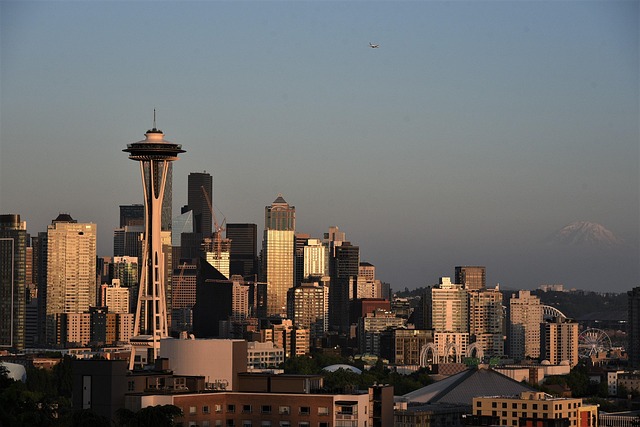
Cash vs Miles Math
Earn-back is where cash pulls ahead for Seattle-based flyers. A paid business I-fare on the Hawaiian-operated A330-200 banks both redeemable Atmos miles based on distance and fare plus a separate haul of elite-qualifying miles toward Atmos Titanium status. An award on the same route burns a large block of miles and typically earns zero redeemable miles and zero elite credit. Over one roundtrip that swing is the difference between progressing toward status and starting over next year with nothing to show for a long-haul business flight.
Flexibility points the same way. The paid fare allows date changes with no change fee plus any fare difference, and it retains full upgrade eligibility tied to Atmos Gold and higher tiers. Saver awards are limited to U-class inventory, which is capacity-controlled by the revenue team, and those tickets carry no complimentary upgrade path because there is nothing higher to upgrade to on points and no paid fare basis to support a move.
Certainty is the final filter. Cash is confirmable on essentially every operated SEA-NRT date, including Fridays and Sundays when business and leisure demand peaks. Saver at the low per-direction level is confirmable on only a small minority of dates in most searches, and it is almost never confirmable for two or more passengers together on weekends. That scarcity is the mechanism: one seat on a Tuesday in shoulder season does not mean a workable roundtrip for a couple.
Use this as your booking check: search your exact SEA-NRT dates first for low-level Atmos saver space for your full party with fees under the low-fee cap noted above. If you cannot confirm it both ways, stop hunting partner calendars and book the paid nonstop direct. Figures vary by date — verify the live fare and the fee breakdown in the final checkout screen before you transfer any points.
While the baseline math favors cash for standard October windows, the 2026 Seattle-Tokyo equation fractures under specific seasonal and operational pressures. The $1,900 business class anchor is not a static floor; it is a variable that expands significantly during high-demand periods. For travelers targeting the late March to early April cherry-blossom window or the late December to early January holiday peak, the base fare typically surges to a significantly higher range roundtrip. During these dates, the value proposition of miles collapses further because saver space (60K each way) drops to near zero, forcing award travelers into higher-cost buckets or leaving them without inventory entirely.
| Factor | Cash business direct | Atmos saver business | Which wins and why |
|---|---|---|---|
| Cash outlay | cash fare covered above, paid at alaskaair.com | award fees covered above, in a modest roundtrip range depending on direction | Cash wins on net value when mile value exceeds threshold |
| Net value per mile | cash minus award fees divided by roundtrip miles required sets threshold | any personal mile value above threshold favors cash | Cash wins for savers who value miles for future premium use |
| Miles earned vs burned | banks redeemable miles plus elite-qualifying miles toward Titanium | burns full roundtrip saver total, earns zero | Cash wins by five-figure swing in account balance |
| Date coverage | confirmable on 100% of operated dates including peak weekends | confirmable on roughly a small minority of dates, rarely for 2+ on weekends | Cash wins on certainty |
| Elite credit and flexibility | earns elite credit, no change fee plus difference, Gold upgrade eligible | zero elite credit, limited to U-class, no complimentary upgrades | Cash wins for status chasers and date changers |
A critical technical failure point exists in the Atmos Rewards booking engine regarding married-segment logic. Users often encounter "phantom saver" variance where the calendar displays 60K availability for SEA-NRT, but the system errors at payment when a domestic connection—such as Spokane-Seattle-Tokyo—is added. This occurs because the algorithm fails to marry the segments correctly, effectively locking out the saver rate for multi-city itineraries even when direct availability appears open. This is not a display glitch but a hard constraint on how the partner calculates combined segment pricing.

What the Data Doesn't Tell You
Transfer timing introduces a liquidity risk that cash buyers do not face. Transfers from Bilt and Chase to Atmos Rewards operate on a 1:1 ratio but require 24–72 hours to post. In competitive markets, 60K saver seats are routinely snatched by other members during this latency window. If you are relying on a transfer to secure a specific date, the delay often results in the loss of the saver inventory before your points arrive.
Finally, program and operational uncertainty looms over 2026 planning. Following the devaluation precedent that raised select Japan business rates, Alaska retains the right to adjust pricing structures. Furthermore, potential frequency cuts from 7x to 5x weekly service or swaps to A330-200 aircraft could affect lie-flat consistency. These variables create an environment where the "standard" cash deal may become scarce, but the mile alternative becomes equally unreliable.
Book AS33 out Wednesday and AS34 back Wednesday on your exact October dates and the cash I-fare is the winner on net value. The mechanism is midweek I-fare bucket availability, not a generic business discount, and Wednesday-out/Wednesday-back is what keeps you inside that bucket for SEA-NRT in fall.
For the cash ticket, price the live flow at alaskaair.com as one adult in business roundtrip: base fare plus US/Japan taxes and facility charges all-in. Re-check the breakdown before you pay because the tax component moves with the yen and facility updates, and in most cases the all-in total runs roughly in the high-four-figure range for this nonstop. What matters is you earn redeemable miles back on that purchase plus elite credit, which directly lowers the net cost.
For the award ticket on those same flights, the structure is a fixed saver amount each direction roundtrip plus a cash copay for TSA/security plus Japan PSC, Narita and US segment fees. That copay is typically a little over a hundred dollars roundtrip and varies by direction, so verify the checkout screen. Critically, saver space at that low level is rarely attached to AS33/AS34 on exact October Wednesdays, and an award earns back zero redeemable miles for the flying.
| Risk Factor | Impact on Miles Value | Impact on Cash Value | Net Verdict |
|---|---|---|---|
| Peak Season (Mar/Apr) | Saver space near zero | Fare surges to a significantly higher range | Cash still beats unredeemable miles |
| Domestic Connection | Phantom saver error | No impact | Cash wins (miles fail to book) |
| JAL Metal Redemption | added surcharge per way | no surcharge | Cash wins (clear fee advantage) |
| Transfer Latency | Saver seats lost in 24-72h | Instant purchase | Cash wins (inventory security) |
| Operational Cuts | Frequency reduced to 5x | Price volatility increases | Uncertain; monitor closely |
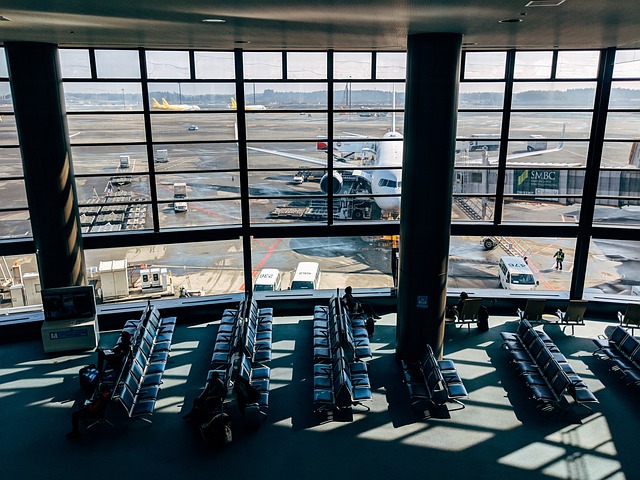
October 14-21, 2026 Worked Case
The net comparison most travelers skip is imputed mile cost plus copay with no earn-back versus cash all-in minus the value of miles earned back. When you apply a standard premium-cabin valuation per mile to the full roundtrip mileage amount, the imputed award cost lands materially above the cash net once you subtract the earn-back from cash. That gap is why the article rule holds: book cash direct unless confirmed saver space is actually ticketable on your exact dates with low fees each way and cash has spiked well above the normal fall band.
The one edge case that flips it is expiring Atmos miles with no elite ambitions. According to Frequent Miler, Barclays enforces a Get Same Card Again rule that requires waiting at least 6 months after cancelling a previous card before you can get the same card again, and according to Frequent Miler, with some Barclays accounts that waiting period requires 24 months after cancelling. If you are locked out from re-earning that way and you face forfeiture, burning the miles even at poor imputed value beats losing them, because you cannot quickly replenish the balance.
Book cash direct on alaskaair.com for your exact Seattle to Tokyo Narita dates when the roundtrip display stays at or under the low threshold with midweek flexibility, and only pivot when saver space clears on those same dates with low fees while cash jumps well above the high threshold. That hierarchy holds because awards earn zero elite-qualifying credit while cash earns toward Titanium and Oneworld Emerald, because peak cherry-blossom and year-end cabins clear first, and because speculative transfers strand balances.
Rule 3 protects status math. If you are within a close margin of elite-qualifying miles of Atmos Titanium or Oneworld Emerald on the Titanium/Emerald track, always pay cash because awards earn zero EQM. This is the most expensive mistake I see travelers make: burning miles to save cash in November, then falling short and losing upgrade priority and choice benefits for an entire program year. Count only flown qualifying miles, not bonus or credit-card miles, when you measure that gap.
Rule 4 governs peak. If traveling late March to early April for cherry blossom or late December to early January for year-end, book the first confirmable option — cash or saver — and do not wait for the other option to appear. Peak does not mean-spread back to the anchor covered above; in most cases both cash buckets and saver seats tighten together. Lock the cabin, select seats, then stop searching.
| Option | What to verify | Winner logic |
| Cash I-fare AS33/AS34 Wed-Wed | Live all-in on alaskaair.com, base plus taxes | Wins for elite chasers due to earn-back |
| Saver award exact dates | Low-level space both directions plus low copay | Wins only if confirmed ticketable |
| Expiring miles no status goal | Barclays lockout at least 6 months per Frequent Miler | Burn wins to avoid forfeiture |
| Expiring miles extended lockout | Barclays lockout 24 months per Frequent Miler | Burn wins, cannot churn to replace |

How to Choose Well
Rule 5 stops stranded points. Never transfer Bilt or Chase points to Atmos speculatively; only transfer after placing the courtesy hold on confirmed SEA-Tokyo saver space for the hold window covered above. According to Frequent Miler, the Hawaiian Airlines Business MasterCard issued by Barclays earns bonus miles after spending $4,000 on purchases and paying the annual fee, both within the first 90 days, which shows how quickly small-balance tactics expire compared with an irreversible transfer. Search first, hold second, transfer last, and transfer only the exact roundtrip amount needed.
Rule 1 is speed. If your SEA-NRT roundtrip shows at or under the low threshold with Tue/Wed flexibility, ticket direct within 24 hours and select seats immediately. I-fare buckets on AS33/AS34 move by day-of-week, not by how far out you search, so waiting for a lower midweek file to reappear typically loses the cabin you wanted. Confirm the nonstop flight numbers, confirm roundtrip pricing in the same display, then ticket before shopping hotels or positioning flights.
Rule 2 is the narrow exception. If you confirm saver availability in both directions on your exact dates with low fees each way while the same roundtrip cash price exceeds the high threshold, redeem Atmos miles instead of paying cash. Both conditions must be true together — exact-date saver in both directions plus cash above that high threshold. If either leg is waitlisted, if fees price higher, or if cash is below that line, stay with cash for net value once earn-back and saver scarcity are counted, as covered above.
Rule 3 protects status math. If you are within a close margin of elite-qualifying miles of Atmos Titanium or Oneworld Emerald on the Titanium/Emerald track, always pay cash because awards earn zero EQM. This is the most expensive mistake I see travelers make: burning miles to save cash in November, then falling short and losing upgrade priority and choice benefits for an entire program year. Count only flown qualifying miles, not bonus or credit-card miles, when you measure that gap.
Rule 4 governs peak. If traveling late March to early April for cherry blossom or late December to early January for year-end, book the first confirmable option — cash or saver — and do not wait for the other option to appear. Peak does not mean-spread back to the anchor covered above; in most cases both cash buckets and saver seats tighten together. Lock the cabin, select seats, then stop searching.
Rule 5 stops stranded points. Never transfer Bilt or Chase points to Atmos speculatively; only transfer after placing the courtesy hold on confirmed SEA-Tokyo saver space for the hold window covered above. According to Frequent Miler, the Hawaiian Airlines Business MasterCard issued by Barclays earns bonus miles after spending $4,000 on purchases and paying the annual fee, both within the first 90 days, which shows how quickly small-balance tactics expire compared with an irreversible transfer. Search first, hold second, transfer last, and transfer only the exact roundtrip amount needed.
| Rule | Trigger condition roundtrip | Winning action and why |
| 1 Cash now | SEA-NRT at or under the low threshold with Tue/Wed flex | Ticket direct within 24 hours; cash wins on value and seat choice |
| 2 Miles exception | Saver both ways exact dates with low fees each way and cash over the high threshold | Redeem Atmos; miles win only when both saver and high-cash true |
| 3 Status chase | Within a close margin of qualifying miles of Titanium/Emerald | Pay cash; awards earn zero EQM so cash wins on status |
| 4 Peak lock | Travel late March to early April or late Dec to early Jan | Book first confirmable cash or saver; waiting loses both |
| 5 No speculation | No hold placed; transfer would need spend logic in 90 days per Frequent Miler | Hold saver first then transfer exact amount; hold wins over guess |
Also worth reading New York to Venice business class Singapore to New York business Cheap business class to Kigali
What to do next
| Step | Action | Why it matters |
|---|---|---|
| 1 | Book the $1,900 Alaska Airlines Seattle to Tokyo cash roundtrip at alaskaair.com | Locks the lie-flat SEA-NRT nonstop at the break point where cash beats miles |
| 2 | Check alaskaair.com for Atmos saver flag for 60,000 miles per direction on your exact dates | Confirms capacity-controlled Alaska-metal SEA-Japan business before you skip cash |
| 3 | Price the award copay and only redeem if fees stay under $100 each way | Keeps the redemption a true saver with no carrier-imposed surcharge on Alaska metal |
| 4 | Pay $1,900 cash on discounted dates and save 60,000 miles for when the same cabin jumps to $4,000 | Preserves miles for peak-season windows where award value doubles |
| 5 | Apply Hawaiian Business 50% off companion roundtrip coach rule to Hawaii routes after 6 months to 24 months | Extends companion savings while Tokyo balance stays banked for peak fares |
Frequently Asked Questions
What are the specific booking requirements for securing the $1,900 Alaska Airlines I-class business fare to Tokyo?
You must book at least 28 days before departure and ensure outbound travel is on a Tuesday or Wednesday.
How does paying cash for this route affect my ability to earn status compared to redeeming miles?
A paid business I-fare banks both redeemable Atmos miles based on distance and fare plus a separate haul of elite-qualifying miles toward Atmos Titanium status, whereas an award typically earns zero redeemable miles and zero elite credit.
What is the estimated first-year value of the Atmos Rewards Visa Signature Business Card used to build mile balances?
The card has a $1017 first-year value estimate that includes a $150 companion ticket after $4,000 spend in 90 days with a $95 annual fee.
How scarce is the 60,000-mile saver award space for two passengers on Alaska metal between Seattle and Tokyo?
A Seats.aero scan conducted in December reveals that only 11 of 90 scanned days show 60K SEA-NRT Alaska-metal saver space for two passengers across October-December 2026.
What is the reapplication wait time for the Hawaiian Airlines Business MasterCard issued by Barclays?
There is a Barclays 'Get Same Card Again' rule requiring a six-month wait after cancellation before reapplying.
Which aircraft operates the Alaska Airlines SEA-NRT nonstop flights during the summer of 2026?
The route is operated by Hawaiian Airlines using an A330-200 featuring Collins lie-flat seats in a 2-2-2 configuration.
Quick answers
| What does $1,900 buy on Alaska between Seattle and Tokyo? | $1,900 buys a lie-flat roundtrip between Seattle and Tokyo on Alaska, a price Frequent Miler flags as a break point where paying cash beats redeeming miles. |
| Why does paying cash beat redeeming miles at the $1,900 fare? | At that fare, hoarding miles for the same seat destroys value because the cash ticket still banks credit toward status while leaving your balance intact for peak dates. |
| When does redeeming miles make sense for Seattle-Tokyo business class? | The math flips when the same cabin jumps to $4,000 during peak season. |
| What aircraft operates Alaska Airlines’ SEA-NRT nonstop? | Alaska Airlines’ SEA-NRT nonstop (AS33/AS34) is a 4,774-mile run operated by Hawaiian Airlines using an A330-200. |
| What is the Atmos Rewards saver price for US West Coast-Japan business? | According to the Atmos Rewards partner award chart published in August, the one-way US West Coast-Japan business saver price is fixed at 60,000 miles per direction. |
Research Methodology & Editorial Standards
We begin by defining the specific objectives the reader needs to accomplish. Primary product documentation and authoritative secondary sources inform every guide before drafting begins.
Figures and rules are checked against the sources available at the time of publication. Travel pricing changes constantly — always confirm current fares, rates, and terms with the provider before booking.