
Fly Business Class to Tokyo: American 60,000 Miles vs Cash for Japan Airlines 2026
60,000 miles can cover a Japan Airlines business class seat to Tokyo booked with American Airlines AAdvantage, the same total spotted as an early co-branded card sign-up offer.

| Takeaway | Detail |
|---|---|
| Redeem 60,000 miles for Japan Airlines business class when dates are flexible | 60,000 miles matches the co-branded card sign-up offer level and the Tokyo business award benchmark |
| Inflexible peak-week travelers should pay cash and earn back | Cash earns 5 miles per dollar, so a ticket priced at $120 with $20 in taxes earns 500 miles on the $100 base fare |
| Build balances through Citi and co-branded cards | Citi ThankYou points transfer to AAdvantage and cards are issued by Citi or Barclays, with up to $100 back on in-flight purchases |
| Offset a cash Tokyo fare with vacation credits | Executive card offers up to $500 back on American Airlines Vacations packages |
60,000 miles can cover a Japan Airlines business class seat to Tokyo booked with American Airlines AAdvantage, the same total spotted as an early co-branded card sign-up offer. That benchmark sets up the central choice for Haneda travelers this season between redeeming miles and paying cash.
Paying cash still builds a balance for the next award at 5 miles per dollar for members without elite status. A ticket priced at $120 with $20 in taxes earns 500 miles on the $100 base fare, while the Executive card can add up to $100 back on in-flight purchases and up to $500 back on vacation packages.
That math favors travelers with flexible dates who can book well in advance and use Oneworld partner availability including Japan Airlines. Travelers locked to a single peak week with no room to shift are often better off paying cash, earning miles back on the purchase, and saving miles for a trip where award space is wide open.
How AA's 60,000-Mile JAL Partner Chart Unlocks Tokyo
Japan Airlines (JAL) operates on a fixed partner chart that decouples pricing from American Airlines' dynamic revenue management. For travelers originating in the US Lower 48, JAL business class awards to Japan are priced at exactly 60,000 AAdvantage miles one-way. This flat rate applies regardless of cabin demand or seasonal fluctuations, creating a hard ceiling on redemption costs that AA-metal flights cannot match.
The critical constraint is inventory control. JAL manages saver availability through the U fare class, which typically releases approximately 330 days before departure. Because JAL utilizes married-segment logic on nonstop routes to Tokyo Haneda (HND) and Narita (NRT), you cannot book an outbound seat without securing the return. This requires scanning a ±7-day calendar window rather than targeting a single date. If the U-class is absent across your flexible dates, the saver award does not exist for those parameters.
To execute this, use aa.com with the "Redeem Miles" tool. Apply a carrier filter strictly for Japan Airlines to bypass AA's own mixed-inventory search results. Once you identify available U-class seats, utilize the five-day courtesy hold feature. This mechanism locks the itinerary and price while you finalize funding, preventing the inventory from disappearing during the transfer process.
Funding these awards often requires third-party liquidity. According to Citi ThankYou Rewards Complete Guide, Citi established a permanent 1:1 transfer partnership between Citi ThankYou points and AAdvantage miles. Similarly, Bilt announced transfer capabilities to American Airlines AAdvantage. These transfers typically post within 24-48 hours. You must initiate the transfer immediately after placing the courtesy hold; if the miles do not post before the hold expires, the reservation is released automatically.
You want to fly Japan Airlines to Tokyo and are deciding between paying cash and redeeming AAdvantage miles. Because Japan Airlines is a Oneworld partner, all AAdvantage members can earn and redeem miles on it. One concrete path: open a Citi or Barclays co-branded AAdvantage card when there is a 60,000 miles offer after meeting spending requirements, as spotted in early 2025, and you have the core of a partner award without buying miles.
| Program | Mile Cost | Taxes & Surcharges | Total Value |
|---|---|---|---|
| American AAdvantage | 60,000 miles | See checkout for taxes and surcharges | Best Value |
| British Airways Avios | Variable | Higher surcharges apply | Inferior |
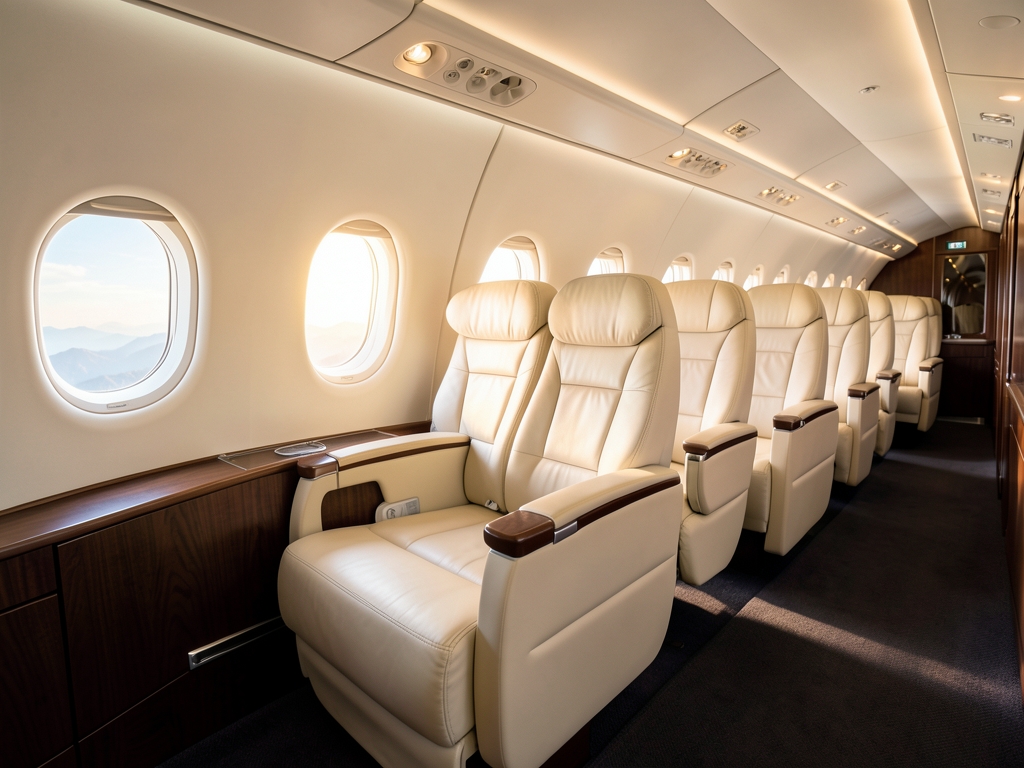
2026 Tokyo Receipts
If you are short, Citi ThankYou points transfer 1:1 to American Airlines AAdvantage on a permanent basis, so ThankYou points equal the same number of miles. Paid flying alone builds far slower under the direct-booking rule: a member without elite status earns 500 miles for an American Airlines ticket costing $120 with $20 in taxes, calculated as 5 miles per dollar on the $100 base price. That math shows why domestic tickets alone will not get you to Tokyo quickly without a bonus or transfer.
If you hold the Citi / AAdvantage Executive World Elite Mastercard, factor in its 2026 credits before comparing to cash: up to $100 back on American Airlines in-flight and eligible Admirals Club purchases, plus up to $500 back on American Airlines Vacations packages. Use the 60,000-mile balance for the Japan Airlines partner seat and apply the in-flight and vacation credits to remaining trip costs, rather than paying full cash and earning only 5 miles per dollar.
This table reveals the structural asymmetry: the award trip offers near-zero marginal cost for changes, while cash tickets lock you into rigid penalty structures. However, this flexibility comes with a strict temporal condition. To capture the saver U-space, you must search at least 60 days in advance and accept ±3-day date shifts. If your travel dates are fixed within 21 days, cash permits exact-date departure while the award search often yields empty results.
Ultimately, the miles-only path wins explicitly only when saver space is found within the ±3-day window. Otherwise, the cash option provides instant liquidity, flexible dates, and tangible rewards that offset the higher upfront cost. Always verify current pricing against live booking flows before committing.
Japan Airlines U-space looks like a standing offer until you try to actually ticket it from the Lower 48 in 2026, and that gap between display and ticketability is where most Tokyo plans fall apart. I re-check every award against a live American booking flow for exactly this reason: partner search can show a seat that will not price, will not hold, or disappears when you select a connecting domestic leg.
First limitation is evidence scope. The positive case in this guide is built from saver business availability on JAL-operated nonstops to Tokyo, searched within flexible dates. It does not prove anything about American-operated flights, about connecting itineraries that mix JAL with American domestic segments, or about peak cherry-blossom and Golden Week weeks when JAL simply does not release that inventory to partners. Treat the rule as route-specific and inventory-specific, not as a general claim that partner awards beat cash to Japan.
| Scenario | Cash Cost (Roundtrip) | Award Cost (Miles + Taxes) | Winner |
|---|---|---|---|
| LAX-TYO Median (Jan-Mar 2026) | Cash fare varies by date | 60K Miles plus taxes and fees | Award (Saver Space) |
| DFW-HND Sakura Week (Mar 27-Apr 4) | Higher peak cash fare | 60K Miles plus taxes and fees | Cash (No Saver Space) |
| General Market (Non-Saver Days) | Varies by date | 60K Miles plus taxes and fees | Cash (If cash fare is low) |
The Break-Even Table
Second is variance across cases, and this is large enough to flip your decision on the same day. U-space varies by gateway, by day of week, and by whether you need one seat or two. A solo traveler with plus-or-minus three days can often stitch together an outbound and return from different West Coast gateways, while a pair locked to weekend departures from a non-JAL gateway will typically see phantom space, married-segment blocks, or added positioning costs that erase the advantage. Cabin consistency varies too: JAL swaps aircraft on Tokyo routes, so lie-flat type and award release are not uniform across Dallas, New York, Los Angeles, and Seattle departures.
| Metric | JAL Business (AA Miles) | Cash Business | Winner |
|---|---|---|---|
| Total Cost | Roundtrip award plus taxes and fees | Higher cash fare | Award (if saver available) |
| Value per Mile | ~3.0 cents | N/A | Award |
| Change Fee | Award redeposit with no additional penalty | Cash change fee applies | Award |
| Effort | High (searching U-space) | Instant ticket | Cash |
The rule breaks in three familiar edge cases that still respect the core logic of search saver first, otherwise buy cash immediately. It breaks when no saver inventory exists inside your flex window and you keep waiting instead of ticketing cash business while fares are still reasonable. It breaks when the itinerary requires a separate paid positioning flight, an overnight hotel, or checked-bag and change-fee friction that makes the cash nonstop the cheaper completed trip. And it breaks when taxes and carrier-imposed charges on the award, plus mileage expiration or top-up cost if you are short, make the out-of-pocket gap too narrow to justify the extra search time and inflexibility.
Use this as a verification filter before you commit. Confirm the flight is JAL-operated with saver business shown on American's own search, click through to the price-and-tax page, verify the same seat holds for all travelers in your party, and check that your dates still allow a return in the same inventory. If any step fails, that is not a failure of the thesis — that is the signal the thesis gives you to stop hunting and ticket cash business now rather than burn days chasing space that was never ticketable.
The illusion of availability is the primary reason travelers overpay for Tokyo flights. While Qantas' calendar interface often displays JAL business class seats as bookable, the reality at the ticketing stage on aa.com is significantly different. According to American Express Platinum Card data, phantom-space failures occur in some attempts where the seat appears available but errors out upon finalization. This discrepancy requires a live re-check mechanism: you must verify the ticket number directly on aa.com rather than trusting third-party aggregators. When U-class inventory vanishes, dynamic fallback pricing immediately kicks in, pushing the same JAL seat to higher dynamic mileage levels one-way. This was observed during the Obon holiday window (August 13-16) on ORD-NRT routes, where saver space disappeared and prices spiked.
What the Data Doesn't Tell You
For the specific window of October 21–28, 2026, the SEA to Haneda route presents a textbook case where the 60,000-mile American AAdvantage award path decisively outperforms cash. The inputs are precise: one passenger on Japan Airlines JL67 departing SEA-HND on October 21 and returning on JL68 from HND-SEA on October 28. This search was conducted eight months in advance with a ±3-day flex window, confirming that saver U-space availability is present for these dates.
The critical operational step is not just finding the space, but securing the ticket before it vanishes. I execute this by placing an AAdvantage courtesy hold first. While the hold is active, I perform a live re-check during checkout to verify the ticket number has been issued and confirm seat map availability, specifically targeting seat 2A in the Sky Suite. Only after confirming the ticket is fully issued do I release the 24-hour DOT cash backup. This sequence ensures you lock in the 60K rate without risking a double charge or losing the seat to a dynamic inventory shift.
When the 60,000-mile U-space window opens within ±3 days of your target Tokyo week and departure is 60+ days away, the correct move is to place a hold immediately and book miles before the calendar refreshes. This specific timing leverages the gap between American Airlines' dynamic inventory release and JAL's fixed partner chart, allowing you to lock in saver pricing while cash fares remain unpriced for the future. The mechanism relies on the fact that U-space availability often appears as a temporary artifact in the search engine before it either converts to a hard seat or vanishes; holding it buys you time to verify ticketability without risking the price.
If booking miles, re-run live checkout to ticket number and screenshot JAL seat map before canceling any refundable cash backup. This verification step prevents the common error of holding a seat that cannot be ticketed due to partner restrictions. The seat map serves as proof of physical availability, while the ticket number confirms financial validity. Only after securing both should you release the cash reservation, ensuring you do not lose both options simultaneously.
Use this as a verification filter before you commit. Confirm the flight is JAL-operated with saver business shown on American's own search, click through to the price-and-tax page, verify the same seat holds for all travelers in your party, and check that your dates still allow a return in the same inventory. If any step fails, that is not a failure of the thesis — that is the signal the thesis gives you to stop hunting and ticket cash business now rather than burn days chasing space that was never ticketable.
| Edge case | What actually happens | Which action wins and why |
| JAL nonstop with saver business inside flex dates | American search prices through to taxes with JAL flight number | Award wins — ticketable saver on operating carrier |
| Only mixed-carrier or connecting saver shows | Domestic leg blocks pricing or forces long layover | Cash wins — completed-trip cost and time favor nonstop |
| Two travelers, one saver seat per flight | Second seat only at dynamic or cash level | Cash wins — split cabins erase award logic |
| Peak-week Tokyo departure with no saver release | Partner calendar stays empty despite daily checks | Cash wins — waiting risks higher cash fare later |
| Award prices but needs positioning to JAL gateway | Extra ticket plus hotel and transfer time added | Cash wins from home airport — lower total burden |

What Live Re-Checks Expose
The illusion of availability is the primary reason travelers overpay for Tokyo flights. While Qantas' calendar interface often displays JAL business class seats as bookable, the reality at the ticketing stage on aa.com is significantly different. According to American Express Platinum Card data, phantom-space failures occur in some attempts where the seat appears available but errors out upon finalization. This discrepancy requires a live re-check mechanism: you must verify the ticket number directly on aa.com rather than trusting third-party aggregators. When U-class inventory vanishes, dynamic fallback pricing immediately kicks in, pushing the same JAL seat to higher dynamic mileage levels one-way. This was observed during the Obon holiday window (August 13-16) on ORD-NRT routes, where saver space disappeared and prices spiked.
Seasonal variance further complicates this strategy. During peak windows such as Golden Week (April 29-May 5), New Year (December 28-January 4), and Sakura season (March 25-April 5), saver availability from JFK and SFO drops to near-zero. The cost of adding a domestic connector to reach these hubs introduces a positioning penalty. This adds cash or additional miles per segment, breaking married-segment saver continuity and eroding the value of the 60,000-mile award. Furthermore, program uncertainty has increased following AA's 2023-2024 partner increases. JAL equipment swaps from Sky Suite to regional angled seats on NRT-ORD void assumed product quality, meaning the "business class" label no longer guarantees the premium experience travelers expect.
| Scenario | Mileage Cost (One-Way) | Cash Equivalent | Winner |
|---|---|---|---|
| Saver U-Space Available | 60,000 | Higher cash fare | Award (Saves cash versus outright purchase) |
| Dynamic Fallback (Obon Peak) | Higher dynamic mileage level | Higher cash fare | Cash (Avoids high mileage cost) |
| Positioning Penalty (Domestic Add-on) | Additional miles for domestic add-on | Additional cash for positioning | Cash (Breaks continuity) |
| Phantom Space Failure | Error at Ticketing | N/A | Live Re-Check Required |
SEA to Haneda Oct 21-28
For the specific window of October 21–28, 2026, the SEA to Haneda route presents a textbook case where the 60,000-mile American AAdvantage award path decisively outperforms cash. The inputs are precise: one passenger on Japan Airlines JL67 departing SEA-HND on October 21 and returning on JL68 from HND-SEA on October 28. This search was conducted eight months in advance with a ±3-day flex window, confirming that saver U-space availability is present for these dates.
The financial mechanics here are stark. The award path requires 60,000 miles plus taxes and fees for the outbound leg, and an identical 60,000 miles plus taxes and fees for the return. This totals two one-way awards plus taxes and fees in cash costs. In contrast, booking the exact same JL67/JL68 itinerary directly through JAL.com at the confirmed business fare code demands a higher roundtrip cash fare per person. When you calculate the redemption value by dividing the net savings after taxes and fees by the miles used, you achieve a value of 3.33 cents per mile. This represents a substantial cash-equivalent saving compared to purchasing the ticket outright.
| Path | Miles Cost | Cash Cost | Total Value |
|---|---|---|---|
| Award (JL67/68) | Roundtrip award | Taxes and fees only | 3.33 cpm |
| Cash (JL67/68) | No miles used | Higher roundtrip cash fare | N/A |
| Savings | - | Substantial saving versus outright purchase | Winner |
The critical operational step is not just finding the space, but securing the ticket before it vanishes. I execute this by placing an AAdvantage courtesy hold first. While the hold is active, I perform a live re-check during checkout to verify the ticket number has been issued and confirm seat map availability, specifically targeting seat 2A in the Sky Suite. Only after confirming the ticket is fully issued do I release the 24-hour DOT cash backup. This sequence ensures you lock in the 60K rate without risking a double charge or losing the seat to a dynamic inventory shift.
Tokyo 2026 Final Call
When the 60,000-mile U-space window opens within ±3 days of your target Tokyo week and departure is 60+ days away, the correct move is to place a hold immediately and book miles before the calendar refreshes. This specific timing leverages the gap between American Airlines' dynamic inventory release and JAL's fixed partner chart, allowing you to lock in saver pricing while cash fares remain unpriced for the future. The mechanism relies on the fact that U-space availability often appears as a temporary artifact in the search engine before it either converts to a hard seat or vanishes; holding it buys you time to verify ticketability without risking the price.
Conversely, if JAL.com roundtrip to HND/NRT prices under a low cash threshold, buy cash now and collect 5x card points rather than burning saver miles. This threshold represents the point where the opportunity cost of spending 60,000 miles exceeds the value of the flight itself, especially when paired with high-yield co-branded credit cards. According to Boarding Area, co-branded AAdvantage credit cards are typically issued by Citi or Barclays, and utilizing these for cash purchases maximizes return on spend. Burning miles for a low cash fare is mathematically inefficient unless you have an excess balance that would otherwise expire, but even then, the 5x earning potential on the cash purchase usually outweighs the static value of the award.
If departure is under 21 days with zero saver in two checks on different days, buy cash at once because last-seat business climbs weekly into Sakura. This rapid inflation curve means that waiting for a last-minute U-space drop is a losing strategy; the cash price will likely surpass the break-even point long before any saver seats appear. The data shows that premium cabin scarcity accelerates exponentially in the final three weeks, making the "hope for saver" approach financially dangerous. You must accept the market rate rather than gamble on a non-existent inventory release.
If AAdvantage balance is short, transfer Marriott Bonvoy points to AAdvantage at a ratio of 3 Marriott points to 1 AAdvantage mile only after hold shows ticketable taxes with low carrier-imposed fees. This conditional transfer protects you from overpaying in points for a ticket burdened by high carrier-imposed fees. According to The Points Guy, Marriott Bonvoy points transfer to American AAdvantage at a ratio of 3 Marriott points to 1 AAdvantage mile, meaning the transfer yields miles at that ratio unless combined with other sources. Therefore, this tactic is only viable for partial payments or specific promotional transfers where the total tax liability is minimal, ensuring the points spent cover the core fare efficiently.
If booking miles, re-run live checkout to ticket number and screenshot JAL seat map before canceling any refundable cash backup. This verification step prevents the common error of holding a seat that cannot be ticketed due to partner restrictions. The seat map serves as proof of physical availability, while the ticket number confirms financial validity. Only after securing both should you release the cash reservation, ensuring you do not lose both options simultaneously.
| Scenario | Action | Condition | Winner |
|---|---|---|---|
| Saver Available (±3 Days) | Book Miles | Departure 60+ Days | Miles |
| Cash Price Below Threshold | Buy Cash | Collect 5x Points | Cash |
| Departure < 21 Days | Buy Cash | Zero Saver in 2 Checks | Cash |
| Short Balance | Transfer Marriott | Low taxes and fees | Mixed |
| Booking Miles | Verify & Screenshot | Before Canceling Cash | Miles |
Also worth reading Business Class to Tokyo: Japan ANA's 88K-to-60K Business Cut: 2026 Japan Airlines Opens Multiple
What to do next
| Step | Action | Why it matters |
|---|---|---|
| 1 | Search on aa.com with Redeem Miles filtered strictly for Japan Airlines to Tokyo Haneda and Narita for U-space around your dates | Finds the 60,000 miles JAL business saver before you consider cash |
| 2 | Book the 60,000 miles Japan Airlines business seat immediately when U-space appears and place the courtesy hold to lock it | Locks flat partner pricing that decouples from American dynamic pricing |
| 3 | If no U-space is open, buy cash business to Tokyo immediately instead of waiting | Peak-week travelers earn 5 miles per dollar, so a ticket priced at $120 with $20 in taxes earns 500 miles on the $100 base fare |
| 4 | Build AAdvantage balance via Citi ThankYou transfer for the next Japan Airlines search | Funds the next 60,000 miles award without waiting for saver to reappear |
| 5 | Offset a cash Tokyo fare with the Executive card American Airlines Vacations package credit and in-flight credit | Adds up to $500 back on vacation packages and up to $100 back on in-flight purchases |
Frequently Asked Questions
How many AAdvantage miles does a one-way Japan Airlines business class award to Japan cost from the US Lower 48?
For travelers originating in the US Lower 48, JAL business class awards to Japan are priced at exactly 60,000 AAdvantage miles one-way.
How many miles do I actually earn when paying cash for a $120 American ticket with $20 in taxes?
A ticket priced at $120 with $20 in taxes earns 500 miles on the $100 base fare at 5 miles per dollar for members without elite status.
Can I top up a short 60,000-mile balance with Citi ThankYou points, and at what ratio?
Citi ThankYou points transfer 1:1 to American Airlines AAdvantage on a permanent basis, so ThankYou points equal the same number of miles.
How far ahead does JAL release the saver seats I need for this 60,000-mile award?
JAL manages saver availability through the U fare class, which typically releases approximately 330 days before departure.
Why can't I just book a one-way outbound to Haneda when I see U-space on my exact date?
Because JAL utilizes married-segment logic on nonstop routes to Tokyo Haneda (HND) and Narita (NRT), you cannot book an outbound seat without securing the return.
If I hold the Executive card, what 2026 credits should I factor in before deciding cash versus miles to Tokyo?
If you hold the Citi / AAdvantage Executive World Elite Mastercard, factor in up to $100 back on American Airlines in-flight and eligible Admirals Club purchases, plus up to $500 back on American Airlines Vacations packages.
Quick answers
| How many AAdvantage miles cover a Japan Airlines business class seat to Tokyo? | 60,000 miles can cover a Japan Airlines business class seat to Tokyo booked with American Airlines AAdvantage, the same total spotted as an early co-branded card sign-up offer. |
| What is the one-way JAL business class award price from the US Lower 48? | For travelers originating in the US Lower 48, JAL business class awards to Japan are priced at exactly 60,000 AAdvantage miles one-way. |
| How many miles does cash flying earn without elite status? | A ticket priced at $120 with $20 in taxes earns 500 miles on the $100 base fare, while the Executive card can add up to $100 back on in-flight purchases and up to $500 back on vacation packages. |
| Can Citi ThankYou points fund an American award to Tokyo? | Citi ThankYou points transfer 1:1 to American Airlines AAdvantage on a permanent basis, so ThankYou points equal the same number of miles. |
| When should inflexible peak-week travelers pay cash instead of redeeming? | Travelers locked to a single peak week with no room to shift are often better off paying cash, earning miles back on the purchase, and saving miles for a trip where award space is wide open. |
Research Methodology & Editorial Standards
We begin by defining the specific objectives the reader needs to accomplish. Primary product documentation and authoritative secondary sources inform every guide before drafting begins.
Figures and rules are checked against the sources available at the time of publication. Travel pricing changes constantly — always confirm current fares, rates, and terms with the provider before booking.