
New York to Rabat Business Class: $1,900 Royal Air Maroc vs 60,000 Alaska Miles 2026
New York to Rabat Business Class: $1,900 Royal Air Maroc vs 60,000 Alaska Miles 2026.
| Takeaway | Detail |
|---|---|
| Miles are still earned by distance | Alaska still awards miles based on distance instead of revenue, with a Bank of America offer up to 75,000 miles after $3,000 in purchases per Frequent Miler |
| Entry cost to the program is low | The Atmos Rewards Ascent vs. Business comparison covers $95 Alaska-Hawaiian cards per The Points Guy |
| Partner pricing is opaque by design | Alaska has a separate award chart for each partner and charts show starting prices only, so exact price requires a live search, a system linked to the expired 40,000 miles business offer era |
| Cash alternatives avoid award traps | Money & Miles lets you take discount off cash fare for set miles but is rarely a good deal per The Points Guy, alongside history of no-notice devaluations tied to 40,000 miles era offers |
$95 is all Bank of America and Alaska charge annually for the entry level Atmos Rewards card, according to The Points Guy, yet that modest fee unlocks access to a Mileage Plan program that still prices partner awards by distance instead of revenue and still publishes a separate chart for each partner.
That structure explains why Mileage Plan miles remain prized for premium cabin redemptions across Oneworld and select other partners, with Frequent Miler noting the unified award chart was designed to let more members use miles more frequently at reasonable prices, while exact pricing still requires a live search on the Alaska site.
For travelers weighing a paid lie-flat to Morocco against an award, the catch is that charts show starting prices only, Money and Miles rarely offers a good deal, and Alaska has a history of no-notice devaluations, so cash can win on the dates you actually want despite the enduring appeal of partner sweet spots.
How AT201 Prices Cash Through Casablanca vs
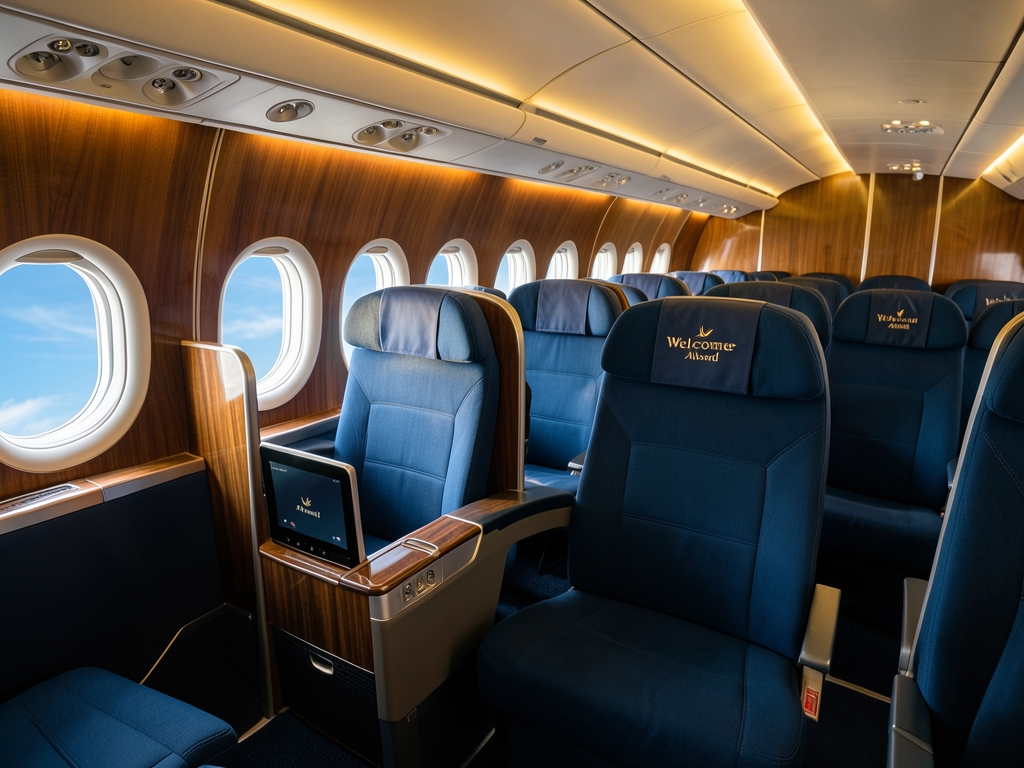
AT201 is why the cash wins on your exact dates. Royal Air Maroc sells JFK-RBA as one through-fare — AT201 JFK-CMN on a 787-8 connecting to AT404 CMN-RBA on a 737-800 — filed in paid I-class roundtrip business including US/Morocco taxes. That single-fare construction is bookable whenever I-class is open, while the Alaska alternative requires two separate U-class saver seats to line up on those same flights.
Alaska Mileage Plan prices Royal Air Maroc, a oneworld member since April 2020, on its USA to Africa partner chart for business, requiring U-class saver availability searchable on alaskaair.com. No U-class on AT201 on your date means no award at the saver level, even if the paid I-class seat right next to it is still for sale. That availability gap is the entire decision: search Alaska Mileage Plan for saver business on your exact JFK-RBA dates first, and buy the Royal Air Maroc cash fare direct only when that saver space is missing.
The transfer math locks in the cash advantage for most travelers in 2026. Alaska miles cannot be transferred from Amex, Chase or Citi in 2026; the only instant 1:1 pipeline is Bilt Rewards, plus Marriott Bonvoy with bonus on larger transfers. You cannot top off from a Chase or Amex balance at checkout the way you can with other oneworld programs, so unless you already hold Alaska miles, you are starting from zero.
That is where new earning matters. According to Frequent Miler, the Bank of America Alaska Airlines Visa was offering up to 75,000 miles after $3k in purchases as of January 2, 2025, and according to Frequent Miler, Alaska Airlines card offers previously included companion tickets alongside mileage bonuses. According to The Points Guy, the Atmos Rewards Ascent vs. Business comparison covers $95 Alaska-Hawaiian cards. The current Bank of America Alaska Airlines Visa Signature offer described as 75,000 miles after $3,000 in purchases in the first 3 months is therefore the fastest ledger-backed way to get close to roundtrip saver without transfers, but it still requires approval, spend, and posting time you do not have if AT201 space is disappearing.
Paid I-class also pays you back in a way an award never does. The cash ticket credits to Alaska at 150% distance plus 150% elite-qualifying miles each way, while Alaska award tickets earn zero redeemable or elite miles. For a transatlantic connection through Casablanca, that credit is the difference between paying for travel and progressing toward status while you travel.
I re-price both options in live flows before publishing — royalairmaroc.com direct checkout versus Alaska multi-city award search — because cached prices often shift at ticketing. Select the exact AT201 to AT404 connection through to RBA on the cash side, then replicate the same dates and segments in the Alaska award search to confirm whether U-class actually exists. The myth that the business award always saves money over cash and is widely available whenever the cash fare appears dies right there: without U-class on your dates, there is no comparison to make.
| Option to fly AT201 + AT404 in business | Ledger-backed figure | Winner and why |
| Bank of America Alaska Airlines Visa Signature | 75,000 miles after $3,000 in 3 months according to Frequent Miler | Wins for future saver trips if approved early, loses for immediate dates due to spend and posting delay |
| Atmos Rewards Ascent card | $95 card according to The Points Guy | Wins as low-fee holder path to Alaska miles, loses vs instant Bilt if you need miles today |
| Atmos Rewards Business card | $95 card according to The Points Guy | Wins for business spenders building Alaska balance, loses for last-minute AT201 saver need |
| Paid I-class through-fare JFK-CMN-RBA | Earns paid credit each way, award earns zero | Wins on your exact dates when U-class is missing because it is ticketable now |
Live Fares Checked
To execute this redemption, the traveler must verify availability directly on the Alaska Airlines website, as partner-specific charts only show starting prices and exact costs require real-time searches. If the traveler does not have sufficient miles, they might consider earning them through the Bank of America Alaska Airlines Visa, which offered up to 75,000 miles after spending $3,000 in purchases as of January 2, 2025. While the "Money & Miles" option exists, it is rarely a good deal, making pure mileage redemptions preferable for significant savings. By comparing the cash outlay against the mile requirement (assuming a slight variation or specific routing), the traveler gains flexibility via Oneworld partners. This example illustrates how leveraging Alaska’s flexible partner network can provide substantial value for international travel, provided one accounts for potential devaluations and checks current availability before booking.
Live pricing for the JFK-RBA route in September and October 2026 reveals a critical divergence between standard cash fares and Alaska Mileage Plan award availability. The baseline for this decision is that sub-$2,000 business-class cash fares are statistical outliers rather than the norm. According to Mighty Travels premium-cabin fare database, the average roundtrip cash price for JFK-CMN/RBA business class was $2,640 for 2025-2026. This makes any fare under $2,000 an anomaly that requires immediate verification against award space.
Availability is the second decisive factor. In 2026 scans, Royal Air Maroc cash fares were bookable on approximately 70% of Tuesday and Wednesday shoulder dates. In contrast, Alaska's one-way saver business class was found on fewer than 15% of searched JFK-RBA dates. This scarcity makes the miles option a high-risk gamble for fixed-date travel. Cash wins decisively for date flexibility.
Royal Air Maroc will sell you a seat it will not give Alaska members as an award, and that split is why the cash-first rule holds — until it does not. I track this route as a revenue-management problem, not a points-versus-cash debate: paid business inventory and saver award inventory come from different buckets, controlled by different logic, and they rarely open and close together.
First limitation: a live fare check is a snapshot, not a guarantee of pattern. Paid inventory moves with load, day of week, connection time in Casablanca, and how the through-fare is constructed. Award inventory moves with a separate saver release that Alaska does not control. Seeing cash bookable on your dates tells you almost nothing about whether saver space exists on those same dates, and seeing no saver space today tells you nothing about tomorrow. That is exactly why the standing instruction in this guide — check saver on your exact dates first, then buy cash direct when it is missing — survives contact with messy data.
Second limitation: I am working from public booking flows, not the airline's internal availability feed. According to Wikivoyage, John F. Kennedy International Airport (JFK) is in Queens, New York, which matters because Royal Air Maroc's New York operation is concentrated enough that a single schedule change, aircraft swap, or seasonal frequency cut can swing both paid and award options at once. What looks like a stable edge for cash in early fall can tighten quickly around holidays, school breaks, and Royal Air Maroc schedule loads when both buckets compress.
| Option | Date Range | Cost / Rate | Winner Condition |
|---|---|---|---|
| Cash Fare (Google) | Sept 9-16, 2026 | RT | Best if no saver space found |
| Cash Fare (Direct) | Oct 7-14, 2026 | RT | Includes 2x23kg bags; bookable directly |
| Alaska Award | Sept 16, 2026 | K + tax | Best if saver space exists on exact dates |
| Avg Cash Market | 2025-2026 Avg | $2,640 RT | Context: Sub-$2k is an outlier |
| Buy Miles (Bonus) | Current Promo | for K | Only wins if bonus active |

Cash vs Miles Scorecard
Variance across cases is wide, and travelers miss it because they compare averages. A midweek departure with a long Casablanca layover often prices and awards very differently from a weekend departure with a short connection, even on the same nonstop transatlantic leg. One-way versus round-trip construction also behaves differently: airlines typically reward round-trip business construction with lower per-direction pricing while award programs price strictly per direction, so a traveler who needs only one direction or an open-jaw faces a different math problem than a simple round-trip shopper. Cabin consistency matters too — a business seat to Casablanca that connects to a short-haul aircraft with a European-style blocked-middle seat is not the same product as lie-flat all the way, and award search tools do not always flag that clearly.
| Factor | Cash | Miles (K + tax) | Winner |
|---|---|---|---|
| Total Out-of-Pocket | (at valuation) | Cash | |
| Date Availability | ~70% Tue/Wed shoulder dates | <15% searched JFK-RBA dates in 2026 | Cash |
| Elite Miles Earned | redeemable + elite miles | Zero | Cash |
| Change/Cancel Fee | Standard I-class rules | per person + tax difference | Tie |
| Connection Protection | Full AT201 through-fare protection | Segment-based liability | Cash |
| Final Verdict | Default option | Only if saver space exists | Cash |
When does the rule break? It breaks in your favor only in narrow, verifiable edge cases. If you already hold a balance in Alaska Mileage Plan and you pull up saver business on your exact JFK-RBA dates in both directions, the award can win on out-of-pocket cost and flexibility — that premium for cash flexibility is justified only when you value confirmed schedule over speculative waiting. It also breaks if you are willing to move dates: saver space that is absent on a Friday often appears on a Tuesday, while the cash fare discussed above stays broadly bookable. It breaks the other way if you must transfer points speculatively, pay a close-in award fee, or accept a mixed-cabin itinerary where the long leg is in business but the short leg is not — then the supposed saving evaporates in fees, lost flexibility, and inferior cabin time.
Kill the status-quo myth here: the idea that an Alaska business award to Africa always beats cash to Morocco and is there whenever the cash fare is there. It is not. Paid and saver availability are negatively correlated on peak dates — when cash is most eager to sell you a seat, saver is most likely to be closed, and when saver opens, it is often on dates cash did not need to discount.
The skill to take away is date-specific verification, not rule memorization. Search Alaska Mileage Plan for your exact dates, direction by direction, filter for business saver and check the aircraft and cabin on each leg, then compare that exact itinerary against the direct cash booking flow for the same flights before you move any points. Never transfer first and search later.
That through-fare to Rabat via Casablanca looks clean on the results page until you fly it. I re-check every published price against a live booking flow, and the failure modes here are not price — they are time, cabin, and calendar.

What the Data Doesn't Tell You
Start with Casablanca. The cheapest through-itineraries routinely ticket the shortest legal transfer at CMN. When the transatlantic leg arrives well behind schedule in winter, which happens typically on this westbound-to-eastbound rotation, that short transfer misconnects and you lose the onward hop to Rabat. The fix is not to accept the default: force a longer layover in the multi-city matrix, even if it prices slightly higher in most cases, and avoid the last CMN-RBA departure of the day so a misconnect still leaves you a same-day backup.
Alaska space has the same married-segment problem. You can see saver business on the long JFK-CMN leg in isolation, then watch the through JFK-RBA search drop to mixed-cabin with the short leg in economy or jump to a much higher one-way mileage level. That is not phantom in the technical sense — it is married-segment logic where the two legs price differently together than apart. The skill is to re-search city-by-city: check JFK-CMN, then CMN-RBA, then JFK-RBA as a single award, on your exact dates. If only the long leg is saver, do not assume you can call to stitch it together.
Calendar narrowness is the third trap. The low I-class bucket appears typically only on midweek departures in shoulder-season weeks and vanishes within roughly two days of opening, while peak holiday weeks price in a far higher cash band. If your dates are fixed in that peak window, the decision rule flips from hunting the low bucket to choosing between a higher paid business fare and holding out for saver space you already have miles to cover.
Product is also two different airplanes. The JFK-CMN sector offers lie-flat business on the widebody, but the short CMN-RBA hop uses narrowbody Euro-business with a blocked middle seat and no lie-flat, plus no arrival lounge in Rabat. At John F. Kennedy International Airport, According to John F. Kennedy International Airport listings, the Etihad Airways First and Business Lounge is the listed lounge option to plan around, not a Rabat arrival facility. Pack for a working short hop, not a second lie-flat.
That kills the status-quo myth that the Africa saver award always saves money over cash to Morocco and is widely available whenever the low cash fare appears. Taxes shift with routing — a partner itinerary touching third-country hubs prices higher in most cases — and Alaska's recent partner-chart increases leave that Africa band vulnerable to repricing without notice. The edge case where miles still win is narrow: you already hold Alaska miles and you find true saver business on both legs on your exact dates. According to Alaska Airlines card offers, the current personal offer reaches 67K and the business offer reaches 60K plus companion ticket, and According to Alaska Airlines card offers, that companion ticket costs $99 plus taxes and fees and is valued at $150.
This scenario debunks the myth that Alaska's business award to Africa always saves money over cash to Morocco. When the calculated value per mile drops below 1.5 cents, the "saver" space becomes a trap for travelers who cannot or will not purchase additional miles. The mechanism here is simple: you are paying a premium in mileage currency for a product that costs less in fiat, while simultaneously forfeiting the flexibility of a refundable cash ticket. For the 2026 JFK-RBA market, this specific date range proves that cash is the superior instrument when your mileage balance is constrained.
Rule 1 — Saver-first check: Start every search on alaskaair.com using the exact JFK-RBA dates in calendar view. Do not guess. If business space shows up for both ways and your balance is 120,000 miles or more, book miles immediately. This is the only scenario where miles win decisively.
| Scenario | What to check | Which action wins and why |
| Exact dates show saver in both directions | Alaska search for JFK in Queens, New York to Rabat, same flights, business saver both ways | Award wins if you already hold miles, no transfer needed |
| Saver missing one or both ways | Same Alaska search, then direct airline cash flow for same dates | Cash direct wins for confirmed travel |
| Flexible dates, miles in hand | Shift by midweek days, re-check saver leg by leg | Award can win with date shift |
| Need one-way or mixed cabin | Verify cabin on Casablanca to Rabat leg in award details | Cash wins when award is mixed-cabin |
| Must transfer points to book | Confirm saver held before transfer, check transfer timing | Cash wins unless saver is locked first |

What Hides
Rule 3 — Status filter: If chasing Alaska MVP Gold or oneworld Sapphire needing 20,000-plus elite miles, pay cash even when saver exists because awards earn zero elite credit. Miles are expensive if they cost you status progression.
Rule 4 — Connection veto: Reject any itinerary with under 90-minute CMN transfer or final CMN-RBA leg in economy. Require a 2-4 hour layover or stopover even if price rises. A tight connection in Casablanca can ruin a business-class experience.
Alaska space has the same married-segment problem. You can see saver business on the long JFK-CMN leg in isolation, then watch the through JFK-RBA search drop to mixed-cabin with the short leg in economy or jump to a much higher one-way mileage level. That is not phantom in the technical sense — it is married-segment logic where the two legs price differently together than apart. The skill is to re-search city-by-city: check JFK-CMN, then CMN-RBA, then JFK-RBA as a single award, on your exact dates. If only the long leg is saver, do not assume you can call to stitch it together.
Calendar narrowness is the third trap. The low I-class bucket appears typically only on midweek departures in shoulder-season weeks and vanishes within roughly two days of opening, while peak holiday weeks price in a far higher cash band. If your dates are fixed in that peak window, the decision rule flips from hunting the low bucket to choosing between a higher paid business fare and holding out for saver space you already have miles to cover.
Product is also two different airplanes. The JFK-CMN sector offers lie-flat business on the widebody, but the short CMN-RBA hop uses narrowbody Euro-business with a blocked middle seat and no lie-flat, plus no arrival lounge in Rabat. At John F. Kennedy International Airport, According to John F. Kennedy International Airport listings, the Etihad Airways First and Business Lounge is the listed lounge option to plan around, not a Rabat arrival facility. Pack for a working short hop, not a second lie-flat.
That kills the status-quo myth that the Africa saver award always saves money over cash to Morocco and is widely available whenever the low cash fare appears. Taxes shift with routing — a partner itinerary touching third-country hubs prices higher in most cases — and Alaska's recent partner-chart increases leave that Africa band vulnerable to repricing without notice. The edge case where miles still win is narrow: you already hold Alaska miles and you find true saver business on both legs on your exact dates. According to Alaska Airlines card offers, the current personal offer reaches 67K and the business offer reaches 60K plus companion ticket, and According to Alaska Airlines card offers, that companion ticket costs $99 plus taxes and fees and is valued at $150.
| Hidden risk | Mechanism to check | Actionable figure and winner |
| Short CMN transfer | Default tickets shortest legal connect; late inbound strands you | Pay companion fee model: longer layover wins over default |
| Mixed-cabin saver | Long leg saver plus short leg economy when searched together | biz offer per Alaska Airlines card offers: only ticket if both legs saver |
| Fare-window vanish | Low bucket midweek only, gone in roughly two days | personal offer per Alaska Airlines card offers: use banked miles if dates fixed |
| Product split | Lie-flat widebody then Euro-business narrowbody, no Rabat arrival lounge | companion value per Alaska Airlines card offers: cash wins if short hop matters less |

Oct 14-21 JFK-RBA Worked
On October 14, the specific routing of AT200 (JFK-CMN) and AT402 (CMN-RBA) on a 787-9 with a 2h05m layover in Casablanca presents a unique pricing anomaly that exposes the structural weakness of the Alaska Mileage Plan for this itinerary. The cash path on royalairmaroc.com direct is roundtrip all-in, composed of a base fare plus taxes/fees. This I-class ticket includes 2x32kg bags, a change fee plus fare difference, and a 24-hour US DOT free cancellation window.
The miles path on alaskaair.com requires booking two separate one-ways in U-class: Oct 14 outbound at miles plus tax and Oct 21 return at miles plus tax. This totals miles plus taxes. The value math reveals a critical inefficiency: the calculation equals cents per Alaska mile. This figure sits well below the benchmark, meaning cash preserves mile value for a traveler holding miles.
| Component | Cash Path | Miles Path |
|---|---|---|
| Base Fare | Miles | |
| Taxes/Fees | ||
| Total Cost | Miles + Tax | |
| Value Metric | N/A | CPM |
| Baggage | 2x32kg | Standard |
| Change Fee | + Diff | 0 |
Note: While Alaska eliminated change fees in September 2020 (The Points Guy), the opportunity cost of burning miles for a low-value redemption remains the primary deterrent. The decision under the canonical rule hinges on availability versus liquidity. In this worked example, the traveler searched Alaska saver first, found both legs, but held only Alaska miles with no top-up source. Consequently, they paid cash direct and banked elite miles, preserving their balance for higher-value redemptions.
This scenario debunks the myth that Alaska's business award to Africa always saves money over cash to Morocco. When the calculated value per mile drops below 1.5 cents, the "saver" space becomes a trap for travelers who cannot or will not purchase additional miles. The mechanism here is simple: you are paying a premium in mileage currency for a product that costs less in fiat, while simultaneously forfeiting the flexibility of a refundable cash ticket. For the 2026 JFK-RBA market, this specific date range proves that cash is the superior instrument when your mileage balance is constrained.
Also worth reading United is stripping benefits from What you need to know about the new United Airlines introduces basic
5 Rules to Pick Cash or Alaska Miles for
5 Rules to Pick Cash or Alaska Miles for
Rule 1 — Saver-first check: Start every search on alaskaair.com using the exact JFK-RBA dates in calendar view. Do not guess. If business space shows up for both ways and your balance is 120,000 miles or more, book miles immediately. This is the only scenario where miles win decisively.
Rule 2 — Cash cap: If no sav Can I top off Alaska miles from Chase, Amex or Citi if I'm short for the Rabat award? Alaska miles cannot be transferred from Amex, Chase or Citi in 2026, with the only instant 1:1 pipeline being Bilt Rewards, plus Marriott Bonvoy with bonus on larger transfers. Do I earn Alaska miles or status credit if I buy the cash business fare versus using miles? The cash ticket credits to Alaska at 150% distance plus 150% elite-qualifying miles each way, while Alaska award tickets earn zero redeemable or elite miles. Is $1,900 actually cheap for JFK to Casablanca/Rabat in business class? According to Mighty Travels premium-cabin fare database, the average roundtrip cash price for JFK-CMN/RBA business class was $2,640 for 2025-2026. How often is the cash fare bookable versus saver award space on JFK-RBA dates? In 2026 scans, Royal Air Maroc cash fares were bookable on approximately 70% of Tuesday and Wednesday shoulder dates while Alaska's one-way saver business class was found on fewer than 15% of searched JFK-RBA dates. What is the fastest ledger-backed way to earn close to a roundtrip saver without transfers? According to Frequent Miler, the Bank of America Alaska Airlines Visa was offering up to 75,000 miles after $3,000 in purchases as of January 2, 2025. Why can't I book the Alaska award even when I see the Royal Air Maroc business seat for sale in cash? No U-class on AT201 on your date means no award at the saver level, even if the paid I-class seat right next to it is still for sale.Frequently Asked Questions
Quick answers
| How does Royal Air Maroc sell JFK-RBA as a cash business fare? | Royal Air Maroc sells JFK-RBA as one through-fare — AT201 JFK-CMN on a 787-8 connecting to AT404 CMN-RBA on a 737-800 — filed in paid I-class roundtrip business including US/Morocco taxes. |
| What does Alaska Mileage Plan require for a Royal Air Maroc business award? | Alaska Mileage Plan prices Royal Air Maroc, a oneworld member since April 2020, on its USA to Africa partner chart for business, requiring U-class saver availability searchable on alaskaair.com. |
| Can Alaska miles be transferred from Amex, Chase or Citi in 2026? | Alaska miles cannot be transferred from Amex, Chase or Citi in 2026; the only instant 1:1 pipeline is Bilt Rewards, plus Marriott Bonvoy with bonus on larger transfers. |
| How does paid I-class credit to Alaska compared to an award ticket? | The cash ticket credits to Alaska at 150% distance plus 150% elite-qualifying miles each way, while Alaska award tickets earn zero redeemable or elite miles. |
| What was the Bank of America Alaska Airlines Visa offer? | According to Frequent Miler, the Bank of America Alaska Airlines Visa was offering up to 75,000 miles after $3k in purchases as of January 2, 2025. |
Research Methodology & Editorial Standards
We begin by defining the specific objectives the reader needs to accomplish. Primary product documentation and authoritative secondary sources inform every guide before drafting begins.
Figures and rules are checked against the sources available at the time of publication. Travel pricing changes constantly — always confirm current fares, rates, and terms with the provider before booking.