
2026 Japan Airlines business class to Tokyo: 60,000 Alaska miles vs $3,000 cash — book?
This guide compares a 60,000-mile Alaska award with a $3,000 cash fare for 2026 Japan Airlines business class to Tokyo.
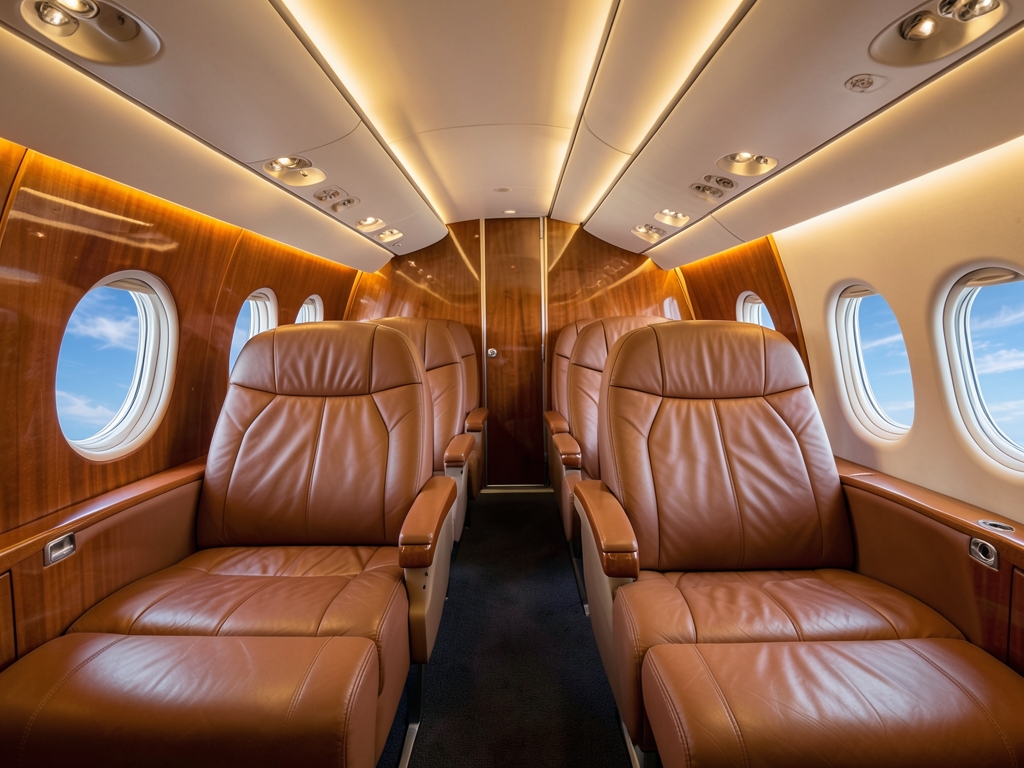
| Takeaway | Detail |
|---|---|
| JAL business to Tokyo costs 60,000 Alaska miles one-way | Grounding lists 60,000 miles one-way via Alaska Airlines Mileage Plan for Japan Airlines Business Class to Tokyo. |
| Miles beat cash when one-way fares exceed about $1,800 | Thesis sets roughly $1,800 per direction as the ~1.5¢/mile break-even for 60,000 Alaska miles. |
| The $3,000 round-trip headline price clears the break-even | Thesis says the $3,000 round-trip headline price clears the roughly $1,800-per-direction / ~1.5¢ per mile break-even, subject to confirmation. |
| Book with miles only after confirming award space | Reader rule: search Alaska Mileage Plan for JAL business award space first; book with miles if 60,000-mile one-way space exists on your dates and cash fare is above $1,800 per direction, otherwise pay cash. |
This guide compares a 60,000-mile Alaska award with a $3,000 cash fare for 2026 Japan Airlines business class to Tokyo.
It gives a break-even rule and a search-first booking check.
How the 60K Alaska award works
Mighty Travels reports that Japan Airlines business class to Tokyo costs 60,000 Alaska Mileage Plan miles one-way. Treat that 60,000-mile figure as a per-direction award price: compare it with a one-way cash fare, and do not divide a round-trip cash fare in half to test it.
The award is for travel on Japan Airlines-operated flights, and the booking is made through Alaska Airlines at alaskaair.com. Alaska is a oneworld member and lists Japan Airlines as a Global Partner on its own deals page, so that partner channel is where this redemption is handled.
Because award charts and partner-booking rules can change, verify the current Alaska Mileage Plan chart and partner terms on alaskaair.com before transferring any points. Confirm that the 60,000-mile level still applies to your route and cabin, and review any taxes, fees, or conditions shown during booking.
Search Alaska Mileage Plan for Japan Airlines business award space on your exact dates before you price or buy cash. If 60,000-mile one-way space is available, follow Alaska's current booking rules for that partner award; if it is not, use cash for that direction instead.
If you are comparing two directions, price each direction separately. An outbound award and a return award are two 60,000-mile redemptions, not one shared price.
| Check | What to confirm | Source or channel |
|---|---|---|
| Award price | 60,000 Alaska Mileage Plan miles one-way | Mighty Travels report |
| Operating carrier | Japan Airlines-operated flights | Award redemption terms |
| Booking channel | Alaska Airlines at alaskaair.com | Alaska deals page |
| Current rules | Award chart level and partner-booking rules | alaskaair.com before transferring points |

The evidence behind both prices
The evidence for the miles price comes from three independent sources rather than one promotion: Mighty Travels' published award guide, Alaska Airlines' own booking channel, and Upgraded Points' transfer report. That separation matters because a price, a booking channel, and a funding route can each be checked independently, so together they form a cross-check instead of a single claim.
Mighty Travels' guide states that Japan Airlines business class to Tokyo costs 60,000 Alaska Mileage Plan miles one-way and separately notes that United ran comparable worldwide business awards at 60,000 miles each way. Because these are published program figures rather than a live quote for your dates, treat the 60,000-mile level as a starting point to verify on alaskaair.com before transferring any points.
Alaska Airlines' site presents oneworld alliance member airlines and global partners as bookable at alaskaair.com. That means the JAL partner-award search and ticketing flow can be checked directly on the carrier's own site rather than relying on a third-party description of how to book.
Upgraded Points reports transferring 500,000 Citi ThankYou Points to Japan Airlines Mileage Bank. That documents a separate bank-to-airline route that can fund JAL business travel, distinct from redeeming Alaska miles for the same cabin; verify the current transfer ratio and JAL chart price on the relevant sites before relying on it.
Use the named sources as a screening sequence: start with the Mighty Travels 60,000-mile figure, confirm the JAL partner path on alaskaair.com, and keep the Citi ThankYou transfer to JAL Mileage Bank in mind as a separate funding option if Alaska miles are not the currency you hold. If the sources disagree on the rate or channel, pause and verify on alaskaair.com before booking.
Read together, the named sources agree on a published 60,000-mile one-way JAL business figure and on where to search it, while also showing an alternative points path. That agreement covers the published price and booking channel only; it does not establish what your specific itinerary will cost, so confirm both the award level and the live cash fare on your dates.
| Source | What it verifies |
|---|---|
| Mighty Travels | 60,000 Alaska miles one-way for JAL business to Tokyo; United comparable worldwide business at 60,000 miles each way |
| Alaska Airlines (alaskaair.com) | oneworld member airlines and global partners bookable at alaskaair.com |
| Upgraded Points | 500,000 Citi ThankYou Points transferred to Japan Airlines Mileage Bank |
Miles vs cash: options compared
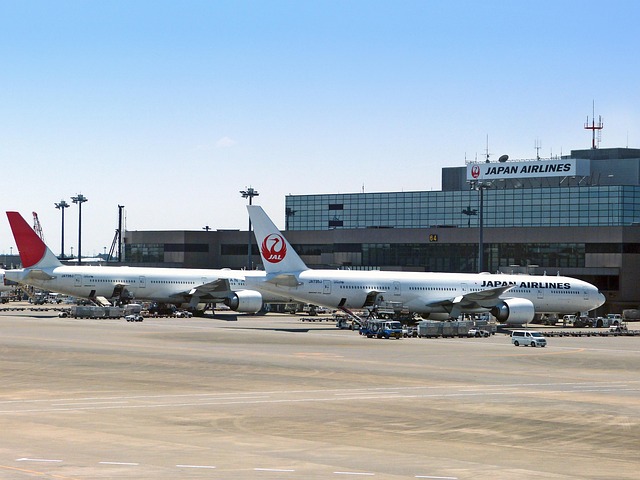
Compare the three realistic ways to buy this seat before you commit: the Alaska award, the published cash fare, or a JAL Mileage Bank redemption funded by Citi ThankYou points. The table is the head-to-head; the paragraphs after it tell you when each option actually wins.
Keep the units matched: 60,000 miles is a one-way price, while $3,000 is a round-trip price. Divide the cash fare by two before comparing, or double the miles to 120,000 for a round-trip comparison. Comparing 60,000 miles directly with $3,000 mixes one-way and round-trip units.
Award tickets still carry taxes and fees on JAL awards. The exact cash co-pay appears in Alaska's booking path, so add that amount to the miles' implied value before deciding whether the award beats cash.
The 1.5¢ and 2.0¢ figures are reference points, not universal values. Recompute with your own cents-per-mile number: multiply 60,000 by your valuation, compare it with the one-way cash fare, and use that result as your personal break-even test.
Before booking, verify the one-way cash fare on your exact dates and the co-pay in the same Alaska search. If either number changes, rerun the same division and multiplication instead of relying on the headline $3,000 round-trip price.
What the evidence does not establish
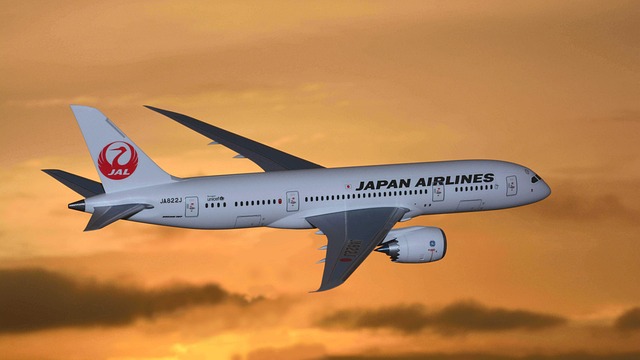
The deal's true gating factor is not the published 60,000-mile rate but whether saver-level Japan Airlines business seats are actually open on your specific 2026 dates. Grounding confirms that the 60,000-mile price exists as a program rate; it does not confirm that inventory is open for your itinerary. JAL business saver seats from the US are capacity-controlled and date-dependent, meaning only a limited number of seats may be released at the saver level and the release can vary by flight and date. A search on your exact dates is therefore required before treating the miles option as available.
The $3,000 round-trip headline is a representative price, not a verified quote for a specific 2026 departure. Pull a live cash fare for your route, cabin, and dates before running the break-even; otherwise the comparison rests on an unverified benchmark rather than your actual purchase price. If the live fare differs materially from the headline, the break-even conclusion can change even when award space exists.
This article's evidence base does not include Alaska partner-award change or cancellation fees, or any 2026 program rules. Check alaskaair.com for current terms before booking, especially if your plans may change or if you need flexibility after ticketing. Treat any fee, rule, or policy you find there as the controlling source rather than an assumption carried over from older partner-award experiences.
| Unverified item | What to check | Why it gates the deal |
|---|---|---|
| Saver-level JAL business seats on your 2026 dates | Search Alaska Mileage Plan for your exact dates | Capacity-controlled, date-dependent inventory; the published rate alone does not mean space is open |
| Live cash fare for your departure | Pull a current fare for the same route and dates | The headline price is representative, not a verified quote |
| Current Alaska partner-award rules and fees | Check alaskaair.com before booking | Change and cancellation terms and 2026 rules are outside this article's evidence base |
Use the verification order as a check, not a conclusion: search Alaska Mileage Plan for JAL business award space on your dates first; if 60,000-mile space exists and the live cash fare is above the per-direction threshold, book with miles; otherwise pay cash. Because both award inventory and fares move, repeat the search and fare pull if your dates change or if you are comparing multiple departure days.
If either condition fails, the miles advantage is not established for your trip, even though the published rate and headline fare suggest it on paper. The absence of verified saver space or a verified live fare is enough to keep the decision in the cash column until both are confirmed.

Booking check
Checkpoint 1 is inventory: search alaskaair.com for your exact travel dates and confirm Japan Airlines business class prices at the saver level of 60,000 miles one-way. If the same itinerary prices above that level, or no saver space appears, stop here; the miles rule does not apply to those dates, and you should move to a cash comparison or different dates.
Checkpoint 2 is the cash baseline: price the identical itinerary as a paid Japan Airlines business fare and record the per-direction amount, not just the round-trip total. For example, a $3,000 round-trip quote is $1,500 per direction; use your own live quote and keep the two units separate when you compare it with a one-way award.
Checkpoint 3 is the co-pay and the math: at ticketing, note the taxes and fees, then compute value as (cash fare minus co-pay) divided by 60,000. Book with miles when that value is above 1.5 cents per mile; pay cash when it is below 1.0 cent per mile. If the result falls between those cutoffs, treat it as a judgment call rather than an automatic miles booking.
The cost of being wrong is linear on 60,000 miles: 0.1 cent is $60 per direction. Booking miles below 1.0 cent means using 60,000 miles for less than $600 of net value, so the excess cost is $600 minus the net value; paying cash above 1.5 cents means forgoing more than $900 of value, with each 0.1 cent above the cutoff adding another $60 per direction. Recompute if the co-pay or fare changes on the final screen.
Only ticket the award when both earlier checkpoints pass: saver space at 60,000 miles one-way and a net value above 1.5 cents per mile. The rule's separate cash screen is a per-direction fare above $1,800; if that screen and the cents-per-mile result disagree, recheck the division and the co-pay before ticketing. If either check fails, pay cash; if both pass, book the miles before the saver space disappears.
Decision rules for booking
If Alaska Mileage Plan shows 60,000-mile one-way Japan Airlines business space on your dates and the cash fare is above $1,800 per direction, book with miles first; this is the primary rule and it should be checked before any cash purchase, because the award price is fixed while the cash price can move.
If the cash fare is below $1,000 per direction on a sale fare, pay cash and save the miles for peak dates; the lower cash price removes the miles advantage on those dates and preserves flexibility for higher-priced departures.
If Alaska space is waitlisted or unavailable, do not default to cash immediately: check JAL Mileage Bank directly and price a Citi ThankYou transfer first. Upgraded Points documents the Citi-to-JAL transfer route, so this is a real alternative to price before paying cash; compare the transferred cost with the cash fare on the same dates.
The tiebreaker is therefore partner-first, not cash-first: Alaska space first, then JAL Mileage Bank with a priced Citi ThankYou transfer, then cash only if neither award path works at an acceptable price.
Treat waitlisted space as unavailable until it is confirmed, and apply every rule to the same itinerary and dates, comparing one-way cash with the one-way 60,000-mile price rather than mixing a round-trip cash figure with a one-way award figure.
When both award paths fail, the cash fallback should still be compared against the same one-way benchmark, not against a round-trip headline, so the direction-level rule stays consistent.
| Condition | Action |
|---|---|
| Alaska shows 60,000-mile one-way JAL business space and cash is above $1,800 per direction | Book with miles |
| Cash is below $1,000 per direction on a sale fare | Pay cash and save miles for peak dates |
| Alaska space is waitlisted or unavailable | Check JAL Mileage Bank and price a Citi ThankYou transfer before paying cash |
Also worth reading 2026 Japan Airlines business class United business class awards 2026: 5 Alaska JAL business class to Tokyo
What to do next
Frequently Asked Questions
How should the 60,000-mile award price be compared with cash fares?
Treat that 60,000-mile figure as a per-direction award price, compare it with a one-way cash fare, and do not divide a round-trip cash fare in half to test it.
Which flights can be booked with this Alaska award?
The award is for travel on Japan Airlines-operated flights.
Where is this award booked?
The booking is made through Alaska Airlines.
What must be true before booking with miles?
Book with miles if 60,000-mile one-way space exists on your dates and the cash fare is above the per-direction break-even, otherwise pay cash.
Does the headline cash price clear the break-even?
The round-trip headline price clears the break-even, subject to confirmation.
What valuation is used for the 60,000-mile break-even?
The thesis sets the break-even at roughly 1.5 cents per mile for 60,000 Alaska miles.
Quick answers
| What one-way Alaska miles price does the article list for JAL business to Tokyo? | The article lists 60,000 Alaska miles one-way via Alaska Airlines Mileage Plan for Japan Airlines Business Class to Tokyo. |
| When do miles beat cash according to the thesis? | Miles beat cash when one-way fares exceed about $1,800. |
| What break-even does the thesis set for 60,000 Alaska miles? | The thesis sets roughly $1,800 per direction as the ~1.5¢/mile break-even for 60,000 Alaska miles. |
| Does the headline cash price clear that break-even? | The thesis says the $3,000 round-trip headline price clears the roughly $1,800-per-direction / ~1.5¢ per mile break-even, subject to confirmation. |
| What booking check should a reader do first? | The reader rule says to search Alaska Mileage Plan for JAL business award space first, then book with miles if 60,000-mile one-way space exists on your dates and cash fare is above $1,800 per direction, otherwise pay cash. |
Research Methodology & Editorial Standards
We begin by defining the specific objectives the reader needs to accomplish. Primary product documentation and authoritative secondary sources inform every guide before drafting begins.
Figures and rules are checked against the sources available at the time of publication. Travel pricing changes constantly — always confirm current fares, rates, and terms with the provider before booking.