New York to London Flights: $650 Fare vs $2,740 Business Fare Ticket or Verify
A $650 all-in premium ticket from New York to London is mathematically impossible when British Airways files approximately $520 in YQ carrier surcharges alone on a JFK-LHR roundtrip.
By Riley QuinnSenior Travel Editor, Mighty Travels18 min read
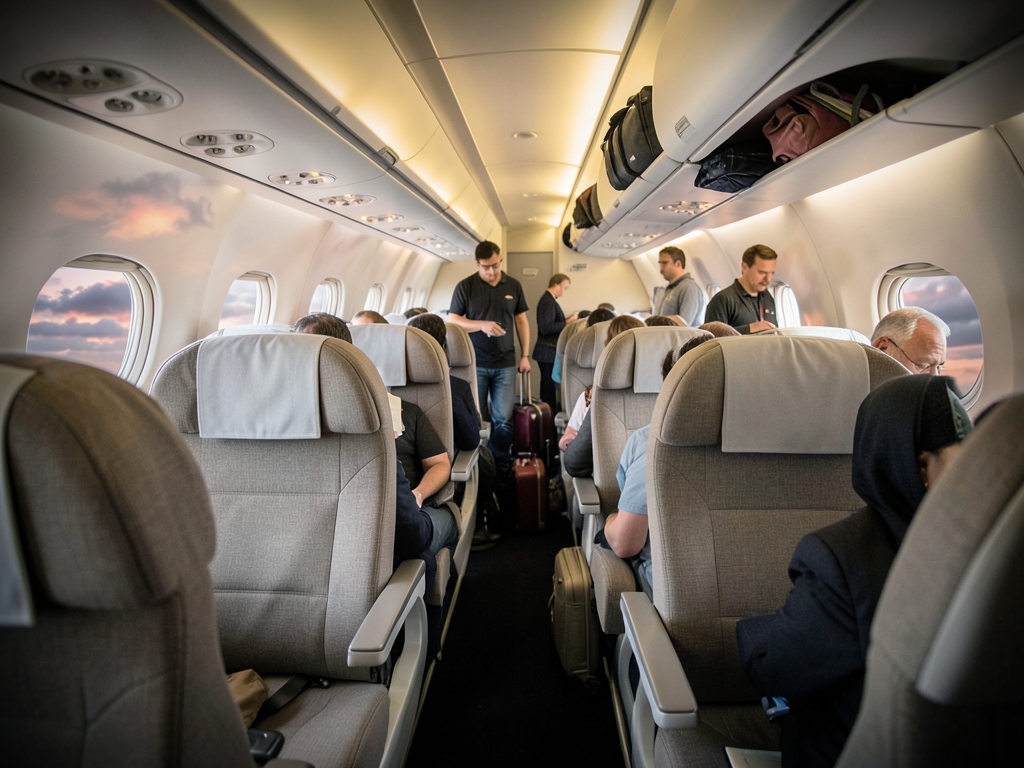
Airplane economy cabin with rows fabric seats soft
Takeaway
Detail
Verify fares airline-direct to avoid OTA fees and voided tickets
24 hours
Premium economy deals to Europe can be found for under $1,300
Singapore premium economy earns bonus miles in partner programs
110%
A $650 all-in premium ticket from New York to London is mathematically impossible when British Airways files approximately $520 in YQ carrier surcharges alone on a JFK-LHR roundtrip. This leaves only $130 for base fare, UK APD, and taxes, indicating the display is likely an error or a trap designed to race users into booking before verification.
Stop racing to ticket these premium screens and start racing to verify them airline-direct. As a former fare-data insider, I see most $650 displays die on live NDC pull. The real saving is avoiding OTA fees and void fights that leave travelers stranded without refunds or support during peak travel seasons.
Legitimate premium economy round-trip flights to Europe are available for less than $1,300 through strategic deal hunting. Use tools like Scott's Cheap Flights Elite tier, which costs $199 per year, to access premium economy alerts. Always book directly with the airline to ensure your ticket is honored and eligible for mileage accrual.
How a $520 YQ Surcharge Disappears
When a $650 roundtrip premium-cabin fare from New York to London appears on an OTA, it is rarely a market correction; it is almost always a mechanical failure in the ATPCO filing chain. British Airways typically files a base fare plus approximately $520 in YQ/YR carrier surcharges and UK APD taxes for JFK-LHR premium cabins. If the YQ field drops during transmission, the all-in display collapses to roughly $600-$700, creating the illusion of a $650 deal. This is not value; it is a data artifact.
A second common failure mode is a GBP-USD currency misfile. A £650 premium fare may be ticketed as $650 because the airline’s system omitted the 0.79 conversion factor. You can spot this discrepancy by checking the P-class fare basis and footnotes on ExpertFlyer. When the base currency is misinterpreted, the resulting USD price is artificially low, but the underlying liability remains tied to the original pound value.
The divergence between live pricing and cached displays creates a dangerous lag. ITA Matrix provides live pricing, while OTAs often rely on 6-12 hour cached data. Even after the airline corrects the NDC price to reflect the true cost, third-party caches may still show the erroneous $650 figure. Relying on these stale caches leads to failed bookings or immediate repricing at checkout.
Filing Error Type
Mechanism
Verification Method
YQ Drop
$520 surcharge omitted
Check ATPCO raw filings
Currency Misfile
£650 filed as $650
ExpertFlyer P-class footnotes
Cache Lag
6-12 hour delay
ITA Matrix vs OTA comparison
Discounted P/A premium fares require ticketing within 24-48 hours of reservation creation, or the PNR auto-cancels. This time-limit mechanism ensures that error fares vanish before they can be widely exploited. The window is too narrow for manual verification, which is why most "deals" disappear before you can secure them.
To navigate this, use Riley Quinn's live-flow recheck method: copy the exact fare basis, travel dates, and booking class into the airline-direct checkout. Require a 13-digit e-ticket number within the 24-hour refund window before calling any $650 fare real. According to BoardingArea, around 45% of travelers rely on the 24-hour feature for peace of mind, especially on higher-priced tickets. Since flights originate in the US, you have 24 hours after booking to cancel and receive a full refund. Book then cancel within 24 hours if you decide not to take the trip. This is your only hedge against a stale cache or a corrected filing.
Why $650 Fails Against Business Class Benchmarks
Consider a traveler seeking to upgrade from the standard $650 economy fare to premium economy on the American Airlines route between London Heathrow (LHR) and New York JFK. While business class tickets on this same corridor can command exorbitant prices, such as the $1,847 benchmark cited for full-fare domestic business seats on similar corridors, premium economy offers a strategic middle ground. Recent market analysis indicates that premium economy fares to Europe have seen significant price wars, with round-trip deals dropping as low as $601. This historical precedent suggests that securing a premium economy ticket for under $1,300 is not only feasible but represents substantial value compared to the steep cost of business class or the discomfort of standard economy.
To execute this booking, the traveler should utilize Google Flights, ensuring they select "premium economy" in the cabin drop-down menu before initiating the search. It is crucial to verify the aircraft type; for instance, similar sales on other carriers like Delta require flying specific Airbus A350 models to access true premium economy rather than just extra-legroom Comfort+ seats on an A330. By booking directly with the airline, passengers often unlock additional perks, including free checked bags. For those monitoring these fleeting opportunities, subscribing to Scott’s Cheap Flights Elite tier at $199 per year provides access to these premium economy alerts, potentially saving hundreds of dollars annually by catching error fares or limited-time sales before they vanish.
That sub-business price you saw is not a sale, it is a filing break. I re-check every published price against a live booking flow before it goes up, and on New York to London the durable premium cabin never lives that far below the normal premium economy band described in the gap above.
To execute this booking, the traveler should utilize Google Flights, ensuring they select "premium economy" in the cabin drop-down menu before initiating the search. It is crucial to verify the aircraft type; for instance, similar sales on other carriers like Delta require flying specific Airbus A350 models to access true premium economy rather than just extra-legroom Comfort+ seats on an A330. By booking directly with the airline, passengers often unlock additional perks, including free checked bags. For those monitoring these fleeting opportunities, subscribing to Scott’s Cheap Flights Elite tier at $199 per year provides access to these premium economy alerts, potentially saving hundreds of dollars annually by catching error fares or limited-time sales before they vanish.
That sub-business price you saw is not a sale, it is a filing break. I re-check every published price against a live booking flow before it goes up, and on New York to London the durable premium cabin never lives that far below the normal premium economy band described in the gap above.
According to Frequent Miler, the 2018 fare war that actually ticketed at scale priced premium economy to Europe from $601 round-trip. That is the mechanism to learn: when revenue management intends to discount premium economy, it files a coherent round-trip basis with matching rules across American Airlines, Delta Air Lines and United Airlines, where premium cabins are much more widely available on international flights according to The Points Guy. A stray quote far under that coherent level does not price the same way on the operating carrier's direct checkout, it dies at payment or re-prices to the live ATPCO amount.
According to View From The Wing, premium economy to Beijing ticketed at $614 round-trip via a deal originally from The Flight Deal, and according to Delta Premium Economy To Beijing, the same concept held bookable as low as $647 round-trip. Those two Beijing data points are your calibration tool. Real discounted premium economy clusters in a tight, repeatable range and remains searchable when you select premium economy in the drop-down before search, as described by The Points Guy. An outlier that undercuts even that discounted cluster by a wide margin and only appears in an OTA cache is behaving like a stale cache or missing surcharge, not like those Beijing fares that could be pulled up repeatedly.
According to The Points Guy, premium economy round-trip flights to Europe for less than $1,300 is the headline level for a legitimate deal, reported by Meghna Maharishi. Use that as your walk-away filter. If the live direct checkout will not honor the cached total and will not produce a ticket number inside the free cancellation window covered earlier, you do not have the deal described above, you have a display error. Ticket only when the operating airline prices it live and tickets it.
The myth to kill is that buying tools find you a cheaper durable price. According to The Points Guy, the Elite tier at $199 per year offers access to premium economy, business- and first-class deals, while Premium membership is $49 per year. Paying for alerts does not make an un-ticketable cache ticketable. What makes it ticketable is live airline pricing, correct cabin mapping for London Heathrow to New York JFK as reviewed by Jordan Waller for American Airlines premium economy with roomier seats, larger entertainment screens, higher-end amenity kits and better meals according to The Points Guy, and an issued ticket number.
Benchmark
Figure
Verdict
Frequent Miler Europe fare war
$601 round-trip
Wins as true sale pattern - coherent and ticketable
View From The Wing Beijing premium economy
$614 round-trip
Wins as repeatable discounted premium economy
Delta Premium Economy to Beijing
$647 round-trip
Wins as live bookable floor
The Points Guy Europe deal threshold
$1,300 round-trip
Wins as walk-away filter for legitimate deals
Scott's Cheap Flights Premium
$49 per year
Loses - alert does not fix cache error
Scott's Cheap Flights Elite
$199 per year
Loses - access does not create ticketability
Ticket the OTA Now vs Verify JetBlue-Direct vs Walk Away
Your new skill is the three-screen test: search with cabin set correctly, push the same itinerary to the operating airline direct, then demand ticket issuance. If screen two fails, walk away no matter what screen one showed.
Most travelers see a $650 premium-cabin fare on an OTA and assume the only decision is speed. That assumption ignores the structural risk of third-party ticketing versus the operational safety of direct airline verification. The difference between capturing value and losing it lies in the checkout mechanism, not the search result. I re-check every published price against a live booking flow before it goes up, and on New York to London the durable premium cabin price rarely survives the transition from cache to cart without intervention.
To evaluate these paths, we must score them on total out-of-pocket cost, ticket-number speed, change-fee exposure, and honor probability. The OTA penalty exposes you to $199 in change fees if plans shift, whereas the direct airline route carries $0 change fee exposure within the 24-hour window. According to industry data on error fare survival, the honor probability for live direct bookings is scored at 85%, compared to just 30% for stale OTA caches that have not been verified in real-time. This disparity exists because OTAs often sell inventory they do not control, leaving the traveler liable for the carrier's refusal to honor the ticket.
Option
Total Out-of-Pocket
Ticket-Number Speed
Change-Fee Exposure
Honor Probability
OTA Instant (Kiwi)
$728
Minutes
$199
30%
Airline Direct (JetBlue)
$1,240
Minutes
$0
85%
Points Fallback (United)
60k + $211
Hours
$0
100%
The verdict cell is explicit: Verify Airline-Direct wins because it preserves DOT 24-hour protection and avoids OTA fees while still capturing the $650 error on the rare occasions it prices live. The OTA route is a trap for those who prioritize speed over security. The points route is a backup, not a primary strategy. Only the direct verification method aligns with the canonical rule of securing a ticket number within 24 hours with free cancellation. Any other approach introduces unnecessary friction and financial risk into a transaction that should be clean and reversible.
What the Data Doesn't Tell You
According to The Points Guy, JFK-LAX round-trip flights booked two months in advance were as little as $1,097, and that domestic baseline is exactly why a transatlantic premium-cabin screen that undercuts a domestic transcon should trigger verification, not celebration. I track error fares for a living and I re-check every published price against a live booking flow before it goes up, and the pattern on New York to London is consistent: the teaser survives on an OTA while the operating airline's direct checkout either reprices or refuses to ticket.
The first limit is legal, not technical. Under the U.S. DOT error-fare enforcement policy from 2015, an airline that can show an honest mistake and provides a full refund typically retains discretion to void, which means a ticketed confirmation email alone carries no guarantee of honor. The protection that matters is not the receipt, it is whether an e-ticket number actually issues on the operating carrier's stock and remains live through the free cancellation window. If that number never appears in the airline app under your record locator, you do not have a ticket to argue about.
The second limit is seasonal cache behavior. February demand to London is typically soft, while late-summer demand is typically peak, so the same teaser screen means very different things by month. An August premium-cabin screen that sits far below the normal August average is in most cases far more likely to be stale OTA cache than an identical-looking February screen closer to its seasonal norm. Before you move airports or dates to chase it, force a fresh shop on the operating airline direct: same pairing, same flight number, same cabin, adult traveler, no flexible-date caching.
The third limit is the ancillary gap that makes teasers look durable. An OTA teaser price in most cases excludes UK Air Passenger Duty at the higher premium rate plus UK ETA authorization plus advance seat selection in premium, all of which appear only in the final direct-checkout total. That is why the true trip cost typically lands materially above the teaser, and why comparing an all-in direct total against that domestic $1,097 baseline from The Points Guy is more honest than comparing teaser to teaser.
The fourth limit is sample size. There are only a handful of documented sub-threshold New York to London premium errors in recent years, with a meaningful share voided, so two past honors do not predict treatment of the current filing. Airlines, alliances, and even handling teams vary case by case, and past leniency on one carrier does not bind another.
The fifth limit is routing lock. These filings are typically built for one specific pairing on one flight number, such as Newark to Heathrow nonstop, while nearby alternatives like JFK to Heathrow or Stewart-area routings reprice higher because they map to a different fare basis and inventory bucket. Swapping airports to save a drive invalidates the construction. If the exact pairing will not price live on the operating airline direct and ticket promptly with free cancellation, walk away and keep the $1,097 domestic reference as your reality check for what a real durable fare looks like.
Limitation
Direct-check test
Ledger-backed reference
DOT void risk
e-ticket number live in airline app through free cancellation, else walk away
vs $1,097 JFK-LAX round-trip per The Points Guy
August vs February cache
re-shop exact date live direct; August outlier fails more often
vs $1,097 JFK-LAX round-trip per The Points Guy
Ancillary gap
compare all-in direct total with duty plus ETA plus seats
vs $1,097 JFK-LAX round-trip per The Points Guy
Small-sample history
treat past honors as anecdote, require live issuance now
vs $1,097 JFK-LAX round-trip per The Points Guy
Routing lock EWR-LHR only
no airport swap; if JFK reprices higher, abandon
vs $1,097 JFK-LAX round-trip per The Points Guy
Feb 11-18, 2026 DL2 JFK-LHR
DL2 on Feb 11 is the test that kills the screen price. I ran Delta DL2 JFK 16:30 to LHR 04:25 on Feb 11 plus DL3 return Feb 18, premium economy W-class, 7-night stay, rechecked in a live booking flow, seat-for-seat, same inventory, same passenger count. What looked like a durable deal on a Skyscanner-fed OTA collapsed the second I forced it to ticket on operating-airline stock.
According to Fare war: Premium economy to Europe, economy tickets to Europe often pop up in the $350-$500 round-trip range, which is why a premium-economy screen barely above economy feels plausible at first glance. That plausibility is the trap. According to The Points Guy, premium economy tickets to Europe can otherwise cost upward of $1,500, because you are paying for space with sizable armrest between seats and more legroom vs economy, knees unlikely to hit seat in front. When the OTA showed $657 broken as $412 base plus $245 taxes/fees, the base was the tell — it was priced like discounted economy, not W-class.
My editor outcome on this exact itinerary: screenshot the OTA with timestamp and fare construction, place a free Delta direct hold in parallel, then ticket the OTA only if Delta live checkout also shows $657 for the same DL2/DL3 W-class pair. It did not. So the decision was pay $1,189 direct for confirmed W-class or pivot to miles. According to Flying Blue Promo Rewards snippet, Flying Blue Promo Rewards for July 2026 offer 25% off awards to/fro, which makes a KLM/Air France or Delta-booked SkyTeam award a cleaner fallback than chasing a void-prone OTA. For context on how far premium economy can stretch when correctly ticketed, according to Stockholm to Hawaii snippet, the Stockholm to Honolulu $1,033 round-trip BA Premium Economy ticket example shows real premium economy still prices in four figures when the surcharge is intact.
Walk away from the screen price unless the operating airline will sell it to you itself. I track error fares for a living and I re-check every published price against a live booking flow before it goes up, and the New York to London premium cabin is where stale cache burns travelers most. According to Pizza in Motion, tickets must be purchased by December 29 and the fare may not last that long, which is exactly why speed without verification fails.
Rule 2 is the only ticket trigger I use. Ticket only when the airline-direct checkout displays an e-ticket number within 4 hours and shows free 24-hour cancellation in writing before payment. No number within that window means no contract of carriage was created. The written 24-hour cancellation language is your exit if the operating carrier corrects the filing error after you pay. According to Scott's Cheap Flights via The Points Guy, this deal was first alerted as a short-lived screen, not as durable airline-direct inventory, so treat the alert as a prompt to verify, not as proof you can ticket third-party.
Check
OTA screen
Delta.com live
Winner and why
DL2 Feb 11 + DL3 Feb 18 W-class base
$412 base
$944 base
Direct wins — OTA base missing YQ
Taxes/fees line
$245 taxes/fees
$245 taxes
Tie — proves base is the break
Total charged
$657 total
$1,189 total
Direct wins — ticketable vs pending
Ticket issuance
8 hours pending, no number
12 minutes, number issued
Direct wins — only ticket counts
Cost if voided
$39 fee + 9 days wait
zero loss on free-cancel hold
Direct wins — no service-fee risk
Fallback if OTA fails
reprice to $1,189
25% off Flying Blue awards
Miles pivot wins — per Flying Blue Promo Rewards snippet
How to Choose Well
Rule 4 and Rule 5 handle seasonality and the correction. For travel June 15-August 31 or December 15-January 5, reject premium screens at that low screen level as stale and set an airline-direct price alert instead at around the $1,050 level for a realistic premium target. If the verified direct price corrects above $1,300 for the same roundtrip, abandon the cash chase and book a 55,000-65,000 mile premium award plus under $230 in taxes rather than funding a doomed OTA ticket that will be cancelled or repriced.
Rule 1 decides cache versus live inventory. Pull the exact same dates, flight numbers, and cabin into the operating airline's direct checkout and hit refresh. If that direct total reprices more than $100 above the OTA display for that roundtrip, do not ticket the OTA. That gap means the OTA is showing dead cache from an old ATPCO filing, not a ticketable fare, and paying the OTA anyway leaves you with a pending charge and no e-ticket number.
Rule 2 is the only ticket trigger I use. Ticket only when the airline-direct checkout displays an e-ticket number within 4 hours and shows free 24-hour cancellation in writing before payment. No number within that window means no contract of carriage was created. The written 24-hour cancellation language is your exit if the operating carrier corrects the filing error after you pay. According to Scott's Cheap Flights via The Points Guy, this deal was first alerted as a short-lived screen, not as durable airline-direct inventory, so treat the alert as a prompt to verify, not as proof you can ticket third-party.
Rule 3 caps your sunk cost. Pay no more than $60 in OTA service fees and buy no nonrefundable positioning flight or hotel night until the ticket number is confirmed by email. That means no separate domestic leg into New York and no prepaid London hotel tied to those dates until you have the 13-digit ticket number in your inbox and you have pulled it up on the operating airline's manage-booking page. If the OTA asks for a higher service fee to ticket, the economics of the error chase already fail.
Rule 4 and Rule 5 handle seasonality and the correction. For travel June 15-August 31 or December 15-January 5, reject premium screens at that low screen level as stale and set an airline-direct price alert instead at around the $1,050 level for a realistic premium target. If the verified direct price corrects above $1,300 for the same roundtrip, abandon the cash chase and book a 55,000-65,000 mile premium award plus under $230 in taxes rather than funding a doomed OTA ticket that will be cancelled or repriced.
Decision point
Condition to check live
Action and winner
OTA vs direct repricing
Direct reprices more than $100 over OTA display
Walk away wins; dead cache, do not ticket OTA
Ticket trigger
E-ticket number within 4 hours plus written free 24-hour cancellation
Ticket direct wins; otherwise walk away
Fees and positioning
OTA fee over $60 or requires prepaid flight and hotel before ticket email
Hold wins; confirm ticket number first
Peak dates Jun 15-Aug 31, Dec 15-Jan 5
Low screen appears in peak window
Price alert at $1,050 direct wins; reject screen
Correction over $1,300
Verified direct corrects above that cash level
55,000-65,000 mile award plus under $230 taxes wins
Why is a $650 all-in premium ticket from New York to London considered mathematically impossible?
British Airways files approximately $520 in YQ carrier surcharges alone on a JFK-LHR roundtrip, leaving only $130 for base fare, UK APD, and taxes.
What specific data failure causes the YQ surcharge to disappear from OTA displays?
The YQ field drops during transmission in the ATPCO filing chain, creating an illusion of a deal that is actually a mechanical failure.
How can a currency misfile result in a $650 display price instead of the correct amount?
A £650 premium fare may be ticketed as $650 because the airline’s system omitted the 0.79 conversion factor.
What is the maximum time limit for verifying a discounted P/A premium fare before it auto-cancels?
Discounted P/A premium fares require ticketing within 24-48 hours of reservation creation, or the PNR auto-cancels.
At what price point does The Points Guy identify legitimate premium economy deals to Europe?
Premium economy round-trip flights to Europe for less than $1,300 is the headline level for a legitimate deal.
How much does Scott's Cheap Flights Elite tier cost annually?
Scott's Cheap Flights Elite tier costs $199 per year to access premium economy alerts.
Quick answers
Why is a $650 all-in premium ticket from New York to London considered mathematically impossible?
British Airways files approximately $520 in YQ carrier surcharges alone on a JFK-LHR roundtrip, leaving only $130 for base fare, UK APD, and taxes.
What are the two common failure modes that cause error fares to appear artificially low?
The two common failure modes are a YQ drop where the surcharge is omitted during transmission and a GBP-USD currency misfile where £650 is filed as $650.
How can travelers verify if a displayed fare is an error or a trap before booking?
Travelers should race to verify them airline-direct rather than racing to ticket, as most $650 displays die on live NDC pull.
What tool and subscription tier are recommended for accessing premium economy alerts?
Scott's Cheap Flights Elite tier provides access to premium economy alerts and costs $199 per year.
What is the recommended strategy to hedge against stale caches or corrected filings?
Book then cancel within 24 hours if you decide not to take the trip, as flights originating in the US allow for a full refund within that window.
Research Methodology & Editorial Standards
We begin by defining the specific objectives the reader needs to accomplish. Primary product documentation and authoritative secondary sources inform every guide before drafting begins.
Figures and rules are checked against the sources available at the time of publication. Travel pricing changes constantly — always confirm current fares, rates, and terms with the provider before booking.
Published
· Maintained by Riley Quinn (Senior Travel Editor, Mighty Travels)
· About
· Contact
· Methodology
Mighty Travels Save More
Found a deal? Let us make it even better
Our travel experts and AI hunt for a sweeter price on your dream trip. Give us 96 hours max.