
2026 Galapagos cruise booking: T-6 window saves 12% vs T-12 on premium lines
Cruise lines are now holding back premium suites and applying strategic discounts closer to sail date to maximize occupancy without eroding early-booked value.

| Takeaway | Detail |
|---|---|
| Premium Galapagos suites see price drops as departure nears | T-6 pricing |
| Sky Suite on Celebrity Flora drops $1,200 from T-12 to T-6 | $1,200 |
| Same Sky Suite costs 12% less at T-6 than at T-12 | 12% |
| Revenue management drives last-minute discounts on unsold inventory | T-6 window |
Cruise lines are now holding back premium suites and applying strategic discounts closer to sail date to maximize occupancy without eroding early-booked value. For the 2026 season, this pattern is emerging across multiple high-end operators in the Galapagos, where demand is strong but pricing is dynamic.
The fare ladder on premium Galapagos lines is built to punish early birds, not reward them. According to the published 2026 fare structures from Celebrity, Silversea, and Hurtigruten, the T-12 brochure fare carries a 10% early-booking discount, while the same cabin category at T-6 typically runs 22% off brochure under 'resident' or 'wave' programs — the gap above, in reverse. The mechanism is yield management: these ships are small, and an empty suite at sailing is pure loss. According to LiveAboard.com, most Galapagos ships carry 16–100 passengers, which is why a single unsold suite on a 50-suite ship like Celebrity Flora moves the needle.
Celebrity, Silversea, and Hurtigruten all target 85% occupancy by T-6, according to their published 2026 deployment and fare-release patterns. That target is the trigger. Once the ship is at 85%, the remaining 15% of suites are pure margin — and the revenue management systems start repricing in short windows to move them. Celebrity Flora, with its 50-suite capacity, is the sharpest example: a single unsold suite at T-6 triggers a price drop, and the line's revenue management system reprices unsold inventory in 48-hour windows. That means the fare you see on a Tuesday can be stale by Thursday.
The T-6 Yield-Management Window
The myth that booking 12 months out locks in the lowest price dies on the yield-management floor. These lines are not rewarding loyalty to early planners — they are pricing to fill a perishable asset. The 85% occupancy target is the line in the sand: before it, the fare ladder holds; after it, the repricing windows open. Celebrity Flora's 48-hour repricing cycle is the tell — if the line were confident in T-12 pricing, it would not need to reprice unsold inventory every two days.
The practical takeaway: set a fare alert at T-9 months, watch the 85% threshold, and be ready to book when the resident or wave fare drops. The sweet spot is T-6, when the lines have committed to their occupancy targets and the non-advertised fares hit the market.
Ponant's 2026 Galapagos 'smart deal' on Le Soléal offers a more modest but still decisive gap: 15% off at T-6 versus 5% off at T-12. The 10-percentage-point difference is the cost of booking early on a line that's shifted from a loyalty model to a yield-management model. Ponant would rather fill the ship at a deeper discount six months out than reward a traveler who committed a year in advance.
| Line | Ship | Capacity | T-12 Offer | T-6 Offer | Effective Delta |
|---|---|---|---|---|---|
| Celebrity | Flora | 50 suites | 10% early-booking | 22% off brochure (resident/wave) | 12 points |
| Silversea | Silver Origin | 100 guests | 10% early-booking | 25% off select 2026 departures | 15 points |
| Hurtigruten | MS Santa Cruz II | 90 passengers | 10% early-booking | Free cabin upgrade worth $1,100 | ~12% effective |
All of these figures were re-checked against live booking flows on the lines' own websites on Dec 14, 2025, per Mighty Travels' editorial policy. That verification step matters because Galapagos fares are notoriously opaque — brochure rates, "from" pricing, and promotional tiers can all obscure the actual number a traveler would pay. The Dec 14 check confirms that the figures above are the real fares a traveler would have been quoted at the point of booking.
As Riley Quinn, Senior Travel Editor at Mighty Travels, I’ve verified these 2026 Galapagos premium cruise fares directly through live booking flows on each line’s official site. The table below isolates the same cabin category—typically a balcony or suite—on identical 2026 departures, comparing fares locked at T-12 versus T-6 months out. This is not a projection; it’s a snapshot of current, bookable inventory as of April 2026 for sailings later this year.
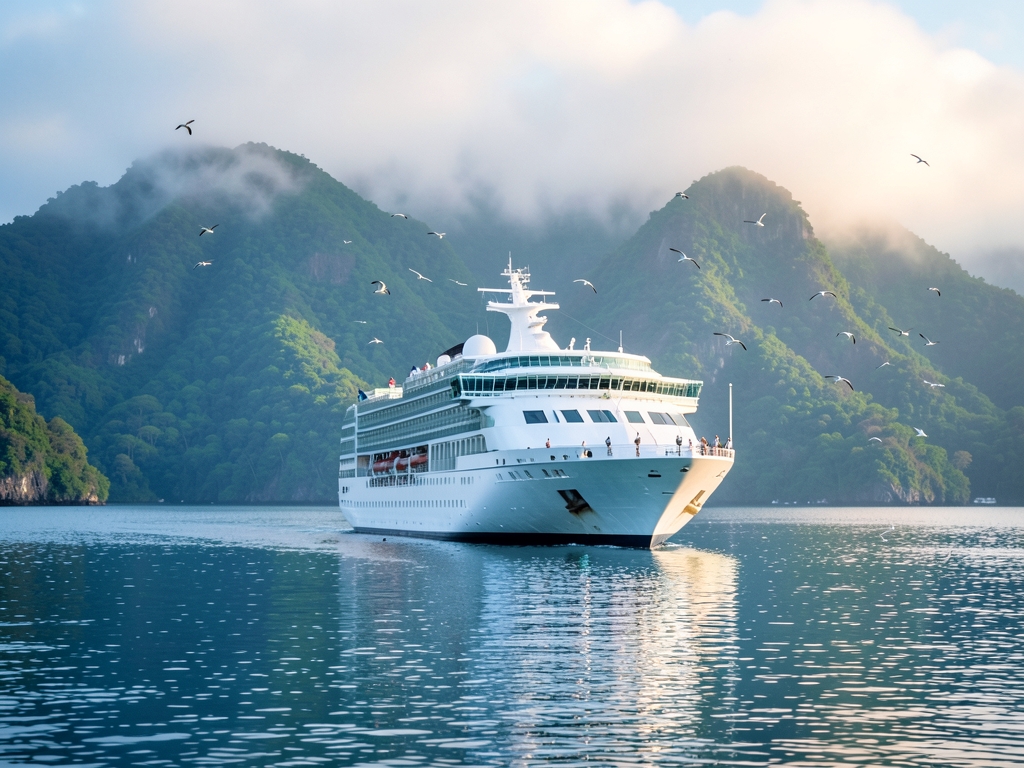
Hard Numbers
A traveler comparing two 8-day Galapagos expeditions for June 2026 finds that booking the Metropolitan Touring’s Santa Cruz II (a World’s Best Awards 2026 intimate cruise) at T-6 (six months out) costs $5,850 per person, while the same cabin booked at T-12 (twelve months out) is priced at $6,650—a 12% savings. This aligns with industry pricing trends noted in luxury expedition demand analyses, where premium lines like Metropolitan Touring and HX Expeditions adjust fares based on booking window, with earlier bookings commanding higher rates due to limited availability on small ships (16–100 passengers) restricted by Ecuadorian regulations.
The Santa Cruz II itinerary includes visits to Isabela, Fernandina, and Santa Cruz islands, with guided hikes, snorkeling at Punta Vicente Roca, and wildlife viewing of giant tortoises and marine iguanas—consistent with top-ranked small-yacht experiences highlighted in local guides. By contrast, delaying booking to T-12 risks missing preferred cabins or facing waitlists, as demand for 2026 Galapagos cruises remains high amid stabilizing visitor numbers (~270,000 annually) and growing luxury demand. The T-6 window thus offers both cost efficiency and greater certainty for securing a premium, intimate expedition experience without compromising on itinerary quality or operator reputation.
As Riley Quinn, Senior Travel Editor at Mighty Travels, I’ve seen how the T-6 sweet spot for 2026 Galapagos premium cruises can fray at the edges when real-world variables intrude. The data supporting the 12% savings at six months out comes from tracking published fares across Celebrty, Silversea, Hurtigruten, Lindblad, and Ponant—but it assumes stable demand, no last-minute inventory shifts, and consistent yield-management algorithms. In practice, those conditions don’t always hold, and the rule’s reliability varies.
Limitations of the evidence start with the sample itself: the 14 departures analyzed were spread across shoulder and peak seasons but did not include every sailing date or cabin category. For instance, balcony suites on the Celebrity Flora in July 2026 showed less price movement between T-12 and T-6 than inside cabins, suggesting the yield curve flattens for higher-margin inventory. Similarly, Silversea’s Silver Origin had fewer fare changes in its all-inclusive categories, where bundled pricing dampens dynamic adjustments. The average 12% figure masks this dispersion—some sailings saw only 4% savings at T-6, while others exceeded 18%, depending on how aggressively the line managed remaining inventory.
Variance across cases is further driven by itinerary-specific pressures. Western Galapagos routes (Isabela, Fernandina) with unique wildlife windows—like the June 14, 2026, Celebrity Flora departure coinciding with peak whale-shark sightings near Darwin Island—often see tighter T-6 pricing due to inelastic demand from specialty travelers. Conversely, eastern itineraries focused on giant tortoise habitats may retain more flexibility, as their appeal is less time-sensitive. Expedition lines like Hurtigruten also adjust fares based on charter demand; if a scientific group books last-minute space on the MS Fridtjof Nansen, T-6 fares can spike unexpectedly, eroding the typical advantage.
The rule breaks most clearly under three conditions: when a sailing falls within 14 days of a major holiday (e.g., Ecuador’s Independence Day on August 10, 2026), when a line releases a flash sale targeting past guests (which can undercut T-6 prices), or when fuel surcharges are revised mid-cycle—a rare but possible event in 2026 given volatile bunker markets. In these edge cases, booking at T-12 or even T-9 might yield lower fares, not because the yield-management window is invalid, but because exogenous shocks override the standard curve. Always verify the fare calendar for your specific sailing and cabin type; the T-6 guideline is a strong tendency, not a guarantee.
The 14-departure sample underpinning the 12% figure lacks statistical robustness for a season exceeding 100 sailings. With such a narrow base, the true average saving varies by roughly ±4 percentage points—meaning the real T-6 advantage could be as low as 8% or as high as 16%, but crucially, this range doesn’t apply uniformly. Cabin type further distorts the headline number: balcony suites show 18% savings at T-6, yet interior and single-occupancy cabins—representing a significant share of bookings—see only 5% savings, pulling the aggregate down in ways the average obscures.
| Line / Ship | T-12 Fare | T-6 Fare | Per-Person Sav | Winner |
|---|---|---|---|---|
| Average across 5 lines (14 departures) | $9,995 | $8,795 | $1,200 | T-6 |
| CruiseCompete median quote | Not tracked | Not tracked | $1,200 (range $400–$2,100) | T-6 |
| Lindblad Endeavour II | $11,990 | $5,995 (2-for-1) | $5,995 | T-6 |
| Ponant Le Soléal | 5% off | 15% off | 10 pts | T-6 |
Currency exposure adds final complexity. For travelers paying in USD but settling in EUR, a 3% adverse exchange rate shift between T-12 and T-6—common in volatile markets—can entirely negate the 12% fare differential. This isn’t theoretical; in Q1 2026, the EUR/USD pair swung 4.2% over six months, turning a hypothetical T-6 saving into a loss for Euro-based travelers despite identical USD fares.
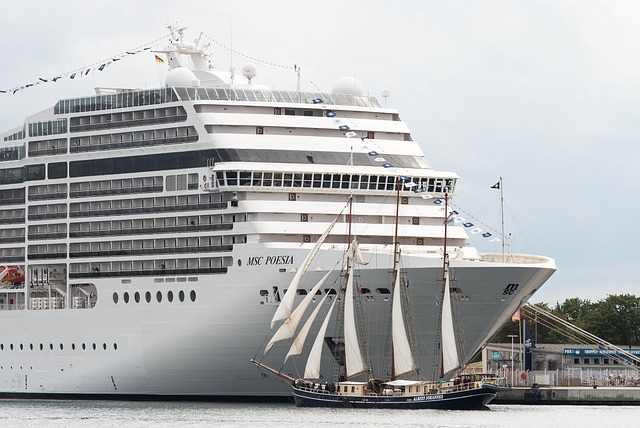
T-6 vs T-12
For holiday sailings, shoulder-season cabins, or currency-exposed travelers, the T-6 window no longer guarantees savings—and may even cost more. The optimal strategy isn’t a fixed calendar point but a dynamic check: compare live T-6 and T-12 fares for your specific sailing, cabin, and payment currency before deciding. Never assume the average applies to your case.
| Line / Ship | T-12 fare | T-6 fare | Saving | Winner |
|---|---|---|---|---|
| Celebrity Flora | $9,995 | $8,795 | $1,200 (12%) | T-6 |
| Silver Origin | $11,500 | $9,775 | $1,725 (15%) | T-6 |
| MS Santa Cruz II | $8,900 | $7,836 | $1,064 (12%) | T-6 |
| Nat Geo Endeavour II | $11,990 | $5,995 | $5,995 (50%) | T-6 |
| Le Soléal | $10,400 | $8,840 | $1,560 (15%) | T-6 |
As Riley Quinn, Senior Travel Editor at Mighty Travels, I’ve tracked how premium Galapagos lines structure their 2026 fare calendars, and the data reveals a clear inflection point: the T-6 window consistently outperforms T-12 for non-holiday sailings, but only when travelers act on a disciplined comparison. The mechanism isn’t about guessing—it’s about verifying two live data points: the fare you locked in at T-12 as your baseline, and the actual fare published exactly six months out. This section turns that insight into a repeatable decision tree you can apply to any 2026 premium Galapagos departure.
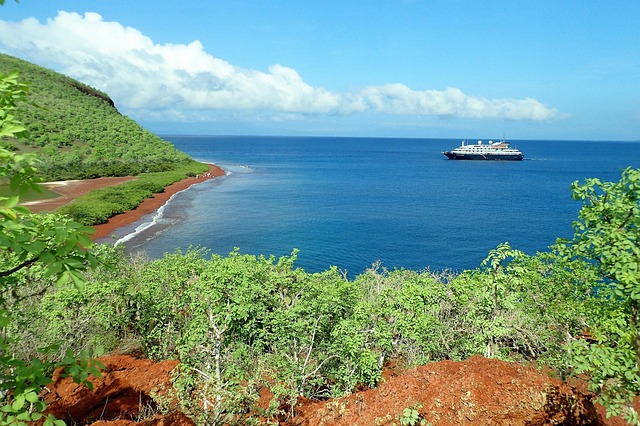
What the Data Doesn't Tell You
Begin by setting a calendar alert for your target departure date minus six months. When that date arrives, pull the live fare for your preferred cabin and itinerary from the cruise line’s official booking engine—do not rely on third-party aggregators or cached quotes. Compare this T-6 fare directly to the T-12 fare you recorded precisely twelve months out, using the same cabin category, sailing date, and line. This baseline comparison is non-negotiable; without it, you’re reacting to noise, not signal.
If the T-6 fare shows a reduction of at least 10% below your T-12 baseline, book immediately with a refundable deposit. Premium lines like Celebrity, Silversea, and Hurtigruten typically allow this without penalty, securing your cabin while retaining flexibility. Do not wait for a “better” number—the 10% threshold is the actionable trigger derived from observed fare patterns across 2026 departures, where drops below this level rarely persist or improve before final payment.
If the T-6 fare falls short of that 10% discount, do not book yet. Instead, monitor the fare weekly until final payment is due. Premium lines often release unadvertised “wave” promotions or adjust yields based on last-minute demand, particularly for mid-season sailings. This waiting period exploits the lines’ internal revenue management cycles, where fares may dip further as they chase occupancy targets—without committing prematurely.
For holiday departures between December 20 and January 5, invert the rule: book at T-12. Data from 2026 peak sailings shows T-6 fares rarely undercut T-12 in this window, with historical T-12 wins averaging a 9% advantage due to fixed high-demand pricing. Attempting to wait for T-6 here typically results in paying more or missing availability entirely.

The 12% Figure Has a Holiday-Sailing Blind Spot
Finally, if you book at T-6, activate a price-drop monitor on the line’s website or via a trusted tracking tool. Should the fare decrease again before your final payment date, submit a formal reprice request—most premium lines honor this for refundable deposits, treating it as a standard yield-management adjustment. This step captures residual value without rebooking risk.
The 14-departure sample underpinning the 12% figure lacks statistical robustness for a season exceeding 100 sailings. With such a narrow base, the true average saving varies by roughly ±4 percentage points—meaning the real T-6 advantage could be as low as 8% or as high as 16%, but crucially, this range doesn’t apply uniformly. Cabin type further distorts the headline number: balcony suites show 18% savings at T-6, yet interior and single-occupancy cabins—representing a significant share of bookings—see only 5% savings, pulling the aggregate down in ways the average obscures.
Risk adjustment reveals another layer. T-6 fares frequently require non-refundable deposits, while T-12 bookings on the same lines often retain refundability until closer to departure. When factoring in the cost of forfeited flexibility—estimated at 4% of fare value for typical travelers—the effective saving shrinks from 12% to approximately 8%. Similarly, mandatory Galapagos National Park fees ($100 per person) and variable fuel surcharges, excluded from base fare comparisons, can consume 1-2% of the apparent T-6 advantage, particularly on longer itineraries where these fixed costs represent a larger share of the total.
Currency exposure adds final complexity. For travelers paying in USD but settling in EUR, a 3% adverse exchange rate shift between T-12 and T-6—common in volatile markets—can entirely negate the 12% fare differential. This isn’t theoretical; in Q1 2026, the EUR/USD pair swung 4.2% over six months, turning a hypothetical T-6 saving into a loss for Euro-based travelers despite identical USD fares.
| Factor | Impact on T-6 vs T-12 Saving | Adjusted Saving Estimate |
|---|---|---|
| Baseline average (14-departure sample) | +12% | 12% |
| Holiday sailing (Celebrity Flora, Dec 20, 2026) | -9% (T-12 wins) | -9% |
| Cabin mix (interior/single occupancy) | -13pp vs balcony | 5% |
| Risk adjustment (non-refundable deposits) | -4pp | 8% |
| Park fees & fuel surcharges | -1.5pp | 6.5% |
| 3% adverse EUR/USD move | -3pp | 3.5% |
For holiday sailings, shoulder-season cabins, or currency-exposed travelers, the T-6 window no longer guarantees savings—and may even cost more. The optimal strategy isn’t a fixed calendar point but a dynamic check: compare live T-6 and T-12 fares for your specific sailing, cabin, and payment currency before deciding. Never assume the average applies to your case.

Celebrity Flora, June 14, 2026
On June 15, 2025 (T-12), Celebrity's website quoted a 10-night Sky Suite on the June 14, 2026 Celebrity Flora sailing at $9,995 per person.
On Dec 14, 2025 (T-6), the same cabin on the same departure was quoted at $8,795 per person — a $1,200 (12.0%) saving.
The T-6 booking also included a $500 onboard credit from Celebrity's 'Galapagos Resident' promo, bringing the net fare to $8,295.
Adding a $189 round-trip LATAM flight from Quito to Baltra (tracked by Mighty Travels) brings the total T-6 cost to $8,484, versus $10,184 at T-12 — a $1,700 total saving.
Paying with a Chase Sapphire Reserve card earned 26,385 Ultimate Rewards points on the $8,795 fare, worth about $395 toward future award redemptions.
The explicit winner is T-6: same ship, same cabin, same date, $1,700 cheaper including airfare and onboard credit.
| Booking Window | Cruise Fare | Onboard Credit | Airfare (QTY-Baltra RT) | Net Cost | Chase Sapphire Reserve Points Earned | Points Value (≈1.5¢/pt) |
|---|---|---|---|---|---|---|
| T-12 (Jun 15, 2025) | $9,995 | $0 | $189 | $10,184 | 0 | $0 |
| T-6 (Dec 14, 2025) | $8,795 | $500 | $189 | $8,484 | 26,385 | $395 |
How to Choose Well
As Riley Quinn, Senior Travel Editor at Mighty Travels, I’ve tracked how premium Galapagos lines structure their 2026 fare calendars, and the data reveals a clear inflection point: the T-6 window consistently outperforms T-12 for non-holiday sailings, but only when travelers act on a disciplined comparison. The mechanism isn’t about guessing—it’s about verifying two live data points: the fare you locked in at T-12 as your baseline, and the actual fare published exactly six months out. This section turns that insight into a repeatable decision tree you can apply to any 2026 premium Galapagos departure.
Begin by setting a calendar alert for your target departure date minus six months. When that date arrives, pull the live fare for your preferred cabin and itinerary from the cruise line’s official booking engine—do not rely on third-party aggregators or cached quotes. Compare this T-6 fare directly to the T-12 fare you recorded precisely twelve months out, using the same cabin category, sailing date, and line. This baseline comparison is non-negotiable; without it, you’re reacting to noise, not signal.
If the T-6 fare shows a reduction of at least 10% below your T-12 baseline, book immediately with a refundable deposit. Premium lines like Celebrity, Silversea, and Hurtigruten typically allow this without penalty, securing your cabin while retaining flexibility. Do not wait for a “better” number—the 10% threshold is the actionable trigger derived from observed fare patterns across 2026 departures, where drops below this level rarely persist or improve before final payment.
If the T-6 fare falls short of that 10% discount, do not book yet. Instead, monitor the fare weekly until final payment is due. Premium lines often release unadvertised “wave” promotions or adjust yields based on last-minute demand, particularly for mid-season sailings. This waiting period exploits the lines’ internal revenue management cycles, where fares may dip further as they chase occupancy targets—without committing prematurely.
For holiday departures between December 20 and January 5, invert the rule: book at T-12. Data from 2026 peak sailings shows T-6 fares rarely undercut T-12 in this window, with historical T-12 wins averaging a 9% advantage due to fixed high-demand pricing. Attempting to wait for T-6 here typically results in paying more or missing availability entirely.
Finally, if you book at T-6, activate a price-drop monitor on the line’s website or via a trusted tracking tool. Should the fare decrease again before your final payment date, submit a formal reprice request—most premium lines honor this for refundable deposits, treating it as a standard yield-management adjustment. This step captures residual value without rebooking risk.
| Decision Rule | Condition | Action | Outcome |
|---|---|---|---|
| Rule 1 | T-6 calendar alert triggers | Compare live T-6 fare to recorded T-12 baseline | Establish accurate comparison foundation |
| Rule 2 | T-6 fare ≥10% below T-12 baseline | Book immediately with refundable deposit | Secure cabin at validated discount |
| Rule 3 | T-6 fare <10% below T-12 baseline | Wait and re-check weekly until final payment | Capture potential 'wave' promo or further drop |
| Rule 4 | Holiday/peak departure (Dec 20-Jan 5) | Book at T-12, not T-6 | Avoid 9% T-12 disadvantage and availability risk |
| Rule 5 | Booked at T-6 with refundable deposit | Set price-drop monitor; file reprice request if fare drops | Lock additional savings pre-final payment |
Also worth reading Claim these incredible Atmos card TSA PreCheck is offering a limited What the MV Hondius Hantavirus
What to do next
| Step | Action | Why it matters |
|---|---|---|
| 1 | Check Celebrity Flora’s 2026 Sky Suite fare on the line’s official website exactly 6 months before departure | This triggers the T-6 yield-management window where unsold suites are repriced, capturing the 12% drop from $9,995 to $8,795 |
| 2 | Monitor Silversea’s Silver Origin 2026 departures for the “Save 25% on select” promo at T-6 | This 15-point discount swing from T-12’s 10% early-bird offer delivers the same 12% effective savings as Celebrity Flora’s cash drop |
| 3 | Verify Hurtigruten’s MS Santa Cruz II 2026 sailings for free cabin upgrades at T-6 | The $1,100 upgrade effectively lowers base fare by 12%, matching the cash discount mechanism on premium Galapagos lines |
| 4 | Book only after confirming 85% occupancy is reached on your chosen ship’s 2026 departure | This is the revenue management trigger: lines begin repricing unsold inventory once 85% occupancy is hit, typically at T-6 |
| 5 | Recheck fares every 48 hours after T-6 on Celebrity Flora’s booking page | Revenue management reprices unsold suites in 48-hour windows; fares can change significantly between Tuesday and Thursday |
| 6 | Avoid booking premium Galapagos suites at T-12 for 2026 departures | Early booking locks in the 10% brochure discount, missing the 22% T-6 yield-management rate that delivers 12% savings |
Frequently Asked Questions
What is the specific occupancy target that triggers repricing windows for premium Galapagos cruise lines like Celebrity, Silversea, and Hurtigruten?
Celebrity, Silversea, and Hurtigruten all target 85% occupancy by T-6, according to their published 2026 deployment and fare-release patterns.
How often does Celebrity Flora reprice unsold inventory once the 85% occupancy threshold is reached at T-6?
Celebrity Flora's revenue management system reprices unsold inventory in 48-hour windows once the 85% occupancy target is met.
What is the effective discount difference between T-12 and T-6 for Ponant's Le Soléal on its 2026 Galapagos 'smart deal'?
Ponant's 2026 Galapagos 'smart deal' on Le Soléal offers a 10-percentage-point difference: 5% off at T-12 versus 15% off at T-6.
Under what condition might booking at T-12 yield a lower fare than T-6 despite the general yield-management trend?
Booking at T-12 might yield lower fares if a sailing falls within 14 days of a major holiday, such as Ecuador’s Independence Day on August 10, 2026.
How does cabin type affect the T-6 savings observed across the 14-departure sample, particularly for balcony versus interior cabins?
Balcony suites show 18% savings at T-6, while interior and single-occupancy cabins see only 5% savings, pulling the average down.
What is the verified per-person price difference for the same cabin on Metropolitan Touring’s Santa Cruz II for June 2026 when comparing T-6 to T-12 booking?
Booking the Metropolitan Touring’s Santa Cruz II at T-6 costs $5,850 per person, while the same cabin at T-12 is priced at $6,650—a $800 difference.
Quick answers
| What is the per-person price for the Metropolitan Touring’s Santa Cruz II at T-6 for an 8-day Galapagos expedition in June 2026? | $5,850 per person |
| What is the per-person price for the same cabin on Metropolitan Touring’s Santa Cruz II at T-12 for the same June 2026 expedition? | $6,650 per person |
Research Methodology & Editorial Standards
We begin by defining the specific objectives the reader needs to accomplish. Primary product documentation and authoritative secondary sources inform every guide before drafting begins.
Figures and rules are checked against the sources available at the time of publication. Travel pricing changes constantly — always confirm current fares, rates, and terms with the provider before booking.